
News
OPINION: Ibadan Is Oyo

By Lasisi Olagunju
On Monday, 25 March, 1946, Chief I. B. Akinyele, Chief James Ladejo Ogunsola, Messrs D. T. Akinbiyi and E. A. Sanda, the very cream of the Ibadan educated elite, met behind closed doors with Oyo town delegates at the secretariat in Ibadan. One of them got home that day and wrote in his diary that they “could reach no agreement because we (Ibadan) flatly refused to pay one penny towards the Alaafin’s salary.”
Yet, some 84 years earlier (1862), the same Ibadan went to war against friends, family, and acquaintances in support of Alaafin. Ibadan destroyed Ijaiye because its ruler, Kurunmi, was rude and unruly to the Alaafin. He had to die because he refused to recognise the king whose father made him Aare, and who made Oluyole Basorun of Ibadan.
Ibadan of 1862 served Oyo and its Alaafin; that of 1946 damned them. Between the first stance and the second, what changed or what caused the change? The tongue. The body. Disposition. Reciprocal respect. My Christian friend pointed at a verse in the Bible: “And the king answered the people roughly. In a blustering manner, gave them hard words and severe menaces…” Then it was “To your tent, O Israel!”
On Sunday, 3 February, 2008, twelve out of the then seventeen members of Oyo State Council of Obas and Chiefs visited the Alaafin in Oyo. They said they were there “to solidarise and pay traditional respect to our permanent chairman.” From that visit came a ten-point resolution which was published as an advertorial on page 27 of the Nigerian Tribune of 5 February, 2008. The title of that advert is: ‘Oyo obas back Alaafin for permanent chairmanship of Council of Obas and Chiefs.’ The fifth of the resolutions is the shortest and most categorical: The obas declared that in Oyo State, “remove the Alaafin, and all other obas are equal.”
The obas who signed that statement were the Eleruwa of Eruwa, Olugbon of Orile Igbon, Okere of Saki, Aseyin of Iseyin, Iba of Kisi, Onpetu of Ijeru, Onjo of Okeho, Sabi Ganna of Iganna, Aresaadu of Iresaadu, Onilalupon of Lalupon, Onijaye of Ijaye and Olu of Igboora.
MORE FROM THE AUTHOR:OPINION: Trump And The Ruin Of Kurunmi
Now, read that list again – and this is where I am going: In the Saturday Tribune of January 17, 2026 (two days ago), an advert celebrating the reconstitution of the obas’ council with the Olubadan as rotational chairman was signed by six of those who signed the 2008 advert which celebrated Alaafin’s permanent chairmanship. These are: Eleruwa of Eruwa, Olu of Igboora, Olugbon of Orile-Igbon, Onpetu of Ijeru, Okere of Saki and Aseyin of Iseyin.
Yesterday’s “permanence” becomes today’s “rotation,” each wrapped in the rhetoric of unity, justice, and tradition. We see obas who were with Oyo in 2008 shifting allegiance to Ibadan in 2026. What this suggests is not moral collapse but the old, unembarrassed truth about power: it obeys seasons. Our obas, like politicians, have read too much of Geoffrey Chaucer. They move in steps that suggest that time, when it shifts, rearranges loyalties as effortlessly as it rearranges hierarchies.
Friendship and politics define statuses and hierarchies. Governor Rashidi Ladoja in 2004 decentralised the council of obas into zones and directed each paramount oba to preside over their area. His decision was based on the fact and logic that there was no throne of Oyo State for the kings to fight over. I agree with that reasoning, and, in fact I do not think any council anywhere is necessary as conclave of obas. However, last week, Oba Rashidi Ladoja assumed office as chairman of an undecentralised council of obas. What has changed?
Ladoja’s successor, Governor Adebayo Alao-Akala in 2007, made Alaafin permanent chairman. The Olubadan and Soun of Ogbomoso kicked and would have nothing to do with that arrangement. The governor ignored them. He said he was following the law. But the same Alao-Akala, on his way out of government in May 2011, used the House of Assembly to reverse that decision. Because his friendship with the Alaafin had expired, he made the position rotational in the following order: 1. Olubadan; 2. Soun of Ogbomoso; 3. Alaafin of Oyo. Check the Nigerian Tribune of 3 May, 2011, page 4.
MORE FROM THE AUTHOR:OPINION: Black Is White, Foul Is Fair, Wrong Is Right
Were all these about history, or about that fluid thing called change? What was obviously at play there was (and is) politics; and in politics, nothing is constant; not truth, not friendship. What exists is interest. “There is no fellowship inviolate, No faith is kept, when kingship is concerned,” says Second Century BC Roman poet, Ennius. Obas, institutions and palaces that took a position in 2008, are this year taking a directly opposing stand. What changed? Is it about the person of the last Alaafin and the persona of the incumbent?
In his caustic response to last week’s inauguration of Oyo State Council of Obas, Alaafin Akeem Owoade referred to himself as “superior head of Yorubaland.” Did he have to write that? And, what does it mean? Whatever that claim was meant to achieve has attracted negative vibes from every corner of Yorubaland. I read resentment and resistance even when its author knows it is a plastic claim. In the old understanding of the world, the ancients spoke of two ruling forces: Love, which binds; and Strife, which sunders. The palace, no less than the cosmos, is governed by this uneasy pair. The oba in Yorubaland reigns within the contradiction. The crown draws devotion even as it breeds resentment. It commands reverence when it is humble and just in its royalty; it invites resistance when haughty and proud.
Shakespeare, in Richard III, speaks about kings’ “outward honour” and “inward toil.” In Hamlet, he says “The king is a thing…Of nothing.” In Henry V, he says the “king is but a man, as I am” and therefore prone to errors courtiers make. No two kings are the same; no two reigns score the same marks. There are definitely differences in engagement between the last Alaafin and this new one. Alaafin Adeyemi III went out to make quality friends and read good books; his successor, so far, appears distant and aloof. I am interested in who, among obas and commoners, are his friends. I am eager to know the books he reads. His handlers should help him to succeed by telling him to look more forward than backwards. A lot of 19th century data which he romanticises are no longer valid. For instance, Ibadan of the past saw itself as part of Oyo; today’s Ibadan sees Oyo as part of its inheritance. Read Professor Bolanle Awe in her ‘The Ajele System: A Study of Ibadan Imperialism in the Nineteenth Century’ (1964). Mama reminds everyone who argues with history that “the direct heirs of the Old Oyo empire…regrouped themselves in three main centres at Oyo, Ijaye and Ibadan.” So, Ibadan is Oyo while today’s Oyo is not necessarily Ibadan.
People who understand the dynamics of power and history would insist that Ibadan’s defiance in 1946 and its earlier zeal in 1862 are not contradictions so much as timestamps. We see and feel Ibadan challenging Oyo, even feeling insulted by suggestions of being subjects of Alaafin. Authority once defended as sacred becomes, under a new alignment of interests, negotiable. This Oyo has everything a father has, except age. It has a history of leadership. But has Oyo provided the right leadership in the last one year? You remember what King Sunny Ade sings should be done to Egungun that dances for twenty years and remains in poverty? You throw away its mask and costume and promote Gelede. That is why institutions today act selectively; and actors remember the past strategically. What appears as amnesia or inconsistency is cold calculation. The past is not denied; it is merely edited.
Every Alaafin since 1830 has had to contend with the Ibadan factor. Ibadan is pro-Oyo but it won’t accept suggestions of Alaafin and Oyo overlordship. And that is because the founders of Ibadan were shareholders of Oyo, both the old and the new. In particular, they see in Oyo and its monarchy partners, not lords. Indeed, Ibadan never believed/believes there was (is) a king anywhere for them to worship. Professors I. A. Akinjogbin and E. A. Ayandele say the early Ibadan “prided themselves as a group who had nothing but contempt for the crowns.” Indeed, in July 1936 when the city wanted its Baale to become known and called ‘Olubadan’, its leaders made it clear that what they wanted was the change in title; they did not want an oba who would rob them of their republican freedom. Is that not the reason for its very unique lack of royal or ruling houses? Read Toyin Falola’s ‘Ibadan’, pages 681 and 682.
MORE FROM THE AUTHOR:OPINION: Gov Makinde, His Sons And His ‘Friends’
The new Alaafin has no excuse for making cheap and expensive mistakes. His heritage is goodly and his court is not lacking in quality men and women. When he was made oba a year ago (January 2025), Professor Toyin Falola, easily Africa’s preeminent historian and Yoruba patriot, wrote a long piece of advice for the man chosen as our Alaafin. The title of that piece is: ‘Alaafin Owoade and Yorùbá Renaissance.’ It was primarily written for the new king to read. If he read it, I am not sure many of today’s challenges would spring and hang on his nascent reign. Every paragraph of the essay is gold, every line golden. If he read it last year, he should read it again and make it his operations manual. Take these: “He must learn history. I can reveal to the new Alaafin that his immediate predecessor took time to understand history. Alaafin Adeyemi’s power of retentive memory was second to none. He had a memory arsenal covering almost 500 years…
“Alaafin Owoade must know history…The new Alaafin must not engage in historical revisionism as his counterparts now do. Rewriting history is dangerous, as in saying the Benin Empire owes little to Ile-Ife and Oranmiyan. Conflating Ugbo with Igbo is a wrong-footed interpretation of the past. He needs not to dabble into issues of superiority around who the superior king was in the past. Oyo and Ile-Ife are constant in the people’s history because they represented the seats of economic and political power and the spiritual rallying point of the Yorùbá people. Let him explore the consensus around historical prestige: the foundation of prominent Yorùbá ancestors and the creation of a glorious history.”
So far, it would appear that Alaafin Owoade has not benefited from the nuggets in the Falola advice. He should go back to it. He should also go out to make quality friends among his brother obas. He needs them. If there are people he needs to beg, he should beg them. Nothing is damaged (yet) beyond repairs. Like flights of planes, every reign has tough beginnings. In tension and turbulence, the expertise of the pilot makes a lot of difference. If the Alaafin refuses to spread his eyes first, no guest will sit on the mat he spreads, no matter how beautiful.
He also needs to know (or remember) that power attracts, but it also repels. This is why allegiance cannot be ordered into existence; it must be patiently won. It is also why sovereignty carries its own burden, captured in the timeless lament of the dramatist: uneasy lies the head that wears a crown. For the Alaafin to remain tall, he must woo Ibadan and other Yoruba towns with friendship; he cannot summon their loyalty by proclamation.



News
NiMet Warns Of Flash Flooding In 19 States

The Nigerian Meteorological Agency (NiMet) has warned that 19 states across the country may experience flash flooding.
In an advisory issued yesterday, NiMet said increased surface runoff and flash flooding could occur during heavy early rains due to dry and hardened soils that prevent water from properly soaking into the ground.
The agency listed the states likely to be affected as Zamfara, Nasarawa, Kwara, Oyo, Lagos, Ogun, Ekiti, Delta, Imo, Anambra, Enugu, Ebonyi, Akwa Ibom, Cross River, Rivers, Edo, Ondo, and Bayelsa.
NiMet said the possible impacts include flooded roads, traffic disruption, damage to homes, farmlands, and infrastructure, blocked drainage systems, power outages, telecommunication disruptions, and increased risks of injuries and water-borne diseases.
READ ALSO:Meningitis: NiMet Lists High-risk States
The agency advised residents to clear blocked drainage and stay updated with weather and flood alerts.
NiMet also cautioned motorists and pedestrians against driving or walking through flooded areas.
The agency asked relevant authorities and stakeholders to strengthen coordination, preparedness, and emergency response measures to reduce flood-related risks.
“An informed community is a prepared community. Know the risks and act early,” the advisory read.
READ ALSO:NiMet Predicts Three-day Rain, Thunderstorms From Monday
The Federal Government had warned that 14,118 communities in 33 states and the Federal Capital Territory (FCT) are at risk of severe flooding in 2026.
The states include Abia, Adamawa, Anambra, Bauchi, Bayelsa, Benue, Borno, Cross River, Delta, Ebonyi, Edo, Enugu, Gombe, Imo, Jigawa, Kaduna, and Kano.
Others are Kebbi, Kogi, Kwara, Lagos, Nasarawa, Niger, Ogun, Ondo, Osun, Oyo, Plateau, Rivers, Sokoto, Taraba, Yobe, and Zamfara, and the FCT.
READ ALSO:NiMet Predicts 3-day Thunderstorms, Rains
Meanwhile, Nimet and the National Emergency Management Agency (NEMA) have intensified efforts to improve disaster management in the country with plans to develop a national early warning system roadmap.
The move was announced yesterday during a courtesy visit by the Director General of NEMA, Zubaida Umar, to the Director General of NiMet, Charles Anosike, at the NiMet headquarters in Abuja.
Mrs Umar applauded NiMet for the timely release of the 2026 Seasonal Climate Prediction and its consistent weather forecasts, noting that the agency had recorded significant improvements under Prof. Anosike’s leadership.
News
‘Nothing New’ – Wike Defends Houses For Judges, Dismisses NBA Criticism
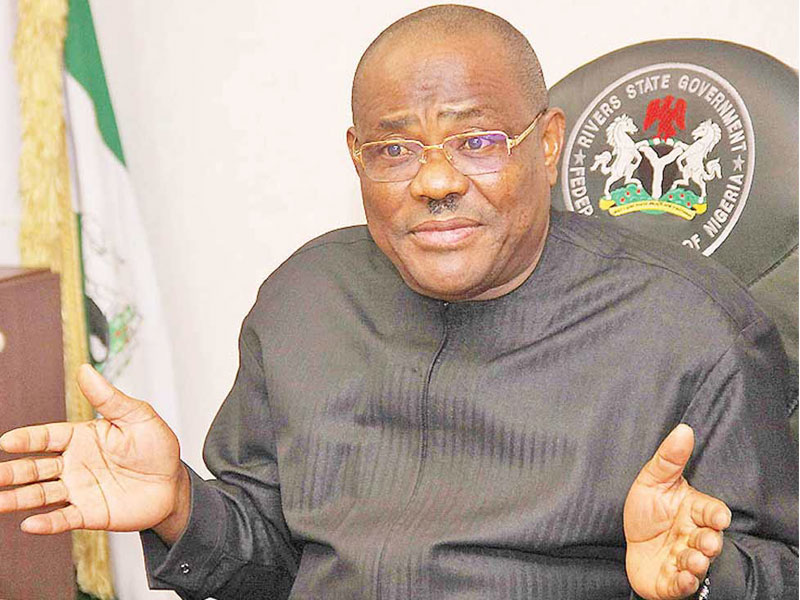
Federal Capital Territory, FCT, Minister, Nyesom Wike, on Friday defended the construction of houses for judges and justices in Abuja, dismissing concerns that the projects could compromise the independence of the judiciary.
Wike spoke after inspecting ongoing judicial infrastructure projects, including judges’ residences, the Court of Appeal Abuja Division and proposed residential projects for judges of the Industrial Court and the Code of Conduct Tribunal.
The minister’s remarks followed criticisms reportedly raised by the Nigerian Bar Association (NBA) over executive involvement in the provision of infrastructure for the judiciary.
Rejecting the concerns, Wike argued that government provision of facilities for judicial officers was neither new nor a threat to judicial autonomy.
He said: “The mere fact that the executive constructs buildings does not mean it will interfere with the judiciary.
READ ALSO:2027: Wike Opens Up On Preferred Rivers Guber Candidate
“We have built public houses for the National Assembly and for the judiciary before. The Supreme Court was built by government. So there is nothing new in this.”
Wike accused the NBA leadership of inconsistency, alleging that the association frequently sought financial support from state governments for its conferences and activities while criticising government interventions in the judiciary.
“All they are interested in is when state governments will sponsor NBA activities. If governments fund their conferences, does that mean they are no longer independent?” he queried.
He maintained that the FCT Administration would not be distracted from implementing projects designed to improve the welfare and working conditions of judges and justices.
“This is a voluntary act by government to make judicial officers comfortable and focused on their work. It is not done to erode judicial independence,” the minister added.
READ ALSO:Open Bank Account In PDP Name, See What Will Happen – Wike Dares Turaki Faction
Wike said the projects formed part of activities lined up to mark President Bola Tinubu’s third anniversary in office.
He expressed satisfaction with the completion level of the judges’ quarters, describing the project as well executed and nearly ready for inauguration.
“We’ve seen the judges’ quarters beautiful. I’m very elated that the job was done well. The houses are well furnished and almost 99 per cent ready,” he stated.
The minister also disclosed that preparations had begun for the groundbreaking ceremony of residences for judges of the Industrial Court and the Code of Conduct Tribunal.
However, he expressed dissatisfaction with aspects of the finishing at the Court of Appeal Abuja Division project, despite its advanced stage of completion.
READ ALSO:Trump Tired Of War In Iran – Shehu Sani
“Almost 90 per cent complete, but I must say it’s not the quality I expected. I have told the contractor that several errors must be corrected before inauguration,” he said.
Wike assured that the administration would continue monitoring contractors to ensure all projects are delivered according to specification and within schedule.
“All the promises that have been made, we are going to fulfil them. That is why we are going around to inspect and ensure contractors are ready,” he added.
News
LASG Fixes Dates For Public Service Exams, Releases CBT Guidelines

The Lagos State Government, through the Ministry of Basic and Secondary Education and the Lagos State Examinations Board, has released the timetable and guidelines for the 2026 Public Service Examinations.
In a statement by the Lagos State Government, the announcement, which aligns with a prior circular from the Head of Service with Ref No: CIR/HOS/’26/005 dated January 21, 2026, sets out key instructions for candidates preparing for the exercise.
The examinations will hold between Tuesday, May 12 and Tuesday, May 19, 2026, at the Lagos State Public Service Staff Development Centre (PSSDC), Magodo, Lagos.
They include the Compulsory Examination for all cadres in the State Public Service, the Combined Confirmation/Promotion Examination for Clerical Officers II (CO II) and Clerical Assistants (CA), as well as the External Secretarial Examination.
READ ALSO:Lagos Begins 2026 Civil Service Promotions
According to the board, candidates are expected to begin printing their examination slips from Tuesday, May 5, 2026, through the official portal using their registration login details.
The slip will contain key information such as each candidate’s exam date and time.
“All candidates are required to present valid identification at the examination centre. Acceptable forms of identification include Staff Identity Cards, National Identification Number (NIN) slips, and Lagos State Residents Registration Agency (LASRRA) cards,” the statement said.
Candidates are also required to bring printed copies of their examination slips to the venue and must strictly follow the date and time allocated to them.
READ ALSO:Why Tinubu Didn’t Attend Project Commissioning In Lagos —Presidency
The board further advised candidates to acquaint themselves with basic computer skills ahead of the exercise, as the examinations will be conducted using a Computer-Based Test, CBT, format.
It also warned that dressing must be formal, adding that inappropriate dressing will not be allowed at the examination centre.
Candidates were urged to comply fully with all instructions to ensure a smooth and orderly process.
“The Lagos State Examinations Board urges all candidates to comply fully with these guidelines to ensure a smooth and orderly examination process,” the statement added.

 News5 days ago
BREAKING: Wike Picks Alabo George For Rivers Governorship
- Business4 days ago
Why We Sited Our Multi-Billion Naira Automobile Firm Branch in Benin – Skyewise Group CEO
- Politics5 days ago
JUST IN: Why I left ADC For NDC With Kwankwaso – Peter Obi Opens Up
- Politics4 days ago
BREAKING: 17 ADC Reps Follow Join NDC
- Business3 days ago
Again, Dangote Refinery Hikes Fuel Price
- Entertainment5 days ago
Why I Stopped Attending Church Service – Funke Akindele
- News3 days ago
Xenophobic Attacks: Nigerian Students To Picket MTN, MultiChoice, Other Businesses
- News4 days ago
OPINION: APC’s Politics Of Consensus
- News4 days ago
IGP Orders Officers Display Name Tag On Uniform, Gives Update On State Police
- Entertainment5 days ago
‘My Mum Started Quoting Bible’ — Shank Sparks Debate After Tattoo Confession


