
News
OPINION] MOWAA: Unpleasant meal cooked for Benin from the outside (Two)

By Tony Erha
“Agha tot’ ikolo, t’ amen mie ede”; A Benin idiom holds sway that; “When the earthworm dominates a discussion, the rainfall would be all day long”. For the Museum of West Africa Art (MOWAA), whose skewed establishment had resurfaced about 2018, dominated global discourse and has reached a peak. Day in, day out, there is intense global indignation, bothering on an alleged swindling of the museum’s artefacts and huge accrued monies, which were under the care of the immediate-past governor of Edo State, Mr. Godwin Obaseki, alongside some of his political and business associates, which many commentators presented to be a f monumental fraud. As already claimed, it could as well have been called MOWAA-gate!
This article, being the second and last stanza of the first, published two weeks ago, was predicated on the decimating crisis of MOWAA. A condensed recap of the said article was partly anchored on a lavish reportage by swamps of Nigerian and foreign press, which largely implicated the Obaseki’s government, as inept in the due processes of MOWAA’s setup. MOWAA is a charitable entity, which sprang up on global funding and other resources of the state government, whereupon a case of undue diligence was allegedly stressed on Obaseki and his government.
There is a threesome public inquiry, thus raising a gummy accusation of indecency, especially when the ex-governor Obaseki’s People’s Democratic Party (PDP) had been voted out by the All Progressives Congress (APC), with Senator Monday Okpebholo as the present governor. And the MOWAA-gate is getting messier as Governor Okpebholo and the state’s House of Assembly, the lawmaking arm, had each set up a probe panel. Disturbed that the MOWAA-gate is earning the nation a bad name, the National Assembly, from a far-away Abuja, the nation’s capital, also instituted another probe.
”The returned looted Benin artifacts, like other sacred art work of Benin provenance, are not just superficial or ornamental, but infused with the mystical command and supernatural energy of the Benin kingdom of great antique. The key to correctly identify, classify, and position the authentic totems, in time and space, lies in the Royal Benin Palace, under the power of the Oba of Benin”. Sampson Ebome, a lawyer and perceptive cultural activist, uttered, postulating further;
MORE FROM THE AUTHOR:[OPINION] MOWAA: Unpleasant Meal Cooked For Benin From The Outside (Part One)
“In every other society as Japan, Sweden, Spain, Denmark, Britain, the Netherlands, Saudi Arabia and Morocco etc., royalty holds a choice-place in preserving the unique cultural and corporate identity of the society and its governance. It is no co-incidence, therefore, that even in today’s Europe, there are about twelve statutory monarchs in its advanced democracies. Perhaps, the grave error of Godwin Obaseki’s administration was to proceed on the false logic that a concrete divergence existed between the government and the Benin kingdom, the very source and origin of the history, dialects, cultural identity and heritage of all the people of Edo State. To have persisted in this gargantuan ruse, an original artifice of the colonising powers of Europe, was always bound to be destabilising to the spiritual and socio-political equilibrium of the state”
In the state’s legislative’s probe, cans of worms are being revealed on MOWAA and the Reddisson Hotel construction, said to have been Obaseki’s conduit pipes. And there is intense firework by the contending parties. Chief Osaro Idah and some of the Oba’s palace chiefs have dragged MOWAA to the law court, a development which Oyiwola Afolabi SAN, MOWAA’s lawyer said had jeopardised the appearances of Godwin Obaseki, Osarodion Ogie (former Secretary to State Government) and other MOWAA’s executive at the House of Assembly summon.
“Even khiri-khiri keke udemwen idan ere ogbakhian”. “Fierce wrestling is a companion to violent thuds”. And the fight is now more forceful as no man will leave his leg for an opponent to grab. “Emwin na ma ru ese, to si itale emwen”, a Benin parlance for; “That which had been tardily or slyly done is bound to cause disaffection”. And so, the fight ranges whilst the onlookers are left to mock he that is already falling!
“Ovbi ekpen ere otolo ekpen ehae”. “Osayomore Joseph, the late music crooner and a soulmate, had often reminded me about the age-long Benin axiom; “It takes only the Cub – heir, to tickle the forehead of a Leopard. Instructively, HRM, Ewuare II, the revered Oba of Benin, with the Methuselah of wisdom at play, narrated the seizure of the artefactual ownership and benefaction, as he stoically alleged the undue conscription of his heir into the corporate board of Edo Museum of West Africa Art (EMOWAA) by ex-governor Obaseki. His son had also attested to that. The claim was also buttressed that EMOWAA was an inordinate scheme evolved by Obaseki and his associates to wrestle the returned looted artefacts and supplement payment from their foreign sources.
MORE FROM THE AUTHOR:OPINION: A ‘Crazy’ African Nation, Where Citizens Eat And Drink Football
The Esans of Edo would say; “Ehun no ho obhiaha emoen, avava uwendin, ole odia”. “The sharp fart that disgraces the bride perches in-between her buttocks”. Once upon a time, Governor Okpebholo, on the heels of his final governorship declaration by the Supreme Court, which Obaseki and his protégé, Dr. Asue Ighodalo, the PDP candidate had dragged him through, was swayed by the of Senator Adams Oshiomhole insistence on the probe of Obaseki and his government. But Nyesom Wike, the flammable minister of Abuja, had dissuaded a pliable Okpebholo. But, Obaseki wasn’t mindful that he had escaped the expected probes, until he caused it with his usual foibles.
“Asua gha sua egile, oya danmwen ekpatu; eighi ye ebe gue egbe”. In a Benin folktale, it’s about the adventurous snail that crawls up the tree and soon crash to the ground, failing to cover itself from its hunters. The headstrong former governor, with the braggadocio of a ‘diaspora governor’, has taken the fight from ‘iya’ (valley) to ‘oke’ (mountain top). All we now see is the continuation of a “filaga filogo” (a street brawn with broken bottles and cudgels), now that ‘slappers and bone breakers’ fight wherever they meet in Europe and America. It is a bitter reminder of Obaseki’s heydays of masterminding the ‘Torgbas’ fighters’ gang that fought the APC’s ‘Tokpas’, which had earned him aliases like ‘Emanton’ (Iron Rod) and ‘Isakpana’ (the god of anger).
Whilst Nigerians and humankind watch the ‘filaga filogo’ and shame emanating from the Nigeria’s ‘heartbeat’ state, the very man who was called the ‘Wake and see Governor, may be laying down in the foreign climes the same landlines, that he laid on his home’s pathway that makes him to go into self-exile’.



News
Children’s Day: Chaos At Ogbe Stadium As Dozens Faint
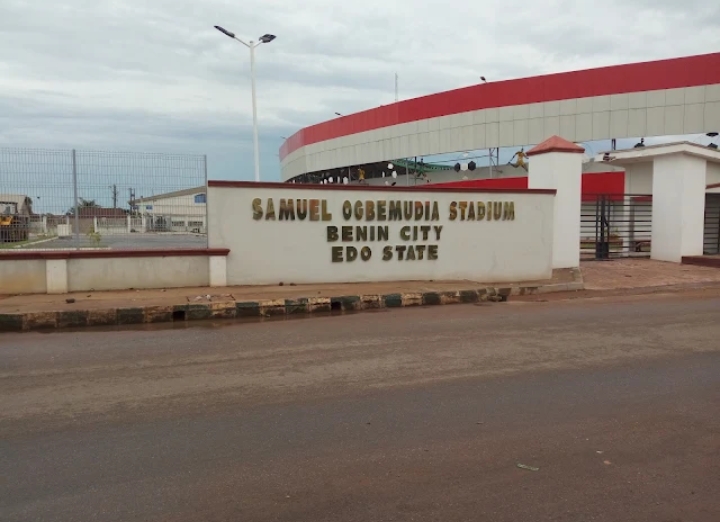
Chaos erupted on Wednesday during the Children’s Day celebration as dozens of students reportedly collapsed following a stampede triggered by the use of pepper spray.
The event,
organised by the Edo State Ministry of Education at the Samuel Ogbemudia Stadium was disrupted after some male students of Ihogbe College allegedly made uncompromising advances towards female students at the venue.
A parent who identified himself as Oboh Emmanuel said, “the behaviour of those uncultured students attracted the attention of bouncers stationed at the stadium as they rebuked the male students.”
Oboh said the affected students later regrouped and attacked the bouncers, leading to a confrontation within the crowded arena.
READ ALSO:Children’s Day: Edo Commits To Child Protection
It was gathered that in the ensuing confusion, the bouncers were reported to have deployed pepper spray in an area occupied by a large number of students.
Several students, particularly female students, reportedly fainted after inhaling the substance, while others sustained injuries after being stepped on during the ensuing melee.
The panic was said to have spread across the stadium as students, teachers and parents scampered for safety.
Many of the affected students were reportedly rushed to the Edo Specialist Hospital for medical attention.
READ ALSO: Egor LG Chair, Ogbemudia, Vice, Osawe Impeached
Reacting to the incident, Chief Press Secretary to Governor Monday Okpebholo, Dr Patrick Ebojele, said the security personnel that fired the tear gas had been detained.
He said all the students, except two, that were rushed to the hospital have been discharged.
Ebojele stated that doctors wanted to observe the students till tomorrow before allowing them to go home.
“The two students are not seriously injured. Doctors want to observe them overnight. Permanent Secretary, Ministry of Education is still at the hospital. The man who used pepper spray has been detained.
“The incident did not happen the way it is being exaggerated. All modalities were put in place to ensure the children enjoyed their day.”
News
Okpebholo Salutes Edo Muslims, Seeks Continued Support, Prayers
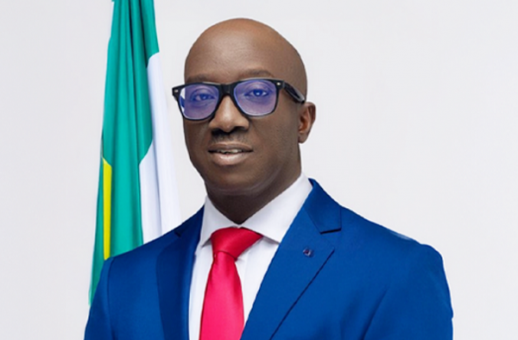
Governor Monday Okpebholo of Edo State has urged Muslims and all Nigerians to continue to pray for peace, unity and progress in the country even as they celebrate the annual Eid-al-Adha
The governor, who was represented by his deputy, Dennis Idahosa, stated this during the annual Eid-al-Adha celebration with Muslim faithfuls held at Government House in Benin City.
He reiterated his administration’s commitment to fairness, inclusivity and equal opportunities for all citizens irrespective of religion and tribe.
READ ALSO:ADC Penetrates Okpebholo’s District As Defections Strengthen Party in Edo Central
According to him, the present administration remains determined to building a government that reflects the diversity of Edo State, noting that competent and qualified Muslims have continued to play vital roles in his government because of their capacity, integrity and commitment to service.
“As a government, we remain committed to fairness, inclusivity and equal opportunity for every Edo citizen, irrespective of religion, ethnicity or political affiliation. This is why quality and competent Muslims are serving in key positions in our administration.”
Okpebholo appreciated the Muslim community in Edo State for their unwavering support and continuous prayers for his administration, noting that such prayers and support have contributed immensely to the peace and steady development being witnessed across the state.
READ ALSO:Okpebholo Felicitates Muslims On Eid-el-Fitr Celebration
He then called on all Nigerians to use the occasion of Eid-al-Adha to pray for the administration of President Bola Ahmed Tinubu, stressing that the country needs collective prayers, unity and cooperation to overcome its present economic and security challenges.
“I urge all Muslims and indeed all Nigerians to use this occasion to pray for our dear nation and for the administration of President Bola Ahmed Tinubu. Nigeria needs our collective prayers, unity and support as we strive to overcome our challenges and build a more prosperous future for all.”
In his remarks, the Chief Imam of Edo State, Abdulfatai Enabulele, applauded the governor for what he described as remarkable developmental strides recorded in less than two years in office.
The cleric commended the administration for ongoing infrastructural development and efforts geared towards improving governance in the state, but appealed to the government to revisit and complete some abandoned projects inherited from the previous administration for the benefit of the people.
News
Children’s Day: Edo Commits To Child Protection
The Edo State Government has reaffirmed its commitment to protecting the rights of children, promoting quality education, and strengthening sports development across the state.
This assurance was given by the governor of Edo State, Monday Okpebholo, during the 2026 Children’s Day Celebration and Governor’s Cup Finale held on Wednesday at the Samuel Ogbemudia Stadium, Benin City.
Addressing pupils, students and teachers,
the governor described children as the pride of Edo State and the future of the nation.
The governor, represented by his deputy, Dennis Idahosa,
noted that the annual celebration provides an opportunity to honour their dreams, talents, and limitless potential.
READ ALSO:Eid-el-Kabir: Edo Deputy Gov Solicits prayers For Okpebholo
Speaking on this year’s Children’s Day theme, “Choose Kindness, Reject Bullying,” the governor said the message was timely and significant, as it emphasizes the need to create safe, supportive, and inclusive environments for children both in schools and communities.
He stated that bullying in all forms — physical, verbal, emotional, or online — has no place in society, adding that the Edo State Government remains fully committed to protecting the rights and dignity of every child.
According to him, the administration will continue to strengthen policies and programmes that promote child protection, discipline, mutual respect, and positive learning environments across schools in the State.
The governor urged children to embrace kindness, compassion, teamwork, and respect for one another, stressing that true strength lies not in intimidation but in empathy, good character, and mutual understanding.

 Metro5 days ago
My Husband Abandoned Me On Our Wedding Night To Attend Political Meeting, I Want Our Marriage Dissolved
- Headline4 days ago
Woman Passes Out After Receiving 100 Strokes Of Cane
- Headline4 days ago
JUST IN: White House Locked Down Briefly As Gunman Opens Fire At Security Checkpoint
- Politics5 days ago
Warri Ijaw Hail INEC Delineation Report, Call For Additional Electoral Wards, Others
- Politics3 days ago
Two Masked Men Gun Down Politician In His Rivers State Hotel
- News3 days ago
More Pain For Nigerians As Cooking Gas Price Increases Nationwide
- News5 days ago
Alleged Terrorism: Court Rejects Defendant’s Bid To Travel Abroad
- Metro5 days ago
My Wife Stop Cooking My Food, Beats Me Black And Blue All the Time, Man Tells Court
- Politics5 days ago
What I’ll Do As President Of Nigeria — Amaechi
- Politics3 days ago
‘Tinubu’s Borrowing In 24 Months Surpasses 55 Years’ Debt Record’


