

News
OPINION: Nigeria And The Echoes Of A People Unheard




By Israel Adebiyi
October 20 has become a date etched in the consciousness of modern Nigeria, a day that reminds us of two enduring truths: that power without accountability breeds resistance, and that a people’s voice, no matter how suppressed, never truly dies. Five years after the #EndSARS protest shook the very foundations of Nigeria’s civic conscience, the echoes still resound, muffled by fear perhaps, but alive in the restless hearts of a generation that refuses to be silenced. Coincidentally, on the same day, the #FreeNnamdiKanu protesters returned to the streets, invoking another chapter in the complex narrative of a nation walking a dangerous tightrope between governance and grievance.
It is, in every sense, a delicate balance, a thin line between hope and disillusionment, between democracy and dissent, between the people’s voice and a system that has perfected the art of defiance. For a nation that once seemed on the verge of awakening, the past five years have offered a sobering reflection of regression. The promises that trailed the tragic aftermath of the Lekki Toll Gate shooting have dissipated like smoke, committees inaugurated, panels convened, reports shelved, and justice deferred. The police reforms that were loudly proclaimed never saw the light of sincerity. The same system that promised change rebranded itself into old habits, more impunity, more tone, deaf leadership, more disconnection from the people it swore to serve.
The irony of it all is how Nigeria has managed to move forward in time but backward in essence. Inflation has soared, wages have stagnated, and the once fierce flame of civic optimism has dimmed under the weight of economic despair. The average Nigerian today stands not merely at the mercy of governance failure but at the edge of psychological exhaustion, caught between surviving a collapsing economy and maintaining faith in a country that constantly betrays its citizens’ expectations.
Yet, beneath the fatigue lies a simmering truth: the voice of the people does not die; it only waits. History teaches us that when systems become deaf to the cry of justice, they unwittingly orchestrate their own reckoning. The youth of 2020 were not the first to cry out, and they will not be the last. In Madagascar, a fresh generation took to the streets, chased away its leadership, protested poor governance, erratic energy supply, and economic mismanagement. The message is global, the pattern unmistakable, the age of passive citizenship is ending. The people’s patience is thinning, and when voices are ignored, they find other ways to be heard.
MORE FROM THE AUTHOR:OPINION: Nigerian Leaders And The Tragedy Of Sudden Riches
This is where Nigeria stands today, at an intersection of lessons unlearned and warnings unheeded. The government’s defiance in the face of legitimate grievances has become systemic. Those in power seem trapped in an echo chamber of self-congratulation, insulated from the grinding realities of those they lead. Policies are drafted in air-conditioned rooms far removed from the dusty markets and crowded bus stops where their effects are felt. Governance, instead of being a conversation, has become a monologue of decrees.
But the people are not voiceless. They are watchful, wounded, waiting. Every protest dispersed, every promise betrayed, every hardship endured adds to a growing moral deficit that no propaganda can offset. The defiant system may appear powerful, but it is brittle, its strength is sustained by fear, not legitimacy. And fear, history reminds us, is a poor foundation for governance.
The enduring lesson of #EndSARS is not in the streets that were filled or the hashtags that trended, it is in the awareness it birthed. For the first time, an entire generation understood the anatomy of their oppression. They saw how power could distort truth, how justice could be delayed into oblivion, how institutions could serve as shields for impunity rather than sanctuaries for justice. That awareness, though bruised, remains one of Nigeria’s most potent democratic gains.
It is this awareness that leaders must now reckon with. The youth of today are no longer satisfied with slogans; they demand systems that work. They will not be pacified by token gestures or cosmetic reforms. And as economic conditions worsen and social discontent deepens, the thin line between silence and resistance grows ever more fragile.
MORE FROM THE AUTHOR:[OPINION] Rivers: The Futility Of Power And The Illusion Of Victory
To govern a people effectively is to listen, not merely to their words but to their pain. Yet, Nigeria’s ruling class has mastered selective deafness. The cry for justice from 2020 still lingers unanswered; the call for Nnamdi Kanu’s fair trial remains shrouded in political calculation. Each unresolved grievance chips away at the credibility of the state, reminding the people that the system has learned nothing, and forgotten nothing.
Still, there is a flicker of hope, because awareness, once awakened, cannot be unlearned. The people’s voice may be subdued, but it is not silenced. It reverberates in conversations at bus parks, in social media threads, in the weary sighs of market women and the angry essays of students. It is the heartbeat of a nation that refuses to surrender.
Nigeria stands at a crossroads, between renewal and rebellion, between dialogue and discontent. The path chosen will determine whether this democracy deepens or disintegrates. For now, the system continues to walk the thin line, defiant and detached. But as the events of October 20 remind us, every silence imposed today becomes the shout of tomorrow.
MORE FROM THE AUTHOR:Nigeria @ 64: The One The World Troubles [OPINION]
To begin to heal the widening gap between the governed and the governors, leaders must rediscover the essence of empathy and accountability. Governance should no longer be an exercise in survival or personal enrichment but a genuine pursuit of the collective good. The first duty of leadership is to listen, not for applause, but for the silent groans beneath the noise of daily life. It is time to confront the uncomfortable truths about unemployment, insecurity, and the erosion of dignity among citizens. This means investing in human capital, rebuilding trust through transparency, and showing humility in leadership. When leaders engage citizens as partners rather than subjects, they ignite hope even in the face of hardship.
Equally, there must be a deliberate reawakening of public trust through the strengthening of institutions. Leaders must stop governing by impulse and start building systems that outlast individuals. Justice must not only be done but be seen to be done; public resources must be managed with integrity; and the young must see that honesty still pays in Nigeria. True leadership is not in silencing dissent but in understanding it, not in suppressing opposition but in channeling it toward progress. To assuage a weary people, the nation’s rulers must first acknowledge their pain and then chart a new path, one that replaces defiance with dialogue, and arrogance with accountability.
Because in the end, the people’s voice is not noise, it is the nation’s conscience. And no system, however defiant, can drown a conscience forever.




News
Xenophobic Attacks: Oshiomhole Tells FG To Retaliate Against South African Companies In Nigeria

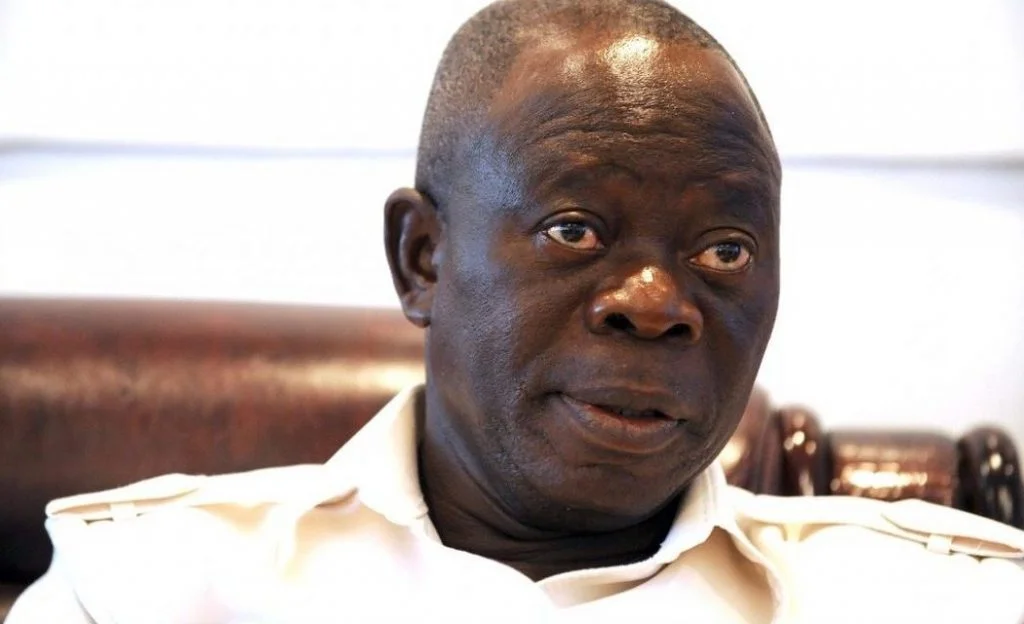
Senator Adams Oshiomhole has called on the Federal Government to retaliate against South African businesses operating in Nigeria following the recent attacks on Nigerians in South Africa.
Speaking during plenary on Tuesday, Oshiomhole said the Federal Government should consider revoking the working license of South African owned companies such as MTN and DSTV.
He argued that Nigeria must respond firmly to what he described as persistent hostility against its citizens.
READ ALSO:South Africa To Investigate ‘Mystery’ Of Planeload Of Palestinians
“I am not going to shed tears. If you hit me, I hit you. I think it is appropriate in diplomacy. It is an economic struggle,” Oshiomhole said.
He argued that while some South Africans accuse Nigerians of taking their jobs, Nigerians should return home and take over employment opportunities created by major South African companies operating in the country, including MTN and DSTV.
“When we hit back, the President of South Africa will not only talk but will also go on his knees to recognise that Nigeria cannot be intimidated.
READ ALSO:South African Ambassador Found Dead Outside Paris Hotel
“We will not condone any life being lost. If a crime has been committed under the South African law they have the right to bring any such person to justice, but to kill our people as if we are helpless, we will not allow that,” Oshiomhole added.
DAILY POST reports that several Nigerians in South Africa have reportedly been attacked, and their businesses destroyed, in ongoing xenophobic attacks in the country.
News
IGP Orders Officers Display Name Tag On Uniform, Gives Update On State Police

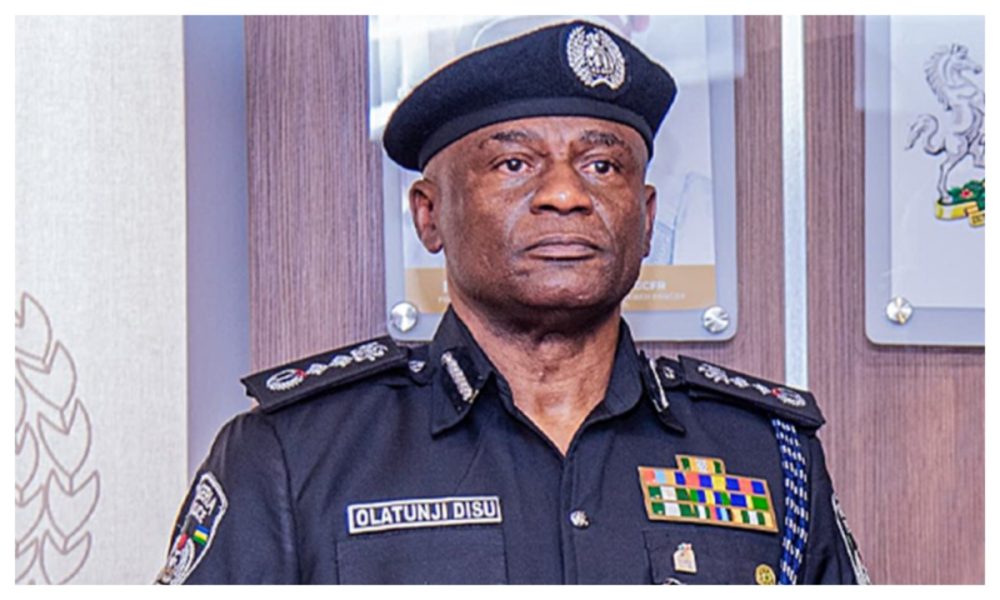
The Inspector General of Police, IGP, Tunji Disu, has ordered all police personnel to always have their name tags on their uniforms for easy identification.
Disu disclosed that only police personnel who are undercover are exempted from displaying their name tags.
Speaking on Tuesday, Disu said: “All police officers should have their name tags. All of us on the high table have our names apart from the undercover among us so if you look at all the Commissioners of Police we have our name tags, so it’s not our standard.
READ ALSO:
“All the Commissioners of Police are here and that is why we called this meeting, we have list of things like this that we will want to discuss with the Commissioners of Police, we have told them earlier and we will still let them know that every that happens within their area of jurisdiction falls under their control.”
On the issue of state police, the IGP said: “Since we got the signal that the Federal Government of Nigeria intend to establish State Police and since we are the federal police, we decided to take the bull by the horn and put down our own side of what we believe on how the state police should be run.
“A lot of things were taken into consideration, a lot of comparative analysis was done and it has been transmitted to the National Assembly.”
News
Court Orders SERAP To Pay DSS Operatives N100m For Defamation

The High Court of the Federal Capital Territory has ordered a non-governmental organization, the Socio-Economic Rights and Accountability Project, SERAP, to pay N100 million as damaged to two operatives of the Department of the State Services, DSS, for unjustly defaming them in some publications.
The court also ordered SERAP to tender public apologies to the defamed officers,
Sarah John and Gabriel Ogundele, in two national newspapers, two television stations and its website.
Besides, the organization was also ordered to pay the two operatives N1 million as cost of litigation and 10 percent post-judgment interest annually on the judgment sum until it’s fully liquidated.
Justice Yusuf Halilu of the High Court of the Federal Capital Territory gave the order on Tuesday while delivering judgment in a N5.5 billion defamation suit instituted against SERAP by the DSS operatives.
The judge found SERAP liable for unjustly defaming the two DSS operatives with allegations that they unlawfully invaded its Abuja office, harassed and intimidated its staff, in September 2024.
READ ALSO:How We Arrested Terror Suspect Who Threatened To Kill Students, Teachers In Abuja — DSS
In the offending publication on its website and Twitter handle, SERAP alleged that the two operatives unlawfully invaded and occupied its office with sinister motives.
The judge held that the publication was in bad taste especially from an organization established to promote transparency and accountability, as nothing in the publication was found to be truthful.
The DSS staff had listed SERAP as 1st defendant in the suit marked CV/4547/2024. SERAP’s Deputy Director, Kolawole Oluwadare, was listed as the 2nd defendant.
In the suit, the claimants – Sarah John and Gabriel Ogundele – accused the two defendants of making false claims that they invaded SERAP’s Abuja office on September 9, 2024..
Counsel to the DSS, Oluwagbemileke Samuel Kehinde, had while adopting his final address in the mater urged the judge to grant all the reliefs sought by his client in the interest of justice.
READ ALSO:DSS Arrests Suspected Gunrunner, Recovers 832 Rounds Of Ammunition
He admitted that although the names of the two claimants were not mentioned in the defamation materials, they had however established substantial circumstances that they are the ones referred to in the published defamation article by SERAP on its website.
The counsel submitted that all ingredients of defamation have been clearly established and the offending publication referred to the two officials of the secret police.
However, SERAP, through its counsel, Victoria Bassey from Tayo Oyetibo, SAN, law firm, asked the court to dismiss the suit on the ground that the two claimants did not establish that they were the ones referred to in the alleged defamation materials.
She said that SERAP used “DSS officials” in the alleged offending publication, adding that the two claimants must establish that they are the ones referred to before their case can succeed.
Similar arguments were canvassed by Oluwatosin Adefioye who stood for the second defendant, adding that there was no dispute in the September 9, 2024 operation of DSS in SERAP’s office.
READ ALSO:Alleged Cyberstalking: DSS Plays Video Evidence In Sowore’s Trial
He said that since SERAP in the publication did not name any particular person, the claimants must plead special circumstances that they were the ones referred to as the DSS officials.
Besides, he said that there is no organization by name Department of State Services in law, hence, DSS cannot claim being defamed adding that the only entity known to law is National Security Agency.
The claimants had in the suit stated that the alleged false claim by SERAP has negatively impacted on their reputation.
The DSS also stated, in the statement of claim, that, in line with the agency’s practice of engaging with officials of non-governmental organisations operating in the FCT to establish a relationship with their new leadership, it directed the two officials – John and Ogunleye – to visit SERAP’s office and invite them for a familiarization meeting.
The claimants added that in carrying out the directive, John and Ogunleye paid a friendly visit to SERAP’s office at 18 Bamako Street, Wuse Zone 1, Abuja on September 9 and met with one Ruth, who upon being informed about the purpose of the visit, claimed that none of SERAP’s management staff was in the country and advised that a formal letter of invitation be written by the DSS.
READ ALSO:DSS, Police Partner NCCSALW To End Terrorism, Mop Up Illegal Arms
John and Ogundele, who claimed that their interactions with Ruth were recorded, said before they immediately exited SERAP’s office, Ruth promised to inform her organisation’s management about the visit and volunteered a phone number – 08160537202.
They said it was surprising that, shortly after their visit, SERAP posted on its X (Twitter) handle – @SERAPNigeria – that officers of the DSS are presently unlawfully occupying its office.
The claimant added, “On the same day, the defendants also published a statement on SERAP’s website, which was widely reported by several media outfits, falsely alleging that some officers from the DSS, described as “a tall, large, dark-skinned woman” and “a slim, dark skinned man,” invaded their Abuja office and interrogated the staff of the first defendant (SERAP).
John and Ogundele stated that “due to the false statements published by the defendants, the DSS has been ridiculed and criticised by international agencies such as the Amnesty International and prominent members of the Nigerian society, such as Femi Falana (SAN)”.
“Due to the false statements published by the defendants, members of the public and the international community formed the opinion that the Federal Government is using the DSS to harass the defendants.”
READ ALSO:SERAP To Court: Stop CBN From ‘Implementing ‘Unlawful, Unjust ATM Fee Hike’
They added that the defendants’ statements caused harm to their reputation because the staff and management of the DSS have formed the opinion that the claimants did not follow orders and carried out an unsanctioned operation and are therefore, incompetent and unprofessional.
The claimants therefore prayed the court for the following reliefs: “An order directing the defendants to tender an apology to the claimants via the first defendant’s (SERAP’s) website, X (twitter) handle, two national daily newspapers (Punch and Vanguard) and two national news television stations (Arise Television and Channels Television) for falsely accusing the claimants of unlawfully invading the first defendant’s office and interrogating the first defendant’s staff.
“An order directing the defendants to pay the claimants the sum of N5 billion as damages for the libellous statements published about the claimants.
“Interest on the sum of N5b at the rate of 10 percent per annum from the date of judgment until the judgment sum is realised or liquidated.
“An order directing the defendants to pay the claimants the sum of N50 million as costs of this action.”
-

 Politics4 days ago
2027: Tinubu’s Re-election May Put An End To Nigeria — Baba Ahmed Warns
-

 Metro5 days ago
I’m A Street Girl’ – Bimbo Ademoye Clashes With Area Boys [VIDEO]
-

 Politics5 days ago
BREAKING: 2027: Former Adamawa APC Guber Candidate, Aishatu Binani Defects To NDC
-

 Politics5 days ago
Senatorial Seat: Ogbakha-Edo Warns Against Imposition Of Candidates In Edo South
-

 Business3 days ago
JUST IN: Nigerian Filling Stations Reduce Fuel Price After Hike
-

 Entertainment4 days ago
Actress Eniola Badmus Gets New Federal Appointment
-

 News5 days ago
10 African Countries With Highest Petrol Prices In Prices In April 2026
-

 News2 days ago
BREAKING: Wike Picks Alabo George For Rivers Governorship
-

 Politics3 days ago
NDC Speaks On Peter Obi, Kwankwaso Joining Party
-

 News3 days ago
OPINION: Why South Africans Murder Nigerians In Cold Blood
