
News
OPINION: Oba Of Benin, Ancestors And Lagos

By Lasisi Olagunju
“Every record has been destroyed or falsified, every book rewritten, every picture has been repainted, every statue and street building has been renamed, every date has been altered. And the process is continuing day by day and minute by minute. History has stopped.” Imagine this George Orwel dystopian quote in his ‘1984’ applying directly to where you come from. That is why I sympathise with both sides in the controversy that has followed Oba of Benin’s claim of Lagos as his ancestors’ creation. Between the two sides, who is telling the truth? I have a friend who thinks that more serious existential issues should provoke Nigerians’ outcries and not this antique matter of who founded where. But I told that person to read John Hope Franklin’s 1944 piece ‘History- Weapon of War and Peace’, and the author’s thesis that one of the intangible weapons of war is history.
Did Plato not say “those who tell the stories rule society”? An oba who rarely goes out of his domain goes out. And while out, he says publicly that “I do not want to say this” because of the certain controversy that will follow, but he proceeds immediately to say that very thing. He has not made a mistake; he had his reason for saying what he said where he said it. So, do not blame the people doing a pushback against the king’s claim; blame not the original owners of Lagos for replying the oba. Remember that slogan of the Party in Orwel’s 1984: ‘Who controls the past controls the future…’
The Oba of Benin, Ewuare II, said during his recent visit to Lagos that his ancestors founded Lagos. He spoke at the Lagos State House, Marina, where he was received by the state governor, Babajide Sanwo-Olu. Addressing the audience, the monarch said, “I don’t want to say something that will now drag me into the controversy of Benin and Lagos. But I cannot help but say that it is in history books that Benin founded Lagos. But when some people hear it now, they (will) go haywire that ‘what is the Oba saying there again?’ But it is true. Go and check the records. Maybe not all of Lagos as we know it now, but certain areas in Lagos – maybe, the nucleus of Lagos was founded by my ancestors. The Oba of Lagos will say so. Everyone knows it, (that) the source of Lagos is Benin whether the Ooni of Ife likes it or not.”
FROM THE AUTHOR: OPINION: Powerful Lagos, Powerless Osun State
The good thing about Yoruba people is that their history is long documented. There is hardly a town without at least a book or pamphlet containing its ancient and modern history. My very small community, Eripa, in Osun State has a compendium that contains the family tree of every lineage in every compound in the community. Our next-door neighbour, Otan Ayegbaju, has a similar text; the next town on that line, Ila Orangun (where I had my primary and secondary school education), has a number of books on its history, one of them ‘The Orangun Dynasty,’ written by the town’s very first university graduate, Prince Isaac Adebayo, and published in 1996, qualifies as a history book on the Igbomina-Yoruba people worldwide. Lillian Trager’s Ijesa-focused ‘Yoruba Hometowns’ (2001) with Foreword written by Justice Kayode Eso, and Sarah S. Berry’s various works, including ‘Fathers Work for Their Sons’ (1985) tell the deep attachment the Yoruba have for their hometowns even when they no longer live there or “may never have lived there.” The Yoruba do not think any amount is too heavy to contribute and spend in defence of their homeland and its history. In wartime, they buy guns and send them home; in peacetime, they write and publish books on their home.
Emeritus Professor of the History of Africa at the University of Stirling, United Kingdom, Robin Law, in his ‘Early Yoruba Historiography’ (published in ‘History in Africa, 1976, Vol. 3, page 69-89), wrote that “the Yoruba have been exceptionally prolific among West African peoples in the production of historical literature.” Law said it was “exceedingly difficult to trace (all) the works of Yoruba local historians”. But he tried and got quite a number: There was Iwe Itan Eko by John B. Ogunjinmi Losi (1913) with its English translation ‘History of Lagos’ (1914). There were Iwe Itan Abeokuta (1917) and its translation, History of Abeokuta (1923). There was another ‘History of Abeokuta’ (1916) by Emmanuel Olympus O. Moore (better known as Ajayi Kolawole Ajisafe). The Yoruba also had Iwe Itan Ibadan (1912) by Isaac Babalola Akinyele who later became Olubadan. There were Iwe Itan Ajase (Porto Novo) by Akindele Akinsowon (1914); Iwe Itan Oyo Ile ati Oyo Isisiyi abi Ago d’Oyo by M. C. Adeyemi (1916); History of Ondo by the Rev. J.A. Leigh (1917) and A History of Ketu (in Benin Republic) by Abbe Thomas Moulro (1926). There were also ‘Iwe Itan Ijesa-Obokun’ by J.D.E. Abiola, J.A. Babafemi and S.O.S. Ataiyero (1932); Iwe Itan Ogbomoso by N.D. Oyerinde (1934); Iwe Ikekuru ti Itan Ijebu by M.D. Okubote (1937); Iwe Itan Saki by Samuel Ojo Bada (1937) and Iwe Itan Ondo by Samuel Ojo Bada (1940). There were several others.
The Yoruba’s pocket of well documented history is deep. Lagos has several such books. One of them is ‘Iwe Itan Eko’ and its translation, ‘History of Lagos’, by John Losi. There are more recent ones that include ‘A History of Lagos, Nigeria: The Shaping of an African City’ by Takiu Folami, published in 1982 and described as “most authoritative” in its Foreword by the late Oba of Lagos, Adeyinka Oyekan. A knowledge-driven people with this kind of background will always be difficult to defeat in a battle of records. So, when the Oba of Benin, Ewuare II, was shown in Lagos some days ago flashing history and declaring that his ancestors founded Lagos and that his kingdom was the source and the fountain head of Lagos, it was not a surprise to see the Yoruba elite, especially the Awori-Yoruba, up and asking which ‘history’ the Benin monarch was talking about. The Yoruba say they have enough documentary evidence to prove that the claim from Benin palace was not based on facts of history.
FROM THE AUTHOR: OPINION: Helen Paul And Other Bastardy Stories
Lagos started from Isheri and “the first man that built Isheri and settled there…was a hunter, named Ogunfunminire, meaning ‘the god of iron has given me success.’ He was of the royal family of Ile-Ife…” John B. Losi, school headmaster and pioneer Lagos historian wrote the above in his book, Iwe Itan Eko published in 1913. It was twenty years after that book was published that the first book on Benin history, Jacob Egharevba’s ‘Ekhere vb Itan Edo’ (Short History of Benin) was published in 1933.
The fact of the Benin-Lagos history is that the Awori inhabited a land they called Oko under their leader, Olófin. Their Oko includes today’s Iddo and the general Lagos Island area. In 1603, the more powerful kingdom of Benin came on an armada of war boats, overran them, turned their Oko to a war camp (Eko), gave them a king and started collecting tributes from them. War historians will describe what happened as seizure by conquest. That is a relationship that does not align with Oba of Benin’s claim of founding Lagos and of Benin being its source. You don’t wage a war against a non-existent people. The fact of Lagos’s existence provoked the attack and subjugation from Benin forces. And, did you notice that the Oba of Benin said the Oba of Lagos would say exactly what he said about Benin being the founder and source of Lagos? He was right about the Oba of Lagos. The palace in Lagos, today, sees itself as an extension of the Benin palace. It won’t remember that there had been points in the past when the Lagos underling was weaned of his slavery. Robert Smith in his ‘The Lagos Consulate, 1851–1861’ published in 1978 cites an instance in 1860 when the Oba of Benin asked Oba Dosumu to allow exiled ex-King Kosoko return to Lagos. Oba Dosunmu turned down the request from the Benin palace declaring that things were “not as in former times when Lagos was under the King of Benin to whom annually a tribute was paid”.
Could the source of the current controversy be the Benin oba’s choice of words? He said his ancestors ‘founded’ Lagos. He used that word ‘founded’ twice, which means it wasn’t a slip. ‘Founded’ is the past tense and past participle of ‘found’ which means “establish or originate” (Oxford English Dictionary); “to bring something into existence” (Cambridge English Dictionary). So, how could the ancestors of the Oba of Benin have been the ones who brought into existence a settlement that they waged war against in 1603 but which received the Portuguese explorer, Rui de Sequeira, in 1472? The Oba also said “the source of Lagos is Benin”. ‘Source’, in this context, means the place where something (e.g. a river or stream) starts (Oxford English Dictionary). If he had said his ancestors took Lagos by conquest and imposed a dynasty of kings on it, he would have been right. But he chose the more solid markers of original possession: “found” and “source”. With profound respect, I say the Oba’s claims are historically not correct. I read G.A. Akinola’s ‘The Origin of the Eweka Dynasty of Benin: A Study in the Use and Abuse of Oral Traditions (1976)’. In April, 1973, the researcher was in the palace of the Oba of Benin, Akenzua II, on an interview appointment but the Oba changed his mind when he arrived. The Oba refused to speak with the man while he “wondered why a Yoruba should be interested in Benin history.” The researcher reported that his session with the king ended “with the Oba and his courtiers reminiscing about how Eko (that is Lagos) in fact belongs to Benin by right of conquest long ago.” I see a divergence here between the position of the current Oba of Benin and that of his ancestor, Akenzua II. The ancestor claimed Lagos as a war booty; the incumbent claims Lagos as a creation of his ancestors.
I have read the seminal ‘Benin Imperialism and the Transformation of Idejo Chieftaincy Institution in Lagos, 1603-1850’ written by Bashir Animasahun of Lagos State University, and published in the Journal of the Historical Society of Nigeria (2016). I have read the author’s argument that the conquest of Lagos by the Benin Kingdom led to a change of the Lagos political system from a confederacy to a monarchy in the period 1603 to 1850. I have read his point that the imposition of Benin monarchy in Lagos made the Idejo chiefs who had ruled Lagos between 1500 and 1603 get incorporated into the new monarchy as white cap chiefs but that they retained control over land rights. From the fine lines of his work, I could deduce that Benin could claim a dynasty of Lagos obas, but it has little control (if any) over the land there.
FROM THE AUTHOR: OPINION: The Judicial Adultery In Kano
Lagos has had more than its fair share of socio-political changes imposed from outside. None of the outsiders should ever claim to be its creator, although they serially gave it names. The Awori ‘Oko’ became ‘Eko’ when it was invaded and conquered by the Benin in about 1603. When the Portuguese came, the toponym was Curamo, then a transition began. According to Liora Bigon (2011), “Curamo, was used in parallel to another Portuguese name, ‘Onim’, which became more dominant towards the end of the eighteenth century and the early nineteenth. Among the other variations of Onim in contemporary sources, especially Portuguese and French, were Aunis, Ahoni, or Onis. These names, as explained by Law, were probably derived from Awori, the Yoruba sub-group to which the first residents of Oko belonged…The name Lagos itself — from the Portuguese lago or lagõa (‘Lake’ or ‘lagoon’) — permanently replaced all the other names only when Portuguese influence started to fade and gave way to the British.” (see Liora Bigon’s ‘The Former Names of Lagos (Nigeria) in Historical Perspective’ published in Names, Vol. 59 No. 4, December, 2011, 229–40).
Oba Ewuare II laid his claim to Lagos and added the clause, “whether the Ooni likes it or not”. With that broadside, the Oba was claiming more than Lagos. It didn’t start today. There is an age-long war of histories between the royalty of Benin and the House of Oduduwa in Ile Ife. Oba Ewuare II’s father and predecessor was in the ring with the predecessor of the incumbent Ooni of Ife on more than one occasion. On November 11, 1982, the Oba of Benin was a guest of Oba Okunade Sijuwade Olubuse II. Oba Sijuwade, at that occasion, told the Benin king: “As we have mentioned briefly during our historic visit to your domain not too long ago, we said we were there to pat you on the back for a job well done…Your present visit…we regard as a short home-coming where you will have an opportunity to commune with those deities you left behind… Now, my son and brother, long may you reign.” The Oba of Benin replied that address of welcome with “If the Ooni of Ife calls the Oba of Benin his son and the Oba of Benin calls the Ooni of Ife his son, they are both right” (see Edun Akenzua’s Ekaladerhan, 2008: Pages Xi -Xii). But you and I know that they cannot both be right. The Benin-Ife story started not with the present Oranmiyan dynasty but with the earlier pre-Benin Ogiso dynasty. Is it true that Obagodo or Ogiso, the man who started Igodomigodo, the pre-Benin entity, came there from Ile Ife? I have read Dmitri M. Bondarenko’s ‘Ancient Benin: Where did the first monarchs come from?’ (2001). I have read ‘A reconsideration of the Ife-Benin relationship’ by A. F. C. Ryder (1965) published in the Journal of African History. I have read ‘The Scholarship of Jacob Egharevba of Benin’ by Uyilawa Usuanlele and Toyin Falola published in History in Africa, 1994. I have read some more on Ife and Benin archaeology. But I note, specifically that Jacob Egharevba wrote ‘Ekhere Vb ‘Itan Edo’ (Short History of Benin’) and published it after reading the manuscript to Oba Eweka II in 1933 with the crown prince who would later become Akenzua II in attendance. The reading-and-listening exercise made the book the official/palace history of Benin. Now, what does the first edition (even the second edition) of that ‘Short History’ say about Benin and Ile-Ife and their origins?
Back to Lagos. A story is like a rope; no matter how long, it must have a beginning and an end. I end this piece with some words of knowledge from first class historian, Professor Ayodeji Olukoju, in his 2017 seminal piece entitled ‘Which Lagos, Whose (Hi)story?’: “We may conclude that Awori-Yoruba communities in Lagos, as we now know them, played host to, and absorbed, a series of newcomers. Among these were military invaders and settlers from Benin of Edo State; fugitives, refugees and adventurers from the hinterland Yoruba kingdoms, ranging from those displaced by nineteenth-century Yoruba inter-state wars and the Ifole in Abeokuta (13 October, 1867); retainers of chiefly families of Nupe origins; returnees and deportees from the Atlantic and West African diaspora; descendants of British colonial-era ‘Hausa’ constabulary and Royal West African Frontier Force (RWAFF) personnel; and individuals who were absorbed as retainers and guests of notable Lagos ruling families.” The takeaway from the foregoing is that Lagos takes not just the waters of the hinterland; it takes (and cares for) the people too – from everywhere.
This article written by Dr. Lasisi Olagunju, Editor, Saturday Tribune, was first published by the newspaper. It’s published here with permission from the author.



News
Shatta Wale Bailed Burna Boy From Ghana Prison After Arrest For Smoking Weed – Captan

Ghanian singer, Captan, has claimed that his former record label boss, Shatta Wale, once bailed Nigerian singer Burna Boy out of prison in Ghana after he was allegedly arrested for smoking weed.
Speaking in a recent podcast interview, Captan claimed that Shatta Wale sent him and others to free Burna Boy from police custody.
He also claimed that Shatta Wale and his group once accommodated Burna Boy when he was being hunted by some dangerous men.
READ ALSO: Wale Edun Opens Up After Sack
Captan said, “I once bailed Burna Boy out of prison in Ghana when he was arrested for smoking weed. Shatta Wale sent me and some guys to go and free him from police custody.
“There was a time we also accommodated him when some people were after his life. We helped him settle the case.”
He added that he and Burna Boy are no longer in good terms after the Nigerian artist’s fallout with his mentor, Shatta Wale.
He, however, said he and Shatta Wale are open to reconciling with Burna Boy if he asks for it.
Watch the video here
News
Children’s Day: Chaos At Ogbe Stadium As Dozens Faint

Chaos erupted on Wednesday during the Children’s Day celebration as dozens of students reportedly collapsed following a stampede triggered by the use of pepper spray.
The event,
organised by the Edo State Ministry of Education at the Samuel Ogbemudia Stadium was disrupted after some male students of Ihogbe College allegedly made uncompromising advances towards female students at the venue.
A parent who identified himself as Oboh Emmanuel said, “the behaviour of those uncultured students attracted the attention of bouncers stationed at the stadium as they rebuked the male students.”
Oboh said the affected students later regrouped and attacked the bouncers, leading to a confrontation within the crowded arena.
READ ALSO:Children’s Day: Edo Commits To Child Protection
It was gathered that in the ensuing confusion, the bouncers were reported to have deployed pepper spray in an area occupied by a large number of students.
Several students, particularly female students, reportedly fainted after inhaling the substance, while others sustained injuries after being stepped on during the ensuing melee.
The panic was said to have spread across the stadium as students, teachers and parents scampered for safety.
Many of the affected students were reportedly rushed to the Edo Specialist Hospital for medical attention.
READ ALSO: Egor LG Chair, Ogbemudia, Vice, Osawe Impeached
Reacting to the incident, Chief Press Secretary to Governor Monday Okpebholo, Dr Patrick Ebojele, said the security personnel that fired the tear gas had been detained.
He said all the students, except two, that were rushed to the hospital have been discharged.
Ebojele stated that doctors wanted to observe the students till tomorrow before allowing them to go home.
“The two students are not seriously injured. Doctors want to observe them overnight. Permanent Secretary, Ministry of Education is still at the hospital. The man who used pepper spray has been detained.
“The incident did not happen the way it is being exaggerated. All modalities were put in place to ensure the children enjoyed their day.”
News
Okpebholo Salutes Edo Muslims, Seeks Continued Support, Prayers
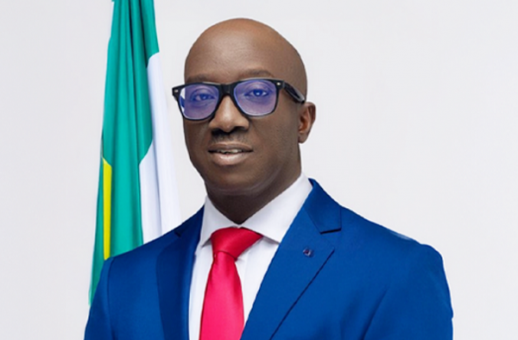
Governor Monday Okpebholo of Edo State has urged Muslims and all Nigerians to continue to pray for peace, unity and progress in the country even as they celebrate the annual Eid-al-Adha
The governor, who was represented by his deputy, Dennis Idahosa, stated this during the annual Eid-al-Adha celebration with Muslim faithfuls held at Government House in Benin City.
He reiterated his administration’s commitment to fairness, inclusivity and equal opportunities for all citizens irrespective of religion and tribe.
READ ALSO:ADC Penetrates Okpebholo’s District As Defections Strengthen Party in Edo Central
According to him, the present administration remains determined to building a government that reflects the diversity of Edo State, noting that competent and qualified Muslims have continued to play vital roles in his government because of their capacity, integrity and commitment to service.
“As a government, we remain committed to fairness, inclusivity and equal opportunity for every Edo citizen, irrespective of religion, ethnicity or political affiliation. This is why quality and competent Muslims are serving in key positions in our administration.”
Okpebholo appreciated the Muslim community in Edo State for their unwavering support and continuous prayers for his administration, noting that such prayers and support have contributed immensely to the peace and steady development being witnessed across the state.
READ ALSO:Okpebholo Felicitates Muslims On Eid-el-Fitr Celebration
He then called on all Nigerians to use the occasion of Eid-al-Adha to pray for the administration of President Bola Ahmed Tinubu, stressing that the country needs collective prayers, unity and cooperation to overcome its present economic and security challenges.
“I urge all Muslims and indeed all Nigerians to use this occasion to pray for our dear nation and for the administration of President Bola Ahmed Tinubu. Nigeria needs our collective prayers, unity and support as we strive to overcome our challenges and build a more prosperous future for all.”
In his remarks, the Chief Imam of Edo State, Abdulfatai Enabulele, applauded the governor for what he described as remarkable developmental strides recorded in less than two years in office.
The cleric commended the administration for ongoing infrastructural development and efforts geared towards improving governance in the state, but appealed to the government to revisit and complete some abandoned projects inherited from the previous administration for the benefit of the people.

 Metro5 days ago
My Husband Abandoned Me On Our Wedding Night To Attend Political Meeting, I Want Our Marriage Dissolved
- Headline4 days ago
Woman Passes Out After Receiving 100 Strokes Of Cane
- Politics5 days ago
Warri Ijaw Hail INEC Delineation Report, Call For Additional Electoral Wards, Others
- Headline4 days ago
JUST IN: White House Locked Down Briefly As Gunman Opens Fire At Security Checkpoint
- News3 days ago
More Pain For Nigerians As Cooking Gas Price Increases Nationwide
- Politics3 days ago
Two Masked Men Gun Down Politician In His Rivers State Hotel
- Metro5 days ago
My Wife Stop Cooking My Food, Beats Me Black And Blue All the Time, Man Tells Court
- News5 days ago
Alleged Terrorism: Court Rejects Defendant’s Bid To Travel Abroad
- Politics5 days ago
What I’ll Do As President Of Nigeria — Amaechi
- News3 days ago
FG Declares Two Days Public Holiday For Eid-el Kabir Celebration


