

News
OPINION: Oba Of Benin, Ancestors And Lagos




By Lasisi Olagunju
“Every record has been destroyed or falsified, every book rewritten, every picture has been repainted, every statue and street building has been renamed, every date has been altered. And the process is continuing day by day and minute by minute. History has stopped.” Imagine this George Orwel dystopian quote in his ‘1984’ applying directly to where you come from. That is why I sympathise with both sides in the controversy that has followed Oba of Benin’s claim of Lagos as his ancestors’ creation. Between the two sides, who is telling the truth? I have a friend who thinks that more serious existential issues should provoke Nigerians’ outcries and not this antique matter of who founded where. But I told that person to read John Hope Franklin’s 1944 piece ‘History- Weapon of War and Peace’, and the author’s thesis that one of the intangible weapons of war is history.
Did Plato not say “those who tell the stories rule society”? An oba who rarely goes out of his domain goes out. And while out, he says publicly that “I do not want to say this” because of the certain controversy that will follow, but he proceeds immediately to say that very thing. He has not made a mistake; he had his reason for saying what he said where he said it. So, do not blame the people doing a pushback against the king’s claim; blame not the original owners of Lagos for replying the oba. Remember that slogan of the Party in Orwel’s 1984: ‘Who controls the past controls the future…’
The Oba of Benin, Ewuare II, said during his recent visit to Lagos that his ancestors founded Lagos. He spoke at the Lagos State House, Marina, where he was received by the state governor, Babajide Sanwo-Olu. Addressing the audience, the monarch said, “I don’t want to say something that will now drag me into the controversy of Benin and Lagos. But I cannot help but say that it is in history books that Benin founded Lagos. But when some people hear it now, they (will) go haywire that ‘what is the Oba saying there again?’ But it is true. Go and check the records. Maybe not all of Lagos as we know it now, but certain areas in Lagos – maybe, the nucleus of Lagos was founded by my ancestors. The Oba of Lagos will say so. Everyone knows it, (that) the source of Lagos is Benin whether the Ooni of Ife likes it or not.”
FROM THE AUTHOR: OPINION: Powerful Lagos, Powerless Osun State
The good thing about Yoruba people is that their history is long documented. There is hardly a town without at least a book or pamphlet containing its ancient and modern history. My very small community, Eripa, in Osun State has a compendium that contains the family tree of every lineage in every compound in the community. Our next-door neighbour, Otan Ayegbaju, has a similar text; the next town on that line, Ila Orangun (where I had my primary and secondary school education), has a number of books on its history, one of them ‘The Orangun Dynasty,’ written by the town’s very first university graduate, Prince Isaac Adebayo, and published in 1996, qualifies as a history book on the Igbomina-Yoruba people worldwide. Lillian Trager’s Ijesa-focused ‘Yoruba Hometowns’ (2001) with Foreword written by Justice Kayode Eso, and Sarah S. Berry’s various works, including ‘Fathers Work for Their Sons’ (1985) tell the deep attachment the Yoruba have for their hometowns even when they no longer live there or “may never have lived there.” The Yoruba do not think any amount is too heavy to contribute and spend in defence of their homeland and its history. In wartime, they buy guns and send them home; in peacetime, they write and publish books on their home.
Emeritus Professor of the History of Africa at the University of Stirling, United Kingdom, Robin Law, in his ‘Early Yoruba Historiography’ (published in ‘History in Africa, 1976, Vol. 3, page 69-89), wrote that “the Yoruba have been exceptionally prolific among West African peoples in the production of historical literature.” Law said it was “exceedingly difficult to trace (all) the works of Yoruba local historians”. But he tried and got quite a number: There was Iwe Itan Eko by John B. Ogunjinmi Losi (1913) with its English translation ‘History of Lagos’ (1914). There were Iwe Itan Abeokuta (1917) and its translation, History of Abeokuta (1923). There was another ‘History of Abeokuta’ (1916) by Emmanuel Olympus O. Moore (better known as Ajayi Kolawole Ajisafe). The Yoruba also had Iwe Itan Ibadan (1912) by Isaac Babalola Akinyele who later became Olubadan. There were Iwe Itan Ajase (Porto Novo) by Akindele Akinsowon (1914); Iwe Itan Oyo Ile ati Oyo Isisiyi abi Ago d’Oyo by M. C. Adeyemi (1916); History of Ondo by the Rev. J.A. Leigh (1917) and A History of Ketu (in Benin Republic) by Abbe Thomas Moulro (1926). There were also ‘Iwe Itan Ijesa-Obokun’ by J.D.E. Abiola, J.A. Babafemi and S.O.S. Ataiyero (1932); Iwe Itan Ogbomoso by N.D. Oyerinde (1934); Iwe Ikekuru ti Itan Ijebu by M.D. Okubote (1937); Iwe Itan Saki by Samuel Ojo Bada (1937) and Iwe Itan Ondo by Samuel Ojo Bada (1940). There were several others.
The Yoruba’s pocket of well documented history is deep. Lagos has several such books. One of them is ‘Iwe Itan Eko’ and its translation, ‘History of Lagos’, by John Losi. There are more recent ones that include ‘A History of Lagos, Nigeria: The Shaping of an African City’ by Takiu Folami, published in 1982 and described as “most authoritative” in its Foreword by the late Oba of Lagos, Adeyinka Oyekan. A knowledge-driven people with this kind of background will always be difficult to defeat in a battle of records. So, when the Oba of Benin, Ewuare II, was shown in Lagos some days ago flashing history and declaring that his ancestors founded Lagos and that his kingdom was the source and the fountain head of Lagos, it was not a surprise to see the Yoruba elite, especially the Awori-Yoruba, up and asking which ‘history’ the Benin monarch was talking about. The Yoruba say they have enough documentary evidence to prove that the claim from Benin palace was not based on facts of history.
FROM THE AUTHOR: OPINION: Helen Paul And Other Bastardy Stories
Lagos started from Isheri and “the first man that built Isheri and settled there…was a hunter, named Ogunfunminire, meaning ‘the god of iron has given me success.’ He was of the royal family of Ile-Ife…” John B. Losi, school headmaster and pioneer Lagos historian wrote the above in his book, Iwe Itan Eko published in 1913. It was twenty years after that book was published that the first book on Benin history, Jacob Egharevba’s ‘Ekhere vb Itan Edo’ (Short History of Benin) was published in 1933.
The fact of the Benin-Lagos history is that the Awori inhabited a land they called Oko under their leader, Olófin. Their Oko includes today’s Iddo and the general Lagos Island area. In 1603, the more powerful kingdom of Benin came on an armada of war boats, overran them, turned their Oko to a war camp (Eko), gave them a king and started collecting tributes from them. War historians will describe what happened as seizure by conquest. That is a relationship that does not align with Oba of Benin’s claim of founding Lagos and of Benin being its source. You don’t wage a war against a non-existent people. The fact of Lagos’s existence provoked the attack and subjugation from Benin forces. And, did you notice that the Oba of Benin said the Oba of Lagos would say exactly what he said about Benin being the founder and source of Lagos? He was right about the Oba of Lagos. The palace in Lagos, today, sees itself as an extension of the Benin palace. It won’t remember that there had been points in the past when the Lagos underling was weaned of his slavery. Robert Smith in his ‘The Lagos Consulate, 1851–1861’ published in 1978 cites an instance in 1860 when the Oba of Benin asked Oba Dosumu to allow exiled ex-King Kosoko return to Lagos. Oba Dosunmu turned down the request from the Benin palace declaring that things were “not as in former times when Lagos was under the King of Benin to whom annually a tribute was paid”.
Could the source of the current controversy be the Benin oba’s choice of words? He said his ancestors ‘founded’ Lagos. He used that word ‘founded’ twice, which means it wasn’t a slip. ‘Founded’ is the past tense and past participle of ‘found’ which means “establish or originate” (Oxford English Dictionary); “to bring something into existence” (Cambridge English Dictionary). So, how could the ancestors of the Oba of Benin have been the ones who brought into existence a settlement that they waged war against in 1603 but which received the Portuguese explorer, Rui de Sequeira, in 1472? The Oba also said “the source of Lagos is Benin”. ‘Source’, in this context, means the place where something (e.g. a river or stream) starts (Oxford English Dictionary). If he had said his ancestors took Lagos by conquest and imposed a dynasty of kings on it, he would have been right. But he chose the more solid markers of original possession: “found” and “source”. With profound respect, I say the Oba’s claims are historically not correct. I read G.A. Akinola’s ‘The Origin of the Eweka Dynasty of Benin: A Study in the Use and Abuse of Oral Traditions (1976)’. In April, 1973, the researcher was in the palace of the Oba of Benin, Akenzua II, on an interview appointment but the Oba changed his mind when he arrived. The Oba refused to speak with the man while he “wondered why a Yoruba should be interested in Benin history.” The researcher reported that his session with the king ended “with the Oba and his courtiers reminiscing about how Eko (that is Lagos) in fact belongs to Benin by right of conquest long ago.” I see a divergence here between the position of the current Oba of Benin and that of his ancestor, Akenzua II. The ancestor claimed Lagos as a war booty; the incumbent claims Lagos as a creation of his ancestors.
I have read the seminal ‘Benin Imperialism and the Transformation of Idejo Chieftaincy Institution in Lagos, 1603-1850’ written by Bashir Animasahun of Lagos State University, and published in the Journal of the Historical Society of Nigeria (2016). I have read the author’s argument that the conquest of Lagos by the Benin Kingdom led to a change of the Lagos political system from a confederacy to a monarchy in the period 1603 to 1850. I have read his point that the imposition of Benin monarchy in Lagos made the Idejo chiefs who had ruled Lagos between 1500 and 1603 get incorporated into the new monarchy as white cap chiefs but that they retained control over land rights. From the fine lines of his work, I could deduce that Benin could claim a dynasty of Lagos obas, but it has little control (if any) over the land there.
FROM THE AUTHOR: OPINION: The Judicial Adultery In Kano
Lagos has had more than its fair share of socio-political changes imposed from outside. None of the outsiders should ever claim to be its creator, although they serially gave it names. The Awori ‘Oko’ became ‘Eko’ when it was invaded and conquered by the Benin in about 1603. When the Portuguese came, the toponym was Curamo, then a transition began. According to Liora Bigon (2011), “Curamo, was used in parallel to another Portuguese name, ‘Onim’, which became more dominant towards the end of the eighteenth century and the early nineteenth. Among the other variations of Onim in contemporary sources, especially Portuguese and French, were Aunis, Ahoni, or Onis. These names, as explained by Law, were probably derived from Awori, the Yoruba sub-group to which the first residents of Oko belonged…The name Lagos itself — from the Portuguese lago or lagõa (‘Lake’ or ‘lagoon’) — permanently replaced all the other names only when Portuguese influence started to fade and gave way to the British.” (see Liora Bigon’s ‘The Former Names of Lagos (Nigeria) in Historical Perspective’ published in Names, Vol. 59 No. 4, December, 2011, 229–40).
Oba Ewuare II laid his claim to Lagos and added the clause, “whether the Ooni likes it or not”. With that broadside, the Oba was claiming more than Lagos. It didn’t start today. There is an age-long war of histories between the royalty of Benin and the House of Oduduwa in Ile Ife. Oba Ewuare II’s father and predecessor was in the ring with the predecessor of the incumbent Ooni of Ife on more than one occasion. On November 11, 1982, the Oba of Benin was a guest of Oba Okunade Sijuwade Olubuse II. Oba Sijuwade, at that occasion, told the Benin king: “As we have mentioned briefly during our historic visit to your domain not too long ago, we said we were there to pat you on the back for a job well done…Your present visit…we regard as a short home-coming where you will have an opportunity to commune with those deities you left behind… Now, my son and brother, long may you reign.” The Oba of Benin replied that address of welcome with “If the Ooni of Ife calls the Oba of Benin his son and the Oba of Benin calls the Ooni of Ife his son, they are both right” (see Edun Akenzua’s Ekaladerhan, 2008: Pages Xi -Xii). But you and I know that they cannot both be right. The Benin-Ife story started not with the present Oranmiyan dynasty but with the earlier pre-Benin Ogiso dynasty. Is it true that Obagodo or Ogiso, the man who started Igodomigodo, the pre-Benin entity, came there from Ile Ife? I have read Dmitri M. Bondarenko’s ‘Ancient Benin: Where did the first monarchs come from?’ (2001). I have read ‘A reconsideration of the Ife-Benin relationship’ by A. F. C. Ryder (1965) published in the Journal of African History. I have read ‘The Scholarship of Jacob Egharevba of Benin’ by Uyilawa Usuanlele and Toyin Falola published in History in Africa, 1994. I have read some more on Ife and Benin archaeology. But I note, specifically that Jacob Egharevba wrote ‘Ekhere Vb ‘Itan Edo’ (Short History of Benin’) and published it after reading the manuscript to Oba Eweka II in 1933 with the crown prince who would later become Akenzua II in attendance. The reading-and-listening exercise made the book the official/palace history of Benin. Now, what does the first edition (even the second edition) of that ‘Short History’ say about Benin and Ile-Ife and their origins?
Back to Lagos. A story is like a rope; no matter how long, it must have a beginning and an end. I end this piece with some words of knowledge from first class historian, Professor Ayodeji Olukoju, in his 2017 seminal piece entitled ‘Which Lagos, Whose (Hi)story?’: “We may conclude that Awori-Yoruba communities in Lagos, as we now know them, played host to, and absorbed, a series of newcomers. Among these were military invaders and settlers from Benin of Edo State; fugitives, refugees and adventurers from the hinterland Yoruba kingdoms, ranging from those displaced by nineteenth-century Yoruba inter-state wars and the Ifole in Abeokuta (13 October, 1867); retainers of chiefly families of Nupe origins; returnees and deportees from the Atlantic and West African diaspora; descendants of British colonial-era ‘Hausa’ constabulary and Royal West African Frontier Force (RWAFF) personnel; and individuals who were absorbed as retainers and guests of notable Lagos ruling families.” The takeaway from the foregoing is that Lagos takes not just the waters of the hinterland; it takes (and cares for) the people too – from everywhere.
This article written by Dr. Lasisi Olagunju, Editor, Saturday Tribune, was first published by the newspaper. It’s published here with permission from the author.




News
N5m, N10m Zero-interest Loans: SheVentures Opens Applications For Women Entrepreneurs


First City Monument Bank (FCMB) has opened a new round of applications for its SheVentures proposition, offering zero-interest loans of up to ₦10 million to women entrepreneurs to ease access to working capital and support business growth.
The facility provides loans ranging from ₦500,000 to ₦5 million under a general category, and ₦5 million to ₦10 million for sector-specific businesses, with funding capped at up to 50% of an applicant’s average monthly turnover.
At the centre of the offering is a 0% interest rate, with all charges embedded in a transparent structure.
Repayment is structured over four or six months, allowing businesses to match obligations with their cash flow cycles.
READ ALSO:I’ve Been Blacklisted In Music Industry For 13 Years – Seun Kuti
Yemisi Edun, Managing Director and Chief Executive of First City Monument Bank (FCMB), said the initiative reflects a deliberate approach to inclusive growth.
“Inclusive growth requires access to capital and the right conditions for businesses to deploy that capital effectively.
“Women-led enterprises are critical to economic activity, yet they face structural barriers.
This intervention aims to help close that gap by providing financing that supports job creation, business expansion, and long-term sustainability for women entrepreneurs.”
“Access to affordable finance remains a major constraint for women entrepreneurs,” said Nnenna Jacob-Ogogo, Group Head, SheVentures and Impact Segments at First City Monument Bank (FCMB).
READ ALSO:My Beef With Wizkid Is For Life – Seun Kuti
“By removing the cost barrier and offering quick, flexible funding, this zero-interest loan is designed to safeguard existing jobs, enable businesses to invest in growth initiatives, and foster resilience in challenging economic conditions.”
Women-owned businesses account for a significant share of Nigeria’s small and medium-sized enterprises but continue to face high borrowing costs and limited access to credit.
Through these efforts, SheVentures tackles persistent financing gaps facing women-led businesses, combining targeted funding with broader support to empower women entrepreneurs, encourage business innovation, and enhance their ability to compete on a national scale.
Applications for the zero-interest loan are now open.Apply now.
News
Xenophobic Attacks: Oshiomhole Tells FG To Retaliate Against South African Companies In Nigeria

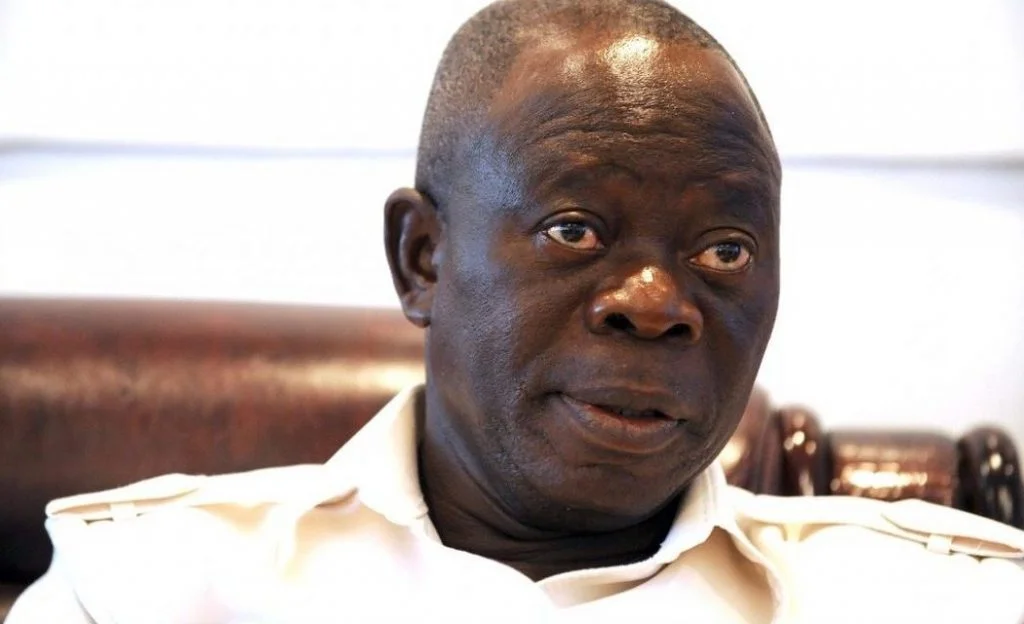
Senator Adams Oshiomhole has called on the Federal Government to retaliate against South African businesses operating in Nigeria following the recent attacks on Nigerians in South Africa.
Speaking during plenary on Tuesday, Oshiomhole said the Federal Government should consider revoking the working license of South African owned companies such as MTN and DSTV.
He argued that Nigeria must respond firmly to what he described as persistent hostility against its citizens.
READ ALSO:South Africa To Investigate ‘Mystery’ Of Planeload Of Palestinians
“I am not going to shed tears. If you hit me, I hit you. I think it is appropriate in diplomacy. It is an economic struggle,” Oshiomhole said.
He argued that while some South Africans accuse Nigerians of taking their jobs, Nigerians should return home and take over employment opportunities created by major South African companies operating in the country, including MTN and DSTV.
“When we hit back, the President of South Africa will not only talk but will also go on his knees to recognise that Nigeria cannot be intimidated.
READ ALSO:South African Ambassador Found Dead Outside Paris Hotel
“We will not condone any life being lost. If a crime has been committed under the South African law they have the right to bring any such person to justice, but to kill our people as if we are helpless, we will not allow that,” Oshiomhole added.
DAILY POST reports that several Nigerians in South Africa have reportedly been attacked, and their businesses destroyed, in ongoing xenophobic attacks in the country.
News
IGP Orders Officers Display Name Tag On Uniform, Gives Update On State Police

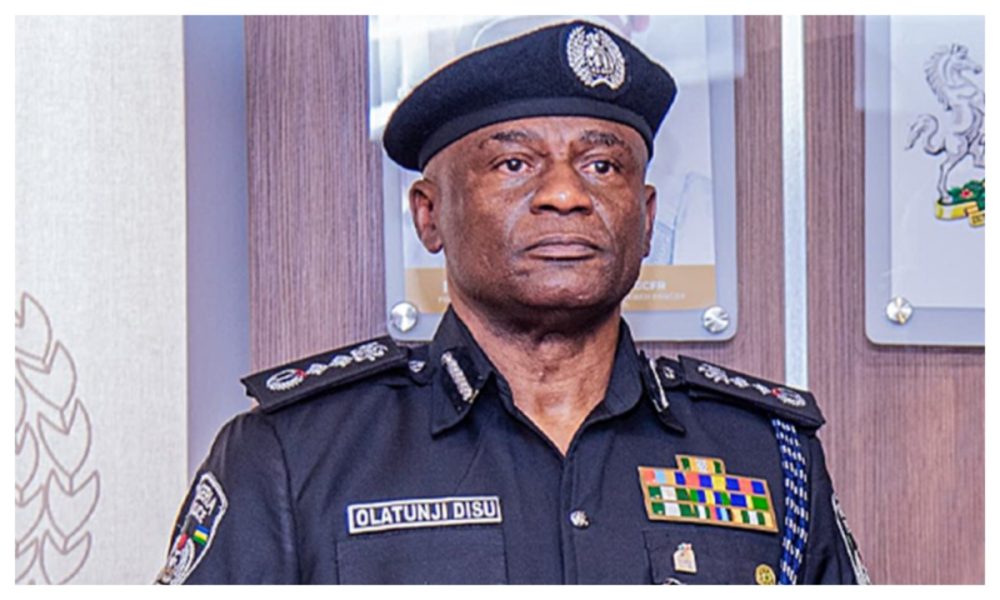
The Inspector General of Police, IGP, Tunji Disu, has ordered all police personnel to always have their name tags on their uniforms for easy identification.
Disu disclosed that only police personnel who are undercover are exempted from displaying their name tags.
Speaking on Tuesday, Disu said: “All police officers should have their name tags. All of us on the high table have our names apart from the undercover among us so if you look at all the Commissioners of Police we have our name tags, so it’s not our standard.
READ ALSO:
“All the Commissioners of Police are here and that is why we called this meeting, we have list of things like this that we will want to discuss with the Commissioners of Police, we have told them earlier and we will still let them know that every that happens within their area of jurisdiction falls under their control.”
On the issue of state police, the IGP said: “Since we got the signal that the Federal Government of Nigeria intend to establish State Police and since we are the federal police, we decided to take the bull by the horn and put down our own side of what we believe on how the state police should be run.
“A lot of things were taken into consideration, a lot of comparative analysis was done and it has been transmitted to the National Assembly.”
-

 Politics4 days ago
2027: Tinubu’s Re-election May Put An End To Nigeria — Baba Ahmed Warns
-

 Politics5 days ago
BREAKING: 2027: Former Adamawa APC Guber Candidate, Aishatu Binani Defects To NDC
-

 Politics5 days ago
Senatorial Seat: Ogbakha-Edo Warns Against Imposition Of Candidates In Edo South
-

 Business4 days ago
JUST IN: Nigerian Filling Stations Reduce Fuel Price After Hike
-

 Entertainment5 days ago
Actress Eniola Badmus Gets New Federal Appointment
-

 News2 days ago
BREAKING: Wike Picks Alabo George For Rivers Governorship
-

 Politics4 days ago
NDC Speaks On Peter Obi, Kwankwaso Joining Party
-

 News3 days ago
OPINION: Why South Africans Murder Nigerians In Cold Blood
-

 News4 days ago
2027: Pastor Adeboye Speaks On Nigeria’s Next President
-

 Politics5 days ago
2027: Pondi, Otuaro, Other Delta South Stakeholders, Endorse Senator Joel-Onowakpo For Second Term
