
News
[OPINION] Olubadan Ladoja: His Tenacity, His Triumphs
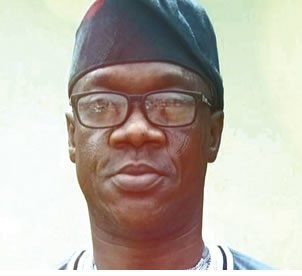
By Suyi Ayodele
“When I set out to join the race to become the Olubadan, I was focusing on how to become the Olubadan and the only crown I want to wear is that of Olubadan of Ibadanland.”
Oba Rasidi Adewolu Ladoja, the Olubadan of Ibadanland, spoke these immortal words on June 28, 2023. Two years, two months and two days later, Oba Ladoja was crowned the Olubadan, on Friday, September 26, 2025.
The elders of our land say when the snail sticks tenaciously to the tree, it will climb it to the top (Ìgbín tenu mó igi, ó gùn ún d’ókè). Oba Ladoja, who in 2017 fought the late Governor Ajibola Ajimobi of Oyo State to a standstill over the balkanisation of the Olubadan throne, equally rose in 2023 to challenge the crowning of Ibadan High Chiefs as obas by the government of Governor Seyi Makinde.
Governor Makinde, a fellow Ibadan man like the late Ajimobi, had, through the Amended Olubadan Chieftaincy Declaration, approved the elevation of 11 Ibadan High Chiefs to beaded-crown obas. Ladoja, who then was the Otun Olubadan, saw the matter differently.
Holding on to the ancient tradition of Ibadanland, the then Otun Olubadan, who was also a former governor of the state and a former senator, quipped: “You don’t mend what is not broken. I don’t think it is right to make high chiefs Obas. The only crown I want to wear is the Olubadan crown. Everybody knows that it is God who makes one an Oba. As far as I am concerned, it is not proper for high chiefs to wear crowns. My intention is to become Olubadan.”
He held to that position and boycotted the July 7, 2023, crowning of the remaining 10 chiefs, namely; Balogun of Ibadanland, Owolabi Olakulehin; Otun Balogun, Tajudeen Ajibola; Osi Olubadan, Eddy Oyewole; Osi Balogun, Lateef Adebimpe; Ashipa Olubadan, Biodun Kola-Daisi; Ashipa Balogun, Kola Adegbola; Ekerin Olubadan, Hamidu Ajibade; Ekerin Balogun, Olubunmi Isioye; Ekarun Olubadan; Bayo Akande and Ekarun Balogun, Abiodun Azeez, by the then Olubadan, Oba Lekan Balogun.
That action by Oba Ladoja, set Ibadan on the edge. The debate was severe in the public place. Those who know Governor Makinde very well vouched for his stubbornness. They were ready to swear that nothing would make the governor shift ground.
A senior journalist told me then that “Seyi Makinde kìí se eran rírò (he is not a soft meat). You see, when he tells you: òrò yìí ò dè rí béè (this matter is not as you think), forget it; he has made up his mind. Ladoja will have to accept the crown if he wants to be Olubadan.” I was alarmed.
MORE FROM THE AUTHOR:OPINION: Befriending Bandits
I asked another Ibadan man about the solution. His response was not encouraging. According to him: “Baba Ladoja is not being stubborn, as many people believe. He is just trying to say, ‘don’t let us bastardise Ibadan culture’. I pray that he will listen to those who are close to him because Baba himself is as stubborn as Seyi Makinde.”
The die was cast. Oba Lekan Balogun joined his ancestors on March 14, 2024. Oba Owolabi Olakulehin was crowned Olubadan on July 12, 2024. Ladoja moved up to the second-in rank as the Otun Olubadan. Then Governor Makinde, true to his identikit as a man of strong will, decided to make public the published Amended Olubadan Chieftaincy Declaration at the coronation of Oba Olakulehin on July 12, 2024.
The tension at the arena heightened; it was palpable. Nobody was in doubt that Ladoja was the target. The Declaration is a simple matter. For anyone to become Olubadan, he must have been a beaded crown-wearing oba. The gazetted paper was freely shared at Olakulehin’s coronation. The implication is that Ladoja could no longer claim ignorance of its existence.
Who would blink first? Ibadan is a city which answers the name, Agbotikuyo (he who rejoices at the death of another). They are not wicked people, mind you. It is just their tradition. When an Olubadan passes on, all the chiefs on the line to the throne are happy. Why? The death of an Olubadan is a promotion for each of the remaining chiefs. Ladoja had waited for over three decades to be Olubadan. Oba Olakulehin was old and frail at his coronation. But for the tenacity of Ladoja himself, the ascension of Olakulehin was almost truncated. Now, an amended chieftaincy declaration stood between him and his ambition!
Many were worried. Yours sincerely, inclusive. I am not from Ibadan. But I wanted Ladoja as Olubadan. Not for any other reason but for the fact that he stood to be counted among those who wanted our culture preserved. The late Ajimobi, I stand to be corrected, had no reason to do what he did in 2017 over the Olubadan throne.
Ibadan, in the entire Yorubaland, I dare say, is the only town that upholds the tradition of seamless succession procedure. Though conservative compared to the ‘modern-day’ thinking, the Olubadan chieftaincy legacy is a demonstration that Africans have a perfect sense of what is right and just, and uncommon fidelity with justice and fairness. Once a man joins the line to the Olubadan throne either through the Balogun or the civilian line, only death can stand in his way. So, why would anybody tamper with that smooth process? We will never understand how our politicians think!
Will Ladoja ever become Olubadan of Ibadanland given the new law in place and his promise not to wear any other crown apart from that of Olubadan? If he failed to, Ibadan’s smooth process of ascension would be gone forever. Ibadan being the last man standing, so to say, in matters of enthronement, and with Ifa and other kingmakers dancing ijo yoyo all over the place, the sanctity of thrones in Yorubaland was gravely threatened!
MORE FROM THE AUTHOR:OPINION: The Clappers They Want In Us
The Igbo say: “When a man says yes, his chi says yes also” (Onye kwe chi ya ekewe). The saying is a testament to the power of positive thinking. The legend, Chinua Achebe, projected the saying in his classic, Things Fall Apart, to demonstrate that with the tenacity of purpose, a man can achieve anything he desires. Fortunes don’t come cheap. Achebe was both right and great in the imagery of a man’s willpower and the approval of the Cosmic in terms of the man’s destiny.
Did the literary icon, Achebe, have Ladoja in mind when he used the above saying to depict the character of Okonkwo, the tragic hero of Things Fall Apart in 1958? Will Ladoja ever become Olubadan if he held on to his stance of not accepting a crown before the crown? Yet, the multi-billionaire politician insisted that he would be Olubadan! As how, in the manner of our street lingo?
Reason prevailed. The Otun Olubadan of Ibadanland, High Chief Ladoja, on Sunday, August 4, 2024, announced that he would accept the beaded crown. He said so while appearing on the Ibadan-based Fresh FM Radio programme, Agbami Oselu, He added that he would be doing that in deference to prominent Ibadan sons and daughters and other well-meaning Nigerians who appealed to him. There again, he declared: “By the grace of God, I will become Olubadan… Anyone God destined to become Olubadan will become Olubadan, no matter the obstacles placed in their way.” We heaved a sigh of relief!
On August 12, 2024, Ladoja ended the seven-year-old controversy over the Olubadan chieftaincy matter as he was elevated to a beaded-crown wearing oba by the late Oba Olakulehin. Incidentally, the elevation of Ladoja was the first official duty of Oba Olakulehin. The relief across Yorubaland after that historical event was palpable! Ibadan, once again, rose to the occasion as the defender of Yoruba unity.
So, when on Friday, September, 26, 2025, all the people of Ibadan gathered at the historic Mapo Hill to crown Oba Rasidi Adewolu Ladoja, the 44th Olubadan of Ibadanland, the entire Yoruba race rose to salute the courage, the goodwill and the strength of Ibadan people at upholding the culture of fairness and justice handed over to them by the founders of the west Africa’s largest city!
As a Yoruba man, if anyone had ridden a horse in my stomach last Friday, there would have been no stumbling. I was not just happy for Oba Ladoja and the people of Ibadan; I was happy for the entire Yoruba Race. A ségun òtá, a r’éhìn odì (we conquered the enemy; we prevailed against perversity)!
Ibadan people would never appreciate what they have done to the Yoruba race by preserving that age-long culture of succession to the Olubadan throne. Governor Makinde, who had to cut short his annual leave to attend the ceremony and personally perform the tradition of presentation of staff of office to the new monarch has equally recorded his name in the history of the race. The owners of the day and night will endow him with the wisdom to review that needless declaration.
MORE FROM THE AUTHOR:OPINION: When The Dead Can’t Rest In Peace
Oba Ladoja’s tenacity of purpose is a study in self-worth. It is an act and art commended to everyone who desires that which is good. For a man who had waited for over three decades and almost lost the precious prize, one needs no further evidence to show that power, of a truth, belongs to God! We have no doubt that the new Olubadan of Ibadanland understands what Kim Tan The Heirs, the wealthy heir to the Korean conglomerate, Jeguk Group, means, when he posits: “The one who wants to wear the crown, must bear its weight.”
In all the battles he has fought in politics, business and in upholding the tradition of his people, Olubadan Ladoja has demonstrated that William Shakespear was right in his postulation that, “My crown is in my heart, not my head” (Henry VI). It is indeed the content of the heart that makes a monarch who he is. In and out, Oba Ladoja has demonstrated that his is a heart of gold.
At his coronation on Friday, he told the entire world that he would not be an Olubadan for the people of Ibadanland alone. The entire Yorubaland, nay, the Black Race, he assured, would be his constituency. Looking back at his journey in life, Oba Ladoja declared: “There is nothing else I am looking for in life. Yesterday, I clocked 81. Some people do not have this privilege. So, I recognise that the fact that God spared me till date, what remains is to serve every resident of Ibadan, serve Oyo State, serve Yorubaland, serve Nigeria and Africa, to the best of my ability.”
I believe Kabiyesi Olubadan will pursue that goal with the same tenacity of purpose. He is, like Robert Greene, the American author, who says great men “Do not wait for a coronation; the greatest emperors crown themselves.” Indeed, Oba Ladoja crowned himself long ago through his fidelity with the tradition of his people. We hope, again, like Greene posits that as the king has placed the crown upon his head, he has assumed, “a different post-tranquil yet radiating assurance. Never show doubt, never lose your dignity beneath the crown….”
Olubadan Ladoja cannot but radiate joy. He cannot but demonstrate confidence. He is a man who has seen it all. From the classrooms to the boardrooms, from the legislative chamber to the Government House; from the Government House to the courtrooms and from the courtrooms back to the government House and finally the Palace of Olubadan of Ibadanland, Oba Rasidi Adewolu Ladoja is the quintessential figure of the English writer and theologian, William Penn (October 14, 1644-July 30, 1718), who says: “No pain, no palm; no thorns, no throne; no gall, no glory; no cross, no crown.” That is Oba Ladoja in words!
Kabiyesi, now that you have obtained that which you most desired, holding on to your abiding faith in your creator and the triumph of good over evil, we can only pray as Oodua Atewonro decreed in the ancient Ode Aro, at the coronation of their oba thus: Kí e gbó gbó Olúyèyèntuyè/Kí e gbó gbó Olúyèyèntuyè/Kí e gbó gbó Olúogbó/Ìrùkèrè á di abéré/ Èé je ju ará iwájú?/ Èé je kù f’érò èhín. May your reign be peaceful! Àse!!



News
Shatta Wale Bailed Burna Boy From Ghana Prison After Arrest For Smoking Weed – Captan
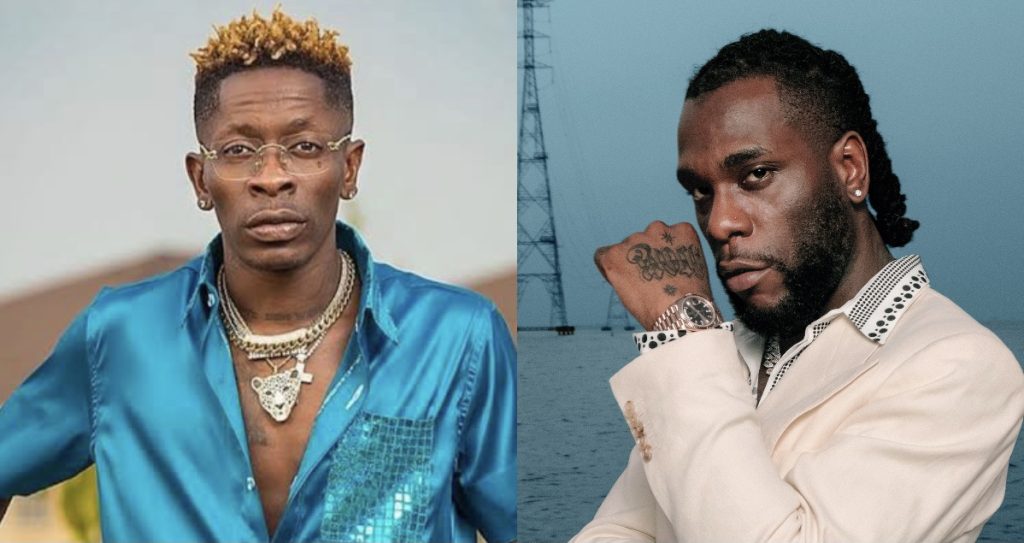
Ghanian singer, Captan, has claimed that his former record label boss, Shatta Wale, once bailed Nigerian singer Burna Boy out of prison in Ghana after he was allegedly arrested for smoking weed.
Speaking in a recent podcast interview, Captan claimed that Shatta Wale sent him and others to free Burna Boy from police custody.
He also claimed that Shatta Wale and his group once accommodated Burna Boy when he was being hunted by some dangerous men.
READ ALSO: Wale Edun Opens Up After Sack
Captan said, “I once bailed Burna Boy out of prison in Ghana when he was arrested for smoking weed. Shatta Wale sent me and some guys to go and free him from police custody.
“There was a time we also accommodated him when some people were after his life. We helped him settle the case.”
He added that he and Burna Boy are no longer in good terms after the Nigerian artist’s fallout with his mentor, Shatta Wale.
He, however, said he and Shatta Wale are open to reconciling with Burna Boy if he asks for it.
Watch the video here
News
Children’s Day: Chaos At Ogbe Stadium As Dozens Faint
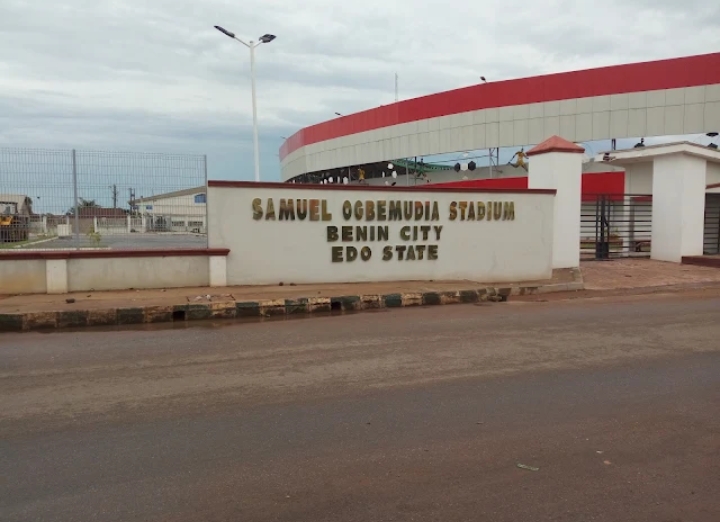
Chaos erupted on Wednesday during the Children’s Day celebration as dozens of students reportedly collapsed following a stampede triggered by the use of pepper spray.
The event,
organised by the Edo State Ministry of Education at the Samuel Ogbemudia Stadium was disrupted after some male students of Ihogbe College allegedly made uncompromising advances towards female students at the venue.
A parent who identified himself as Oboh Emmanuel said, “the behaviour of those uncultured students attracted the attention of bouncers stationed at the stadium as they rebuked the male students.”
Oboh said the affected students later regrouped and attacked the bouncers, leading to a confrontation within the crowded arena.
READ ALSO:Children’s Day: Edo Commits To Child Protection
It was gathered that in the ensuing confusion, the bouncers were reported to have deployed pepper spray in an area occupied by a large number of students.
Several students, particularly female students, reportedly fainted after inhaling the substance, while others sustained injuries after being stepped on during the ensuing melee.
The panic was said to have spread across the stadium as students, teachers and parents scampered for safety.
Many of the affected students were reportedly rushed to the Edo Specialist Hospital for medical attention.
READ ALSO: Egor LG Chair, Ogbemudia, Vice, Osawe Impeached
Reacting to the incident, Chief Press Secretary to Governor Monday Okpebholo, Dr Patrick Ebojele, said the security personnel that fired the tear gas had been detained.
He said all the students, except two, that were rushed to the hospital have been discharged.
Ebojele stated that doctors wanted to observe the students till tomorrow before allowing them to go home.
“The two students are not seriously injured. Doctors want to observe them overnight. Permanent Secretary, Ministry of Education is still at the hospital. The man who used pepper spray has been detained.
“The incident did not happen the way it is being exaggerated. All modalities were put in place to ensure the children enjoyed their day.”
News
Okpebholo Salutes Edo Muslims, Seeks Continued Support, Prayers
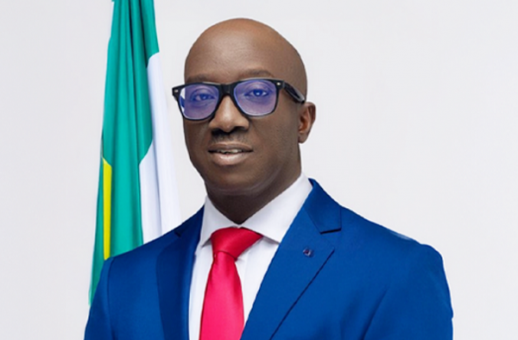
Governor Monday Okpebholo of Edo State has urged Muslims and all Nigerians to continue to pray for peace, unity and progress in the country even as they celebrate the annual Eid-al-Adha
The governor, who was represented by his deputy, Dennis Idahosa, stated this during the annual Eid-al-Adha celebration with Muslim faithfuls held at Government House in Benin City.
He reiterated his administration’s commitment to fairness, inclusivity and equal opportunities for all citizens irrespective of religion and tribe.
READ ALSO:ADC Penetrates Okpebholo’s District As Defections Strengthen Party in Edo Central
According to him, the present administration remains determined to building a government that reflects the diversity of Edo State, noting that competent and qualified Muslims have continued to play vital roles in his government because of their capacity, integrity and commitment to service.
“As a government, we remain committed to fairness, inclusivity and equal opportunity for every Edo citizen, irrespective of religion, ethnicity or political affiliation. This is why quality and competent Muslims are serving in key positions in our administration.”
Okpebholo appreciated the Muslim community in Edo State for their unwavering support and continuous prayers for his administration, noting that such prayers and support have contributed immensely to the peace and steady development being witnessed across the state.
READ ALSO:Okpebholo Felicitates Muslims On Eid-el-Fitr Celebration
He then called on all Nigerians to use the occasion of Eid-al-Adha to pray for the administration of President Bola Ahmed Tinubu, stressing that the country needs collective prayers, unity and cooperation to overcome its present economic and security challenges.
“I urge all Muslims and indeed all Nigerians to use this occasion to pray for our dear nation and for the administration of President Bola Ahmed Tinubu. Nigeria needs our collective prayers, unity and support as we strive to overcome our challenges and build a more prosperous future for all.”
In his remarks, the Chief Imam of Edo State, Abdulfatai Enabulele, applauded the governor for what he described as remarkable developmental strides recorded in less than two years in office.
The cleric commended the administration for ongoing infrastructural development and efforts geared towards improving governance in the state, but appealed to the government to revisit and complete some abandoned projects inherited from the previous administration for the benefit of the people.

 Metro5 days ago
My Husband Abandoned Me On Our Wedding Night To Attend Political Meeting, I Want Our Marriage Dissolved
- Headline4 days ago
Woman Passes Out After Receiving 100 Strokes Of Cane
- Politics5 days ago
Warri Ijaw Hail INEC Delineation Report, Call For Additional Electoral Wards, Others
- Headline4 days ago
JUST IN: White House Locked Down Briefly As Gunman Opens Fire At Security Checkpoint
- News3 days ago
More Pain For Nigerians As Cooking Gas Price Increases Nationwide
- Politics3 days ago
Two Masked Men Gun Down Politician In His Rivers State Hotel
- Metro5 days ago
My Wife Stop Cooking My Food, Beats Me Black And Blue All the Time, Man Tells Court
- News5 days ago
Alleged Terrorism: Court Rejects Defendant’s Bid To Travel Abroad
- Metro4 days ago
Police Reject N500m Bribe, Recover N7.8bn Illicit Drugs In Lagos
- Politics5 days ago
What I’ll Do As President Of Nigeria — Amaechi


