
News
OPINION: Olubadan Olákùlẹ́hìn: Names And Destinies

By Lasisi Olagunju
Odysseus survived the Trojan War. He experienced “blissful forgetfulness” in the land of the Lotus-Eaters; he was captured by the Cyclops Polyphemus; he escaped the Sirens, and sea monsters, Scylla and Charybdis. Then the enchantress Circe turned his men to swine. Odysseus wandered for several years in search of his destiny. He finally found it. If Prince Hal in Shakespeare’s Henry IV; if the Bourbons of France and Charles II of England were Yoruba, they would be Olákùlẹ́hìn. Read their stories of spectacular comebacks.
Book critic and columnist at the New York Times, Ralph Thompson, in March 1936 wrote a penetrative piece on the life and death of England’s King George V: “The death of a British monarch… is something more than the death of a man.” He wrote, paused and added that when a king dies, “something far weightier than a single human life comes to a pause.” The passing, last week, of Olubadan Owolabi Olakulehin and the transition yesterday of the Awujale of Ijebuland, Oba Sikiru Adetona, remind me of that pulsating passage.
As it is in Thompson’s England, so it is in my Yorubaland. The oba is the human placeholder for his people’s everything. It does not matter how great or ordinary, wise or reclusive, strong or feeble the king is, a king’s death is always the fall of an elephant. Take Muhammadu Buhari’s death yesterday. He was ruinously ineffectual in power for eight years, yet his exit rumbled the forest. Now, ask: who inherits his 12 million votes? Who benefits from his death?
Olákùlẹ́hìn is the name of the Olubadan who joined his ancestors last Monday. He became oba at 89 and died at 90. Now, I think the name which that oba bore ruled his star; it shone brightest at his dusk. His reign was remarkable in the resilient agedness of his person and in the shortness of the term. His stubborn heart beat long enough for him to mark the royal register before exiting the palace. His family would be ungrateful if they sulk in sadness. Many wanted to sit on that throne for just one day but death came for them before their day.
MORE FROM THE AUTHOR: OPINION: From The North, ‘A Storm Is Coming’
Olákùlẹ́hìn fits in the tapestry of resilient fate. The name, Olá kù lẹ́hìn, deserves a dissection: Olá means not just material wealth; it refers to all-round elevation, destiny-endowed prestige, or noble essence. It means nobility, prestige, royalty, honour and, let me add, greatness. Kù means ‘to remain, to survive, to endure’. The last part, ‘lẹ́hìn’ signifies ‘behind, rear, at the back, in the aftermath’. Cobble the parts together and salute the late oba’s ancestors who prepared the name for his destiny. Olakulehin is more than a personal name; it is a narrative and a prophecy.
There is this passage in Lewis Carroll’s ‘Through the Looking Glass’:
“My name is Alice…”
“… What does it mean? ”
“Must a name mean something?” Alice asked doubtfully. The question on whether a name should naturally have a semantic content can’t be asked in Black Africa without some rebuke. Here, the content and the case are inseparable. You can read more on this in retired professor of Anthropology and Linguistics, Niyi Akinnaso’s ‘The Sociolinguistic Basis of Yoruba Personal Names’ published in October 1980.
In Yoruba sayings and songs, ‘Olákùlẹ́hìn’ is never a stand-alone name. It comes as Orin Òwe (proverbial song); Orin Ọ̀tẹ̀ (song of battle) or Orin Ọpé (song of thanks): Wọ́n ṣe bí olá tán, Ọlá ò tán, Òlá kù l’ẹ́hìn (They thought ola is finished: ola is not finished; ola remains). From that line alone, three names are formed: Wonsebolatan; Olaotan; Olakulehin. There is an additional derivative or variant: Mosebolatan (I thought ola is finished). This one is a name for the grateful, the one who came back victorious after a defeat, the one who rebuilt from personal ruins.
The rhythm of kingship in Yorubaland may pause and bow to the ravages of death, but it never truly stops its sonic breath. In Yoruba royalty, death in one royal house means elevation and joy of enthronement next door. That is why every Ibadan person is called Omo Agbọ́tikúyọ̀ (rejoicers at news of death). When an oba dies, the one who takes the throne is a beneficiary of death’s wicked act. People benefit from others’ death. If Isiaka Adeleke did not die in 2017, would his brother, Demola Adeleke, be governor of Osun State in 2022? The name Kújẹ́mbólà literally means ‘death allows me to meet prosperity’). It was the death of someone else that made the bearer successful and prosperous. Everyone who becomes oba should really answer that name.
MORE FROM THE AUTHOR: OPINION: Let Tehran, Tel Aviv Bleed, Abuja Will Pay The Price
Think of name as destiny. The Yoruba believe that what a child would be is right there in their name. The late Awujale was Olukayode (God has brought happiness). He enjoyed life for 91 years, 65 of those years as a very consequential, respected oba. There was an Aare Ona Kakanfo Kurunmi. The surname (Kurunmi) is extinct because it fulfilled what it promised the bearer: Iku (death) ruined him: all his children perished in a war in which he himself died. A state governor is Lucky Aiyedatiwa. The luck in the man’s ‘Lucky’ needs no analysis but more prescient is the surname, Aiyedatiwa (the world/life has become ours). Death shifted his boss for him to move up and inherit the world. What he does with that inheritance is a different thing altogether.
There are uncanny happenings in other climes which would suggest that some spirits may be living in names. The German name, ‘Drumpf’ crossed to the US and got anglicised to ‘Trump’. Scholars say its roots are in some German term for drumming and drummer. Old French linked it to trumpets or trumpeting. If our popular Trump entertains exceptionally today, he is just keeping family tradition alive. The white man may dismiss this as arrant nonsense.
“What’s in a name?” from Shakespeare’s Romeo and Juliet will not be answered here the way the playwright answered it. Here, we would swear there is so much in a name. Yoruba names are sacred to the Yoruba. That explains why no one would do what the English man does with their child with names that damn. The Ijesa, for instance, can be beautifully descriptive in coining and giving names. Their last oba before the new one was Aromolaran (the one who wraps his child with velvet). He was a power-dresser. The oba before Owa Aromolaran was Agunlejika (the broad-shouldered one). Check his photos, his physique.
‘Good name’ is both literal and metaphor here. All I hear around me are pleasant names. There is Eyitayo (This is enough joy); there is Oladimeji (honour becomes two; honour is doubled); Omopariola (child completes honour/ child epitomizes wealth). Adebayo is the child who arrives to meet joy. Titilayo is forever is joy. Titilola, forever is ola. My mother’s very uncommon name is Orímọ́láwá (Her head brought Ọlá to her). There is my father’s name, Ọlágúnjú. If you bear Ọlágúnjú as I do, just apply all those meanings of Ọlá to ‘gún’ and ‘jú’. Ọlá gún ojú/Ọlá + gún + ‘jú. ‘Gún’ is a verb which, in this tonal context, means ‘to fit’, ‘to be well-formed’, ‘to be properly constructed or shaped’. Ojú, here does not mean ‘eye’, it means ‘face’. Ọlágúnjú thus means “honour fits the face; nobility shapes the countenance.” Now you know.
MORE FROM THE AUTHOR: OPINION: Death Of A Queen
But wrongly pronounced Yoruba names can have unintended infelicity effects. One of the most commonly mispronounced Yoruba names is ‘Awosika’ (Awóòsìkà) which means ‘Awo (Ifa oracle) has not been wicked’. I asked a friend who bears that name how he feels each time he hears it mispronounced as Awósìkà (‘Awo has acted wickedly’). He sighed and said he was tired of correcting people. Again, if for instance, Olákùlẹ́hìn is pronounced Olákúléhìn, the meaning is the very opposite of the original. Sometimes, the misspeak is not a symptom of linguistic incompetence but pure mischief. I had a university classmate, Gbenga Fádíyà. For rascally reasons, some of us would routinely put the wrong tonal marks on the three syllables that make up the surname; a bad boy would say Fàdíya. The ‘victim’ would laugh, his naughty friends would laugh. Both sides were aware that the meaning dripped of negativity.
Across the seas, the white man has been historically crazy with names. ‘Stone’ as surname is not strange in English-speaking countries of the West. Lawyers and judges are familiar with the renowned jurist, Sir William Blackstone (1723-1780). He was a scholar famous for his ‘Commentaries on the Laws of England.’ But why would someone proudly answer Blackstone as a name? If ‘Blackstone’ (and even ‘Blackburn’) sound odd to your African understanding of what a name should be, think of ‘Hogsflesh’ and ‘Gotobed.’ The latter (Go-to-bed) is actually proven to be a real surname from Suffolk, England. A Jannik Sinner won the Wimbledon at the weekend. There is ‘Pigg’ and there is ‘Smellie’, both pronounced as spelt. Google says Smellie is a real Scottish surname. Some people’s ancestor also answered Death (pronounced ‘Deeth’).
It didn’t start today. As early as the eleventh century, contempt for someone got them Rump (meaning buttocks) as name. Some people’s surname was (is) Belcher – a testament to their ancestor’s “habit of eructating after a heavy meal.” You will see more of this in Robert M. Rennick’s ‘Obscene Names and Naming in Folk Tradition’ (1968). You will read, in there, allusions from Robert Ferguson’s ‘English Surnames and Their Place in the Teutonic Family’ (1858); you will gape reading what examples are drawn from Henry Barber’s ‘British Family Names, Their Origin and Meaning’ (1903); you will encounter unbelievable origin of names in Elsdon Smith’s ‘The Story of Our Names’ (1950).
A child’s name is not just a label. The Yoruba say name is a force that shapes character and actions. We say Orúko omo ní í ro omo (name influences a child’s behaviour; it determines their life choices; it is their compass). Exactly like Bankole who ends up a bricklayer. That parallel is with apology to Funwontan, Gbenga Adeboye of blessed memory.
But things are fast falling apart. Where we used to have Olusegun, there you find now, not Victor or Victoria, but Victory. Our fathers paid attention to the home environment before assigning names to a child (Ilé l’àá wò k’á tó s’omo l’órúko). They knew that Orúkọ ọmọ ni ìjánu ọmọ (A child’s name is a restraint on the child). The name is the bridle that cautions, guides and points the way.
May the souls of Awujale Adetona, Olubadan Olákùlẹ́hìn and Buhari rest in peace. Just like their very long lives, every outing must come to an end. I wrap this too long piece up with this passage in Rennick’s work cited above: “A popular nineteenth century anecdote recounts the trials of a young lawyer who is setting up his practice by performing the most obvious initial act. He hangs a sign outside his office door with his name: ‘A. Swindler’. His first client can’t help remarking that his sign is bound to deter potential clients, and advises him to write out his first name in full. ‘Oh I couldn’t do that,’ the lawyer answers; ‘as bad as this must seem to be, it would be infinitely worse if I added my full given name – Adam.’” Imagine a lawyer whose full name is Adam Swindler!



News
Children’s Day: Chaos At Ogbe Stadium As Dozens Faint

Chaos erupted on Wednesday during the Children’s Day celebration as dozens of students reportedly collapsed following a stampede triggered by the use of pepper spray.
The event,
organised by the Edo State Ministry of Education at the Samuel Ogbemudia Stadium was disrupted after some male students of Ihogbe College allegedly made uncompromising advances towards female students at the venue.
A parent who identified himself as Oboh Emmanuel said, “the behaviour of those uncultured students attracted the attention of bouncers stationed at the stadium as they rebuked the male students.”
Oboh said the affected students later regrouped and attacked the bouncers, leading to a confrontation within the crowded arena.
READ ALSO:Children’s Day: Edo Commits To Child Protection
It was gathered that in the ensuing confusion, the bouncers were reported to have deployed pepper spray in an area occupied by a large number of students.
Several students, particularly female students, reportedly fainted after inhaling the substance, while others sustained injuries after being stepped on during the ensuing melee.
The panic was said to have spread across the stadium as students, teachers and parents scampered for safety.
Many of the affected students were reportedly rushed to the Edo Specialist Hospital for medical attention.
READ ALSO: Egor LG Chair, Ogbemudia, Vice, Osawe Impeached
Reacting to the incident, Chief Press Secretary to Governor Monday Okpebholo, Dr Patrick Ebojele, said the security personnel that fired the tear gas had been detained.
He said all the students, except two, that were rushed to the hospital have been discharged.
Ebojele stated that doctors wanted to observe the students till tomorrow before allowing them to go home.
“The two students are not seriously injured. Doctors want to observe them overnight. Permanent Secretary, Ministry of Education is still at the hospital. The man who used pepper spray has been detained.
“The incident did not happen the way it is being exaggerated. All modalities were put in place to ensure the children enjoyed their day.”
News
Okpebholo Salutes Edo Muslims, Seeks Continued Support, Prayers
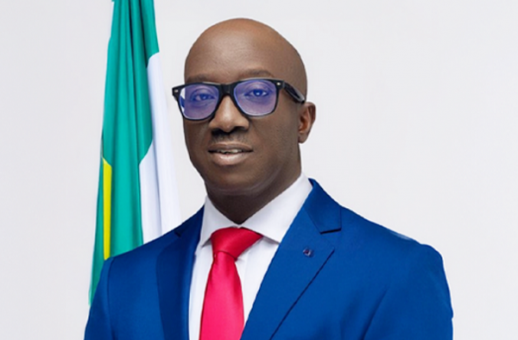
Governor Monday Okpebholo of Edo State has urged Muslims and all Nigerians to continue to pray for peace, unity and progress in the country even as they celebrate the annual Eid-al-Adha
The governor, who was represented by his deputy, Dennis Idahosa, stated this during the annual Eid-al-Adha celebration with Muslim faithfuls held at Government House in Benin City.
He reiterated his administration’s commitment to fairness, inclusivity and equal opportunities for all citizens irrespective of religion and tribe.
READ ALSO:ADC Penetrates Okpebholo’s District As Defections Strengthen Party in Edo Central
According to him, the present administration remains determined to building a government that reflects the diversity of Edo State, noting that competent and qualified Muslims have continued to play vital roles in his government because of their capacity, integrity and commitment to service.
“As a government, we remain committed to fairness, inclusivity and equal opportunity for every Edo citizen, irrespective of religion, ethnicity or political affiliation. This is why quality and competent Muslims are serving in key positions in our administration.”
Okpebholo appreciated the Muslim community in Edo State for their unwavering support and continuous prayers for his administration, noting that such prayers and support have contributed immensely to the peace and steady development being witnessed across the state.
READ ALSO:Okpebholo Felicitates Muslims On Eid-el-Fitr Celebration
He then called on all Nigerians to use the occasion of Eid-al-Adha to pray for the administration of President Bola Ahmed Tinubu, stressing that the country needs collective prayers, unity and cooperation to overcome its present economic and security challenges.
“I urge all Muslims and indeed all Nigerians to use this occasion to pray for our dear nation and for the administration of President Bola Ahmed Tinubu. Nigeria needs our collective prayers, unity and support as we strive to overcome our challenges and build a more prosperous future for all.”
In his remarks, the Chief Imam of Edo State, Abdulfatai Enabulele, applauded the governor for what he described as remarkable developmental strides recorded in less than two years in office.
The cleric commended the administration for ongoing infrastructural development and efforts geared towards improving governance in the state, but appealed to the government to revisit and complete some abandoned projects inherited from the previous administration for the benefit of the people.
News
Children’s Day: Edo Commits To Child Protection
The Edo State Government has reaffirmed its commitment to protecting the rights of children, promoting quality education, and strengthening sports development across the state.
This assurance was given by the governor of Edo State, Monday Okpebholo, during the 2026 Children’s Day Celebration and Governor’s Cup Finale held on Wednesday at the Samuel Ogbemudia Stadium, Benin City.
Addressing pupils, students and teachers,
the governor described children as the pride of Edo State and the future of the nation.
The governor, represented by his deputy, Dennis Idahosa,
noted that the annual celebration provides an opportunity to honour their dreams, talents, and limitless potential.
READ ALSO:Eid-el-Kabir: Edo Deputy Gov Solicits prayers For Okpebholo
Speaking on this year’s Children’s Day theme, “Choose Kindness, Reject Bullying,” the governor said the message was timely and significant, as it emphasizes the need to create safe, supportive, and inclusive environments for children both in schools and communities.
He stated that bullying in all forms — physical, verbal, emotional, or online — has no place in society, adding that the Edo State Government remains fully committed to protecting the rights and dignity of every child.
According to him, the administration will continue to strengthen policies and programmes that promote child protection, discipline, mutual respect, and positive learning environments across schools in the State.
The governor urged children to embrace kindness, compassion, teamwork, and respect for one another, stressing that true strength lies not in intimidation but in empathy, good character, and mutual understanding.

 Metro5 days ago
My Husband Abandoned Me On Our Wedding Night To Attend Political Meeting, I Want Our Marriage Dissolved
- Headline4 days ago
Woman Passes Out After Receiving 100 Strokes Of Cane
- Headline4 days ago
JUST IN: White House Locked Down Briefly As Gunman Opens Fire At Security Checkpoint
- Politics5 days ago
Warri Ijaw Hail INEC Delineation Report, Call For Additional Electoral Wards, Others
- Politics3 days ago
Two Masked Men Gun Down Politician In His Rivers State Hotel
- News3 days ago
More Pain For Nigerians As Cooking Gas Price Increases Nationwide
- News5 days ago
Alleged Terrorism: Court Rejects Defendant’s Bid To Travel Abroad
- Metro5 days ago
My Wife Stop Cooking My Food, Beats Me Black And Blue All the Time, Man Tells Court
- Politics5 days ago
What I’ll Do As President Of Nigeria — Amaechi
- Politics3 days ago
‘Tinubu’s Borrowing In 24 Months Surpasses 55 Years’ Debt Record’


