

News
[OPINION] PDP: A Prince And A Pastor’s Son (SENT)



By Suyi Ayodele
How should a king react to an in-your-face abuse by his son’s schoolmate? An altercation on a football field led to a physical engagement between two schoolboys: one a prince; the other sired by a poor farmer. The one who was farmer-born was dexterous in (eke) wrestling. He had the upper hand in the fight; threw the prince a couple of times and enjoyed himself, beating the hell out of him. Other friends stepped in and separated the combatants.
But it didn’t end there. The prince instantly became the butt of the jokes by the others on their way home. Most boys do that, you know.
The path to the community runs in front of the palace. The prince walked slowly and deliberately. But as soon as the boisterous group entered the palace precinct, the prince regained his mojo, his boldness and confidence. He hurled curses at his opponent, who remained calm, aware that the king was watching from the palace balcony, flanked by a few chiefs.
Sighting his father, the king, the prince did the unthinkable. He walked up to his opponent and uttered the following words in his Ekiti dialect: “Ayé ùba re hí a dáa (may it not be well with your father)! The son of the farmer stopped in his tracks. The party became silent. Kabiyesi and his chiefs heard the prince clearly. They waited in suspended breath to see what the other boy would do or say. They did not have to wait for a long time.
The boy looked up to Kabiyesi on the balcony, and at the prince. Then he pointed at the king and told the prince: “Sé òrúba re -mentioned the title of the king – kì mì o o, ayé rè hí a dáa (you see this your father I am looking at; it will not be well with him)!” Silence! What did the king do?
On hearing what the boy said, Kabiyesi first restrained his palace guards from acting. He ordered the children to be brought to the palace. He descended the stairs, followed by his chiefs and the palace griot chanting his praises. The king asked the two combatants to relay what happened. He got corroborations from the other students. Then he made his pronouncement.
The Oba asked a palace guard to get a cane. Done. He ordered two more guards to stretch out the prince, the naughty way rascals are stretched out for punishment. Then without counting, the king asked the palace guard holding the cane to do justice to the buttocks of the prince with the cane. He resisted the pleas from his chiefs.
The Olori, mother of the prince, dared not venture into the open space. Satisfied that enough strokes of the cane had been donated to the prince, Kabiyesi stopped the guard. He lectured the children on why they should not fight, and if they must, why they must never extend their vituperations to the parents of their opponents. Did the message sink? The prince in this story is a judge of a High Court of Justice today. The farmer’s son is a successful businessman and a big farmer too! Are they still friends? I will find out!
MORE FROM THE AUTHOR:OPINION: Any ‘Appropriate’ Rites Of Passage For Yoruba Kings?
The children prostrated. The son of the farmer offered apologies for what he said. Kabiyesi responded that he did the right thing by defending himself against the prince. He dismissed the party. The news travelled fast. The farmer gathered relations and the elders of his clan. They went back to the palace to beg the king. They brought gifts, farm produce to appease the Oba. Kabiyesi would have none of those.
The king insisted that the boy did no wrong by cursing back at the prince. He asked the farmer if he would be happy if his child had come back home to say that the prince cursed him (father) but he (child) could not retaliate because his opponent’s father was a king. The farmer answered in the negative. Kabiyesi said he would feel the same way if it had happened to the prince. Then he dropped the moral of the incident to wit: children must be trained so well so that if the parents looked back in their hereafter, they would be proud of the children’s conducts!
Children upbringing in Yoruba emphasises character (ìwà). From the cradle, children are moulded to be of good conduct (behaviour) and the pride of the family. A child is beautiful only if he has good character (ìwà lewà). Yoruba also categorise character. There is a type called ìwà abínibí (congenital character), which is hereditary or one that easily depicts a family a child comes from. If it is good, the family source can be identified; likewise, if it is otherwise.
There is also ìwà àtowádá (a character trait a child develops by himself). Modern sociologists trace this type of character to so many things with the influence of peer groups being the most visible culprit. No matter the fine upbringing a child had, if he gets involved in a negative peer group activity, such a child could derail.
Another category is iwa atúnraenibí (reenactment of one’s congenital character). A child with this type of character trait is rated as the best. This is the type of child who is conscious of his enviable background and takes steps to preserve the good name, the family pride and heritage.
He is the type that is always conscious that he cannot behave contrary to his solid upbringing. In this case, the name of the family counts, what others would say about him, and his background comes into play and thus, the child remains within acceptable boundaries. This, to a greater extent, births the saying: resemblance depicts ancestry (àbíjo làá mo ìran).
But a caveat here is necessary. That a child behaves badly or turns out to be a miserable, terrible adult does not mean that such a child was not nurtured very well. A parent can be lucky to have a child who combines ìwà abínibí and iwa atúnraenibí to produce the Yoruba ethos of Omoluabi. A society or group populated more by Omoluabi thrives. When that Yoruba primordial ethos is in short supply in any society or group, what you have is what the once dominant Peoples Democratic Party (PDP) is experiencing at the moment.
Last week, two top leaders of the PDP in the South-West spoke about the present and future of the party. The two top figures share so many things in common. One is a prince. The other is a son of a clergyman. The two are separated in age by 10 years.
MORE FROM THE AUTHOR:OPINION: APC’s Leprosy Versus ADC’s Scabies
The first is Prince Olagunsoye Oyinlola, a retired Brigadier-General, former Military Governor of Lagos State and former civilian governor of Osun State. His late father was the Olokuku of Okuku, Oba Moses Oyewole Oyinlola, who reigned between 1934 and 1960.
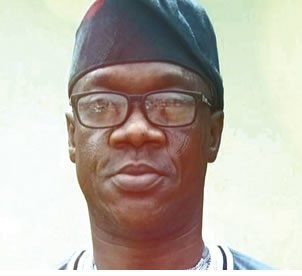
The second PDP leader is Ayodele Peter Fayose, a son of a preacher of the Gospel and was brought up in ‘the ways of the Lord and in His Vineyard!’ Fayose is phenomenal in politics. At two different times, he defeated two incumbent governors to clinch the governorship of Ekiti State.
In 2003, Fayose was a nobody. But through the instrumentality of ‘street credibility’, he led the PDP to victory in the governorship election, defeating the then Governor Adeniyi Adebayo of the defunct Alliance for Democracy (AD) in 12 out of the 16 local government areas of the state.
While ‘street credibility’ brought Fayose to power, character could not sustain him. Within a short time in office, he plunged the state into unprecedented crises. He had dispensed with two deputy governors before the system got rid of him six months to the end of his first term. A state of emergency was declared in Ekiti State by General Olusegun Obasanjo, the then president and Fayose was parcelled out of the state like contraband goods.
Like the proverbial once-defeated ram, Fayose turned his misfortune to fortune, re-strategised and challenged his removal in the courts. Luckily, and just as many people believed that Obasanjo overreached himself, the court declared Fayose’s removal as invalid. That paved the way for him and having rebuilt the PDP in Ekiti, he again became the gubernatorial flag bearer of the party for the 2014 governorship election.
More like the 2003 election, Fayose’s opponent in the 2014 gubernatorial race was another soft target, a far more vulnerable target with lacklustre performance in office. Thus, it was a total political tsunami as Fayose routed the then Governor Kayode John Fayemi of the defunct Action Congress of Nigeria (ACN), in all the 16 local government areas of the state.
Again, by the time Fayose signed off in 2018 as Ekiti State governor, he had little, or nothing left of him in terms of politics. He had wasted his goodwill so much that installing a ward councillor became a herculean task for him. His PDP performed so woefully in that election that one began to wonder if the party ever existed in the state. And that was the beginning of Fayose’s descent.
When a man falls, our elders counsel that he should look at all the factors responsible for the fall. That is not for Fayose. By the time another election came calling in 2022, Fayose had become Mr. Giwa, the legendary trader of our primary school New Oxford English Course (NOEC) textbook, openly supported the All Progressives Congress (APC) that defeated his deputy and PDP governorship candidate in the 2018 election, Professor Olusola Eleka.
Ironically, Fayose remains in the PDP. What he did in the 2022 Ekiti State gubernatorial election, he repeated in the 2023 presidential election by throwing his weight behind the candidature of Bola Ahmed Tinubu of the APC against Atiku Abubakar of the PDP. Today, the PDP is on oxygen. Everyone who is a member of the PDP political family, except Fayose, is all over the place, looking for the cure for the party’s seeming terminal ailment.
MORE FROM THE AUTHOR:OPINION: Oshiomhole’s Toxic Advice To Okpebholo
It is against this background that Oyinlola and Fayose spoke last week, assessing the fate that has befallen the PDP and how the party could get out of coma. This is where the character of the two personalities came to play.
I watched the video clips of the interviews where Oyinlola and Fayose featured. My reactions are predictable. One, there was nothing new that Fayose said. Besides, there is nothing he said in that interview that is not within his character portraiture. He couldn’t have acted otherwise. Who are his friends, by the way?
The only baffling thing is how Fayose, in bringing down the PDP, failed to realise that a knife which destroys its pouch invariably destroys its own home. Ever since Fayose started this journey of let-the-PDP-die-if-it-wants, I have not seen any gain that comes his way, politically. His camp keeps dwindling; his popularity keeps sinking; yet he feels destroying the party that gave him life is the best way to please the powers that be! In the last general election, all his former aides who contested lost woefully.
The gale of failure that hit his camp did not spare his own biological son, who contested the House of Representatives election and lost. Yet, the people in opposition that Fayose is selling the PDP to are not just in power and government, they have their children and running dogs fixed up in government as commissioners, members of the legislative arm and heads of choice statutory Boards!
How do we then describe an elder who eats his yesterday, his today and his tomorrow? My elders posit that the owner of the hut will not allow it to be demolished. Where is that wisdom in Fayose and his attitude of household enemy that he has turned himself to in the PDP?
If I were close to the one once hailed as Oshokomole, ebora to unje jollof rice (the deity that eats jollof rice) in recognition of his fabled ‘street credibility’ and mass mobilisation, I would advise him to walk the streets of Afao Ekiti, his hometown, to see the reaction of the people. Can he still amass the crowd of yesteryears in Ekiti today?
And coming to Oyinlola’s interview on the same misfortune of the PDP, it is not surprising that his message, his tone, his mien and candour while the interview lasted, are in sharp contrast to Fayose’s. A child who witnesses the setting of the yam barn, our elders say, cannot be mistaken while removing a tuber from the stack (omo tí a bí nínú ogbà kò ní si isu ogbà yo). You cannot be a prince, a retired General, an officer and gentleman, former military and civilian governor and lack decency in public engagement!
But my view of Oyinlola’s interview, his use of anecdotes, the folkloristic voyage to the deceitful game-hunting party and the weight of the tail of a crocodile and that of the lizard are more in the message Kabiyesi in the introductory story passed across when he adjudicated over the matter involving his son and the son of the farmer.
Character is the ornament on a man (ìwà ni èsó ènìyàn) is a saying of our elders. They have another one: Character is beauty (ìwà lewà). What informed the wisdom? This is what the prince and the son of a pastor displayed in their attitudes to their party, the PDP!




News
Xenophobic Attacks: Oshiomhole Tells FG To Retaliate Against South African Companies In Nigeria

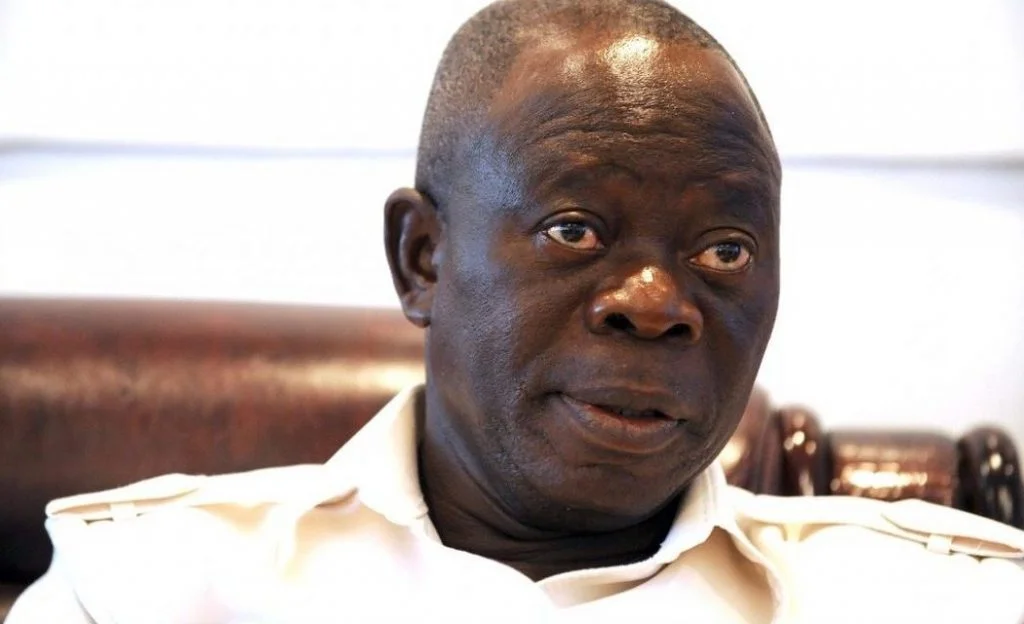
Senator Adams Oshiomhole has called on the Federal Government to retaliate against South African businesses operating in Nigeria following the recent attacks on Nigerians in South Africa.
Speaking during plenary on Tuesday, Oshiomhole said the Federal Government should consider revoking the working license of South African owned companies such as MTN and DSTV.
He argued that Nigeria must respond firmly to what he described as persistent hostility against its citizens.
READ ALSO:South Africa To Investigate ‘Mystery’ Of Planeload Of Palestinians
“I am not going to shed tears. If you hit me, I hit you. I think it is appropriate in diplomacy. It is an economic struggle,” Oshiomhole said.
He argued that while some South Africans accuse Nigerians of taking their jobs, Nigerians should return home and take over employment opportunities created by major South African companies operating in the country, including MTN and DSTV.
“When we hit back, the President of South Africa will not only talk but will also go on his knees to recognise that Nigeria cannot be intimidated.
READ ALSO:South African Ambassador Found Dead Outside Paris Hotel
“We will not condone any life being lost. If a crime has been committed under the South African law they have the right to bring any such person to justice, but to kill our people as if we are helpless, we will not allow that,” Oshiomhole added.
DAILY POST reports that several Nigerians in South Africa have reportedly been attacked, and their businesses destroyed, in ongoing xenophobic attacks in the country.
News
IGP Orders Officers Display Name Tag On Uniform, Gives Update On State Police

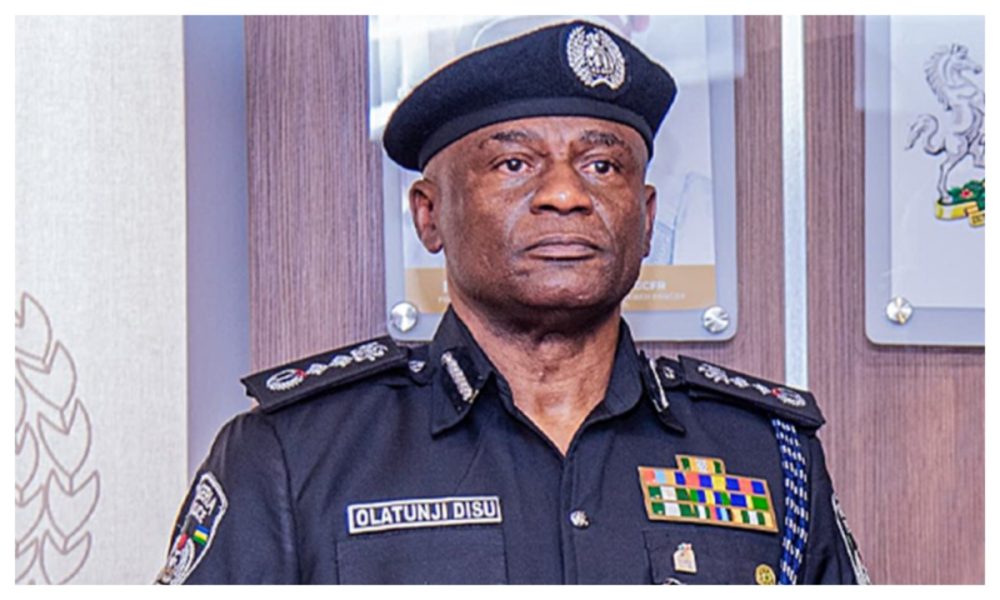
The Inspector General of Police, IGP, Tunji Disu, has ordered all police personnel to always have their name tags on their uniforms for easy identification.
Disu disclosed that only police personnel who are undercover are exempted from displaying their name tags.
Speaking on Tuesday, Disu said: “All police officers should have their name tags. All of us on the high table have our names apart from the undercover among us so if you look at all the Commissioners of Police we have our name tags, so it’s not our standard.
READ ALSO:
“All the Commissioners of Police are here and that is why we called this meeting, we have list of things like this that we will want to discuss with the Commissioners of Police, we have told them earlier and we will still let them know that every that happens within their area of jurisdiction falls under their control.”
On the issue of state police, the IGP said: “Since we got the signal that the Federal Government of Nigeria intend to establish State Police and since we are the federal police, we decided to take the bull by the horn and put down our own side of what we believe on how the state police should be run.
“A lot of things were taken into consideration, a lot of comparative analysis was done and it has been transmitted to the National Assembly.”
News
Court Orders SERAP To Pay DSS Operatives N100m For Defamation
The High Court of the Federal Capital Territory has ordered a non-governmental organization, the Socio-Economic Rights and Accountability Project, SERAP, to pay N100 million as damaged to two operatives of the Department of the State Services, DSS, for unjustly defaming them in some publications.
The court also ordered SERAP to tender public apologies to the defamed officers,
Sarah John and Gabriel Ogundele, in two national newspapers, two television stations and its website.
Besides, the organization was also ordered to pay the two operatives N1 million as cost of litigation and 10 percent post-judgment interest annually on the judgment sum until it’s fully liquidated.
Justice Yusuf Halilu of the High Court of the Federal Capital Territory gave the order on Tuesday while delivering judgment in a N5.5 billion defamation suit instituted against SERAP by the DSS operatives.
The judge found SERAP liable for unjustly defaming the two DSS operatives with allegations that they unlawfully invaded its Abuja office, harassed and intimidated its staff, in September 2024.
READ ALSO:How We Arrested Terror Suspect Who Threatened To Kill Students, Teachers In Abuja — DSS
In the offending publication on its website and Twitter handle, SERAP alleged that the two operatives unlawfully invaded and occupied its office with sinister motives.
The judge held that the publication was in bad taste especially from an organization established to promote transparency and accountability, as nothing in the publication was found to be truthful.
The DSS staff had listed SERAP as 1st defendant in the suit marked CV/4547/2024. SERAP’s Deputy Director, Kolawole Oluwadare, was listed as the 2nd defendant.
In the suit, the claimants – Sarah John and Gabriel Ogundele – accused the two defendants of making false claims that they invaded SERAP’s Abuja office on September 9, 2024..
Counsel to the DSS, Oluwagbemileke Samuel Kehinde, had while adopting his final address in the mater urged the judge to grant all the reliefs sought by his client in the interest of justice.
READ ALSO:DSS Arrests Suspected Gunrunner, Recovers 832 Rounds Of Ammunition
He admitted that although the names of the two claimants were not mentioned in the defamation materials, they had however established substantial circumstances that they are the ones referred to in the published defamation article by SERAP on its website.
The counsel submitted that all ingredients of defamation have been clearly established and the offending publication referred to the two officials of the secret police.
However, SERAP, through its counsel, Victoria Bassey from Tayo Oyetibo, SAN, law firm, asked the court to dismiss the suit on the ground that the two claimants did not establish that they were the ones referred to in the alleged defamation materials.
She said that SERAP used “DSS officials” in the alleged offending publication, adding that the two claimants must establish that they are the ones referred to before their case can succeed.
Similar arguments were canvassed by Oluwatosin Adefioye who stood for the second defendant, adding that there was no dispute in the September 9, 2024 operation of DSS in SERAP’s office.
READ ALSO:Alleged Cyberstalking: DSS Plays Video Evidence In Sowore’s Trial
He said that since SERAP in the publication did not name any particular person, the claimants must plead special circumstances that they were the ones referred to as the DSS officials.
Besides, he said that there is no organization by name Department of State Services in law, hence, DSS cannot claim being defamed adding that the only entity known to law is National Security Agency.
The claimants had in the suit stated that the alleged false claim by SERAP has negatively impacted on their reputation.
The DSS also stated, in the statement of claim, that, in line with the agency’s practice of engaging with officials of non-governmental organisations operating in the FCT to establish a relationship with their new leadership, it directed the two officials – John and Ogunleye – to visit SERAP’s office and invite them for a familiarization meeting.
The claimants added that in carrying out the directive, John and Ogunleye paid a friendly visit to SERAP’s office at 18 Bamako Street, Wuse Zone 1, Abuja on September 9 and met with one Ruth, who upon being informed about the purpose of the visit, claimed that none of SERAP’s management staff was in the country and advised that a formal letter of invitation be written by the DSS.
READ ALSO:DSS, Police Partner NCCSALW To End Terrorism, Mop Up Illegal Arms
John and Ogundele, who claimed that their interactions with Ruth were recorded, said before they immediately exited SERAP’s office, Ruth promised to inform her organisation’s management about the visit and volunteered a phone number – 08160537202.
They said it was surprising that, shortly after their visit, SERAP posted on its X (Twitter) handle – @SERAPNigeria – that officers of the DSS are presently unlawfully occupying its office.
The claimant added, “On the same day, the defendants also published a statement on SERAP’s website, which was widely reported by several media outfits, falsely alleging that some officers from the DSS, described as “a tall, large, dark-skinned woman” and “a slim, dark skinned man,” invaded their Abuja office and interrogated the staff of the first defendant (SERAP).
John and Ogundele stated that “due to the false statements published by the defendants, the DSS has been ridiculed and criticised by international agencies such as the Amnesty International and prominent members of the Nigerian society, such as Femi Falana (SAN)”.
“Due to the false statements published by the defendants, members of the public and the international community formed the opinion that the Federal Government is using the DSS to harass the defendants.”
READ ALSO:SERAP To Court: Stop CBN From ‘Implementing ‘Unlawful, Unjust ATM Fee Hike’
They added that the defendants’ statements caused harm to their reputation because the staff and management of the DSS have formed the opinion that the claimants did not follow orders and carried out an unsanctioned operation and are therefore, incompetent and unprofessional.
The claimants therefore prayed the court for the following reliefs: “An order directing the defendants to tender an apology to the claimants via the first defendant’s (SERAP’s) website, X (twitter) handle, two national daily newspapers (Punch and Vanguard) and two national news television stations (Arise Television and Channels Television) for falsely accusing the claimants of unlawfully invading the first defendant’s office and interrogating the first defendant’s staff.
“An order directing the defendants to pay the claimants the sum of N5 billion as damages for the libellous statements published about the claimants.
“Interest on the sum of N5b at the rate of 10 percent per annum from the date of judgment until the judgment sum is realised or liquidated.
“An order directing the defendants to pay the claimants the sum of N50 million as costs of this action.”
-

 Politics4 days ago
2027: Tinubu’s Re-election May Put An End To Nigeria — Baba Ahmed Warns
-

 Metro5 days ago
I’m A Street Girl’ – Bimbo Ademoye Clashes With Area Boys [VIDEO]
-

 Politics4 days ago
Senatorial Seat: Ogbakha-Edo Warns Against Imposition Of Candidates In Edo South
-

 Politics4 days ago
BREAKING: 2027: Former Adamawa APC Guber Candidate, Aishatu Binani Defects To NDC
-

 Business3 days ago
JUST IN: Nigerian Filling Stations Reduce Fuel Price After Hike
-

 Entertainment4 days ago
Actress Eniola Badmus Gets New Federal Appointment
-

 News5 days ago
10 African Countries With Highest Petrol Prices In Prices In April 2026
-

 News1 day ago
BREAKING: Wike Picks Alabo George For Rivers Governorship
-

 Politics4 days ago
2027: Pondi, Otuaro, Other Delta South Stakeholders, Endorse Senator Joel-Onowakpo For Second Term
-

 News3 days ago
2027: Pastor Adeboye Speaks On Nigeria’s Next President
