
News
OPINION: Rivers Of Betrayals
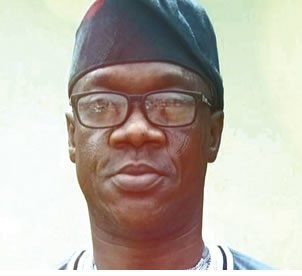
By Suyi Ayodele
“A child”, the elders of my place say, “only knows when he takes the oath of loyalty but is never aware when he breaks it” (Ojó tí omodé bá mu ilẹ̀ lo mo; kii mo ojó tọ́ bá da). They did not stop there. They go a bit further to talk about the consequence of treachery. Their judgement is a grave one. They submit thus: “Ilẹ̀ ní pa òdàlẹ̀” (The earth kills the one who breaks an oath). Now listen. When you hear the word, “ilẹ̀”, my elders are not by any means referring to the solid surface known as land – earth surface. No. It is deeper than that. Ilẹ̀ in Yoruba philosophy goes beyond the physical. My little knowledge of our culture tells me that once a person is cursed with the land, all terrestrial and celestial bodies are invoked and evoked to come to play. I know one or two persons that suffered the misfortune of being so cursed. As I penned this, my mind raced to those personalities in pity, and I trembled at the same time.
I tell you a short story of how someone I know suffered the fate that befalls every treacherous being. The two characters in the story are brothers of the same father. Their family, like every other polygamous set up, is not spared the ordeals of sibling rivalry. But those two guys were the closest in their family, or so we thought. They also shared one common character determiner; they are both rogues. So, it happened that one night, they conspired to burgle a tenant’s apartment in their father’s house. As planned, the elder brother was the one who climbed the ceiling to gain access to the apartment. As soon as his younger brother confirmed that he was in the room, he raised the alarm. Neighbours gathered and surrounded the house. It was to everybody’s shock when the thief was caught, and he turned out to be the son of the landlord. The culprit, on sighting his brother, asked why he decided to act the way he did. The police came and took him into custody. Days later, he was arraigned in a magistrate court and was summarily sentenced to a three-year prison term. He did his term and returned home in the dead of the night.
Early the following day, he left for the family’s ancestral home and sent a traditional message to the elders of their clan to join him there because he had a story to tell. The elders gathered. Some wayfarers joined them. Then he went ahead to narrate how his brother betrayed him on the night he was caught. His brother was in the audience. He did not dispute what the elder brother said. Before the elders could speak, the ex-convict did something tragic and irreversible. On the traditional spot where the family’s first placenta was buried, the ex-convict placed his left foot on it and issued a curse on his half-brother thus: “Let the land judge between us if I deserved the treachery from you that night.” The people present chorused “Ase”- Amen. He (the one caught) left town, only to return years later, a practically useless man. The last time I was in their place, I saw the two brothers. The signs of the effects of the jail term and the curse were very visible. Indeed, “Ilẹ̀ nií pa òdàlẹ̀.”
FROM THE AUTHOR: Tribune At 74: A Reporter’s Diary [OPINION]
Mr. Nyesom Wike, the immediate past governor of Rivers State, and current Minister of the Federal Capital Territory (FCT), has been in the news in the last couple of days. And it is for very bad reasons, though that has, in itself, become the new normal in the Nigerian political firmament. Wike, unarguably, is a man who thrives in trouble and controversies. He is the typical “Arogunyo” (he who is happy when there is war). Is that an enviable attribute? I leave you to answer that. From doing-in his own political party, the now comatose Peoples Democratic Party (PDP), in the last presidential elections, to his attempt to remove, unceremoniously, his political protégé and successor, Governor Siminalayi Fubara, to practically insulting a Bishop of the Anglican Communion, Rt. Rev. Emmanuel Oko-Jaja, the Bishop of the Anglican Diocese of Niger Delta, the FCT minister cuts the picture of a man whose yam turns out to be the biggest in the compound but has not learnt the wisdom of covering his mouth while eating it. There is a word of caution for such indiscreet behaviour. I don’t know how much of learning Wike has in our culture. I can just offer a free lesson here, to wit, what joins one to eat the biggest yam is more than one’s family members.
I saw the video of Wike’s tirade on the Bishop, and I asked myself what would have been the reaction of, let’s say, My Lord Bishop Emmanuel Bolanle Gbonigi, the retired Bishop of Akure Diocese. Tufiakwa! No Jupiter would dare do such a thing where my Lord Bishop Gbonigi presides. Not even a Military Governor or Administrator would ever come to the lion’s lair the way Wike did in Port Harcourt about a week ago, where he openly upbraided the clergyman for not recognising him when he (Wike) entered the church. Such behaviour also has a description in our traditional folksongs. In one of the songs, someone of Wike’s behaviour is called; “Ajaye ma wo ehin” – he who carries on without a thought for the end result. The elders, again, warn such an individual to note that the world rotates. Today, Wike is the FCT Minister. But for how long? Probably, another eight years, if God permits. After that, he becomes an ex-FCT Minister the same way he is being referred to as ex-governor! That is life. It moves, it revolves and those who carry on without sparing a thought for the repercussion of their actions and inactions are usually caught on the wrong side of history.
How true then is the saying that a man with bad character may not necessarily know himself? I found an answer to this question in the recent statement credited to Minister Wike, who was quoted to have said that he could not tolerate ingrates. Whao! So, the restless former governor detests ingratitude? Wike, while speaking at a function in Abuja, described his successor, Governor Fubara, as an ingrate, who attempted to crumble his political structure in Rivers State.
FROM THE AUTHOR: OPINION: Government’s One-grain Palliative
This is how the minister described his successor and the political crisis in the once-peaceful state: “Let me tell you, I don’t like ingrates. I can’t stand it. What is happening now is what former Governor Peter Odili said in his book: ‘Give a man, power and money, then you will know the person.’ If you haven’t given a man, power, and money then you don’t know the person…. You know what is painful? All these allegations, I smile. Who and who sat with him. In all your doings be grateful in your life no matter the circumstance. Nobody who is a gentleman, and a politician will support this kind of thing. I left projects for him to commission so he would showcase them during his 100 days, then politics came in. We are just starting. God gave you something, you are now importing crisis. God gave this on a platter of gold, no crisis. The Federal Government is not fighting you; nobody at home is fighting you. You are the one trying to create a crisis for yourself. What kind of system is that? Who does that? Only ingrates that it is in their blood that will support what is happening there. Only those who are naturally ingrates.”
So, in all his dealings with all the benevolent political squirrels that cracked his political palm kernels for him, Wike has remained grateful to all of them? Who among his political benefactors has Wike not shown ingratitude to? Who among them has he not decimated? Which of the political structure that was used in making Wike chairman of a council, Chief of Staff to Governor Rotimi Amaechi, Minister of State for Education and finally governor of Rivers State, is still standing today. Has Wike been eternally grateful to his benefactors, like Dr Peter Odili, whose book, “Conscience and History – My Story”, he quoted at the Abuja function. If Odili had not shown magnanimity, maturity, and a deep sense of forgiveness, would he and Wike have been on talking terms today? What about Rotimi Amaechi, the man who handed over power to Wike? Is the Ikwere man not nursing the fatal political injury inflicted on him by Wike till date? If Amaechi were to write the memoirs of his political voyage, how many negative chapters would Wike occupy? What has been the foundation of Rivers State since the beginning of this present democratic dispensation if not treachery, ingratitude, and acute backstabbing?
While one will not necessarily support Fubara burning the bridge that he used in crossing his political river, it is completely out of place for Wike to talk about ingratitude. His entire political life and journey is built on that infamy. Whatever a man sows, is what he reaps. Nothing changes that! Is Wike not ungrateful to the PDP which sharpened his political teeth for him? Did he not sink the PDP in Rivers, Enugu, Abia, Oyo, and Benue States, when he led the PDP G-5 Governors, in the last election? Without the PDP, would Wike have amounted to anything politically? Is he not an ingrate and a prodigal political son to the benevolent Odili? Did he not repay Amaechi, the man who made him a CoS, a junior minister, and a governor with ingratitude when he found new masters in the former President Goodluck Ebele Jonathan and his wife, Madam Patience Goodluck Jonathan? But for selling his old godfather, Amaechi for 30 Shekels of silver like Judas Iscariot, would Wike not have been long confined to the ignoble dustbin of political history? Something is wrong with Rivers State. The owners of the land need to look deeper into the issue of political treachery in the oil-rich state. The way political leaders there change loyalty like a baby’s diapers calls for concern. Political decency appears to be in short supply over there!
FROM THE AUTHOR: OPINION: Salute To Melchisedec Of Nigeria
In Rivers State, it has been an unbroken stream of treachery. Odili tells it all in his “Conscience and History – My Story.” The Rivers’ political ancestor tells the story of how he made his own Personal Assistant, Rotimi Amaechi, a member of the House of Assembly, and then the speaker. Wike was a council chairman in the Odili government. When it was discovered that the Abuja powerhouse would not support Amaechi’s governorship PDP candidature, it was the same Amaechi who nominated his cousin, Celestine Omehia and he was elected governor. Suddenly, the same Amaechi became incommunicado and disappeared from the radar of the godfather, Odili. By the time Amaechi resurfaced, Omehia was no longer the governor, having been removed by his cousin, Amaechi. As the new governor, Amaechi appointed Wike his CoS, and the duo ganged up to dethrone Odili as the political godfather of Rivers and stripped him naked! Then it was the turn of Wike to derobe and dethrone Amaechi, who made him CoS, nominated him to Goodluck Jonathan for appointment as minister.
Amaechi lost Wike to Abuja and from there joined forces with Amaechi’s foes to sack him from Rivers politics. With Abuja behind him, Wike defeated Amaechi’s candidate and became governor of Rivers. In the last election, Mr. Wike made his Accountant General, Fubara, the governor. Seven months down the line, Fubara is up in arms against Wike as a continuation of that narration of treachery. One strange thing about it all is that at every bus stop of treachery, each of the traitors complained loudly that he had been betrayed. The Yoruba say curse (egun) moves from one generation to the other. Treachery will continue in that political family in Rivers for a long time until an outsider comes in to break the jinx. Did Odili ever do that to whoever his political godfathers were? That is a task for political historians to handle.
It is true that Wike has been much luckier than his mates. He has enjoyed the best of political patronage and upliftment. He has the right to behave like the proverbial “Ajaye ma wo ehin.” Most people in his category see others who are less-fortunate as never-do-well. But there is always a tomorrow for people in that mould. When you eat in the house of a benevolent deity, it is foolish to look at others in a home that suffers lack with disdain. Why? There is a saying by my people that “Ebora ayini je, he yini hi ta”- the deity that feeds you doesn’t give you to sell. This means there is an extent to which luck can carry a man. Wike had used the sword of treachery to decapitate his political benefactors in the past. It is natural that Wike is worried that Fubara is sharpening that same sword and aiming at his political skull. He can fight all the fights. He has the support of those in power. But one thing is sure; vengeance will surely come at the appointed time. The sword has been unsheathed. It is now like the Biblical “bow of Jonathan”, and the “sword of Saul”, which “turned not back, and returned not empty” without touching “the blood of the slain”, and “the fat of the mighty” (2 Samuel 1:22). He can only postpone the evil days; they will surely come the way day succeeds the night. This is not a curse; it is the course of life that no man can change. We will witness it and we will recall that at a point in time, the past treachery of a mighty man was fully repaid in full measure, if not more. It will happen!



News
[OPINION] Osimhen: The Arrogance Of A Ghetto Hero

Tunde Odesola
Before the raving hawk disappeared into the sunny afternoon sky, the mother hen caught a glimpse of it just in time. Squawking and clucking, the brown mother hen sounded a throaty alarm, frantically calling on her 11 chicks, who sprinted into the sanctuary of her warm wings, where they brooded, peeping through the safety of feathers.
Like witches, hawks on predatory flights don’t make a noise. The screaming and scampering of mother hen after an attack is the first telltale of tragedy. The second telltale is the sight of a dangling chick in clutchy claws, rising helplessly skywards.
On that fateful day, the mother hen brooded her chicks out of sight from a hovering hawk. But a particularly arrogant and belligerent chick called OsinmHEN slipped through the mother’s tail end and decided to play in the hot afternoon sand, chest puffed, shoulders raised like Aso Rock fence.
The hawk sighted the stray prey and flew higher up, and away, out of sight. The mother hen monitored the ravenous hawk with red-alertness, assured her chicks were safe underneath.
Then it happened.
With the swiftness of a whirlwind, the hawk suddenly swept downwards, like a missile deployed from a military jet, grabbing OsinmHEN with both claws, but the protection of the mother hen was comprehensive. In a jiffy, she sprang and smashed into the predator midair, making it lose both balance and grip. And OsinmHEN fell off to safety, limping back under the mother’s brood.
Furious, the mother hen scolded the petulant OsinmHEN, saying it could have ended up in the belly of the hawk if not for providence. Then, as mothers do when warnings fail, mother hen reached for a myth told by Ifa scholar, Ifayemi Elebuibon.
“Listen,” she said, voice laden with solemn grief. “Let me tell you about Ọ̀kẹ́rẹ́.”
“Once upon a forest,” the mother hen began, “a mother squirrel received a warning from Ifa: ‘keep your son indoors for seven days, death prowls’. However, on the third day, Baby Squirrel sprinted out from the family burrow, waving his bushy tail from one tree to another. The forest was quiet. ‘There are no predators,’ he thought.
“He didn’t hear the gun. But the forest did. The boom shook leaves loose from branches.
“When she heard the shot, Iya Ọ̀kẹ́rẹ́, the mother squirrel, ran deeper into the burrow, looking for her son. Little ọ̀kẹ́rẹ́ was nowhere in sight. Panic gripped the mother. She couldn’t sleep. So, she went in search of her son all evening and all night. As she was returning home, hiding behind trees, she stopped in front of the hunter’s house, out of sight.
“Behold, by a flickering firelight, she saw the hunter and his family having a dinner of pounded yam and egusi. From behind a fallen trunk, she peered. And she saw the head of her son floating in the family soup, and the hunter grabbed the head, stroked it ‘ko, ko’ in the plate to shake off some egusi, before airlifting it to the mouth.
MORE FROM THE AUTHOR:[OPINION] Siyan Oyeweso: Lessons In Virtue And Vanity
“Iya Ọ̀kẹ́rẹ́ shook her head and shed the tears of a mother, saying: ‘Orí ọ̀kẹ́rẹ́ koko láwo, bí a wí fún ọmọ ẹni, ọmọ ẹni a gbọ́.’”
Of the mother hen’s 11 chicks, only OsinmHEN refused to understand the Ọ̀kẹ́rẹ́ myth and the consequences of disobedience. Blinded by arrogance, OsinmHEN, who thinks himself a hawk, is bound to walk the path of self-destruction soon again.
And so, in the distant Moroccan city called Fez, Nigeria’s Super Eagles fearsome striker, Victor Osimhen, replayed the ancient tragedies of OsinmHEN and Ọ̀kẹ́rẹ́.
It was in a round of 16 match against Mozambique at the ongoing African Cup of Nations soccer tournament, Super Eagle Osimhen exhibited the traits of Super Chicken OsinmHEN. Nigeria was leading 3-0, and Osimhen had scored two of the three goals, with fellow striker Ademola Lookman scoring the opening goal and providing two assists.
In a moment of arrogant madness, Osimhen, who once hawked ‘pure water’ and sold newspaper in the city of Lagos, pushed away the hand of his cautioning captain, Wilfred Ndidi, and launched a verbal attack on his more decorated teammate, Ademola Lookman, pointing accusing finger at him, as he belched, “No try am again, no try am again,” like a member of the renowned union of road transport workers.
In the glare of a shell-shocked world, Osimhen proved once again that you may take a lizard from Olusosun to Turkey, it will never become a crocodile. No matter how long irú (locust beans) stays in the soup, it will not lose its smell.
Let’s imagine for a moment that Lookman had the temperament of Yomi Peters, the dreadful Stationery Stores FC of Lagos playermaker, notorious for beating up referees. Known as Mudashiru Atanda, Peters changed his name to Yomi Peters when he came back from suspension for head-butting referee Bolaji Festus Okubule. In the 1980-1990 era of rampant fan attacks, many referees feared Peters more than they feared fans.
In the height of his arrogance, if he played in the national team of yesteryears, Osimhen could never have pushed away former captains of the national team, such as Chairman Christian Chukwu, Segun Odegbami, Stephen Keshi, Yobo Joseph, Sunday Oliseh, Austin Eguavoen, etc., as he shoved aside captain Ndidi, before unleashing unnecessary assault on Lookman.
Can he shove aside any of Tarila Okorowanta, Etin Esin, Daniel Amokachi, Taribo West, Bright Omokaro and Sunday Eboigbe, or launch a verbal assault on them? Osimhen no go try am, walahi. Otherwise, di match for turn into a mixed martial free-for-all, with players losing their teeth.
Were it not for emotional maturity on the part of Ndidi and Lookman, Osimhen, by his childish attitude, would have put a knife to the bond of unity in the team, and things would have fallen apart because a house divided against itself can never stand.
MORE FROM THE AUTHOR:[OPINION] Tinubu: Ade Ori Okin Befits KWAM 1, Not Awujale Crown
Osimhen’s outburst sheds light on how people in positions of authority look down on people they consider beneath them. It is an on-the-pitch reenactment of how Nigerian security agencies, military and police, especially, oppress fellow Nigerians just because they bear guns.
This oppressive mindset formed the motivation behind a retired Chief of Naval Staff, Vice Admiral Awwal Zubairu Gambo, grabbing a large portion of unapproved land in Abuja, building on it a sprawling edifice that his life’s savings cannot justify, yet turned around to deploy armed soldiers to guard the property when FCT authorities asked him to provide approval documents for the land.
Raised in the Olusosun ghetto of Lagos, Osimhen, as a child, had seen an established pattern of ‘might is right’ in everyday Nigeria and has imbibed loud talk, threat and arrogance as a way of life. Osimhen was the one who went on social media to curse his coach, Finidi George, and Nigerian Football Federation members over a misunderstanding.
He said, “Ẹni ku’re, walahi talahi (It shall not be well with you in God’s name). I don lose all the respect wey I get for dat man (Finidi).” He burst into a Yoruba curse, “Ti alale ba ni ko da fun yin, alaro o ni ye yin, meaning ‘if the evening god decrees goodness for you, morning god will decree evil for you’. Ogun kill anybody, anybody wey dey believe all those nonsense. I tell am (Finidi) say make I come camp, make I come follow di boys dem talk. Make I come follow dem dey. I spoke with my fellow teammates, too. Wetin im (Finidi) tell me, ‘Oh no, you know, you have to be with the family; oh dis, oh dat. (So,) I go dey live my life dey go, I face my life dey go. But team don lose now, una wan find person wey dey at fault, na me wey dey nurse my injury una come think say una wan put my name because of say Super Eagles get two bad games, I know how many injuries weyI don use play. Ẹni ku’reni ku’re se! All of una no go die better. I no go allow one person to come and say, ‘you can’t beg Osimhen to come and play, wetin bi say you can’t beg wetin?’”
Three months after Osimhen’s outburst, Finidi reacted, saying, “The meeting we had, we never talked about Osimhen at all. The only time Osimhen’s name came up was when the minister talked about hearing about indiscipline while we were at the AFCON, and he mentioned Osimhen’s name.
“It was in that meeting, I think one of the officials, I don’t know who, called him or sent him a message because they wanted to save their heads as the minister was very furious about the team not doing well.
“Someday, he is going to realise it’s not true. I think they used him because they wanted to save their heads because of bad results. It’s better they talked about Finidi George than the real issues, and it’s quite unfortunate that he came up live and said those things.
“I sent him a message to tell him that’s not the best way to go about lying. From that point, I didn’t hear from him; he didn’t apologise. Since then, I’ve moved on. I wish everybody well.”
A more emotionally mature player would not have taken to social media to rant against his coach on such a misunderstanding, an action which further reinforces Osimhen’sarrogant mentality because he did not rant against Napoli FC authorities when they blocked his move away from the club. He knows very well that doing so might affect his career.
What Osimhen fails to realise is that his on-field and off-field antics put a question mark on his emotional intelligence – an asset in modern football. As the world has become a cyber village, the actions of popular personalities are splashed on social media, enabling football scouts, in Osimhen’s own case, to see what elite footballers are up to.
MORE FROM THE AUTHOR:OPINION: Aláàfin Ọ̀yọ́ Cuddling A Dead Empire (1)
Exposing the volatility of Osimhen’s emotional state, his viral outburst against Finidi showed him threatening to beat up those with him when he was recording the video over what he deemed as interference during the recording. For someone who emerged from such a humble beginning as Osimhen, a modicum of humility is expected to temper their life.
The Lookman and Finidi episodes are not the only avoidable clashes Osimhen has had in his soccer career. During a World Cup qualifier in Uyo, Akwa Ibom, Osimhen walked out on his teammates after Zimbabwe equalised, owing to goalkeeper Nwabali’s mistake in the dying minutes of the match. If he was annoyed that Nigeria drew the match, why did he not score enough goals to ensure victory for the Super Eagles? On countless occasions, Nwabali had saved the Super Eagles’ blushes when he (Osimhen) and other outfield players failed to live up to expectations. Tactically speaking, Nwabali contributed more to the Super Eagles than Osimhen during the World Cup qualifiers.
To describe Osimhen’s tantrums as passion is to call a two-year-old baby who loves playing with fire, as courageous. Indulgence breeds impunity. Indulgence in collective sports breeds disunity and kills team spirit.
Sharing his thoughts with me, a colleague and sports aficionado, Adekunle Salami, described Osimhen as ranking among the five best strikers in the world today. He said, “Every striker wants to score. Every midfielder wants to lay that match-defining pass, every defender wants to make that goal-thwarting block. Football is a passionate game. However, in all of this, football is a game that operates on a strict code of conduct because so many people, children especially, watch it.
“Therefore, players must be seen to be of good conduct. I love Osimhen. I love his dedication to the national team, but he must show respect to his fellow teammates. We must remember Osimhen is from the slum. He was taught life’s hard lessons on the street. Struggling has been a way of life for him; we must remember that. But this is not to give room for the bad attitude he is exhibiting. He should have waited for the game to end and then gone to Lookman and told him about how he felt. We were leading 3-0, and you have scored twice, what else do you want? Some people have not scored. Akor has not scored.
“After the Mozambique match, all the players prayed together. He just stormed out of the field, threw his accreditation away, and went to the dressing room. He even threatened to leave for Turkey. They should have allowed him to go. He is the one who would be hurt, not Nigeria. It is a privilege to play for Nigeria; he must not abuse the privilege. He cannot misbehave in Galatasaray, his Turkish team, because they have a code of conduct. Osimhen has grown in this disrespectful and distasteful behaviour because he was never sanctioned.”
Another sports guru, Festus Abu, said the issue should not be overflogged, adding that such things happen in football. “It is one of those things in football. But it becomes worrisome when it turns into a recurring decimal. The coach and his team should ensure that the incident does not escalate into an albatross. I hope Osimhen has learnt his lessons.”
Nothing blinds like arrogance. Ademola Lookman, whom Osimhen talked disrespectfully to on the pitch, is even more decorated than him. Lookman plays for a bigger club in a bigger league and has made more impact in Europe than Osimhen, scoring a hat-trick in a European Cup final. In the ongoing competition, Lookman has scored the same number of goals as him, but has more goal contributions, earning him two Man-of-the-Match awards.
Osimhen, bring your shoulders down, biko.
Email: tundeodes2003@yahoo.com
Facebook: @Tunde Odesola
X: @Tunde_Odesola
News
NMA To Withdraw Medical Services In Edo Over Kidnapped Colleagues

The Nigeria Medical Association (NMA), Edo State Branch, has threatened to withdraw medical services across the state, effective from Saturday, 10 January, 2026.
This followed the recent abduction of two medical doctors on January 1st and 2nd, 2026.
Chairman of the NMA Edo State branch, Dr. Eustace Oseghale, in a statement made available to newsmen in Benin on Friday, stated that the withdrawal of services was a direct consequence of the abduction of their colleagues and a reflection of the heightened sense of vulnerability among medical practitioners in the state.
READ ALSO:Doctors’ Strike Continues As NARD Demands Fair Deal, Better Pay
Oseghale, on behalf of the NMA, called for immediate release of the abducted doctors and implementation of measures to prevent future incidents.
The statement reads: “This incident raises concerns about healthcare professionals’ safety in Edo State, threatening their lives and undermining healthcare delivery.
“We demand the immediate release of our abducted colleagues as well as enhanced security protocols for Edo State residents and regular engagement between NMA Edo and the Edo State Government on security concerns.”
READ ALSO:Edo Targets 2.2 Million Children For Measles, Rubella Vaccination
The NMA Chairman, while insisting on withdrawal of services statewide if their demands aren’t met, stressed that a safe working environment is crucial for healthcare providers.
“We’ll continue to withhold services until our demands are met and colleagues are safe.
“We urge a swift resolution and the safe return of our colleagues. Security operatives should take this seriously, as they’ll be held responsible for the consequences of our action,” Oseghale said.
News
Edo Targets 2.2 Million Children For Measles, Rubella Vaccination

The Edo State Government says it is targeting about 2.2 million children aged between 0 and 14 years for measles and rubella vaccination across the state.
The Director of Disease Control and Immunization at the Edo State Primary Health Care Development Agency, Dr. Eseigbe Efeomon, who disclosed this during stakeholders’ sensitisation meeting in Benin City, said this would be done in collaboration with development partners.
Efeomon, while noting that the vaccination exercise scheduled to hold simultaneously from January 20 to January 30, 2026, across the 18 local government areas of Edo State at designated health facilities and temporary vaccination posts, said the campaign aims to contribute significantly to the reduction of measles and rubella in Nigeria.
He explained that achieving this target requires increased population immunity through sustained vaccination.
READ ALSO:Man Arrested In Edo For Alleged Abduction Of 4-year-old
Dr. Efeomon stressed that only qualified and certified health workers would be recruited as vaccinators because the vaccines are injectable.
According to him, the vaccination strategy would involve fixed posts and temporary fixed posts, and vaccination cards would be issued to all vaccinated children as proof, which parents and caregivers are advised to keep for future reference.
He added that vaccination teams would visit schools, churches, mosques, markets, motor parks, internally displaced persons’ camps and other public places, while children who receive the vaccine would be finger-marked to prevent double vaccination.
He reiterated that the overarching goal of the campaign is to drastically reduce rubella incidence nationwide and protect children from preventable diseases through effective immunisation coverage.
READ ALSO:Edo widow-lawyer Diabolically Blinded Over Contract Seeks Okpebholo’s Intervention
Also speaking, the World Health Organization Local Government Facilitator, Mr. Ajaero Paul, described measles and rubella as major causes of death and congenital abnormalities among children globally.
He said both diseases are preventable through the measles-rubella vaccine, which he described as safe and effective,
He added that sustained advocacy is critical to reducing child mortality and lifelong disabilities.
On his part, UNICEF Social and Behavioural Change Health Officer, Yakubu Suleiman, emphasised that the measles-rubella vaccine is safe and effective for all children aged nine months to 14 years.
READ ALSO:Edo: Suspected Kidnappers Kill Victim, Hold On To Elder Brother
He stated that the government has fully paid for the vaccines, making them available at no cost to all eligible children in government health facilities across the state.
Suleiman explained that vaccination not only protects individual children but also safeguards communities from deadly vaccine-preventable diseases such as measles and rubella.
He added that even children who had previously received the measles vaccine should still be given the measles-rubella vaccine and appealed to schools and other key stakeholders to support the campaign to ensure that no child is left behind.

 News5 days ago
What I Saw After A Lady Undressed Herself — Pastor Adeboye
- Headline5 days ago
PROPHECY: Primate Ayodele Reveals Trump’s Plot Against Tinubu
- Metro5 days ago
Armed Robbers Shot PoS Operator To Death In Edo
- Business4 days ago
NNPCL Reduces Fuel Price Again
- News2 days ago
How To Calculate Your Taxable Income
- Metro4 days ago
AAU Disowns Students Over Protest
- Metro4 days ago
Edo: Suspected Kidnappers Kill Victim, Hold On To Elder Brother
- Metro4 days ago
Nine Soldiers Feared Dead In Borno IED Explosion
- Metro2 days ago
JUST IN: Court Grants Malami, Wife, Son N500m Bail Each
- Headline2 days ago
Russia Deploys Navy To Guard Venezuelan Oil Tanker Chased By US In Atlantic


