

News
OPINION: Sunday Igboho’s Iru Ekun As Sòbìà, The Guinea Worm


By Festus Adedayo
Make no mistake about it: Yorubaland is encircled by terrorists. And Nigeria is today as sour as vinegar. The president’s birthplace is now a terrorist enclave. Since the Ahoro-Esinele tragedy in Oriire LG of Oyo State on May 15, a lot more blood has been spilled. Blood spillage has become, in the words of Bob Marley, a natural mystique and “many more will have to suffer; many more will have to die.” Ondo, Ekiti, Ogun, Osun have since been taking bites of their own blood. On Friday, bandits stormed the Igbosi area of Idogun in Ose Local Government Area of Ondo State. They destroyed two buildings and kidnapped a nine-year-old boy. On the whole, Nigerians can taste the bitter feel of blood in their mouths. Or see a picturesque of blood flowing on the horizon. News of violent deaths in the hands of terrorists, kidnaps for ransom and violent abductions have become daily existential realities.
Sending children to school today is risky. It is like hopping over an IED-buried land. The victory of Boko Haram terrorists, who declared war on education, against a Southwest which prides itself as beacon of education, couldn’t receive more fitting finality than now. Late last week, an unverified claim was made that terrorists keeping vigil with menacing guns over our children and their teachers inside the forest of Oyo National Park have made depressing ransom demands.
War has indeed begun. But, for the president, 2027 votes seem more precious than his people’s blood. And since, as his people say, even if one beholds a thousand heads in the marketplace, it shouldn’t be difficult to identify one’s, the people are bothered whether the president has identified his in this cadaver-counting arithmetic. The president has effectively mutated from his constitutionally guaranteed role as actor-in-chief into a national mourner-in-chief, running a government of bereavement and weekly national condolences.
As I write this, news filtered in that terrorists have again struck Borno State, beheading soldiers and vigilante members. Like other parts of Nigeria, Southwest Nigeria is terrified. It is almost a crime to celebrate. Killings no longer make front page news. Nor the number of our countrymen sent to the graveyards. You can compare our situation to someone’s whose mother was offered as sacrifice to Yemoja, the goddess of the river, for whom smiling is an anathema. Killings by terrorists have become a roulette. Since they stormed Ahoro-Esinele and Yawota, killing a teacher, abducting 46 pupils, teachers and decapitating one, Southwest has been the proverbial cycle of conspiracies (Egbìnrìn òtè) which, as you attempt to grapple with one, a multitude spring up.
Many parts of Nigeria bear virtually all chaotic symptoms of rebel-occupied spaces in far-flung places of Africa. Anarchy is fast becoming the new normal. Indices of ungovernable Nigeria are evident.
The chaotic, violent and blood-soaked situation today in Southwest Nigeria is almost akin to that of the 19th century. According to J. F. Ade Ajayi and S. A. Akintoye, in their “Yorubaland in the Nineteenth century” published in Groundwork of Nigerian history (1980) edited by Obaro Ikime, it was the century the Binis succeeded in making incursion into Northern Yoruba towns of Owo, Akoko, Ekiti and Ikare. Between 1830 and 1850, extreme Northeastern Yorubaland towns of Oworo, Bunu, Iyagba, Owe and Ijumu had been taken over by Jihadist Fulanis. Led by the Nupe Malam Dendo, the Jihadists later made incursions into Igbomina, Akoko and northern Ekiti. Ilorin cavalry’s forays also met with huge success. The rivalry between the Ibadan and Ijaye for dominance left blood and sorrows. By 1847, highly feared Ibadan forces had occupied Ekiti, expelled the Ilorin and by 1860, spread their tentacles of dominance over it, Ijesa, Akoko, Igbomina and vast territories of Osun and Ife kingdom. The 16-year war against the Ibadan in the Kiriji war, also known as the Ekitiparapo war, was to later truncate Ibadan’s dominance.
READ FROM THE AUTHOR: OPINION: Tinubu’s 3rd Anniversary, Ogun Deity And Voodoo Vote Numbers
All these led to, in the words of Ade-Ajayi in another journal article with the title, “Professional Warriors in 19th century Yoruba politics” a shift from part-time militias to professional standing armies. Leaders of the armies of Yorubaland during this troublous era were: Aare Latoosa, who commanded Ibadan forces in the Kiriji War; Balogun Oderinlo, a tactical genius who fought and decimated Fulani forces in the Osogbo War; Balogun Ogunmola, a ruthless strategist; as well as Basorun Oluyole and Balogun Ibikunle. The Kiriji war also produced Ogedengbe Agbogungboro of Ilesa, who became the supreme commander of the allied Ekiti-Parapo forces. He was renowned for his military prowess. Then, we had Fabunmi of Oke-Mesi, who was a dreaded key strategist whose beheading of an Ibadan tax administrator became the catalyst of the Ekitiparapo war; as well as Ijaye and Abeokuta (Egba) Commander Kurunmi of Ijaiye.
These militia leaders were spurred on by the collapse of the Old Oyo Empire in the same 19th-century. They became a new class of warlords who rose from the ashes of the incursions of external and internal forces into the domains of territorial powers. These militias sidestepped traditional hereditary lines and went ahead to acquire immense political power. By doing this, they fundamentally transformed the powers of Yoruba constitutional monarchies. Their military expeditions also led to a shift and reshape of Yoruba societal norms, recalibrating might to be right. As said by Ade-Ajayi, the control of violence, access to firearms, and war tactics during this time became central pillars of political authority. It led to a total militarisation of the whole of Yorubaland. This pervaded the land until British colonial intervention became the sole enforcer of normalcy and peace in the late 1890s.
Another example was the Agbekoya Parapo Revolt of 1968–1969 led by Tafa Adeoye. It was a peasant revolt in the Western Region, fought and won against the Federal Government by the Ibadan, spearheaded by two villages of Akanran and Akufo.
I went into this small history to be able to situate what is playing out today. All the above militia leaders of Yorubaland were ex-bandits who became respected military Generals. Ogedengbe Agbogungboro of Ilesa was a local fearless bandit who, as a young boy, terrorized his Atori village. In 1851, he fought on the side of Ijesa against Ibadan in the Ijebu Ere (Ijebu-Jesa) war. He also fought the Igbajo war. It was in this latter war that Ibadan captured him and he became a prisoner of Basorun Ogunmola. He later transformed into a major war commander in the Kiriji war. He died in 1910 as holder of the title of Odole of Ijesaland. Fabunmi of Oke-Mesi was also a local bandit who beheaded an Ibadan Ajele named Oyepetun in retaliation for an assault on his wife.
To validate why a people who lay store by good conduct could accommodate bandits as their leaders, Yoruba validate this in a saying that weaponizes necessity as mother of invention. It is rendered as, “ojó t’áa bá pà’jùbà làá níran àdá, ojó ogun bá le làá níran omo t’ó le”. Literally, it means, it is on the day of cultivation of a virgin forest that a machete becomes a close companion, just as a moment of being besieged makes the tough son in the closet the most useful weapon of defence. By the way, Ibadan veteran broadcaster, Fresh FM’s Abolade Salami gave me this saying some years ago.
A few weeks ago, self-labeled Yoruba nation activist, Sunday Adeniyi Adeyemo, popularly known as Sunday Igboho, again hit headlines. He had earlier come into national reckoning in January 2021 when he gave a controversial seven-day ultimatum to suspected Fulani herdsmen allegedly terrorizing the Ibarapa area of Oyo State to vacate the space. Public accusation then was that these herders were behind the orgy of kidnapping and killing of local farmers in the area. He instantly hit the klieg light as a folk hero in Yorubaland. The Muhammadu Buhari government however hounded him. It led to an Operation Get Igboho which, on July 1, 2021, had a joint team of security operatives haunt him at his Soka, Ibadan, residence. The Department claimed it recovered seven AK-47 assault rifles, three Pump Action guns, 30 fully charged AK-47 magazines, 5,000 rounds of 7.62mm ammunition, and 18 Walkie-Talkies, among others, from his house. Igboho thereafter fled the country.
READ FROM THE AUTHOR: OPINION: Boko Haram’s Slaughter Of Mathematics In Oyo
After being granted pardon and he returned from exile, Igboho recently announced the formation of a security outfit he called “Ìrù Ekùn Security Network”. In his words, it would collaborate with the Police, Department of State Services, Nigeria Army and other relevant stakeholders to flush out terrorists, kidnappers, bandits, and other hoodlums, who are threatening the peace and safety of the people. He also claimed to want to work with South-West governors to fortify state-backed security outfits like the Amotekun Corps.
In the wake of the abduction of pupils and teachers at Oriire, Igboho has again come out to say he knew the politicians behind it. He said they were Tinubu haters.
Voluble, illiterate, unpretentious but bold, those who know Igboho know of his trajectory as an anvil in the hands of politicians. He is also a notorious land-grabber. The Elebu area in Ibadan has repeatedly witnessed his notoriety in this regard. However, this is not a time for recriminations. It is a time to seek ways of wiping away the caked blood of sorrow from our brows as a people and who can effectively do this. Thus, Igboho’s offer to tame insecurity in the Southwest, even claiming to be able to spread his Ìrù Ekùn’s tentacles to Kogi and Kwara States, deserves thorough examination.
Thus, that Igboho is transmuting from villainy into a people’s heroes has its historical trajectory as analysed above. However, if the aim is for the Yoruba, through Igboho, to harvest their share of the national cake as Niger Deltans are doing with claims to be protecting critical oil pipelines and gas sector installations, Igboho’s Ìrù Ekùn is all well and good. If, conversely, the aim is to provide security for the Southwest, it may be deadly in the long run. Igboho may succeed in bailing out some children from the grips of terrorists inside the Oyo National Park. Many may even die in the process. Ultimately, the end result may prove catastrophic for the people.
First is, to hand over such tremendous power to a non-state actor of Igboho’s pedigree and educational depth is dangerous. What knowledge does he have in modern warfare? A similar outing proved fatal which Nigeria has yet to recover from. Mohammed Yusuf, founder of Boko Haram, was known as provider of security cover for then Borno governor, Ali Modu Sheriff. In the 2003 elections, Sheriff reportedly provided him financial backing, government appointments and even protection. His sect, in exchange, then gave him grassroots support and protection. By 2003, the glue to the rapport came in the form of political alliance, with a deal struck to give the sect concessions. One was the release of its imprisoned members and appointment of its allies into local government offices. Yusuff however sensed betrayal and abandonment. After election and Sheriff government sought to do away with Yusuff, the bubble burst. This led to its radicalization and clashes with local security forces. The subsequent deadly 2009 uprising which later arose became a fait accompli. And Yusuff’s elimination. The whole of Nigeria is today suffering from this unholy alliance.
Second, as the Yoruba say, even when a mad person is cured of their malady, there always remains fragments within them, a moment of insanity in sanity. To give Igboho, an ally of political players, such huge security powers is potentially dangerous for the polity. The timing of the outfit is everything but right. Handing total security to a non-state actor, one who has expressed his angst at alleged persons who want to stop “our son” from being president, would be akin to arming deadly political thugs. HURIWA, the human rights group, might have had this in mind when, in its reaction to Igboho’s Ìrù Ekùn, said it would threaten national security.
READ FROM THE AUTHOR: OPINION: Was The Awolowo, Akintola Crisis Instigated By Enemies?
Third is that Ìrù Ekùn would empower other nationalities facing insurgency like the Southwest to equally demand national imprimatur for their own militia. It will be unfair not to grant them, or else it becomes an exercise in ethnic favouritism.
The president’s immediate response to the Oriire kidnap, after the tragedy of his sending a delegation to the place last Sunday, rather than his physical presence, is equally a placebo that cannot cure this national ailment. He had announced the recruitment of 1000 forest guards to be deployed to the forests, in partnership with the Oyo State government. Not only will the presidency, as usual, dilly-dally on this, no one knows the guards’ modus operandi nor when it will take off. Its effectiveness is also suspect except government veers off constitutional provisions by empowering it to carry sophisticated guns.
If, almost three weeks after 46 pupils and teachers were taken into captivity, 1000 forest guards idea is the only plausible word we have heard from government, it is frightening and disheartening. Government should confess its limitations. When a person exhibits palpable incapacity as this, Yoruba compare them to the scruffy whom they ask to confess their dirt affliction so that they could receive help. They say, “Jéwó, òbùn k’án dáso ró e”. It is apparent that government is too tame to rescue us. Could it confess?
In all, the current state of insecurity in Nigeria is the ripening of fruits of decades of neglect of security issues. A Buhari minister once openly told Nigerians that Fulani herders of all countries in Africa were free to ingress and egress into Nigeria. Current holders of power were too timid, apparently due to their eyes on power, to condemn the seeds of sorrow Buhari sowed.
The state police idea is apparently the most effective path to tread. Unfortunately, because of votes, necessity to act right politically, and in supine bow to the region where massive votes could come from, the presidency is dilly-dallying on the implementation of the lofty anti-insecurity idea. IGP Tunji Disu’s timeline implementation of 60 months equally gave indication of the peremptory approach government wanted to give the idea.
To combat guinea worm, which Yoruba call Sòbìà, native doctors found a herbal remedy in the Olúgànbe leaf. It is usually boiled and its water used to clean the ulcer. The leaves are then used as plaster on the burst worm site. So, as a tribute to the rescue that the Oluganbe leaf provides those who suffer the strike of Sòbìà, a traditional Yoruba aphorism was invented as salutation to the Oluganbe. They say, “tí Sòbìà y’óó bá d’egbò, Olúgànbe làá ké sí,” translated to mean, before guinea worm transmutes into a dangerous sore, Oluganbe is always called to the rescue. Beyond the strike of the Sòbìà, this wise saying has assumed a broader context as call on those who have ears, upon noticing early signals of an impending disaster, to immediately seek timely solutions to it. However, what do we do when the Oluganbe is itself the affliction? That is the complexity of the Nigerian security challenge. And Igboho’s Ìrù Ekùn.




News
OPINION: An Agenda For Yoruba Oba, Leaders


By Lasisi Olagunju
On Friday, November 1, 1878, a decisive war was fought in the north-eastern corridor of Yorubaland. History remembers it as the Jalumi War. It was that one-day battle that permanently halted the southward march of the Fulani towards the sea.
One of the bitterest engagements of that war was fought in a place called Iba, a few kilometres off the Ikirun-Offa Road.
I remembered that episode of Yoruba history when the oba of the town, the Eburu of Iba, Oba (Prof) Adekunle Okunoye, invited me to deliver his tenth coronation anniversary lecture last Thursday. We agreed on the topic: ‘Old Crowns, New Worlds: Obas and the Future of Indigenous Leadership in Yorubaland.’
I told two friends about the assignment, and their responses were the same: how safe could that journey be with the Fulani around? They refused to accompany me. I did not find their apprehension amusing. That Osun State community is a shouting distance from Kwara South, with its blisters of insecurity. Imagine bandits from the north invading a gathering of Yoruba kings.
I could have told Kabiyesi that there was another assignment. For a reporter, there is always another deadline and a reason to postpone one journey for another. But then I asked myself whether it was divine design or mere coincidence that a major cultural event was taking place in that community at the very moment the aggressor of the nineteenth century appears to have resumed the abandoned campaign to penetrate and plunder Yorubaland.
Why are armed men from the north ravaging the peace of the Yoruba often without resistance? Why are they killing the old and abducting the young from communities that had known peace for almost two centuries? How have the Yoruba become so vulnerable at a time when a Yoruba man is President and Commander-in-Chief of Nigeria?
Eminent historian Professor Banji Akintoye, in ‘The Yoruba People: Profile of the Foremost Black Nation’ (2022:95), quotes equally eminent Professor Wande Abimbola as lamenting in exasperation, “in elite circles”, that “the British could not, and did not, conquer us Yoruba, but now Nigeria is conquering us.”
Professor Abimbola’s observation deserves careful reflection. I read it through the lens of the fourteenth-century North African thinker, Ibn Khaldun. In his Muqaddimah, Khaldun argues that every successful society carries within itself the seeds of decline. He calls the force that makes a people great ‘asabiyyah’ —group solidarity, social cohesion and a shared sense of purpose. It is this collective spirit that builds civilisations and sustains them through adversity. It worked for the Yoruba generations that fought the Fulani wars of the 19th century.
Yet prosperity and comfort can gradually erode solidarity. Men who inherit power often forget the hardships through which it was won. A further reading of Ibn Khaldun tells me that as asabiyyah weakens, societies become vulnerable to more cohesive, more determined challengers. Dynasties, Khaldun warned, have life cycles just as men do. The question confronting the Yoruba today is whether the insecurity engulfing their homeland is merely a failure of the Nigerian state or evidence of a deeper erosion of Yoruba asabiyyah.
In the past, a full Oba River was never an excuse for turning down the oba’s invitation. Now, something worse than a full, furious flood stands on the way of the Yoruba traveller. Should it be so bad that in the 21st century, there would be a part of the fatherland that a citizen would be afraid to go? In Yorubaland, offspring of the house does not knock before crossing the threshold; besides, a child should never dread his father’s home. So, I was there, in Iba, on Thursday to heed the king’s summon.
READ MORE FROM THE AUTHOR: OPINION: Boko Haram Comes South
The assignment turned out to be more than a lecture. It became an opportunity to reflect on an institution many have repeatedly buried but which stubbornly refuses to die: the Yoruba throne. For more than a century, prophets of modernity have predicted the disappearance of kingship. Colonialism was supposed to finish it. Democracy was expected to replace it. Globalisation was thought capable of making it irrelevant. Yet the palace remains.
But as what? A king without kingship. A ruler stripped of the sword but still burdened with his people’s expectations of protection in a time of war.
The lecture and the discussions in Iba were not merely about the past. They were also about the anxieties of the present. There were about forty obas at the event. I looked at them; they asked questions, I answered. We looked at one another. We found no magic with which to retrieve the peace of the past. It is gone.
A friend who hailed from Ogbomoso agonised over the recent mass kidnap of kids and teachers in her homestead. She sent me a staccato of messages conveying her fears and frustrations. She recalled what she encountered in that part of Yorubaland four years ago:
“I was in Ipapo in Oke Ogun, in 2022 for a research on the farmer-herder crisis. The town itself had about 70 per cent Hausa-Fulani population and the Yoruba residents were constantly harassed by these people. When we tried to have focus group discussions with them, we observed that as soon as any Hausa-Fulani passed, they either went quiet or carefully measured their responses. In the mosque, northerners were at the front and the Yorubas stayed at the back to pray. There was a demarcation. One of us was a Muslim who went into the mosque to pray; he briefed us on what he saw.
“These things had been brewing for long. The warning signs were ignored. What was overlooked has now come full blown in Yorubaland. These towns — Ipapo, Otu, Sepeteri — had always been terrorised. During that research, the only place that was clean of Fulani torment was Igangan. When we got to Sepeteri, the people told us which roads to take, which ones to avoid and the time to travel. It was tales of woe – and fear – throughout.”
Listening to her, I found myself wondering what the old Yoruba political order would have done in such circumstances.
The oba of old handled such situations as war commander. He was a lion. His authority was measured not by the ferocity of his roar but by the peace enjoyed by those under his care. He stood watchful and composed, a steady presence in turbulent times, unshaken when storms gathered over the land. That is why the Yoruba say: “Ibi tí kìnìún bá tọ̀ sí, ẹranko tó bá bá ibẹ̀ lọ kò so ríire.” Where the lion marks with its urine, any animal that passes through the place is doomed.
Such was the authority of the oba. But that was in the past. T. A. A. Ladele’s ‘Igbi Aye Nyi’ tells us of that transition from the substance of power to its abject opposite. The novel laments: Omi lọ ľáyé, pètèpétè l’o kù/ Oba lọ l’ayé, àworán l’ọbá dà (The spring water has gone; mud remains/ Kingship has departed; only its image survives).
One oba asked me how the past could be salvaged? I asked if there had ever been a river that flows backward. The challenge before today’s oba is not how to recover lost political power. That era is gone. The challenge is how to recover moral authority. A throne respected for integrity, restraint and service will remain relevant. A throne converted into a business venture may survive physically but lose its soul.
READ MORE FROM THE AUTHOR: [OPINION] Awolowo: Legacies And Prophecies
I told the gathering of traditional rulers that the oba of the future must be more than a custodian of rituals and of beautiful regalia. He must be a custodian of relevance. He must understand tradition without becoming trapped by it. He must embrace innovation without becoming uprooted. He must be educated without becoming alienated. He must speak the language of ancestry and the language of technology.
I told them the oba must be an instrument of development, cultural renewal and community advancement. He should champion education, encourage enterprise, support social cohesion and serve as a voice of moderation in moments of tension. The palace should become more than a residence; it should become a living classroom.
We also discussed obas and politics.
Should an oba openly participate in partisan contests? I told them no. The oba is a citizen. He has opinions. He votes where the law permits him to vote. But the throne belongs to everybody. The palace must remain a place where supporters of opposing parties can sit together. Once a king becomes identified with one faction, he risks turning subjects into opponents.
Political victories come and go. The throne is expected to outlive them all.
Which brings me back to Jalumi.
If Jalumi was fought to halt an external threat to Yoruba existence, today’s threat is different. It comes on motorcycles instead of cavalry; with kidnappers instead of imperial armies. Yet the challenge remains the same: can Yoruba institutions still mobilise society in moments of danger?
The answer to that question may determine whether the throne remains merely a monument to history or a participant in shaping the future.
It is true that the obaship institution has lived through threats that threatened its existence. But survival alone is not enough. The palace faces a challenge our ancestors never imagined. That challenge is modernity, or what J. D. Y. Peel called olaju.
The danger is not technology. The danger is forgetting who we are. Odò tí ó bá gbàgbé orísun rẹ̀ yóò gbẹ. A river that forgets its source will dry up. The same is true of a people.
The modern oba’s battlefield is no longer the theatre of war. It is the frontier of ideas, organisation, intelligence and community resilience.
The future will not belong to societies imprisoned by tradition. Neither will it belong to societies ashamed of their heritage. It will belong to those wise enough to carry old crowns into new worlds.
The challenges of our age demand more than nostalgia. You cannot fight today’s AK-47 war with yesterday’s amulets. A Yorubaland that will survive the present existential threats must learn to hunt today’s hare with today’s hound. The wisdom of the ancestors remains invaluable, but the ancestors themselves taught adaptation. After all, a river that refuses to bend to the landscape never reaches the sea.
And perhaps that is the real agenda for the oba – and for Yoruba leaders in general.
As we discussed the place of the throne in today’s insecurity, a striking intervention came from the North. The Emir of Argungu, Alhaji Muhammad Samaila Mera, urged district heads, village heads and ward heads in Kebbi State to organise active community responses to banditry. He asked his people to match bandits’ arms with arms, gun with gun. He asked them to cure madness with madness. His point was simple: criminals thrive where communities are vulnerable, fragmented and fearful.
READ MORE FROM THE AUTHOR: OPINION: An Epidemic Of Sorrow
Whether one agrees entirely with the Emir’s prescription is not the issue. The larger lesson is that a traditional ruler should not be a ceremonial spectator while his people live under siege. He must think. He must strategise. He must convene. He must use the moral authority of the throne to organise society against danger.
That, perhaps, is what the modern oba must become.
The oba of old rode at the head of armies. The oba of today cannot do that. The Constitution has taken away the sword, but it has not taken away the voice. It has not taken away influence. It has not taken away legitimacy. It has not taken away the capacity to bring hunters, farmers, traders, youth leaders, religious authorities, security agencies and community organisations to one table.
My point is that in an age of insecurity, the king must be more than a custodian of festivals and traditions. He must be the community’s chief thinker, chief strategist and chief mobiliser. He must understand the changing realities of his domain, encourage intelligence gathering, strengthen social cohesion and help transform frightened populations into organised communities.
Jalumi was won not merely because brave men fought. It was won because leaders recognised a threat, understood its implications and mobilised society to confront it.
Every generation has its own Jalumi.
The weapons change. The battlefield changes. The enemy changes.
But the need for leadership does not. That is why the future throne cannot afford to sleep, even if the old powers now reside in the pouch of the one who commands troops from Abuja.
Now, a spur away from the oba and their future. If the president has inherited the powers the oba once wielded, should he not also inherit the obligation that came with those powers?
The first duty of government is security. Everything else comes after that. Roads, bridges, rail lines and airports are useful only when citizens are alive and free to use them. History ultimately judges rulers not by the grandeur of their projects but by the safety of their people.
If the old oba was measured by the peace of his kingdom, if he rose and fell with his people’s security, the modern president cannot escape the same test. In a season of fear, protection is the highest form of leadership. The leader who secures his people earns their gratitude; the one who fails is remembered like Alaafin Aole under whom Yorubaland became an empire of refugees.
News
Ohanaeze Ndigbo Bans Monarchical Titles In Edo

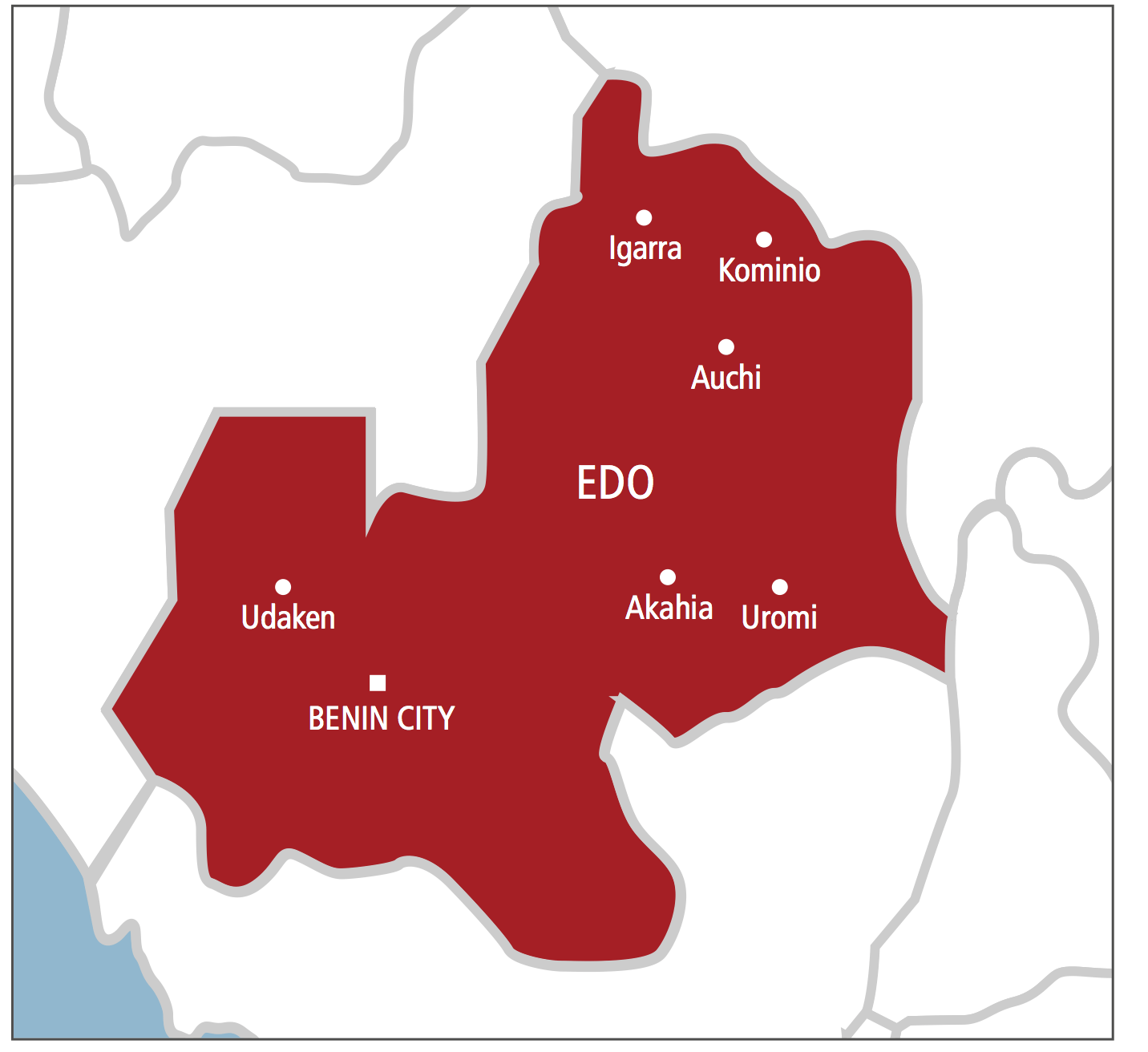
The Edo State chapter of Ohanaeze Ndigbo Worldwide has banned the use of unauthorized Igbo traditional titles such as Ezeigbo, Ezendigbo, Igwe, and similar monarchical designations outside recognized traditional institutions in Igboland.
Addressing journalists during a press conference in Benin, the state secretary of the group, Mr. Emmanuel Ofodu, said the directive follows a resolution of the organization’s General Assembly held on April 9, 2026, which according to him, applies to all Igbo communities in Edo State, the wider Diaspora, and across Nigeria.
He said that the creation or operation of parallel traditional leadership structures outside Igboland is not only culturally invalid but also allegedly inconsistent with a prior court ruling referenced as Suit No. B/290/2015.
Ofodu aɗded that the only constitutionally and traditionally recognized authorities in Igboland have the mandate to confer such titles, warning that any individual or group involved in unauthorized coronations or installations would be acting in violation of both cultural directives and legal pronouncements.
READ ALSO: Two Governors Behind Plan To Destroy Ohanaeze Ndigbo – Secretary-General
He noted that the statement also reaffirmed cooperation with Edo State’s established traditional authority, including loyalty to the Oba of Benin, Ewuare II, and other recognized traditional rulers across Edo North and Central senatorial districts.
He urged security agencies, government authorities, and the public to treat any unauthorized use of such titles as invalid, insisting that enforcement of the directive is necessary to preserve cultural order and prevent inter-communal tensions.
He further emphasized that Igbo residents in Edo State should operate under recognized community frameworks, including town unions and the state chapter of Igbo Community Union, in line with broader coordination by Ohanaeze Ndigbi.
Speaking on the nationwide voter registration mobilization, he said the group announced the commencement of a statewide civic mobilisation campaign aimed at boosting participation in the ongoing voter registration exercise conducted by the Independent National Electoral Commission (INEC).
READ ALSO: Edo Police Recover Live Cartridges, Arrest Suspect
According to the Edo State leadership, “the registration window scheduled to close in July 2026 is a critical opportunity for eligible citizens to update their records, obtain Permanent Voter Cards and strengthen political participation ahead of future elections.
He appealed to all Igbo residents aged 18 and above to register, update their details where necessary, and ensure full participation in the electoral process.
He described voter participation as essential to civic influence, stating that “numbers determine representation in a democratic system” and urging eligible voters not to miss the registration window.
He said that the Ohanaeze Ndigbo s directives on traditional title regulation and voter registration are aimed at strengthening unity, ensuring lawful cultural practices, and enhancing political participation among Igbo residents in Edo State.
READ ALSO: Two Governors Behind Plan To Destroy Ohanaeze Ndigbo – Secretary-General
He further reaffirmed the group’s commitment to peaceful coexistence with host communities and adherence to existing traditional and administrative structures in the state.
Speaking also, the state legal adviser of the group, George Igbokwe, said the decision to proscribe such titles stemmed from the incidence that happened in South Africa where some of their sons were taking different titles.
“The message sent to Edo Chapter is to disseminate the information from their last executive meeting where the issue of some Igbo people in the diaspora take the title of Eze Ndigbo or Eze Igbo in their various places of business.
“The Ohanaeze Ndigbo noted that it has caused several problems in Ghana, in South Africa, in Amsterdam and other parts of the world.
“So they have put their feet down in conjunction with the Council of Traditional Rulers of Ndigbo that, that Eze Ndigbo or Eze Igbo or performing the duties of Eze Ndigbo in any form or manner should be totally and permanently proscribed and prohibited”, Igbokwe said.
News
World Ocean Day: Edo Coastal Communities Lament Loss Of Fish Species, Others

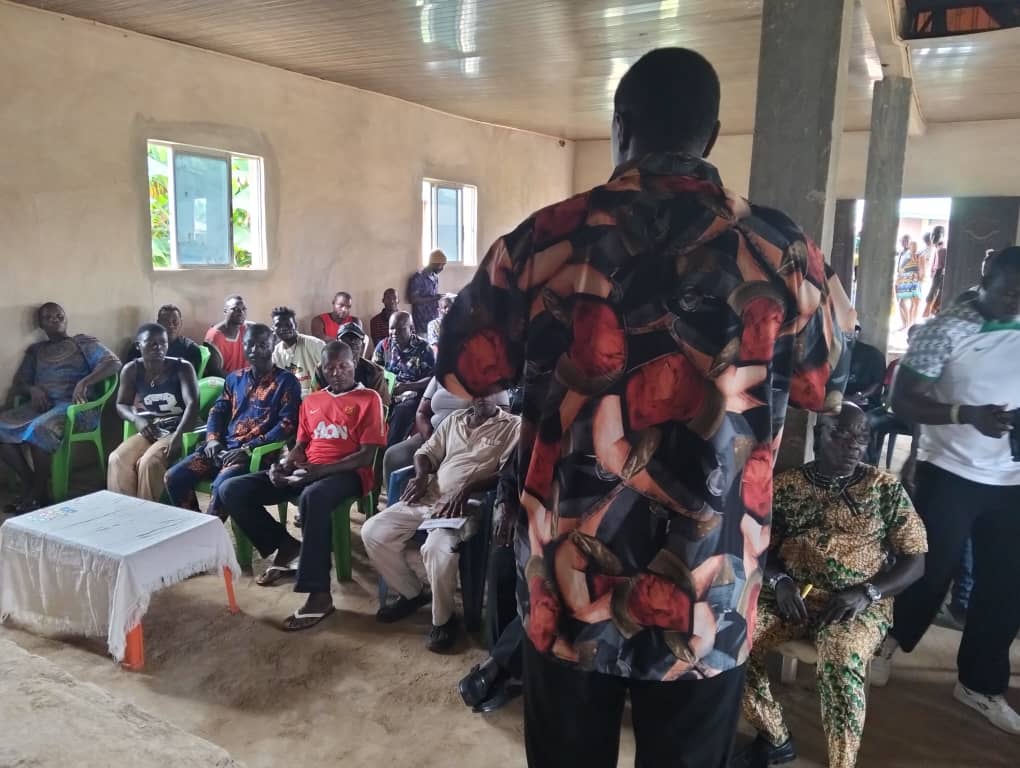
Fishing communities in the coastal areas of Ovia North-East Local Government Area of Edo State have lamented the disappearance of fish species in their rivers, blaming multinational companies’ extractive activities, climate change, and harmful fishing practices.
They spoke during an event organised by the Health of Mother Earth Foundation (HOMEF) to mark this year’s World Ocean Day in Ekewan community, Ovia North-East Local Government Area.
Participants drawn from Gelegele, Inikorogha, Iboro, Ikoro and Ekewan communities said that due to some harmful activities taking place on their rivers, many species of fish they used to catch 20 to 30 years ago are no longer available.
They added that the few species left now require fishermen to travel long distances before making catches.
READ ALSO: 200 Gelegele Community Residents Benefit From TEAAF Free Medical Care
Obon Gardan from Iboro community lamented that crude oil spills in the river, which have persisted for years, have negatively affected fishing activities in the area.
He urged the government to empower fishing communities with fishing nets, engine boats, hooks and other equipment, just as free fertilisers are provided for farmers.
Divine Subotie from Inikorogha community said that although there were some practices among local fishermen that were harmful to fishing activities, coupled with river pollution and climate change, the dialogue had opened her eyes to many issues.
“Until now, I never knew that when we fish in a particular area, we need to allow the fishes some time to reproduce and mature before returning to the same spot to fish again. So, I will go back and tell my community people this. If only they agree to allow such a period of rest, the fish population will grow. This will also benefit us,” she said.


A cross section of participants at the event.
READ ALSO: GMOs: HOMEF Trains Gelegele Farmers, Urges Them To Embrace Agroecology
Regina Awowo from Gelegele community, while appreciating HOMEF for organising the event, urged the government to assist the communities through empowerment programmes and other support initiatives.
Timothy Sibete, Chairman of Ekewan community, described the programme as an eye-opener and urged the organisation not to relent in its advocacy for climate justice and public enlightenment.
He said that before the event, he never knew that some fishing practices were harmful to humanity, adding that the dialogue had broadened his understanding of such practices.
Earlier in his remarks, Stanley Egholo, Project Lead for Fossil Politics at HOMEF and Coordinator of the FishNet Alliance Network, said the significance of the event was to celebrate the efforts of artisanal fishers in the area.
“At the FishNet Alliance, we focus more on artisanal fishing and also kick against exploitative activities by multinational oil corporations,” he said.
READ ALSO: Oil Extraction Gelegelegbene Residents Lament Pollution, Heat Waves
Egholo advocated community-driven government policies, stressing that: “Policies must be driven from the community level. People must make inputs from the grassroots into whatever laws govern our oceans and water bodies.
“It should not just be for governments to make laws that are not community-related and that do not serve the interests of the people. Government must consider community inputs in whatever laws are made to regulate oceans and other water bodies.”
He also called for an immediate transition from fossil fuel extraction to renewable energy.
“That is the solution. Not the false solutions being promoted by some corporations that are also benefiting from environmental degradation,” he added.
-

 News3 days ago
Benefits Of Breast Sucking In Marriage
-

 News2 days ago
2026: ICPC Lists 30 Wanted Persons In Nigeria, Releases Names, Photos
-

 News4 days ago
Edo Unveils Simplified Disability Rights Law
-

 News2 days ago
NELFUND Breaks Silence On Alleged Suspension Of Student Upkeep
-

 Headline3 days ago
VIDEO: If Not For Me, There Won’t Be Israel Right Now — Trump
-

 Headline2 days ago
Xenophobia: FG To Repatriate Over 1,000 Nigerians From South Africa
-

 Metro2 days ago
VIDEO: Footage Of Police Rescue Of Adelabu’s Sister, Twin Sons Emerges
-

 News2 days ago
FCT Residents Turn To Firewood, Charcoal As Cooking Gas Prices Hit N2,000/kg
-

 Metro2 days ago
Security Forces Foil Terror Attack In Kogi Community, Bandits Suffer Casualties
-

 News3 days ago
WED: Bassey Tasks Universities On Climate Action, Environmental Protection