

News
OPINION: The Ɠhomid In The Tears Of JAMB



By Suyi Ayodele
“Dear Ajanlekoko Oriojobi Samuel (real name withheld), Reg Number: 2125512372451F. 2025 UTME Result: Underaged and Under-Performed.”
With the above terse message from the Joint Admission and Matriculation Board (JAMB), the fates of thousands of Nigerians who sat for the 2025 Unified Tertiary Matriculation Examination (UTME) were sealed.
Those thousands of candidates will never see their results. Their parents or guardians, who paid the registration fees and took the candidates—children in their teens—to the various examination centres, will never know the performances of their children’s or wards.
Incidentally, those candidates did not commit any examination malpractice. They were not guilty of any crime known or unknown. Their crime was to be children of the Nigerian society that looks backwards, where other climes are forward marching!
The only crime those affected “underaged’ candidates committed was to be endowed with brains that the awkward system we run here frowns at. Their counterparts in other sane countries of the world are celebrated. But here, we are still in the Stone Age to accept that there are geniuses!
So, when Professor Is-haq Oloyede, the JAMB Registrar, came crying over the mass failure recorded for over 400,000 candidates who wrote this year’s UTME because of the glitch which affected JAMB servers, Nigerians must know that there were more issues than the computer malfunctioning Oloyede cried about. The tears of the former Vice Chancellor of the University of Ilorin were nothing but Ekún Egbére.
When two rival wives fight and one cries when the matter comes up for adjudication, my Yoruba elders have a way to qualify that. They devise a saying: Arojó sunkún obìrin, ilé níi tú (A woman who cries while stating her case tends to destroy the home) to explain the intention of such an act. The tears by the woman playing the victim are considered manipulative.
Elders who sit in judgment don’t usually pay attention to the crying woman in any dispute. They could see through her deceptive tears and her true intention — simply to gain undue sympathy. In my culture, a woman is allowed to cry as much as she wants and then asked to restate her case. More often than not, the crying woman turns out to be the guilty party.
There is a more graphic and semiotic way to qualify such crocodile tears. The Yoruba concept of “Ekún Egbére” is the apt way to describe manipulative tears by the one trying to play the victim.
Ekún Egbére means the tears of the goblin (or bush baby). Egbére in Yoruba mythology refers to a short spiritual being who goes about with a small mat, crying. The myth around the goblin, Egbére, says it cries out, looking for sympathy for its unusually small stature among the legion of ghomids created by Obatala.
It tells whoever cares to listen that the creator is unfair to it by making it the smallest of the ghomids, whereas it has more potential than any others ever created. Those other ghomids Egbére accuses of conspiracy against it. It says they conspired to dampen its potential and good work! How true?
What Egbére, however, does not tell its listeners and would-be sympathisers is the fact that its small stature has nothing to do with any heavenly factory faults. The fault is due to the goblin’s own making of rubbing the wrong lotion on its own body while it had just come out of Obatala’s furnace without waiting for the god of creativity to apply the normal lotion.
Egbére, the legend states, mistakes the white lotion (efun idagba) for the one that would give it a giant stature. But by design, it is the black lotion from the palm kernel that makes all Obatala’s creatures big and tall. Egbére defies all entreaties to wait, be patient and allow the day to break before setting out for the pot of lotion.
It realised too late that it had touched the wrong pot and applied the wrong lotion. Its growth becomes stunted such that its hands could not reach the shelves where Obatala keeps his treasures. The only thing within the reach of the Lilliput is the small mat that Egbére carries about as its permanent burden. The mat, though believed to be a harbinger of fortune, no one in history has been recorded to have become wealthy as a result of taking possession of it.
So, Egbére goes about crying, giving a false narrative to gain the people’s sympathy as the victim of Obatala’s creative abnormality! It does that without stating how it goes against the general principle of discretion and the heavenly discipline of patience and respect for public opinion.
MORE FROM THE AUTHOR: OPINION: Ganduje And China’s Execution Noose
As it is with Egbére, the crying spirit, so is it with Professor Oloyede, the Registrar of JAMB, whose conduct of the last UTME leaves the nation gasping for breath at the rate of mass failure recorded in the five states of the South-East geopolitical zone and Lagos, the Centre of Excellence!
Expectedly, heaven has been let loose on Oloyede, especially from our fellow Nigerians from the East. The noise from that region over what many considered to be a deliberate attempt to deny candidates of Igbo extraction admission into our universities, is enough to sink this federation. Most unfortunate is that the intelligentsia from the South-East joined the fray of ethnic profiling of the computer errors that occurred!
As much as I find most of the comments from the South-East over the JAMB glitch case alarming, I think the reaction speaks more to some fundamental issues about our nationhood. It is most unfortunate that 65 years after independence and an avoidable civil war where we lost over two million patriots, Nigeria is still as divided as the period we were struggling for independence. Most saddening is that no administration after the 1967-1970 civil war has brought to the fore our differences more than the current government, which began in 2015 with the administration of General Muhammadu Buhari!
It is, therefore, natural for the South-East to easily conclude that the recent JAMB misfortune was targeted at the region. The bitter argument here, which many of us are not ready to accept, is that the Igbo race has not been treated fairly by the Nigerian nation. The only unfortunate argument by the Igbo is to think that the Yoruba are their sole enemy!
And I say this without any apology, until the Ndigbo consciously realise that they suffer the same fate as other ethnic groups, they will remain largely marginalised. Until they shed the toga of Yoruba-hate-us and adopt the holistic idea that most ethnic groups in Nigeria have one thing or the other against the Ndigbo, nothing will change for them.
Should that be the case too, the Ndigbo must also look inward and ask self-directed questions as to why the race is detested by virtually all other ethnic nationalities. They must do self-retrospection to determine what in the attitude of an average Igbo man would make others dislike him.
While doing that, the Nigerian nation must also take deliberate steps to integrate the Ndigbo into our nationhood. The attitude of ‘no-Igbo-man-can-be-president’ doesn’t augur well for our unity. If the Ndigbo are not good enough to lead Nigeria, can we deliberately allow them to own their own space, their nation, where they will have no one to contend with?
MORE FROM THE AUTHOR: OPINION: The Ibàs Of Rivers State
This is why it is difficult to rationalise that the glitch which affected JAMB servers affected all five states in the South-East and Lagos! For people who already feel unwanted, it will be difficult for anyone to convince them to look at the issue from the angle of science and technology.
I want to put my shirt on it that if the errors had occurred only in the South-West states, no matter the sophistication of the people there, there would have been no outcry of ethnic attack on the prospects of the candidates from that region. That is due to the pseudo-federalism we practice. The North-East, North-West, North-Central and South-South would have felt the same way. The only difference, probably, would have been the magnitude of the outcry.
While JAMB has our sympathy for the unfortunate incident, I think there are some other fundamental issues we need to address here. I strongly believe that whatever happened in JAMB or with JAMB or to JAMB can be traced to just one problem: restructuring deficiency!
A lot of Nigerians have said that it is wrong to have just one body conducting examinations for both federal, state and private universities in a country that claims to run federalism! The recent claims by JAMB that it remitted over N6 billion to the coffers of the Federal Government makes the body more of a profit-making venture than a serious examination set up.
If we celebrate JAMB for making enough profit like a business venture, for the Federal Government, what about the state-funded universities? What part of that ‘profit’ goes to the private universities? Should JAMB be talking about how much money it rakes in or how effective it is in the conduct of the examinations it was established to conduct?
Take the case of the “underaged” candidates we mentioned above. Why would JAMB withhold the results of candidates it termed “underaged” after collecting the registration fee from them? Where is that done, except in a country where roguery is the order of the day?
If the National Assembly had been alive to its responsibilities, would JAMB have had the audacity to withhold candidates’ results based on being “underaged” without any act of parliament allowing that? If a candidate purchased a form, submitted the form, was accredited and allowed to write an exam, why would the examination body send the message: “UTME Result: Underaged and Under-Performed” without showing the actual scores of the candidates?
Oloyede is a brilliant scholar, no doubt. He did well, so they say, when he was the VC of the University of Ilorin. But I find it difficult to believe that it did not occur to the erudite professor that some parents actually asked their children to write the examination as a mock exercise to prepare those children for when they will be of age, according to the backwards-thinking policy of age limit for admission into our universities?
MORE FROM THE AUTHOR: OPINION: Adenuga, Politicians And Lessons In Loyalty
So, if Oloyede comes shedding Ekún Egbére on national television because he wanted our sympathy, we should, while giving him handkerchief to clean his crocodile tears, tell him that he is presiding over a rotten institution that bears no relevance to modern-day progressive ideas of a nation that desires development.
Agreed cyber-attack or glitch is not peculiar to Nigeria. Our major concern is how, when it happened to us, it wore a three-piece suit of ethnic colouration and age discrimination! That is the peculiarity of the Nigerian version of the global phenomenon. In Nigeria, what affects other nations comes in different shapes, shades and dimensions for us. Nigeria must always “happen” to any universal issue that finds its way to our shores!
So, Oloyede can ‘cry me a river’. It will not vitiate the fact that the institution he supervises is both deaf, dumb and backwards thinking in a global society that makes progress. JAMB, we all can recall, subjected children to uncommon trauma when it allowed them to be on the road to the examination centres as early as 5.00 am! Whatever happened to the server is just a continuation of that trauma.
We shall all see the outcome when the results of the resit examinations are out. We don’t need any professor of child psychology or education planning, and measurement to tell us that those candidates would not be at their optimal best while resitting the examinations.
If truly we want a restructured country with full-fledged federalism, JAMB has no business conducting examinations, for instance, for Ekiti State University or Afe Babalola University. It has no business determining the questions Obafemi Awolowo University, Ile-Ife, or Ahmadu Bello University, Zaria, should set for its intended undergraduates. What do we even gain from the centralised examination when a candidate with a grade of 250 marks from any of the South-West states will be denied admission to study Medicine, and his counterpart from Zamfara State who scored 180 marks will be given a laboratory coat as a medical student?
Nigeria must begin to address its numerous imbalances. This present administration, run by those whose slogans while in the trenches as opposition leaders, were restructuring and true federalism, should walk the talk and live like men of honour. JAMB is a deep example of a unitary system in federalism! It makes a mockery of all of us.
The lawlessness of JAMB at fixing the age limit for its examination against a subsisting judgment of a competent jurisdiction apes the lawlessness of the government of the day. Nigeria, no doubt, needs an effective and efficient examination body. What the nation does not need now is a weeping Chief Executive of its examination body. Ekún Egbére won’t solve our self-inflicted problem; proper restructuring will do. Maybe we should just start with JAMB.




News
Xenophobic Attacks: Oshiomhole Tells FG To Retaliate Against South African Companies In Nigeria

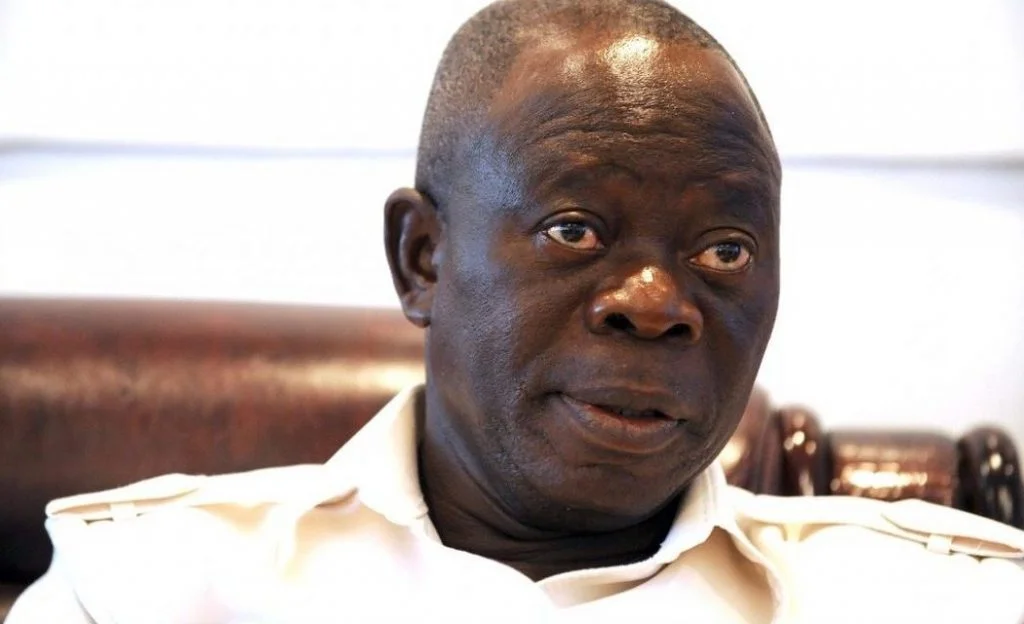
Senator Adams Oshiomhole has called on the Federal Government to retaliate against South African businesses operating in Nigeria following the recent attacks on Nigerians in South Africa.
Speaking during plenary on Tuesday, Oshiomhole said the Federal Government should consider revoking the working license of South African owned companies such as MTN and DSTV.
He argued that Nigeria must respond firmly to what he described as persistent hostility against its citizens.
READ ALSO:South Africa To Investigate ‘Mystery’ Of Planeload Of Palestinians
“I am not going to shed tears. If you hit me, I hit you. I think it is appropriate in diplomacy. It is an economic struggle,” Oshiomhole said.
He argued that while some South Africans accuse Nigerians of taking their jobs, Nigerians should return home and take over employment opportunities created by major South African companies operating in the country, including MTN and DSTV.
“When we hit back, the President of South Africa will not only talk but will also go on his knees to recognise that Nigeria cannot be intimidated.
READ ALSO:South African Ambassador Found Dead Outside Paris Hotel
“We will not condone any life being lost. If a crime has been committed under the South African law they have the right to bring any such person to justice, but to kill our people as if we are helpless, we will not allow that,” Oshiomhole added.
DAILY POST reports that several Nigerians in South Africa have reportedly been attacked, and their businesses destroyed, in ongoing xenophobic attacks in the country.
News
IGP Orders Officers Display Name Tag On Uniform, Gives Update On State Police

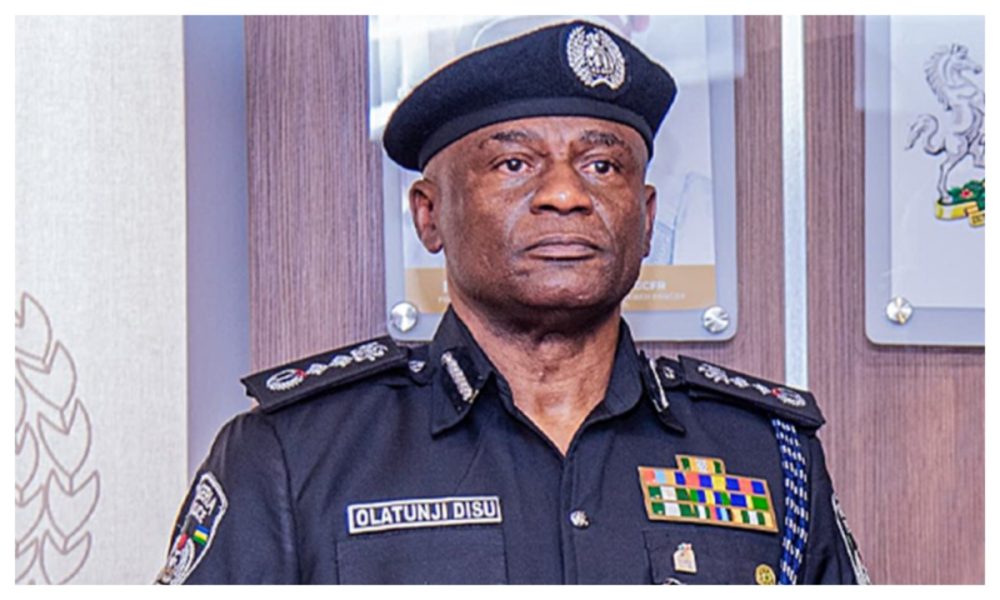
The Inspector General of Police, IGP, Tunji Disu, has ordered all police personnel to always have their name tags on their uniforms for easy identification.
Disu disclosed that only police personnel who are undercover are exempted from displaying their name tags.
Speaking on Tuesday, Disu said: “All police officers should have their name tags. All of us on the high table have our names apart from the undercover among us so if you look at all the Commissioners of Police we have our name tags, so it’s not our standard.
READ ALSO:
“All the Commissioners of Police are here and that is why we called this meeting, we have list of things like this that we will want to discuss with the Commissioners of Police, we have told them earlier and we will still let them know that every that happens within their area of jurisdiction falls under their control.”
On the issue of state police, the IGP said: “Since we got the signal that the Federal Government of Nigeria intend to establish State Police and since we are the federal police, we decided to take the bull by the horn and put down our own side of what we believe on how the state police should be run.
“A lot of things were taken into consideration, a lot of comparative analysis was done and it has been transmitted to the National Assembly.”
News
Court Orders SERAP To Pay DSS Operatives N100m For Defamation
The High Court of the Federal Capital Territory has ordered a non-governmental organization, the Socio-Economic Rights and Accountability Project, SERAP, to pay N100 million as damaged to two operatives of the Department of the State Services, DSS, for unjustly defaming them in some publications.
The court also ordered SERAP to tender public apologies to the defamed officers,
Sarah John and Gabriel Ogundele, in two national newspapers, two television stations and its website.
Besides, the organization was also ordered to pay the two operatives N1 million as cost of litigation and 10 percent post-judgment interest annually on the judgment sum until it’s fully liquidated.
Justice Yusuf Halilu of the High Court of the Federal Capital Territory gave the order on Tuesday while delivering judgment in a N5.5 billion defamation suit instituted against SERAP by the DSS operatives.
The judge found SERAP liable for unjustly defaming the two DSS operatives with allegations that they unlawfully invaded its Abuja office, harassed and intimidated its staff, in September 2024.
READ ALSO:How We Arrested Terror Suspect Who Threatened To Kill Students, Teachers In Abuja — DSS
In the offending publication on its website and Twitter handle, SERAP alleged that the two operatives unlawfully invaded and occupied its office with sinister motives.
The judge held that the publication was in bad taste especially from an organization established to promote transparency and accountability, as nothing in the publication was found to be truthful.
The DSS staff had listed SERAP as 1st defendant in the suit marked CV/4547/2024. SERAP’s Deputy Director, Kolawole Oluwadare, was listed as the 2nd defendant.
In the suit, the claimants – Sarah John and Gabriel Ogundele – accused the two defendants of making false claims that they invaded SERAP’s Abuja office on September 9, 2024..
Counsel to the DSS, Oluwagbemileke Samuel Kehinde, had while adopting his final address in the mater urged the judge to grant all the reliefs sought by his client in the interest of justice.
READ ALSO:DSS Arrests Suspected Gunrunner, Recovers 832 Rounds Of Ammunition
He admitted that although the names of the two claimants were not mentioned in the defamation materials, they had however established substantial circumstances that they are the ones referred to in the published defamation article by SERAP on its website.
The counsel submitted that all ingredients of defamation have been clearly established and the offending publication referred to the two officials of the secret police.
However, SERAP, through its counsel, Victoria Bassey from Tayo Oyetibo, SAN, law firm, asked the court to dismiss the suit on the ground that the two claimants did not establish that they were the ones referred to in the alleged defamation materials.
She said that SERAP used “DSS officials” in the alleged offending publication, adding that the two claimants must establish that they are the ones referred to before their case can succeed.
Similar arguments were canvassed by Oluwatosin Adefioye who stood for the second defendant, adding that there was no dispute in the September 9, 2024 operation of DSS in SERAP’s office.
READ ALSO:Alleged Cyberstalking: DSS Plays Video Evidence In Sowore’s Trial
He said that since SERAP in the publication did not name any particular person, the claimants must plead special circumstances that they were the ones referred to as the DSS officials.
Besides, he said that there is no organization by name Department of State Services in law, hence, DSS cannot claim being defamed adding that the only entity known to law is National Security Agency.
The claimants had in the suit stated that the alleged false claim by SERAP has negatively impacted on their reputation.
The DSS also stated, in the statement of claim, that, in line with the agency’s practice of engaging with officials of non-governmental organisations operating in the FCT to establish a relationship with their new leadership, it directed the two officials – John and Ogunleye – to visit SERAP’s office and invite them for a familiarization meeting.
The claimants added that in carrying out the directive, John and Ogunleye paid a friendly visit to SERAP’s office at 18 Bamako Street, Wuse Zone 1, Abuja on September 9 and met with one Ruth, who upon being informed about the purpose of the visit, claimed that none of SERAP’s management staff was in the country and advised that a formal letter of invitation be written by the DSS.
READ ALSO:DSS, Police Partner NCCSALW To End Terrorism, Mop Up Illegal Arms
John and Ogundele, who claimed that their interactions with Ruth were recorded, said before they immediately exited SERAP’s office, Ruth promised to inform her organisation’s management about the visit and volunteered a phone number – 08160537202.
They said it was surprising that, shortly after their visit, SERAP posted on its X (Twitter) handle – @SERAPNigeria – that officers of the DSS are presently unlawfully occupying its office.
The claimant added, “On the same day, the defendants also published a statement on SERAP’s website, which was widely reported by several media outfits, falsely alleging that some officers from the DSS, described as “a tall, large, dark-skinned woman” and “a slim, dark skinned man,” invaded their Abuja office and interrogated the staff of the first defendant (SERAP).
John and Ogundele stated that “due to the false statements published by the defendants, the DSS has been ridiculed and criticised by international agencies such as the Amnesty International and prominent members of the Nigerian society, such as Femi Falana (SAN)”.
“Due to the false statements published by the defendants, members of the public and the international community formed the opinion that the Federal Government is using the DSS to harass the defendants.”
READ ALSO:SERAP To Court: Stop CBN From ‘Implementing ‘Unlawful, Unjust ATM Fee Hike’
They added that the defendants’ statements caused harm to their reputation because the staff and management of the DSS have formed the opinion that the claimants did not follow orders and carried out an unsanctioned operation and are therefore, incompetent and unprofessional.
The claimants therefore prayed the court for the following reliefs: “An order directing the defendants to tender an apology to the claimants via the first defendant’s (SERAP’s) website, X (twitter) handle, two national daily newspapers (Punch and Vanguard) and two national news television stations (Arise Television and Channels Television) for falsely accusing the claimants of unlawfully invading the first defendant’s office and interrogating the first defendant’s staff.
“An order directing the defendants to pay the claimants the sum of N5 billion as damages for the libellous statements published about the claimants.
“Interest on the sum of N5b at the rate of 10 percent per annum from the date of judgment until the judgment sum is realised or liquidated.
“An order directing the defendants to pay the claimants the sum of N50 million as costs of this action.”
-

 Politics4 days ago
2027: Tinubu’s Re-election May Put An End To Nigeria — Baba Ahmed Warns
-

 Metro5 days ago
I’m A Street Girl’ – Bimbo Ademoye Clashes With Area Boys [VIDEO]
-

 Politics5 days ago
Senatorial Seat: Ogbakha-Edo Warns Against Imposition Of Candidates In Edo South
-

 Politics4 days ago
BREAKING: 2027: Former Adamawa APC Guber Candidate, Aishatu Binani Defects To NDC
-

 Business3 days ago
JUST IN: Nigerian Filling Stations Reduce Fuel Price After Hike
-

 Entertainment4 days ago
Actress Eniola Badmus Gets New Federal Appointment
-

 News5 days ago
10 African Countries With Highest Petrol Prices In Prices In April 2026
-

 News2 days ago
BREAKING: Wike Picks Alabo George For Rivers Governorship
-

 News3 days ago
OPINION: Why South Africans Murder Nigerians In Cold Blood
-

 News4 days ago
2027: Pastor Adeboye Speaks On Nigeria’s Next President
