
News
[OPINION] The Cry Of The Waters: When Flood Became A Funeral

By Israel Adebiyi
In the days when the forest still spoke and rivers still held secrets, there was a tale the elders told of a stubborn village. This village, they said, was warned by the river goddess that heavy rains were coming. “Move to higher ground,” she whispered through the winds. But the people, confident in their mud huts and ancestral trees, scoffed. The rains came, and so did the water. Not as a blessing, but as a grave. By morning, the village was no more—only silence and soaked soil remained.
This is no longer folklore. This is Mokwa.
At the last count, over 200 lifeless bodies have been pulled from the fury of floodwaters in Mokwa Local Government Area of Niger State. Children, women, men—entire households swallowed by what should have been a predictable, preventable disaster. Homes have turned to ruins, schools into swamps, and churches into makeshift morgues. Thousands are now displaced, staring into an uncertain future, and the numbers—like the waters—keep rising.
Year after year, we watch this horror movie unfold, always with fresh cast members and a bloodier script. Yet, nothing seems to change.
The tragedy of Mokwa is not just about water. It is a portrait of systemic rot—of repeated failure across every level of governance. It is the failure of residents who, either out of ignorance or fatalistic resignation, ignore flood alerts. It is the failure of state governments who do not even bother to draw evacuation maps, build retention basins, or construct climate-resilient housing. It is the unforgivable failure of the federal government, which seems to think emergency response begins after the bodies begin to rot.
MORE FROM THE AUTHOR: OPINION: Children’s Day And The Scam Of Tomorrow
To make matters worse, we are watching a theatre of performative concern unfold. Politicians, freshly powdered for the cameras, are arriving with bags of rice, cheques, and empty empathy. They make loud donations, pose with grieving mothers, and deliver soundbites for prime-time television. But what they do not deliver is a comprehensive flood mitigation plan. What they never unveil is a blueprint to stop this nightmare from happening again. The donations are transactional; the tragedy, cyclical.
This is not new. We have seen this same charade after the 2012 floods that displaced over two million Nigerians across 30 states. Again in 2018, major parts of Benue, Anambra, and Delta were submerged. In 2022, over 600 lives were lost and 1.4 million people displaced in what was declared one of Nigeria’s worst natural disasters in decades. Each time, committees are formed, relief is shared, and a deafening silence follows. Until the next flood comes. We are trapped in a loop of disaster and denial.
What is the point of NIMET’s weather forecasts if nobody acts on them? What use is NEMA if it only arrives after villages have become watery graves? Why do state governments scramble to distribute relief materials instead of investing in pre-flood interventions? Why do we wait to wail when we could act to prevent?
Experts have long warned of Nigeria’s vulnerability to climate-induced disasters, yet there is no national flood risk atlas, no coordinated relocation policy, and certainly no political will to dredge rivers or enforce building codes near water bodies. In places like Mokwa, urban planning is a myth, and informal settlements mushroom in high-risk areas without scrutiny.
The contributory causes of flooding in Nigeria are glaring—blocked drainages, unregulated deforestation, poor waste disposal, construction across waterways, failure to release water from dams gradually, and the backflow from neighboring countries like Cameroon during heavy rains. But perhaps the greatest culprit is the pervasive absence of political foresight and empathy.
MORE FROM THE AUTHOR: [Opinion] From Classroom to Crisis: The Slow Death of Nigeria’s Education System
We can no longer pretend that floods are “natural disasters.” They are man-made catastrophes aided by neglect and ignorance. There is nothing natural about people living in areas that should have long been declared unsafe. There is nothing natural about public officials failing to prioritize environmental sustainability in their budgets. There is certainly nothing natural about losing 200 lives in one sweep of water and acting as though it were a minor event.
Mokwa is a metaphor for all of us. It is the consequence of our national amnesia—our strange habit of mourning loudly and forgetting quickly. In a few weeks, the media frenzy will die down, the politicians will return to their SUVs, and displaced residents will return to ruins, left alone with trauma and mud. Until the next rainfall.
We are long past the time of crocodile tears. What we need is a flood of action. We need governments—local, state, and federal—to begin treating flood prevention as a national security issue. We need real-time data, engineering solutions, ecological restoration, and urban planning. But most of all, we need political leaders who feel the pain of their people.
Because when flood becomes funeral, the nation itself begins to drown.



News
Migration Agency Warns Migrants Against Irregular Travel Routes
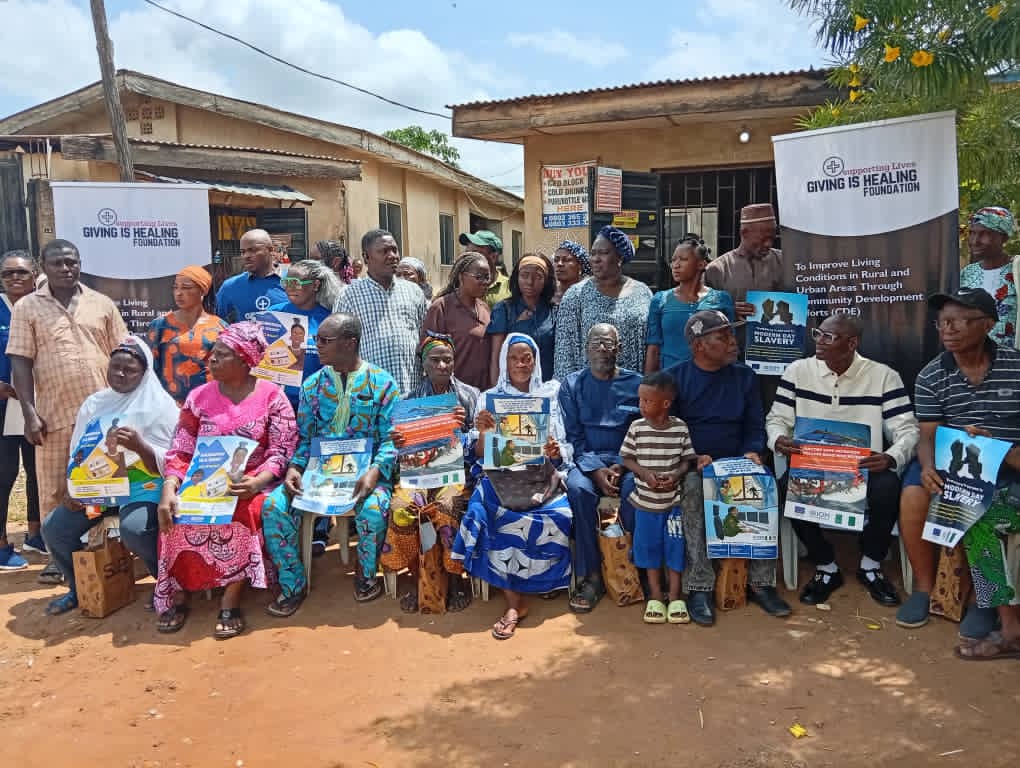
The International Organisation for Migration (IOM), in collaboration with Giving is Healing Foundation, has sensitised residents of Ayobo in Alimosho Local Government Area of Lagos State on the dangers of irregular migration and the need to embrace legal travel procedures.
Speaking during a sensitisation programme held at Megida Ifelodu Community Development Association in Ayobo, the founder of Giving is Healing Foundation, Mr. Gbolahan Ayediran, warned intending migrants against using illegal travel routes.
Ayediran said many Nigerians desire to migrate abroad in search of better opportunities but often ignore proper procedures, thereby exposing themselves to several dangers.
“Lots of people want to migrate and most of them do it in the wrong direction. The reason for the programme is for us to advise people on how they can migrate in the right way. As much as migration is their right, they should do it correctly,” he said.
READ ALSO:How Wike Rescued Me From Political Oblivion — Oshiomhole
He advised intending travellers to obtain the necessary travel documents before embarking on any journey, noting that such documents include international passports, visas, flight tickets and yellow cards, depending on the destination country.
According to him, migrants should also gather adequate information about their destination countries to enable them make informed decisions before travelling.
Ayediran further highlighted some of the dangers associated with irregular migration, including abuse, exploitation, discrimination and forced labour.
Also speaking, the Chairman of Megida Ifelodu Community Development Association, Elder Mathews Amusan, commended the organisers for enlightening members of the community on safe migration practices.
READ ALSO: He Can’t Fix His Party Let Alone Nigeria – Oshiomhole Blasts Atiku
He urged residents planning to travel abroad to always follow legal migration procedures to avoid falling victim to human trafficking and other migration-related challenges.
One of the participants, Mr. Kolawole Adenoko, said the programme enlightened him on the dangers of irregular migration and the importance of travelling through the proper channels.
He added that he would also educate his relatives and friends on the risks associated with illegal migration.
News
Shatta Wale Bailed Burna Boy From Ghana Prison After Arrest For Smoking Weed – Captan
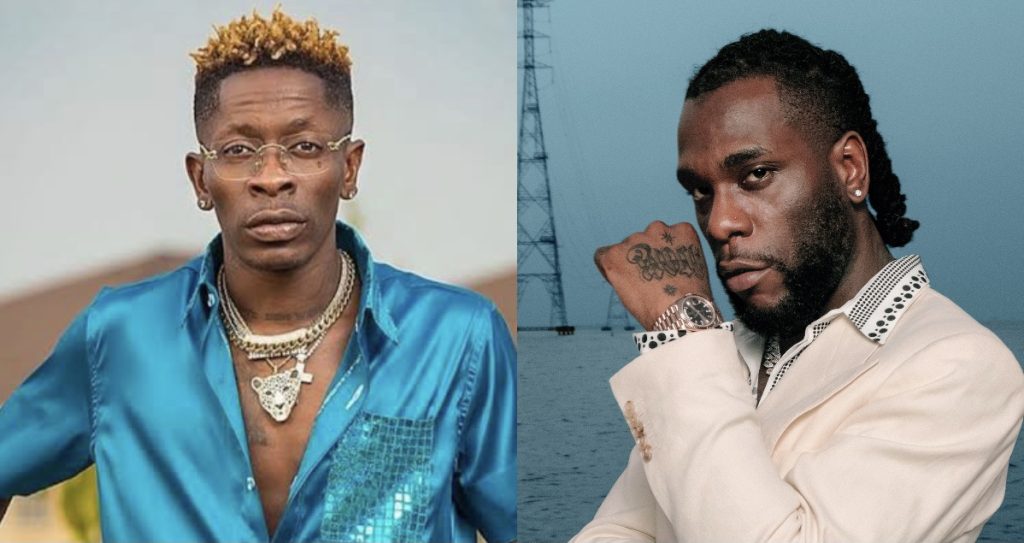
Ghanian singer, Captan, has claimed that his former record label boss, Shatta Wale, once bailed Nigerian singer Burna Boy out of prison in Ghana after he was allegedly arrested for smoking weed.
Speaking in a recent podcast interview, Captan claimed that Shatta Wale sent him and others to free Burna Boy from police custody.
He also claimed that Shatta Wale and his group once accommodated Burna Boy when he was being hunted by some dangerous men.
READ ALSO: Wale Edun Opens Up After Sack
Captan said, “I once bailed Burna Boy out of prison in Ghana when he was arrested for smoking weed. Shatta Wale sent me and some guys to go and free him from police custody.
“There was a time we also accommodated him when some people were after his life. We helped him settle the case.”
He added that he and Burna Boy are no longer in good terms after the Nigerian artist’s fallout with his mentor, Shatta Wale.
He, however, said he and Shatta Wale are open to reconciling with Burna Boy if he asks for it.
Watch the video here
News
Children’s Day: Chaos At Ogbe Stadium As Dozens Faint
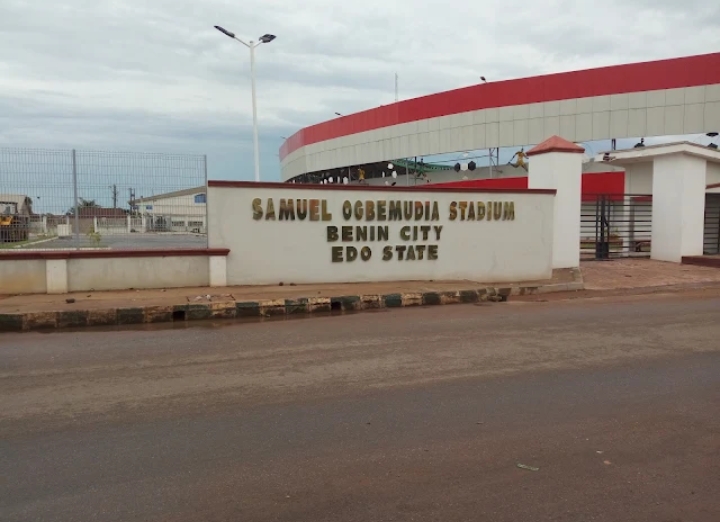
Chaos erupted on Wednesday during the Children’s Day celebration as dozens of students reportedly collapsed following a stampede triggered by the use of pepper spray.
The event,
organised by the Edo State Ministry of Education at the Samuel Ogbemudia Stadium was disrupted after some male students of Ihogbe College allegedly made uncompromising advances towards female students at the venue.
A parent who identified himself as Oboh Emmanuel said, “the behaviour of those uncultured students attracted the attention of bouncers stationed at the stadium as they rebuked the male students.”
Oboh said the affected students later regrouped and attacked the bouncers, leading to a confrontation within the crowded arena.
READ ALSO:Children’s Day: Edo Commits To Child Protection
It was gathered that in the ensuing confusion, the bouncers were reported to have deployed pepper spray in an area occupied by a large number of students.
Several students, particularly female students, reportedly fainted after inhaling the substance, while others sustained injuries after being stepped on during the ensuing melee.
The panic was said to have spread across the stadium as students, teachers and parents scampered for safety.
Many of the affected students were reportedly rushed to the Edo Specialist Hospital for medical attention.
READ ALSO: Egor LG Chair, Ogbemudia, Vice, Osawe Impeached
Reacting to the incident, Chief Press Secretary to Governor Monday Okpebholo, Dr Patrick Ebojele, said the security personnel that fired the tear gas had been detained.
He said all the students, except two, that were rushed to the hospital have been discharged.
Ebojele stated that doctors wanted to observe the students till tomorrow before allowing them to go home.
“The two students are not seriously injured. Doctors want to observe them overnight. Permanent Secretary, Ministry of Education is still at the hospital. The man who used pepper spray has been detained.
“The incident did not happen the way it is being exaggerated. All modalities were put in place to ensure the children enjoyed their day.”

 Headline4 days ago
Woman Passes Out After Receiving 100 Strokes Of Cane
- Headline4 days ago
JUST IN: White House Locked Down Briefly As Gunman Opens Fire At Security Checkpoint
- News3 days ago
More Pain For Nigerians As Cooking Gas Price Increases Nationwide
- Politics3 days ago
Two Masked Men Gun Down Politician In His Rivers State Hotel
- Metro4 days ago
Police Reject N500m Bribe, Recover N7.8bn Illicit Drugs In Lagos
- News3 days ago
FG Declares Two Days Public Holiday For Eid-el Kabir Celebration
- Politics3 days ago
‘Tinubu’s Borrowing In 24 Months Surpasses 55 Years’ Debt Record’
- Politics2 days ago
Court Clears Goodluck Jonathan To Contest 2027 Presidential Election
- News5 days ago
TCN Seeks Edo Govt, Community Support Against Power Infrastructure Vandalism
- News3 days ago
OPINION: Boko Haram Comes South


