

News
OPINION: The Day Friendship Died



By Israel Adebiyi
There is a peculiar kind of pain that comes when two people who once spoke in whispers begin to shout at each other in the marketplace. It is not just the quarrel that hurts. It is the knowledge that both parties know where the bodies are buried. In our clime, we are often warned about who to trust with secrets. Journalists are frequently accused, unfairly, of being incapable of discretion. Even clergymen are sometimes mentioned in hushed tones. Yet experience has shown that the most dangerous custodians of secrets are politicians. When political love turns sour, confidentiality dies first.
Politics has a way of turning men into archivists of one another’s sins. When alliances are strong, secrets are locked away like family heirlooms. When alliances break, those same secrets are dragged into the sun and weaponised. It is why Nigerian politics often feels less like a contest of ideas and more like a theatre of betrayals. The louder the quarrel, the deeper the intimacy that once existed.
The widening gulf between former Rivers State governor and now Minister of the Federal Capital Territory, Nyesom Wike, and Oyo State Governor Seyi Makinde belongs squarely in this tradition. Their falling out is not just another political disagreement. It is the unravelling of a friendship forged in the heat of opposition politics and sustained by mutual suspicion of a party they once believed had lost its moral compass. Today, that friendship lies in ruins, and the Peoples Democratic Party wanders like an orphan unsure of who will lead it home.
Not too long ago, Wike and Makinde spoke the same political language. They were comrades in rebellion, leaders of the G5 governors who openly defied their party’s presidential candidate in 2023. Together with Samuel Ortom, Ifeanyi Ugwuanyi and Okezie Ikpeazu, they insisted that the PDP had violated its own sense of balance and fairness. They framed their revolt as a moral stand, not personal ambition. In that season, Makinde was often the quieter, more measured voice, while Wike was the thunder that shook the room. But thunder and silence were working toward the same end.
What held them together was not affection but necessity. Politics has always been a marriage of convenience, and like many such unions, it thrives only while interests align. The cracks between Wike and Makinde began to show once the election dust settled and the G5 project lost its urgency. With Atiku Abubakar defeated and Bola Tinubu installed as president, the question became what next. That was where the paths diverged.
Makinde remained in the PDP, speaking the language of reform, independence and internal rebirth. Wike, on the other hand, crossed the aisle, accepted a powerful ministerial role, and began to speak with the confidence of a man who believes he has finally found a system that appreciates his political weight. In itself, that choice was not the problem. Nigerian politics is littered with ideological migrations. The problem was the loose tongue that followed.
MORE FROM THE AUTHOR:OPINION: Fubara, Adeleke And The Survival Dance
In a recent disclosure, Makinde lifted the curtain on a high level meeting involving President Tinubu, Wike, the President’s Chief of Staff, Femi Gbajabiamila, and other officials. According to the Oyo governor, the moment that meeting turned from routine to revealing was when Wike reportedly pledged to hold the PDP for Tinubu ahead of the 2027 elections. It was not just the audacity of the statement that stunned Makinde. It was the silence that followed. The president, Makinde said, did not ask for such loyalty, nor did he encourage it.
In that moment, the illusion of shared purpose collapsed. Makinde made it clear that while he respected Wike’s personal political choices, he could not be part of any arrangement that reduced the PDP to a pawn in another party’s chess game. For him, that was a line that could not be crossed. It was not merely about party loyalty. It was about the survival of democratic competition itself.
Given his political temperament, Wike is unlikely to take kindly to the public airing of private conversations. A forceful response, complete with his own version of events and pointed questions about Makinde’s sincerity and political courage, should be expected. What this kind of exchange usually produces is a familiar pattern: accusations, counter-accusations, selective memory and moral grandstanding, each man speaking with the confidence of someone who knows the other too well.
This is how political betrayals often unfold. The elders say that when two brothers fight, strangers are invited to count their teeth. In exposing one another, Wike and Makinde have not only diminished themselves but also further weakened a party already struggling for relevance. The PDP today feels like a house where the elders are busy quarrelling while the roof leaks.
The tragedy is not just that these men cannot reconcile. It is that they no longer seem interested in trying. Politics has taught them that public disagreement attracts attention, sympathy and leverage. Silence is no longer a virtue. The louder the fight, the stronger the signal to allies and adversaries alike. In this climate, restraint is mistaken for weakness.
MORE FROM THE AUTHOR:OPINION: Wike’s Verbal Diarrhea And Military Might
We have seen this script before. In Edo State, the once unbreakable bond between Adams Oshiomhole and Godwin Obaseki collapsed in spectacular fashion. What followed was not a debate over policy or governance philosophy but a parade of allegations and counter allegations. Oshiomhole turned on Obaseki with a ferocity that shocked even seasoned observers. His wife was dragged into the mud, personal matters were weaponised, and the private became brutally public. It was a masterclass in political scorched earth tactics.
What that episode revealed, and what the Wike Makinde saga confirms, is how casually Nigerian politicians treat secrets once loyalty expires. Words are spoken without restraint, meetings are narrated selectively, and private pledges are denied or exaggerated depending on convenience. In such an environment, trust becomes a scarce commodity. Today’s ally is tomorrow’s accuser.
For the PDP, the consequences are dire. A party that once bestrode the political landscape like a colossus now looks disoriented. Its leading figures speak in different tongues. Some flirt openly with the ruling party. Others preach resistance without offering a roadmap. The internal contradictions are no longer hidden. They are debated openly by men who once pretended unity.
An orphaned party is a dangerous thing. Without clear leadership or shared vision, it becomes vulnerable to infiltration, manipulation and irrelevance. The PDP’s inability to manage internal dissent has left it exposed. Wike’s proximity to power and Makinde’s insistence on independence represent two competing instincts within the party. Neither seems willing to yield.
There is an old saying that when the drumbeat changes, the dancer must adjust his steps. The PDP’s problem is that its drummers are beating different rhythms. Some want accommodation. Others want confrontation. Without consensus, the party risks becoming a footnote in future elections, remembered more for its internal quarrels than its contributions to democracy.
MORE FROM THE AUTHOR:OPINION: Nigeria And The Echoes Of A People Unheard
The personal feud between Wike and Makinde matters because it symbolises this broader crisis. Their words carry weight. Their actions send signals. When they speak loosely, they embolden others to do the same. When they expose private conversations, they normalise betrayal as political strategy.
Yet, one is tempted to ask whether reconciliation is still possible. History suggests that political enemies can become allies again when interests realign. Today’s betrayal can become tomorrow’s handshake. But trust, once broken, is not easily repaired. The crack in the mirror remains even after it is glued.
Perhaps the lesson here is not about who is right or wrong but about the cost of unguarded alliances. The elders also say that a friend who knows your weakness holds your destiny in his hands. Nigerian politicians have mastered the art of intimacy without loyalty. They embrace quickly and separate violently.
As the nation watches this latest drama unfold, there is entertainment, yes, but also exhaustion. Nigerians are tired of politics as personal warfare. They yearn for substance, for ideas, for leadership that rises above vendetta. Every public spat chips away at public confidence.
The PDP still has a choice. It can continue down this path of mutual destruction, or it can find a way to impose discipline, restore trust and redefine purpose. Whether Wike and Makinde will be part of that rebirth remains uncertain. What is clear is that their feud has already done damage.
In the end, betrayal is not always about knives in the back. Sometimes it is about words spoken too freely, secrets shared too carelessly, and bridges burned too eagerly. When former friends become public enemies, everyone loses. And when a party loses its compass, it wanders until something stronger replaces it.
For now, the PDP wanders. Its loudest sons are talking past each other, not to each other. The marketplace is noisy, the whispers are gone, and the secrets are out. Whether wisdom will return before it is too late is a question only time can answer.




News
N5m, N10m Zero-interest Loans: SheVentures Opens Applications For Women Entrepreneurs


First City Monument Bank (FCMB) has opened a new round of applications for its SheVentures proposition, offering zero-interest loans of up to ₦10 million to women entrepreneurs to ease access to working capital and support business growth.
The facility provides loans ranging from ₦500,000 to ₦5 million under a general category, and ₦5 million to ₦10 million for sector-specific businesses, with funding capped at up to 50% of an applicant’s average monthly turnover.
At the centre of the offering is a 0% interest rate, with all charges embedded in a transparent structure.
Repayment is structured over four or six months, allowing businesses to match obligations with their cash flow cycles.
READ ALSO:I’ve Been Blacklisted In Music Industry For 13 Years – Seun Kuti
Yemisi Edun, Managing Director and Chief Executive of First City Monument Bank (FCMB), said the initiative reflects a deliberate approach to inclusive growth.
“Inclusive growth requires access to capital and the right conditions for businesses to deploy that capital effectively.
“Women-led enterprises are critical to economic activity, yet they face structural barriers.
This intervention aims to help close that gap by providing financing that supports job creation, business expansion, and long-term sustainability for women entrepreneurs.”
“Access to affordable finance remains a major constraint for women entrepreneurs,” said Nnenna Jacob-Ogogo, Group Head, SheVentures and Impact Segments at First City Monument Bank (FCMB).
READ ALSO:My Beef With Wizkid Is For Life – Seun Kuti
“By removing the cost barrier and offering quick, flexible funding, this zero-interest loan is designed to safeguard existing jobs, enable businesses to invest in growth initiatives, and foster resilience in challenging economic conditions.”
Women-owned businesses account for a significant share of Nigeria’s small and medium-sized enterprises but continue to face high borrowing costs and limited access to credit.
Through these efforts, SheVentures tackles persistent financing gaps facing women-led businesses, combining targeted funding with broader support to empower women entrepreneurs, encourage business innovation, and enhance their ability to compete on a national scale.
Applications for the zero-interest loan are now open.Apply now.
News
Xenophobic Attacks: Oshiomhole Tells FG To Retaliate Against South African Companies In Nigeria

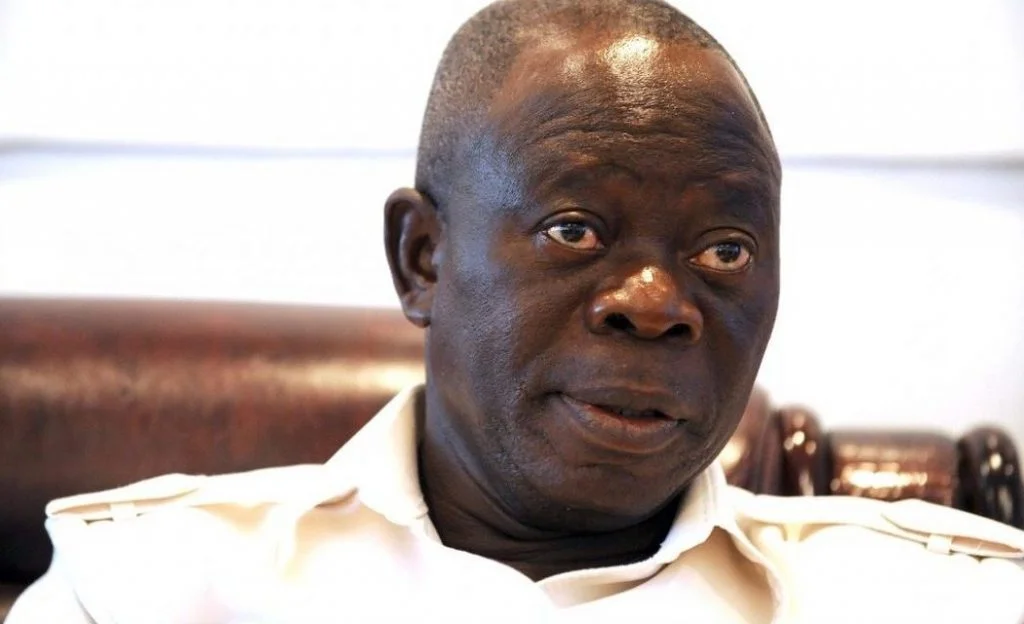
Senator Adams Oshiomhole has called on the Federal Government to retaliate against South African businesses operating in Nigeria following the recent attacks on Nigerians in South Africa.
Speaking during plenary on Tuesday, Oshiomhole said the Federal Government should consider revoking the working license of South African owned companies such as MTN and DSTV.
He argued that Nigeria must respond firmly to what he described as persistent hostility against its citizens.
READ ALSO:South Africa To Investigate ‘Mystery’ Of Planeload Of Palestinians
“I am not going to shed tears. If you hit me, I hit you. I think it is appropriate in diplomacy. It is an economic struggle,” Oshiomhole said.
He argued that while some South Africans accuse Nigerians of taking their jobs, Nigerians should return home and take over employment opportunities created by major South African companies operating in the country, including MTN and DSTV.
“When we hit back, the President of South Africa will not only talk but will also go on his knees to recognise that Nigeria cannot be intimidated.
READ ALSO:South African Ambassador Found Dead Outside Paris Hotel
“We will not condone any life being lost. If a crime has been committed under the South African law they have the right to bring any such person to justice, but to kill our people as if we are helpless, we will not allow that,” Oshiomhole added.
DAILY POST reports that several Nigerians in South Africa have reportedly been attacked, and their businesses destroyed, in ongoing xenophobic attacks in the country.
News
IGP Orders Officers Display Name Tag On Uniform, Gives Update On State Police

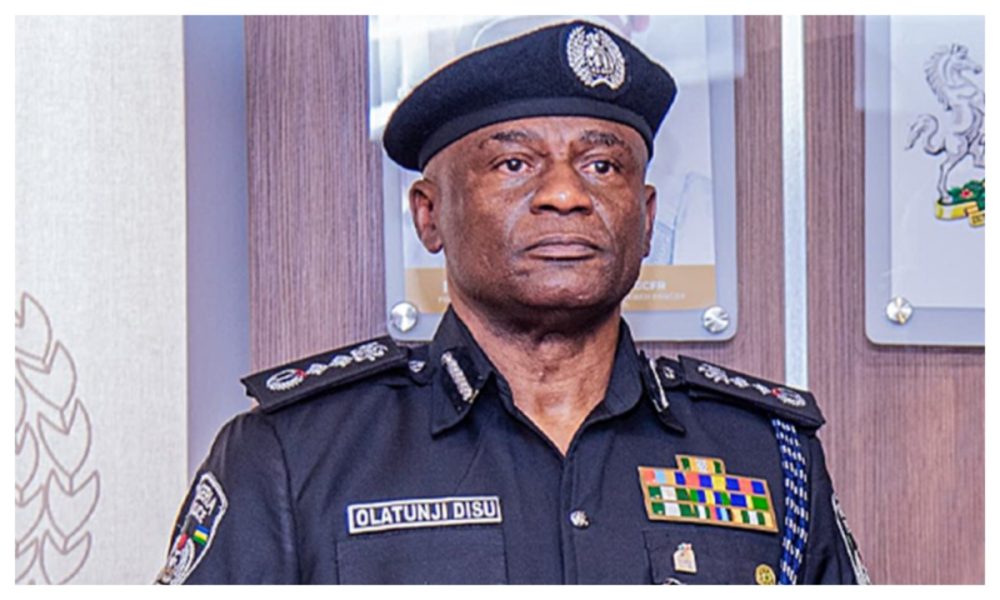
The Inspector General of Police, IGP, Tunji Disu, has ordered all police personnel to always have their name tags on their uniforms for easy identification.
Disu disclosed that only police personnel who are undercover are exempted from displaying their name tags.
Speaking on Tuesday, Disu said: “All police officers should have their name tags. All of us on the high table have our names apart from the undercover among us so if you look at all the Commissioners of Police we have our name tags, so it’s not our standard.
READ ALSO:
“All the Commissioners of Police are here and that is why we called this meeting, we have list of things like this that we will want to discuss with the Commissioners of Police, we have told them earlier and we will still let them know that every that happens within their area of jurisdiction falls under their control.”
On the issue of state police, the IGP said: “Since we got the signal that the Federal Government of Nigeria intend to establish State Police and since we are the federal police, we decided to take the bull by the horn and put down our own side of what we believe on how the state police should be run.
“A lot of things were taken into consideration, a lot of comparative analysis was done and it has been transmitted to the National Assembly.”
-

 Politics4 days ago
2027: Tinubu’s Re-election May Put An End To Nigeria — Baba Ahmed Warns
-

 Politics5 days ago
BREAKING: 2027: Former Adamawa APC Guber Candidate, Aishatu Binani Defects To NDC
-

 Business4 days ago
JUST IN: Nigerian Filling Stations Reduce Fuel Price After Hike
-

 Politics5 days ago
Senatorial Seat: Ogbakha-Edo Warns Against Imposition Of Candidates In Edo South
-

 Entertainment5 days ago
Actress Eniola Badmus Gets New Federal Appointment
-

 News5 days ago
10 African Countries With Highest Petrol Prices In Prices In April 2026
-

 News2 days ago
BREAKING: Wike Picks Alabo George For Rivers Governorship
-

 News3 days ago
OPINION: Why South Africans Murder Nigerians In Cold Blood
-

 Politics4 days ago
NDC Speaks On Peter Obi, Kwankwaso Joining Party
-

 News4 days ago
2027: Pastor Adeboye Speaks On Nigeria’s Next President
