
News
OPINION: Time To Question Buhari
By Lasisi Olagunju
Preparatory to his exit from power last year, President Muhammadu Buhari warned all of us to let him be after office: “Nobody should ask me to come and give any evidence in any court; otherwise whoever it is, he will be in trouble because all important things are on record.” Buhari uttered those words in one of his very rare media interviews. That was in January 2023 – one year, one month ago. And truly, every horror so far traced to him as president has been deflected to some minion somewhere. Whatever was lost under his watch, whatever we seek after his exit, whatever we can’t find in the presidential drawer, we’ve carefully avoided going to the man we handsomely paid to look after them. The chief priest is never guilty of anything. There is always a scapegoat tethered in his honour. The orphaned animal carries the guilt.
Some of the key ‘secular’ supporters of the present president are my friends. I engaged one of them last week on the cost of living crisis ravaging the country. He told me what we’ve been reading on social media: Buhari is the culprit; he is the edá rat that peed into Nigeria’s soup pot. He left a badly managed country. My Èmilókàn friend blamed everything, including the worsening power supply situation, on the former president.
I reminded my friend that the past can’t be solely blamed for the rashes of today. Buhari didn’t float the naira and hack petrol subsidy at the same time. Today’s president did. We’ve run all our lives in this country blaming the next person. I keep reading strenuous efforts being made to do devolution of blames down to state governors. It is ridiculous. Were governors consulted before the naira was fed to the dogs of market forces? Leaders at the very top should accept the consequences of their actions. Buhari in power didn’t. He blamed his past throughout his eight years. His successor cannot be allowed to go that road. As America’s Harry Truman put it, “The president—whoever he is—has to decide. He can’t pass the buck to anybody. No one else can do the deciding for him. That’s his job.” My friend agreed but insisted that Buhari left a very badly managed Nigeria, then added: “But, you know, we can’t come out against him.” I smiled, nodded and reminded him of Buhari’s 2023 promise of trouble if anyone asked him “to come and give any evidence in court.” My friend laughed. We moved our talk to other matters.
But, that is not to say Buhari should not explain what he did to Nigeria. I hope he is following his probe by the Senate. Buhari in power boasted repeatedly of his ‘integrity.’ His people call him Maigaskiya (truth teller). But what kind of integrity disdains accountability, rendering accounts? There is a 2006 book, ‘Responsible Leadership’ edited by Nicolas Pless and Thomas Maak. A chapter in that book is useful here. The chapter, written by George G. Brenkert, is on ‘Integrity, Responsible leaders and Accountability’. Integrity and accountability share an inner connection. They are, in the words of Nigerian playwright, Zulu Sofola, “lightning and thunder inseparable.” George Brenkert maintains that a leader “who is not willing to be subject to conditions involving giving an account of his or her behaviour to others” cannot claim to have integrity. I agree with him. You mouth and wear ‘integrity’ everywhere and still threaten us with trouble if we dare question you.
FROM THE AUTHOR: OPINION: Our President’s Love Affair With The IMF
Former President Buhari did not tell us why he had to threaten his successors against potentially calling him to account. He also did not define or explain what he meant by ‘trouble’. But, you remember Shakespeare’s witches and their chant of ‘trouble’ in Macbeth: “Double, double toil and trouble;/ Fire burn and cauldron bubble” Steaming hot cauldron is elevated boiler. Whatever Buhari had covered up in his boiling kettle is coming out. His warning was a cauldron of guilt.
The Senate told us last week that a total of N30 trillion was printed by the government of Muhammadu Buhari and the money appears to have disappeared. I whispered “Goodbye, Giant of Africa” when I listened to the heart-rending deliberation of our Senate on that disaster. Ahmed Lawan, Buhari’s Senate president, interjected deliberations and said what Buhari printed was N23 trillion, not N30 trillion. Godswill Akpabio, Bola Tinubu’s Senate president (who was also Buhari’s minister), interjected the interjection. He said the extra N7 trillion was interest on the original sum.
We – you and I – are the ones paying principal and interest on Buhari’s misrule. Different strokes. In the United States, convicted former President Donald Trump pays for his bad acts. Reports say he owes an additional $87,502 in post-judgment interest every day until he pays the $354 million fine slammed on him two weeks ago by Judge Arthur Engoron in his civil fraud case. So, a court can convict a big man who had been president?
It happened also in South Africa. Not here. Where I come from, a man is never allowed to be bigger than the village. A community that cowers before a bully is a town of kids. And Nigeria should not forever be J. M. Barrie’s (1911) Neverland, a land of eternal childhood, island of people who refuse to grow up. Or the puer, Carl Jung’s archetypal error-man, who is forever afraid of challenges; who is forever waiting for ‘divine intervention’ to solve all his problems. We cannot be weaned of the disease of bad leadership until the leader knows that his feet will be held to the fires of justice after his reign. Lord Denning, Master of the Rolls, while stating the position of the law on equality before the law, says: “to every subject in this land no matter how powerful, I would use Thomas Fuller’s words over 300 years ago; “be you never so high, the law is above you.”
FROM THE AUTHOR: OPINION: Tinubu, Matter Don Pass Be Careful
We’ve seen in the US judgement that President Trump is not bigger than his country. That is in the United States. Here, trouble awaits anyone who may want to query Buhari on why he wrecked our economy, printed N23 trillion plus N7 trillion interest, and what he used the printed money for. Or that he took a $3.4 billion loan without a trace of how the money was spent and on what. The former president said the consequence of asking him to account is trouble. That is the stuff master-wrestlers are made of. We call them àgbà ìjàkadì in Yoruba. They always tell their victims that they would be victims unless they know their level.
An elected president threatening trouble if asked to render an account is a guilty mind. We should, at this moment, outgrow our fear of strongmen and serve them queries. Can we be man enough for once and square up to Buhari, the heavyweight? The man’s successors in jittery whispers blame their troubles on him. They say his government wreaked today’s woes. They should ask him to come and account for his deeds – good and bad. And the masquerade should be man (or spirit) enough to step out of his guttural grove. He owes everyone who suffers hunger today an explanation that he is not the cause. His successors say he is.
The Buhari government printed money which disappeared as they came out of the mint. That is what our Senate says it is probing without mentioning the name that professed the heist. They will pan the camera away from the one who should be in the dock. There are other issues. Early this month, the Socio-Economic Rights and Accountability Project asked Tinubu to probe the whereabouts of the $3.4bn loan obtained in 2020 by Buhari from the International Monetary Fund. Buhari took that loan to fight COVID. But SERAP is asking Tinubu to promptly probe the allegations that the IMF loan is missing, diverted or unaccounted for.” It hinted that the 2020 annual audited report recently published by the Auditor-General of the Federation “documents damning revelations, including that there was ‘no information or document to justify the movement and spending of the fund’”. There may be many more of such disappearances.
FROM THE AUTHOR: OPINION: Ibadan Blast, Makinde And Federalism
If I were Buhari, I would not wait for the Senate to call me before storming the chambers with details of the N30 trillion and other scandalous matters. I would come out and show the nation where the money is. But Buhari won’t. He is above the law and bigger than Nigeria, a serially abused country.
Is it not futile for leaders to insist they can’t be questioned? Idi Amin of Uganda recklessly printed money like Buhari and ruined his country. No one could caution or question Idi Amin, who boasted repeatedly that he was the conqueror of everybody, including the British Empire. Then he fell and maggots crept out to feast on his bloated belly. Films, books, fiction and non-fiction, have not stopped asking Idi Amin questions even after his death. Wole Soyinka’s A Play of Giants is one; Francis Imbuga’s Man of Kafira is another. Idi Amin is Boss in Imbuga’s play. He flaunts integrity and transparency. Just like today’s Nigeria in which hunger is the most uttered word north and south, Drunk and Sober, two characters in Man of Kafira, wallow in hunger while corrupt Boss lives in transparent ostentation. The two poor characters speak their frustration about a society that provides “three square meals for the transparent man and not a single trianglar one for us.”
We wait to see how the Senate handles the N30 trillion naira scandal and others. We also wait to see how Bola Tinubu will smell after his own tenure and if he will be willing to be questioned. Ultimately, leaders personally answer for their deeds and misdeeds. No fly follows the corpse of leaders into the grave. Not followers, not associates, not their dogs.
FROM THE AUTHOR: Gaza Or Jerusalem: Where Should Nigerians Be Found? [OPINION]
I saw senators struggling to disown Buhari last week. Even dogs that fawned over him and graciously ate his phlegm are barking at him now. That is life. No one admits to using a missing knife to peel their yam. If I were the man of today, I would go watch or read ‘Everyman’, a 15th-century play of man appearing before God naked and all alone. Power and Strength abandon him; Beauty and Knowledge leave too. All he is left with are his Good Deeds. There are modern adaptations of that play. In Dutch, it is Elckerlijc; in Latin, it is Homulus. Duro Ladipo’s Eda is the Yoruba version.
Some governors recently warned that we were on the road to Venezuela. I have written twice on that country; the first was when Buhari’s plantain was decaying and we were told it was ripening. And we were asked to see it so, and we agreed. Venezuela is a burst country where local traders set the price of anything in US dollars and sell everything in US dollars. No one takes the country’s currency, the bolivar, seriously; it is worth less than the wrapper on sweets. But, Venezuela’s head did not go bad overnight. The destruction was gradual, step by step, leader by leader. Long before the bubble burst for that country, Venezuelan playwright and theatre director, José Ignacio Cabrujas, was asked to speak on the curse that rules his country. He said “the state is a magnanimous sorcerer”; it creates illusions and fantasies. He described the reign of one president as “the debut of the myth of progress” and the next as the myth’s “hallucinatory… flamboyant revival.” Powerful imagery that describes our case. I think of the mythical strides of yesterday and the mist in today’s promises.
Shading the truth and exaggerating optimism led us to this day of pies in the sky. Our dog is back to the same behaviour that denied it dinner yesterday. It looks like a foundational curse.
Bola Tinubu cannot renew any hope without showing us how (and why) previous hopes expired. Throughout Buhari’s eight years, the former president feasted on designer shoes and wrapped himself in expensive gowns. He ate big and belched loudly. He tooth-picked his time away while the plane drifted. We demanded to know where the pilot was, we were abused. We asked why he was imperiling a country of 200 million people, we were asked to shut up. Today, some of those who insulted us are in the cockpit; they are whispering alarms at the perilous state of the flight. ‘Where and how is the pilot?’ is the question distraught passengers would ask in life-threatening turbulence. We asked yesterday, we are asking now. All who ask the question today genuinely seek an answer. They ask it just as troubled trees of the forest whine and crackle in terrible storms.
With Buhari, there was no leadership. “In periods where there is no leadership, society stands still,” Harry S. Truman, 33rd president of the United States, uttered that statement long ago and he had reasons to say so. So that today does not end up as yesterday did, we should keep asking questions, even if they are rhetorical. We can make them
epiplectic, forked questions of outrage and rebuke. Whatever flavour we choose, what is important is that we do not stop querying power and demanding answers. Buhari was absent, or pretended to be so. His reign ruined Nigeria; he should be made to account for his deeds.



News
Shatta Wale Bailed Burna Boy From Ghana Prison After Arrest For Smoking Weed – Captan
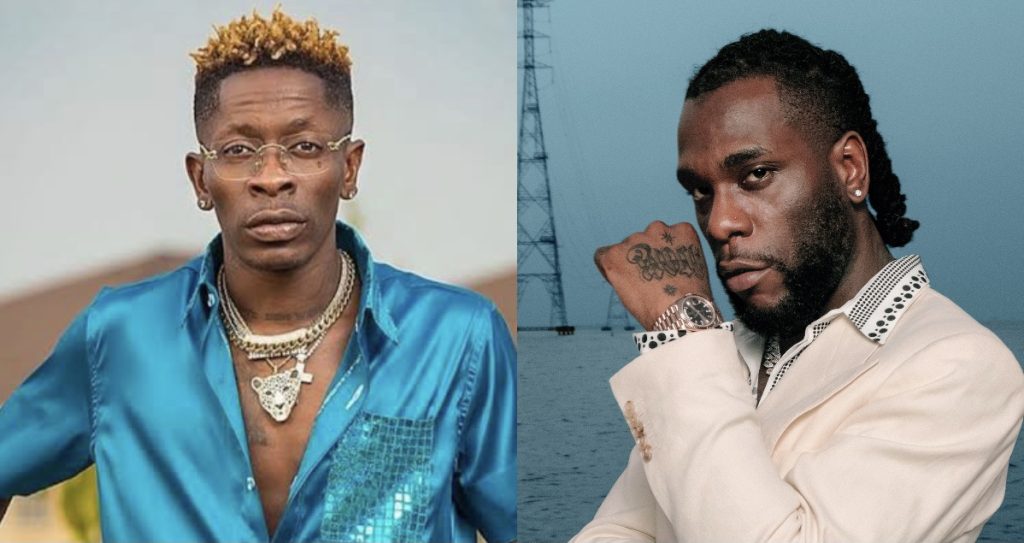
Ghanian singer, Captan, has claimed that his former record label boss, Shatta Wale, once bailed Nigerian singer Burna Boy out of prison in Ghana after he was allegedly arrested for smoking weed.
Speaking in a recent podcast interview, Captan claimed that Shatta Wale sent him and others to free Burna Boy from police custody.
He also claimed that Shatta Wale and his group once accommodated Burna Boy when he was being hunted by some dangerous men.
READ ALSO: Wale Edun Opens Up After Sack
Captan said, “I once bailed Burna Boy out of prison in Ghana when he was arrested for smoking weed. Shatta Wale sent me and some guys to go and free him from police custody.
“There was a time we also accommodated him when some people were after his life. We helped him settle the case.”
He added that he and Burna Boy are no longer in good terms after the Nigerian artist’s fallout with his mentor, Shatta Wale.
He, however, said he and Shatta Wale are open to reconciling with Burna Boy if he asks for it.
Watch the video here
News
Children’s Day: Chaos At Ogbe Stadium As Dozens Faint
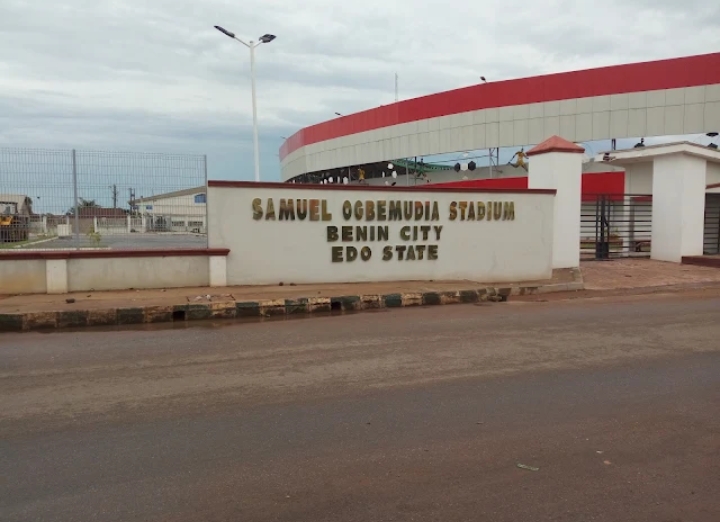
Chaos erupted on Wednesday during the Children’s Day celebration as dozens of students reportedly collapsed following a stampede triggered by the use of pepper spray.
The event,
organised by the Edo State Ministry of Education at the Samuel Ogbemudia Stadium was disrupted after some male students of Ihogbe College allegedly made uncompromising advances towards female students at the venue.
A parent who identified himself as Oboh Emmanuel said, “the behaviour of those uncultured students attracted the attention of bouncers stationed at the stadium as they rebuked the male students.”
Oboh said the affected students later regrouped and attacked the bouncers, leading to a confrontation within the crowded arena.
READ ALSO:Children’s Day: Edo Commits To Child Protection
It was gathered that in the ensuing confusion, the bouncers were reported to have deployed pepper spray in an area occupied by a large number of students.
Several students, particularly female students, reportedly fainted after inhaling the substance, while others sustained injuries after being stepped on during the ensuing melee.
The panic was said to have spread across the stadium as students, teachers and parents scampered for safety.
Many of the affected students were reportedly rushed to the Edo Specialist Hospital for medical attention.
READ ALSO: Egor LG Chair, Ogbemudia, Vice, Osawe Impeached
Reacting to the incident, Chief Press Secretary to Governor Monday Okpebholo, Dr Patrick Ebojele, said the security personnel that fired the tear gas had been detained.
He said all the students, except two, that were rushed to the hospital have been discharged.
Ebojele stated that doctors wanted to observe the students till tomorrow before allowing them to go home.
“The two students are not seriously injured. Doctors want to observe them overnight. Permanent Secretary, Ministry of Education is still at the hospital. The man who used pepper spray has been detained.
“The incident did not happen the way it is being exaggerated. All modalities were put in place to ensure the children enjoyed their day.”
News
Okpebholo Salutes Edo Muslims, Seeks Continued Support, Prayers
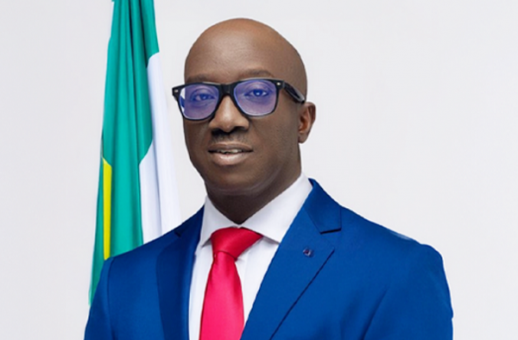
Governor Monday Okpebholo of Edo State has urged Muslims and all Nigerians to continue to pray for peace, unity and progress in the country even as they celebrate the annual Eid-al-Adha
The governor, who was represented by his deputy, Dennis Idahosa, stated this during the annual Eid-al-Adha celebration with Muslim faithfuls held at Government House in Benin City.
He reiterated his administration’s commitment to fairness, inclusivity and equal opportunities for all citizens irrespective of religion and tribe.
READ ALSO:ADC Penetrates Okpebholo’s District As Defections Strengthen Party in Edo Central
According to him, the present administration remains determined to building a government that reflects the diversity of Edo State, noting that competent and qualified Muslims have continued to play vital roles in his government because of their capacity, integrity and commitment to service.
“As a government, we remain committed to fairness, inclusivity and equal opportunity for every Edo citizen, irrespective of religion, ethnicity or political affiliation. This is why quality and competent Muslims are serving in key positions in our administration.”
Okpebholo appreciated the Muslim community in Edo State for their unwavering support and continuous prayers for his administration, noting that such prayers and support have contributed immensely to the peace and steady development being witnessed across the state.
READ ALSO:Okpebholo Felicitates Muslims On Eid-el-Fitr Celebration
He then called on all Nigerians to use the occasion of Eid-al-Adha to pray for the administration of President Bola Ahmed Tinubu, stressing that the country needs collective prayers, unity and cooperation to overcome its present economic and security challenges.
“I urge all Muslims and indeed all Nigerians to use this occasion to pray for our dear nation and for the administration of President Bola Ahmed Tinubu. Nigeria needs our collective prayers, unity and support as we strive to overcome our challenges and build a more prosperous future for all.”
In his remarks, the Chief Imam of Edo State, Abdulfatai Enabulele, applauded the governor for what he described as remarkable developmental strides recorded in less than two years in office.
The cleric commended the administration for ongoing infrastructural development and efforts geared towards improving governance in the state, but appealed to the government to revisit and complete some abandoned projects inherited from the previous administration for the benefit of the people.

 Metro5 days ago
My Husband Abandoned Me On Our Wedding Night To Attend Political Meeting, I Want Our Marriage Dissolved
- Headline4 days ago
Woman Passes Out After Receiving 100 Strokes Of Cane
- Politics5 days ago
Warri Ijaw Hail INEC Delineation Report, Call For Additional Electoral Wards, Others
- Headline4 days ago
JUST IN: White House Locked Down Briefly As Gunman Opens Fire At Security Checkpoint
- News3 days ago
More Pain For Nigerians As Cooking Gas Price Increases Nationwide
- Politics3 days ago
Two Masked Men Gun Down Politician In His Rivers State Hotel
- News5 days ago
Alleged Terrorism: Court Rejects Defendant’s Bid To Travel Abroad
- Metro5 days ago
My Wife Stop Cooking My Food, Beats Me Black And Blue All the Time, Man Tells Court
- Metro4 days ago
Police Reject N500m Bribe, Recover N7.8bn Illicit Drugs In Lagos
- Politics5 days ago
What I’ll Do As President Of Nigeria — Amaechi


