

News
[OPINION] Wasiu Ayinde: The Shame Of A Nation (2)




Tunde Odesola
Welcome, the ancient Land of Akoko beckons, where man lived in peace with nature until the day when the king, OlúfimoÀkókó, decided to let his wife into the secrets of Orò, forgetting the stern warning, “A woman is free to partake in Egúngúnfestival, she is free to partake in Gèlèdé festival, but the day she sets her eyes on Orò, she’s doomed!” Juju music legend, King Sunny Ade, amplifies this forewarning in his 1974 chart-bursting album, ‘E Kilo F’omo Ode’, crooning, “Awo egúngúnl’obirin le se, awo gèlèdé l’obirin le mo, b’obirin f’oju d’oro, oro a gbe! E kilo f’omo ode…”
Anyone who commits an unprecedented abomination, his eyes will witness an unexampled calamity, goes a Yoruba proverb captured thusly, ‘Eni ba se ohun ti enikan o se ri, oju re a ri ohunti enikan o ri ri’. Wasiu Ayinde’s ignominy at the Nnamdi Azikiwe International Airport, Abuja, was not a solitary case in the history of infamy. By its sheer repulsiveness, Wasiu’s àsàkasà ranks alongside the desecration of royalty by Oba Olúfimo Àkókó, a long time ago, when the eyes were at the knees.
But let’s be clear; the eyes were never located on the knees, literally. ‘When the eyes were at the knees’ is an imagery that explains the limited view, the eyes can see if they are embedded in the knees, as opposed to how far they can see when they are socketed in the head. ‘When the eyes were at the knees’ is a Yoruba expression which means ‘when there was little awareness’.
So, the story of Olúfimo Àkókó and his clingy wife, as documented in the Ifa corpus by Orunmila, dates back to ‘time immemorial’, with ‘time immemorial’ being the white man’s equivalent of ‘when the eyes were at the knees’.
According to the story rendered to me by the one and only Awise Agbaye, Prof. Wande Abimbola, the wife of Oba Olúfimo Àkókó knelt before the throne, saying, “My lord, I wish to know how the egúngún metamorphoses in the grove.” The bewildered king screamed, “Ha! No! Never! No woman sees the robing and the derobing of the egúngún. Èwò! Abomination!”
But the queen won’t take no for an answer. “Please, my lord,” she begged, cringing on her knees and blinking tears away from her eyes. For a minute, time and air froze between the king and the queen. “Uhmm!,” the kabiyesi exhaled, tilting his head to the left in thought as his horsetail sashayed in his right hand.
“Okay, my queen. You will hide in my footstool. From there, you can watch the egúngún metamorphosis,” the king said. “Thank you, my king,” the happy queen rolled on the floor to the right and the left, in gratitude.
MORE FROM THE AUTHOR:[OPINION] Wasiu Ayinde: Shame Of A Nation (1)
As planned, the ruler hid his queen in the footstool and placed his feet on it. The atmosphere was charged as different shades and sizes of egúngún sprouted in the grove and stormed out to the delight of the ‘moríwo’, egúngún adherents. The queen watched how the ‘visitors from heaven’ chanted and sang in guttural voices while performing the rites of passage from the grove to the outer world.
Paje-Polobi is an amazing egúngún in Oyo. Its chief priest, the Alagbaa, shouted, “Paje-Polobi o o o o!” The egúngún burst forth in its colourful attire, running and jumping, chasing and dancing…out of the grove. One after the other, various egúngúnemerged from the grove. Alapansanpa was resplendent, so also was Oloolu, followed by Ologbojo, a most fearsome egúngún.
No matter how long the egúngún festival lasts, the child of the Alágbáà will eventually return to eating cornmeal. So, the festival came and went. And, Akokoland looked forward to the egúngún festival next year, even as the incoming Oro festival looms around the corner.
The Akoko queen had long fancied the Oro festival. So, she went to the king and poured out her heart’s desire, cooing in soft tones the sagas that mythify Akoko in honour and glory. “Impossible!” the king boomed, “No woman sees the Oro!” The queen whimpered, “My lord, no one saw me in the grove of egúngún; how can anyone see me in the grove of Oro when I’m inside the protection of your footstool?”
“Woman, pray, this endeavour won’t kill you,” the king blurted out, “Ok, we’ll repeat the egúngún tactics.” “Thank you, my lord,” the daredevil smiled, eyed the king flirtatiously and sang his panegyrics.
The Oro deity is chauvinistic and patriarchal. On the first night of the Oro festival, spirits and gods are evoked to commune with the sons of man. In the custom of the grove, young oros engage in call-and-response chants. The first oro booms, “Ewe meje-meje ni ege ni! (Cassava has seven leaves)” But, instead of the chant reverberating in and outside the grove, it hardly left the mouth of the oro. “What is going on?” Oro disciples began to wonder. A second oro chants, “Ewe meje-meje ni…,” but the second oro couldn’t finish the chant. Clearly, something was amiss. The third Oro burst into the chant, “Ewe me…,” and stopped abruptly like a rat caught in a gum trap.
MORE FROM THE AUTHOR:OPINION: Oluwo Holier Than The Godless Ilorin Imam (2)
The gods are angry. The chief priest rose, looked up and down, and brought out his kola nuts for divination. He threw them on the ground. None looked up. “There’s an intruder in the grove,” he declared. Wizened with age and wisdom, the chief priest sang, “Baye ba ye won tan, iwa ibaje ni won n wu. O difa fun Olufimo Akoko ti o fi aya re mo oro, a pe ita, ita o je, a pe oro, oro o mi titi; e jeka ye inu apere oba wo, e je a ye inu apere oba wo. Translation: When they become successful, they begin to misbehave. This is the Ifa tale of Olufimo Akoko, who showed the secret of Oro to his wife; we called ‘ita’, ita didn’t respond, we called oro, oro didn’t vibrate – let’s look into the footstool of the king!)
Therefore, the footstool was flung open. The queen was brought out. A sword was unsheathed before her eyes, but she never lived to see it sheathed – ‘won ti oju e yo ida, won ti eyin e kiibo’.
Abimbola, a former vice chancellor of Obafemi Awolowo University, concludes in Yoruba, “Wasiu has become successful; he is now misbehaving. When you become successful, you should be careful. The plane would have cut his head off like the wife of Olufimo Akoko was beheaded. May our land not witness evil. Wasiu should be careful.”
What is in a name? Wasiu calls himself Arabambi, a name similar to Olubambi, the name of Sango, the Yoruba god of thunder and lightning, whose death was wrapped in mystery and controversy. Some say Sango committed suicide by hanging, but some say he never did. Abimbola said, “It’s a lie. Sango never committed suicide. It’s not in the Ifa corpus. The lie that he committed suicide was spun by the Anglican Mission to malign the memory of Sango. Sango’s name was not Arabambi; he was Olubambi.”
Well, Wasiu is a music icon and cultural asset to Nigeria, but may he not use his hands to undo himself, I pray. I say this prayer because a psychoanalysis of Wasiu’s actions reveals an expert in the art and science of arrogance and bootlicking. In the video of his disrespectful telephone conversation with President Tinubu, Wasiu put his left hand behind him – a sign of respect – when he talked to the President respectfully, using the pronoun ‘e’, but he put the same hand in his pocket when he talked to the President disrespectfully, using the pronoun ‘o’, like he was talking to his band boy.
In his unbashful character, Wasiu, in an old video, boasted on stage that he could stop a traveller from landing at the Murtala Muhammed International Airport, Lagos: “Emi gangan, walahi, ti n ba ni o ni de Murtala, o le wo Murtala; eniti o mo oba lo n fi oba sere o.” Jatijati.
MORE FROM THE AUTHOR:OPINION: Oluwo Holier Than The Godless Ilorin Imam (1)
The conciliatory way the police, NCAA, FAAN and Keyamohandled Wasiu’s case, in contrast to the way authorities hurriedly bundled the daughter of a nobody, Emmanson, into prison, paints the picture of tigers tearing at the godfatherlessand a pride of lions caressing a bull. The Federal Government’s appointment of Ayinde as aviation security ambassador without the conclusion of the investigation amounts to an abuse of justice.
Some argue that Wasiu should not be brought to justice because he had tendered an apology. If an apology were the price for freedom for offenders, there would be no convicts in Nigerian prisons. R. Kelly and P. Diddy, by music achievements and success, are far better than Wasiu. But they are behind bars in the US today for criminal offences. If ‘I’m sorry’ could fetch them freedom, both would churn out Grammy-winning monster hits. If ‘I’m sorry’ could fetch ex-CBN Governor, Godwin Emefiele, freedom, the 64-year-old banker would use numbers to write “I’m sorry”. Despite saying sorry, the troublemaking singer, Portable, was arrested and made to pay fines when he beat up Ogun State environmental officials. He also corrected the building infraction he committed.
With a brand of Fuji relying more on beats than pearls of wisdom, Wasiu has endeared Fuji to the younger generation who prefer form to substance, but with his airport show of shame, he has dragged Fuji into the mud of shame.
Can Wasiu ever change? I doubt it. In his first show after the meltdown, Wasiu, in a most unrepentant manner, referenced the airport saga as ‘isele kekere’ (a minor incident), in a song in which he was begging for forgiveness. To say Wasiu cannot replicate his Abuja dishonourable display in countries such as the US, UK, Canada, etc., is far-fetched. He cannot do such in the Republic of Benin. I doubt if he could do that in Anambra, Abia, Rivers, etc. Cowards bully in their areas of influence.
One thing still beats me in all of this Fuji House of Commotion; it is the shocking realisation that some passengers on the Value Jet plane have not come together to file a class action lawsuit against Wasiu for endangering their lives. If I were on that plane, I would personally and jointly sue Wasiu, who needs to be taught a lesson.
Can Wasiu ever change? Yes, when the cock grows teeth.
* Concluded.
Email: tundeodes2003@yahoo.com
Facebook: @Tunde Odesola
X: @Tunde_Odesola
////////////////////////////////////////
NB: This column goes on a break from next week.
See you!
…




News
Xenophobic Attacks: Oshiomhole Tells FG To Retaliate Against South African Companies In Nigeria

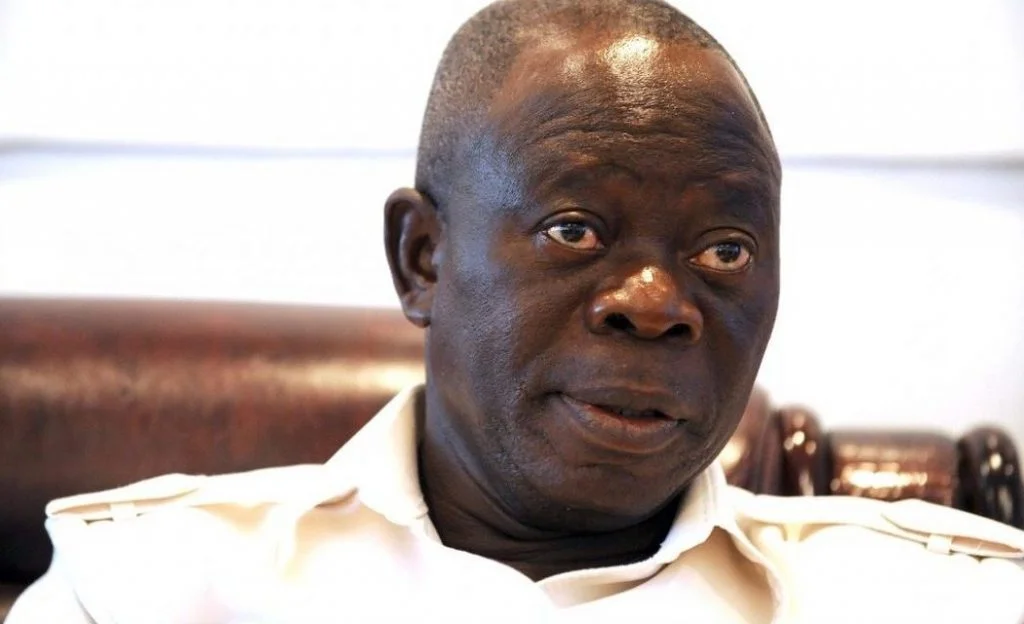
Senator Adams Oshiomhole has called on the Federal Government to retaliate against South African businesses operating in Nigeria following the recent attacks on Nigerians in South Africa.
Speaking during plenary on Tuesday, Oshiomhole said the Federal Government should consider revoking the working license of South African owned companies such as MTN and DSTV.
He argued that Nigeria must respond firmly to what he described as persistent hostility against its citizens.
READ ALSO:South Africa To Investigate ‘Mystery’ Of Planeload Of Palestinians
“I am not going to shed tears. If you hit me, I hit you. I think it is appropriate in diplomacy. It is an economic struggle,” Oshiomhole said.
He argued that while some South Africans accuse Nigerians of taking their jobs, Nigerians should return home and take over employment opportunities created by major South African companies operating in the country, including MTN and DSTV.
“When we hit back, the President of South Africa will not only talk but will also go on his knees to recognise that Nigeria cannot be intimidated.
READ ALSO:South African Ambassador Found Dead Outside Paris Hotel
“We will not condone any life being lost. If a crime has been committed under the South African law they have the right to bring any such person to justice, but to kill our people as if we are helpless, we will not allow that,” Oshiomhole added.
DAILY POST reports that several Nigerians in South Africa have reportedly been attacked, and their businesses destroyed, in ongoing xenophobic attacks in the country.
News
IGP Orders Officers Display Name Tag On Uniform, Gives Update On State Police

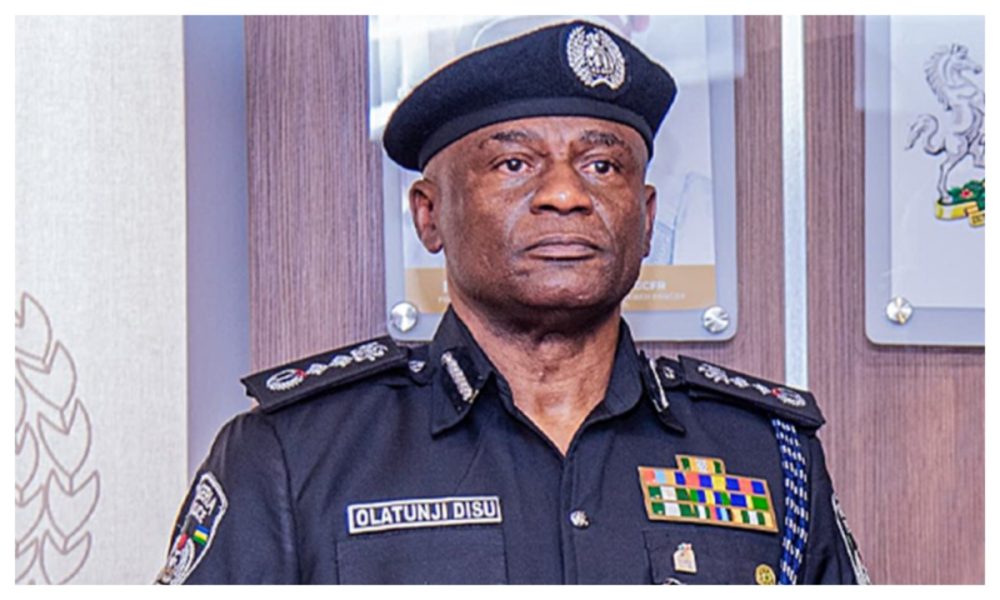
The Inspector General of Police, IGP, Tunji Disu, has ordered all police personnel to always have their name tags on their uniforms for easy identification.
Disu disclosed that only police personnel who are undercover are exempted from displaying their name tags.
Speaking on Tuesday, Disu said: “All police officers should have their name tags. All of us on the high table have our names apart from the undercover among us so if you look at all the Commissioners of Police we have our name tags, so it’s not our standard.
READ ALSO:
“All the Commissioners of Police are here and that is why we called this meeting, we have list of things like this that we will want to discuss with the Commissioners of Police, we have told them earlier and we will still let them know that every that happens within their area of jurisdiction falls under their control.”
On the issue of state police, the IGP said: “Since we got the signal that the Federal Government of Nigeria intend to establish State Police and since we are the federal police, we decided to take the bull by the horn and put down our own side of what we believe on how the state police should be run.
“A lot of things were taken into consideration, a lot of comparative analysis was done and it has been transmitted to the National Assembly.”
News
Court Orders SERAP To Pay DSS Operatives N100m For Defamation
The High Court of the Federal Capital Territory has ordered a non-governmental organization, the Socio-Economic Rights and Accountability Project, SERAP, to pay N100 million as damaged to two operatives of the Department of the State Services, DSS, for unjustly defaming them in some publications.
The court also ordered SERAP to tender public apologies to the defamed officers,
Sarah John and Gabriel Ogundele, in two national newspapers, two television stations and its website.
Besides, the organization was also ordered to pay the two operatives N1 million as cost of litigation and 10 percent post-judgment interest annually on the judgment sum until it’s fully liquidated.
Justice Yusuf Halilu of the High Court of the Federal Capital Territory gave the order on Tuesday while delivering judgment in a N5.5 billion defamation suit instituted against SERAP by the DSS operatives.
The judge found SERAP liable for unjustly defaming the two DSS operatives with allegations that they unlawfully invaded its Abuja office, harassed and intimidated its staff, in September 2024.
READ ALSO:How We Arrested Terror Suspect Who Threatened To Kill Students, Teachers In Abuja — DSS
In the offending publication on its website and Twitter handle, SERAP alleged that the two operatives unlawfully invaded and occupied its office with sinister motives.
The judge held that the publication was in bad taste especially from an organization established to promote transparency and accountability, as nothing in the publication was found to be truthful.
The DSS staff had listed SERAP as 1st defendant in the suit marked CV/4547/2024. SERAP’s Deputy Director, Kolawole Oluwadare, was listed as the 2nd defendant.
In the suit, the claimants – Sarah John and Gabriel Ogundele – accused the two defendants of making false claims that they invaded SERAP’s Abuja office on September 9, 2024..
Counsel to the DSS, Oluwagbemileke Samuel Kehinde, had while adopting his final address in the mater urged the judge to grant all the reliefs sought by his client in the interest of justice.
READ ALSO:DSS Arrests Suspected Gunrunner, Recovers 832 Rounds Of Ammunition
He admitted that although the names of the two claimants were not mentioned in the defamation materials, they had however established substantial circumstances that they are the ones referred to in the published defamation article by SERAP on its website.
The counsel submitted that all ingredients of defamation have been clearly established and the offending publication referred to the two officials of the secret police.
However, SERAP, through its counsel, Victoria Bassey from Tayo Oyetibo, SAN, law firm, asked the court to dismiss the suit on the ground that the two claimants did not establish that they were the ones referred to in the alleged defamation materials.
She said that SERAP used “DSS officials” in the alleged offending publication, adding that the two claimants must establish that they are the ones referred to before their case can succeed.
Similar arguments were canvassed by Oluwatosin Adefioye who stood for the second defendant, adding that there was no dispute in the September 9, 2024 operation of DSS in SERAP’s office.
READ ALSO:Alleged Cyberstalking: DSS Plays Video Evidence In Sowore’s Trial
He said that since SERAP in the publication did not name any particular person, the claimants must plead special circumstances that they were the ones referred to as the DSS officials.
Besides, he said that there is no organization by name Department of State Services in law, hence, DSS cannot claim being defamed adding that the only entity known to law is National Security Agency.
The claimants had in the suit stated that the alleged false claim by SERAP has negatively impacted on their reputation.
The DSS also stated, in the statement of claim, that, in line with the agency’s practice of engaging with officials of non-governmental organisations operating in the FCT to establish a relationship with their new leadership, it directed the two officials – John and Ogunleye – to visit SERAP’s office and invite them for a familiarization meeting.
The claimants added that in carrying out the directive, John and Ogunleye paid a friendly visit to SERAP’s office at 18 Bamako Street, Wuse Zone 1, Abuja on September 9 and met with one Ruth, who upon being informed about the purpose of the visit, claimed that none of SERAP’s management staff was in the country and advised that a formal letter of invitation be written by the DSS.
READ ALSO:DSS, Police Partner NCCSALW To End Terrorism, Mop Up Illegal Arms
John and Ogundele, who claimed that their interactions with Ruth were recorded, said before they immediately exited SERAP’s office, Ruth promised to inform her organisation’s management about the visit and volunteered a phone number – 08160537202.
They said it was surprising that, shortly after their visit, SERAP posted on its X (Twitter) handle – @SERAPNigeria – that officers of the DSS are presently unlawfully occupying its office.
The claimant added, “On the same day, the defendants also published a statement on SERAP’s website, which was widely reported by several media outfits, falsely alleging that some officers from the DSS, described as “a tall, large, dark-skinned woman” and “a slim, dark skinned man,” invaded their Abuja office and interrogated the staff of the first defendant (SERAP).
John and Ogundele stated that “due to the false statements published by the defendants, the DSS has been ridiculed and criticised by international agencies such as the Amnesty International and prominent members of the Nigerian society, such as Femi Falana (SAN)”.
“Due to the false statements published by the defendants, members of the public and the international community formed the opinion that the Federal Government is using the DSS to harass the defendants.”
READ ALSO:SERAP To Court: Stop CBN From ‘Implementing ‘Unlawful, Unjust ATM Fee Hike’
They added that the defendants’ statements caused harm to their reputation because the staff and management of the DSS have formed the opinion that the claimants did not follow orders and carried out an unsanctioned operation and are therefore, incompetent and unprofessional.
The claimants therefore prayed the court for the following reliefs: “An order directing the defendants to tender an apology to the claimants via the first defendant’s (SERAP’s) website, X (twitter) handle, two national daily newspapers (Punch and Vanguard) and two national news television stations (Arise Television and Channels Television) for falsely accusing the claimants of unlawfully invading the first defendant’s office and interrogating the first defendant’s staff.
“An order directing the defendants to pay the claimants the sum of N5 billion as damages for the libellous statements published about the claimants.
“Interest on the sum of N5b at the rate of 10 percent per annum from the date of judgment until the judgment sum is realised or liquidated.
“An order directing the defendants to pay the claimants the sum of N50 million as costs of this action.”
-

 Politics3 days ago
2027: Tinubu’s Re-election May Put An End To Nigeria — Baba Ahmed Warns
-

 Metro4 days ago
I’m A Street Girl’ – Bimbo Ademoye Clashes With Area Boys [VIDEO]
-

 News5 days ago
VIDEO: Moment S’Court Recognises David Mark-led ADC Leadership
-

 Politics4 days ago
BREAKING: 2027: Former Adamawa APC Guber Candidate, Aishatu Binani Defects To NDC
-

 Politics4 days ago
Senatorial Seat: Ogbakha-Edo Warns Against Imposition Of Candidates In Edo South
-

 Business3 days ago
JUST IN: Nigerian Filling Stations Reduce Fuel Price After Hike
-

 Entertainment4 days ago
Actress Eniola Badmus Gets New Federal Appointment
-

 Metro5 days ago
Robbers Raid Imo Catholic Church, Steal Holy Communion Materials
-

 News4 days ago
10 African Countries With Highest Petrol Prices In Prices In April 2026
-

 Metro5 days ago
VIDEO: Policemen Filmed Assaulting Individual In Viral Clip
