
News
OPINION:HPV Testing, A Catalyst For Women’s Empowerment
An old proverb from the Congo says, “A mother is like a kernel, crushed by problems but strong enough to overcome them”. Throughout Africa, mothers, sisters – the continent’s primary caregivers – are expected to be strong. Indeed, their resilience is the glue that holds our families and economies together. Yet, women in the African Region are more vulnerable to many more life-threatening diseases and health conditions than women in other regions.
Among these illnesses is cervical cancer (caused by HPV – the Human Papillomavirus), which remains the leading cause of death in women in Sub-Saharan Africa – even though it is preventable. January, marking Cervical Cancer Awareness Month, comes around every year – and every year, we move closer to the WHO (World Health Organization) 2030 “90-70-90” cervical cancer elimination targets.
READ ALSO: OPINION: Amaechi, el-Rufai And Alákedun
That is, 90% of girls fully vaccinated with the HPV vaccine; 70% of women screened with a high-performance test by age 35 and again at 45; and 90% of women identified with cervical disease receiving treatment (90% of women with invasive cancer managed). We still have a long way to go.
The economic case for investment in HPV screening
With fewer than five years left to achieve the 90-70-90 targets, we’re in a race against the clock. To make the case for urgent action for African women’s health, let’s consider that none of us exists in a vacuum. A cycle of cause and effect starts in the smallest corners of our communities and escalates to the most significant factors influencing our economies.
When a family’s primary caregiver or breadwinner becomes a casualty of cervical cancer, an entire family system collapses. According to estimates, for every 100 mothers who die from cervical or breast cancer in resource-poor settings, 14 children die before their 10th birthday, and 210 become maternal orphans.
As a young physician serving in rural communities in my home country, Kenya, I observed the cycle firsthand. Children left behind suffer enhanced exposure to malaria, tuberculosis, pneumonia or even malnutrition because their mother is not there to care for them. Beyond the awful tragedy this represents for good, hardworking people, this also perpetuates a domino effect that trickles down to local economies.
In Africa, women comprise an estimated 50% of the agricultural sector labour force, power over 50% of all SMEs (as per IFC data), and support families (African Development Bank). Valuable members of our communities, their children and their families are at risk. These are all potentially valuable contributors to our society and economy. Logically, for Africa to realise its full economic potential, we must prioritise women’s health.
Ending the cycle
There are currently two methods of testing; the traditional method is a pap smear, which many women will be familiar with. In addition to its low sensitivity and need to be conducted more often, the method leaves many women feeling embarrassed or vulnerable during the sample collection process. However, a second option empowers women to avoid the perceived indignity of a pap smear. This relatively recent innovation is the HPV-DNA testing with the self-collection kit – now available from many healthcare providers.
According to the WHO, self-collection has proved to be as reliable as samples collected by healthcare providers. The most significant benefit of self-collection is that once the self-collection kit has been picked from your nearest healthcare facility, sample collection can be done in the privacy of your home. Lancet and other participating laboratories provide lists of local locations where kits are available.
Currently, lack of access to national HPV screening, vaccination, testing and treatment programmes as well as lack of education and social and economic inequities, prevent women from taking their cervical health into their own hands, leaving many at risk. We can change this.
Partnerships powering progress
Governments and policymakers worldwide are becoming more committed to prioritising diagnostics. This commitment was bolstered by the 2022 adoption of the WHO Resolution on Strengthening Diagnostics Capacity by participating member states at the World Health Assembly.
The Resolution prompts government stakeholders to drive equitable access to diagnostics, ultimately driving universal healthcare for all people. To accomplish the WHO goals, however, we need a collective effort – from our communities, the private and public sectors, healthcare practitioners and anyone else who can make the time to have the necessary conversations about HPV.
Cervical cancer doesn’t just impact the individual—it affects entire communities. In low and middle-income countries, the financial burden of late-stage treatment falls heavily on families and national healthcare systems. Advanced treatments like chemotherapy are costly and often unattainable for many, driving households into poverty.
By contrast, early diagnosis through HPV testing alleviates these financial pressures. It reduces the cost of treatment, eases the strain on overburdened healthcare systems and enables women to remain active contributors to their families and the economy.
When women thrive, so do the communities they support. Early testing for HPV is the open “secret weapon” – and our roadmap to 90-70-90.
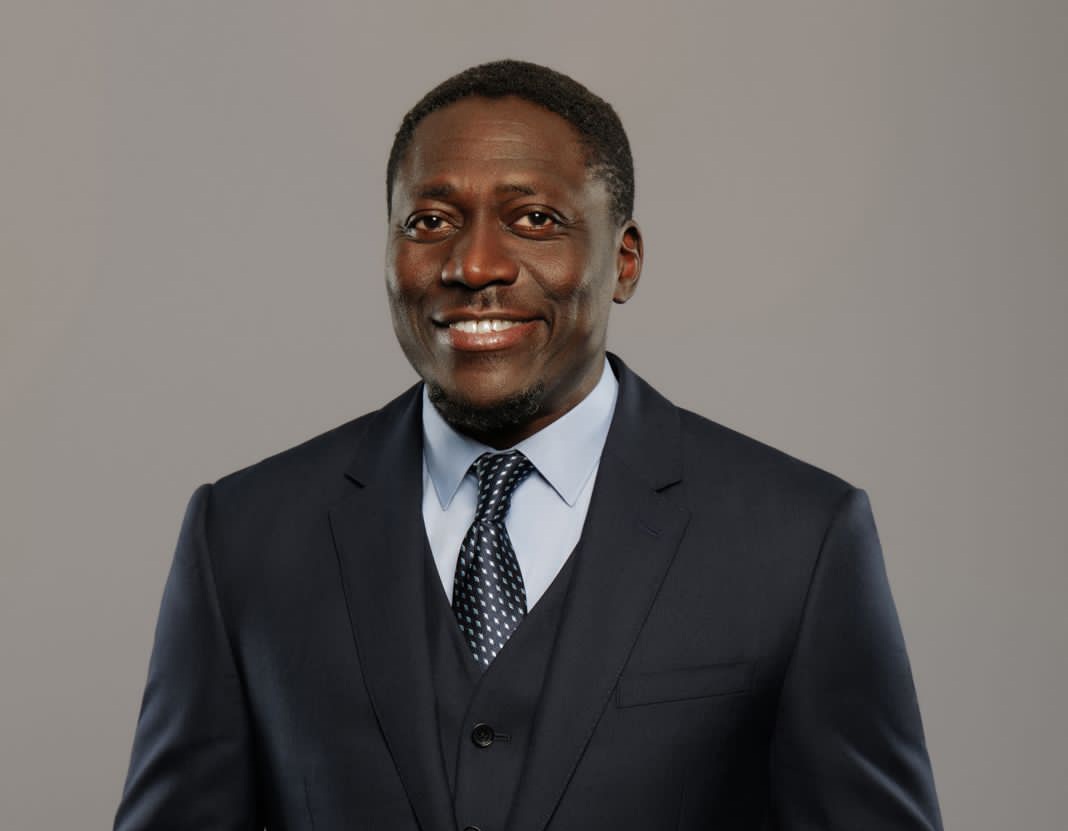
By Dr Allan Pamba, Executive Vice President, Diagnostics, Africa at Roche Diagnostics.

News
Shatta Wale Bailed Burna Boy From Ghana Prison After Arrest For Smoking Weed – Captan

Ghanian singer, Captan, has claimed that his former record label boss, Shatta Wale, once bailed Nigerian singer Burna Boy out of prison in Ghana after he was allegedly arrested for smoking weed.
Speaking in a recent podcast interview, Captan claimed that Shatta Wale sent him and others to free Burna Boy from police custody.
He also claimed that Shatta Wale and his group once accommodated Burna Boy when he was being hunted by some dangerous men.
READ ALSO: Wale Edun Opens Up After Sack
Captan said, “I once bailed Burna Boy out of prison in Ghana when he was arrested for smoking weed. Shatta Wale sent me and some guys to go and free him from police custody.
“There was a time we also accommodated him when some people were after his life. We helped him settle the case.”
He added that he and Burna Boy are no longer in good terms after the Nigerian artist’s fallout with his mentor, Shatta Wale.
He, however, said he and Shatta Wale are open to reconciling with Burna Boy if he asks for it.
Watch the video here
News
Children’s Day: Chaos At Ogbe Stadium As Dozens Faint

Chaos erupted on Wednesday during the Children’s Day celebration as dozens of students reportedly collapsed following a stampede triggered by the use of pepper spray.
The event,
organised by the Edo State Ministry of Education at the Samuel Ogbemudia Stadium was disrupted after some male students of Ihogbe College allegedly made uncompromising advances towards female students at the venue.
A parent who identified himself as Oboh Emmanuel said, “the behaviour of those uncultured students attracted the attention of bouncers stationed at the stadium as they rebuked the male students.”
Oboh said the affected students later regrouped and attacked the bouncers, leading to a confrontation within the crowded arena.
READ ALSO:Children’s Day: Edo Commits To Child Protection
It was gathered that in the ensuing confusion, the bouncers were reported to have deployed pepper spray in an area occupied by a large number of students.
Several students, particularly female students, reportedly fainted after inhaling the substance, while others sustained injuries after being stepped on during the ensuing melee.
The panic was said to have spread across the stadium as students, teachers and parents scampered for safety.
Many of the affected students were reportedly rushed to the Edo Specialist Hospital for medical attention.
READ ALSO: Egor LG Chair, Ogbemudia, Vice, Osawe Impeached
Reacting to the incident, Chief Press Secretary to Governor Monday Okpebholo, Dr Patrick Ebojele, said the security personnel that fired the tear gas had been detained.
He said all the students, except two, that were rushed to the hospital have been discharged.
Ebojele stated that doctors wanted to observe the students till tomorrow before allowing them to go home.
“The two students are not seriously injured. Doctors want to observe them overnight. Permanent Secretary, Ministry of Education is still at the hospital. The man who used pepper spray has been detained.
“The incident did not happen the way it is being exaggerated. All modalities were put in place to ensure the children enjoyed their day.”
News
Okpebholo Salutes Edo Muslims, Seeks Continued Support, Prayers

Governor Monday Okpebholo of Edo State has urged Muslims and all Nigerians to continue to pray for peace, unity and progress in the country even as they celebrate the annual Eid-al-Adha
The governor, who was represented by his deputy, Dennis Idahosa, stated this during the annual Eid-al-Adha celebration with Muslim faithfuls held at Government House in Benin City.
He reiterated his administration’s commitment to fairness, inclusivity and equal opportunities for all citizens irrespective of religion and tribe.
READ ALSO:ADC Penetrates Okpebholo’s District As Defections Strengthen Party in Edo Central
According to him, the present administration remains determined to building a government that reflects the diversity of Edo State, noting that competent and qualified Muslims have continued to play vital roles in his government because of their capacity, integrity and commitment to service.
“As a government, we remain committed to fairness, inclusivity and equal opportunity for every Edo citizen, irrespective of religion, ethnicity or political affiliation. This is why quality and competent Muslims are serving in key positions in our administration.”
Okpebholo appreciated the Muslim community in Edo State for their unwavering support and continuous prayers for his administration, noting that such prayers and support have contributed immensely to the peace and steady development being witnessed across the state.
READ ALSO:Okpebholo Felicitates Muslims On Eid-el-Fitr Celebration
He then called on all Nigerians to use the occasion of Eid-al-Adha to pray for the administration of President Bola Ahmed Tinubu, stressing that the country needs collective prayers, unity and cooperation to overcome its present economic and security challenges.
“I urge all Muslims and indeed all Nigerians to use this occasion to pray for our dear nation and for the administration of President Bola Ahmed Tinubu. Nigeria needs our collective prayers, unity and support as we strive to overcome our challenges and build a more prosperous future for all.”
In his remarks, the Chief Imam of Edo State, Abdulfatai Enabulele, applauded the governor for what he described as remarkable developmental strides recorded in less than two years in office.
The cleric commended the administration for ongoing infrastructural development and efforts geared towards improving governance in the state, but appealed to the government to revisit and complete some abandoned projects inherited from the previous administration for the benefit of the people.

 Metro5 days ago
My Husband Abandoned Me On Our Wedding Night To Attend Political Meeting, I Want Our Marriage Dissolved
- Headline4 days ago
Woman Passes Out After Receiving 100 Strokes Of Cane
- Headline4 days ago
JUST IN: White House Locked Down Briefly As Gunman Opens Fire At Security Checkpoint
- Politics5 days ago
Warri Ijaw Hail INEC Delineation Report, Call For Additional Electoral Wards, Others
- Politics3 days ago
Two Masked Men Gun Down Politician In His Rivers State Hotel
- News5 days ago
Alleged Terrorism: Court Rejects Defendant’s Bid To Travel Abroad
- Metro5 days ago
My Wife Stop Cooking My Food, Beats Me Black And Blue All the Time, Man Tells Court
- News3 days ago
More Pain For Nigerians As Cooking Gas Price Increases Nationwide
- Politics5 days ago
What I’ll Do As President Of Nigeria — Amaechi
- Politics3 days ago
‘Tinubu’s Borrowing In 24 Months Surpasses 55 Years’ Debt Record’


