
News
Osun APC, Ataoja Of Osogbo Trade Words Over Alleged Illegal Directive

The All Progressives Congress (APC) in Osun State has accused the Ataoja of Osogbo land, Oba Jimoh Oyetunji of issuing directives to non-indigenes to vote for all the candidates of the Peoples Democratic Party (PDP) in the forthcoming general elections.
The allegation was contained in a statement signed by Tajudeen Lawal, the Osun APC acting Chairman and obtained by DAILY POST on Saturday.
In the statement, the Osun APC noted that the posture of the Ataoja towards the APC was undemocratic and absolutely an act of illegality.
The party frowning at the alleged directive said a palace source had disclosed that the royal father had summoned the leaders of the Hausa, Igbo, Fulani and Ebira communities where he warned them against voting for any other political party.
READ ALSO: Osun: Oyetola, APC Ask Court Of Appeal To Sack Adeleke Over Certificate
According to the party, at the meeting, the Ataoja also directed attendees to switch off their telephones to ensure the video and audio versions of the meeting are not captured.
The party also stated that the absence of the Igbo community leader in the meeting drew the irk of the monarch who angrily maintained that it has become his habit to exclude himself from such meetings.
The statement said, “It is on record that the monarch has never hidden his dislike for the APC as he celebrated the loss of the party as announced by the Independent National Electoral Commission INEC on July 17, 2022.
“It is this despisement that the Ataoja has for the APC and Mr Gboyega Oyetola that has not made the Oba Oyetunji congratulate Oyetola since the governorship tribunal sacked his preferred candidate, the embattled Governor Ademola Adeleke, and withdrew his certificate of return to be given to Oyetola, the winner of the governorship election.”
While maintaining that the alleged directive from the traditional ruler breached the fundamental human right of association of those in attendance, Lawal urged the affected non-indigenes to resist all illegal directives that might be coming from any quarters to infringe on any of their fundamental human rights.
“Such directive from the Ataoja wasn’t within the purview of his constitutional roles and it’s capable of precipitating avoidable violence among the inhabitants of Osogbo.”
The Osun acting APC chairman advised Oba Oyetunji to be a father to all politicians irrespective of their political leanings.
READ ALSO: Fuel, Naira Scarcity: Osun CSOs Accuse Buhari, Emefiele Of Insensitivity
Reacting on behalf of the palace, Wasiu Bello, the Secretary to Oba Oyetunji described the APC allegations as mere exaggeration and politicking.
Bello also maintained that the Ataoja never warned anybody from the communities.
In his words, “I convened that meeting as directed by His Royal Majesty, Ataoja of Osogbo.
“Even though I was not privy to the topic of the invitation, the usual topic is pertaining to Osogbo and its security. The Igbo, Hausa, Ebira and Fulani community representatives were in attendance.
“On Wednesday, the day of the meeting, other community representatives were in attendance except for the leader of the Igbo community
“I called the Igbo community leader to inquire why he was absent and he made me understand that he did not get any invitation and I assured him that I’d communicate with him whatever was discussed at the meeting.
“Ataoja only discussed matters pertaining to the security and welfare of Osogbo and appealed for calm with regard to the general elections. He also encouraged them to vote for any candidate of their choice.
“I was with the Ataoja and I never heard him issue any directive for phones to be switched off.”
Also, a rejoinder signed by the wife of the monarch who also doubles as his spokesperson, Kafayat Adedoyin Oyetunji stated that the statement by the APC sought to discredit the Ataoja and dent his reputation as a father to all irrespective of political leanings.
According to her, “The Ataoja of Osogbo has never been known to engage in any political activity that would breach the constitutional roles of his office. The directive given to some non-indigenes was in no way illegal or undemocratic as portrayed by some politicians. The Ataoja, in his capacity as the traditional ruler of Osogbo, has always sought to promote peace and unity among the people living in Osogbo and the recent directive was aimed at maintaining that peace.”
While reiterating that it was imperative for politicians in the state to desist from using the Ataoja for their political gains, she added that the monarch’s position as a monarch should not be taken for granted, and his role as a mediator and peacekeeper should be respected by all.
“The Ataoja should not be used as a political tool for settling scores and advancing personal interests.
“The Ataoja of Osogbo is a patriotic traditional ruler who has always acted in the best interest of his people. The statement by the Osun State chapter of the APC is not only an affront to the Ataoja, but it is also a disservice to the people of Osogbo who have always held the Ataoja in high esteem.”
She also advised the politicians not to drag the monarch into their political mudslinging and show respect for the Ataoja stool as he remained a father to all and a symbol of unity, peace, and stability in Osogboland.



News
Foundation Offers Free Medical Serves To Edo Community

As part of its campaign against extractive activities and promotion of healthy living in the Niger Delta region, an environmental think-tank organisation — The Ecological Action Advocacy Foundation (TEAAF) on Monday offered free medical services to the people of Gelegele community in Ovia South West Local Government Area of Edo State.
The free medical services which included eye screening, sugar level and BP tests, general medical examination and counseling, etc, saw over 150 people benefitting from the free medical outreach.
The beneficiaries were also offered the appropriate reading eyeglasses and medications as the outcome of their tests required.
In her speech, Project Director, TEAAF, Ann Ajirioghene Offi, said though it was not the first time her organisation is taking free medical services to the community, the need to offer the current free medical services to Gelegele people arise during a dialogue with them where they narrated different health challenges to the representatives of the organisation.

A cross section of beneficiaries of the outreach
READ ALSO:200 Gelegele Community Residents Benefit From TEAAF Free Medical Care
Offi, who described Gelegele as a Community of Particular Concern to her organisation, said the health challenges keep increasing by the day as a result of extractive activities, gas flares and negligence.
She said: “We have seen that there are a lot of health challenges in this community, and this is as a result of the location of the community, and the ongoing extractive activities in the community, most especially the gas flares in the heart of the community. The gas flare has resulted in a lot of health challenges in the community, according to our research.
“We felt it’s very vital for us to bring free medical services here going by the health challenges facing the people.
“The challenges keep increasing by the day as a result of negligence. Negligence in the sense that the health centre in the community is not functional as it ought to be, and from my observation, no medical equipment in the clinic to take care of people.”

Eyeglasses display displayed during the medical outreach for distribution.
READ ALSO:Oil Extractive Activities: Gelegele Community Told To Speak In Unison
One of the beneficiaries, Clement Eyenmi, expressed joy and appreciated TEAAF for the free medical services, saying “our people need an organisation as this to come to their aid.”
He lamented that despite his age, he’s already having eye challenges as a result of the gas flares in the heart of the community.
“In this our environment, and personally for me, I have an eye challenge as a result of this gas flaring in the heart of our community. But today, I was attended to; I was given a reading glasses.
“The oil company flares the gas but does not bother about the welfare of the people, or show concern about the environment. This is a major problem we have here.

Medical personnel attending to a beneficiary.
READ ALSO:Patient Accuses Ekiti Teaching Hospital Of Organ Harvesting
“What this organisation is doing today is what we expect the government and the oil company to do, but they will never do such,” he added.
Also speaking, another beneficiary, Bobby Ikinbor, also appreciated TEAAF for the free medical services, saying “we do not have a standard hospital here, so, today, as this organisation brings this free medical services, it is a relief to us. We appreciate the organisation.”
He added: “You see, at times when we have an emergency health challenge and we try to rush the person to the city, we have to pray because of the bad condition of the road. At times the emergency patient dies before we get to the city.”
News
OPINION: Nigeria Deserves A President Donald Trump
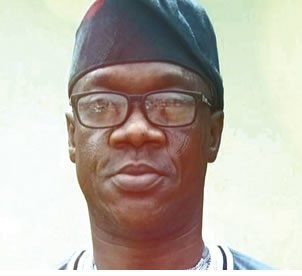
By Suyi Ayodele
“I spoke with AJ on the phone to personally convey my condolences… He assured me that he is receiving the best care in the hospital.” From wherever he then was, President Bola Ahmed Tinubu relayed that Anthony Joshua, the British-born boxer of Nigerian descent involved in a recent car accident, had told him he was receiving the best medical attention in Nigeria.
Yet, with something as ordinary as a headache, the same president routinely jets out of the country for treatment, sometimes to the United Kingdom, sometimes to France, sometimes to destinations left undisclosed. No one asks Mr. President why he can not stay behind and partake of that same “best care in the hospital” available at home.
Instead, we busy ourselves with tallying the number of days he spends abroad, and when the arithmetic is done, we move on. Nothing more is demanded; nothing more is explained.
So, if tomorrow a President Donald Trump were to bar Nigerians from travelling to the United States for medical treatment, we would promptly denounce him as a racist. Yet the very next day, we would assemble a cultural troupe to welcome home a medical tourist president, one who left Nigeria quietly, without telling us what ailed him, and returned triumphantly after treatment abroad.
That is our lot; the predicament of a people wedded to decay and decadence. And it is precisely this contradiction, this ritual of self-deception, that makes it easy for some world leaders to dismiss Nigeria as a disgraced country.
President Trump is a man many love to hate. And justifiably too. The man attracts ‘hatred’ for himself as if his mission on earth is to do what many consider ‘despicable.’
I, however, have a different opinion about the man who rules America at the moment. I see him as more of an American patriot than the brute many people project him to be. I don’t see anything wrong in a president asking non-nationals to go back and fix their own countries. That, to me, is the central message of the Trump Presidency. My understanding of his philosophy on governance is that citizens should hold their leaders accountable, rather than fleeing their countries.
This is one of the reasons I hardly argue about Nigeria and its numerous failing institutions with any Nigerian living outside the shores of the country, especially those who japa less than 20 years ago. My position is simple: if you know that Nigeria is being run by the best of men now, just pack your bags and baggage and come back home. A friend once asked me why I don’t see anything wrong in “the racist called Trump”, and I responded by asking him to come back home and enjoy our nationalist president. If farming is an easy venture, blacksmiths will not sell hoes and cutlasses. Those are the words of our elders.
MORE FROM THE AUTHOR:OPINION: Don Pedro And Beautiful Benin
Three days into the New Year 2026, President Trump opened the New Year on a very good note for the people of Venezuela. Venezuelans, at home and in the diaspora, woke up that Saturday, January 3, 2026, morning to discover that they had no president. Trump, using the sophisticated American soldiers in the US elite corps, invaded Venezuela in the dead of the night and abducted, if you like, kidnapped President Nicolás Maduro and his wife. Surprisingly, the people rejoiced at the news!
The husband and wife were in bed when the American soldiers came calling. One can picture how startled they were when they saw the strange faces in their inner room. The shock, especially when Maduro had, less than a month ago, boasted that he was safe and secure and dared America to come after him, is better imagined! What if the couple were making out when the intruders arrived?
Hours later, Trump boasted of the feat as “an extraordinary military operation,” during which “air, land, and sea were used to launch a spectacular assault. And it was an assault like people have not seen since World War Two.” He then described the operation as “…. One of the most stunning, effective and powerful displays of American military might and competence in American history” as the Venezuelan military capacities were “rendered powerless”, and “…. the men and women of our military working with US law enforcement successfully captured Maduro in the dead of night.” Could this be the reason why our elders advise that when one’s mother’s co-wife is older, one must call her mother (Tí ìyàwó ìyá eni bá ju ìyà eni lo, ìyá làá pèé).
A great public speaker, Trump warned that “This extremely successful operation should serve as a warning to anyone who would threaten American sovereignty or endanger American lives.” He listed those to be warned to include Cuba, saying, “I think Cuba is going to be something we’ll end up talking about because Cuba is a failing nation right now, a very badly failing nation. And we want to help the people. It’s very similar in the sense that we want to help the people in Cuba.”
Trump is a consummate power wielder. He did not forget Colombia. It is a known fact worldwide that Colombia and drugs are Siamese twins. If President Maduro of Venezuela could be ‘captured’ because he was accused of importing cocaine to America, the Colombian President, Gustavo Petro, President Trump warned, should “watch his ass”, because “He’s making cocaine and they’re sending it into the United States, so he does have to watch his ass.”
We must get this right from the start. No law permits what President Trump did in Venezuela. The invasion of the presidential palace and the kidnapping of President Maduro and his wife are bad in all ramifications. America is not the world police. At least, the United Nations (UN), that toothless world bulldog, Charter does not permit such an infraction. The sovereignty of Venezuela was raped by Trump. The sanctity of the human person of President Maduro was violated. Oh, yes, I must add this: the solemnity of the bedroom of Maduro and his wife was desecrated! What if Maduro and his wife had slept naked, as most couples do?
Article 2(4) of the UN Charter prohibits any member state from using force against the territorial integrity (sovereignty) of an independent country. The Charter, in Article 51, only allows the use of force in self-defence, while Articles 24 and 25 permit only the Security Council to use joint or collective force against any independent nation that threatens world peace. So, where did President Trump derive the power to invade another country, pick up the incumbent president, and transport him to America in handcuffs, as he did to President Maduro of Venezuela?
MORE FROM THE AUTHOR:OPINION: My Man Of The Season
I have read many comments about the Trump Presidency. This recent action in Venezuela added fuel to the inferno of hatred for the American President. If Nigerians in the Diaspora in America were to choose who governs God’s Own Country, Trump would not have smelled the presidency. In fact, he would not have been elected as the mayor of any city. But unfortunately for the entire world, the American people, or, as someone argued, ‘the American skewed system’, elected Trump as president. Everybody, haters or lovers alike, would have to deal with that fact.
From day one, Trump never hid his identity. He never pretended to be a gentleman. He did not tell anyone that he would run America for foreigners. His ‘Make America Great Again’ (MAGA) mantra is self-explicit. America would be for Americans, he promised. And he has lived up to that. That is honesty in its illiterate form! If you ask me, that is the type of president every nation deserves. No pretence, no diplomacy; all that matters is American interests. I wish Nigeria had such a President, the one who thinks, sleeps and dreams of Nigeria. We have been unfortunate with the selfish individuals that we have had as leaders. The present crop of transactional leaders is the very worst in our recent history.
If I were to choose a president for Nigeria, I would not think twice before picking a character like Trump. A man who places the nation’s interest above any other consideration is the man after my heart. This is what is lacking in Africa, and particularly in Nigeria. A nation that has no defined national interest is bound to be in ruins, like most nations of Africa.
Nigeria has the capacity, in all ramifications, to be great. What we lack is a president who is purposeful, courageous and above all, patriotic. We can imagine that our military became suddenly effective and efficient only after Trump ‘invaded’ Sokoto and cleared out a good number of terrorists. Yet again, nobody is asking what went wrong before the coming of Trump.
I have read so much about the sovereignty of Venezuela. I have no problem with that. But the one question I keep asking the proponents of national sovereignty is: at what time does the respect for a nation’s sovereignty stop? If, for instance, the sovereignty of Nation A threatens the peace of Nation B, what should Nation B do? Should it act in the interest of its own peace or fold its hands while the rudderless nation A acts anyhow?
If President Maduro was exporting drugs to America as Trump alleged, what should be the response of President Trump? I also find it curious that many who talked about the sanctity of the American judiciary in the case involving President Tinubu and the Chicago University certificate are the same set of people saying Maduro would not get justice in America! What a people!
After the ‘capture’ of President Maduro, the American President said that the US would “run” Venezuela. Many said that Trump was only interested in Venezuelan crude oil. Trump himself did not deny that. His press conference after Maduro had been taken into custody was clear enough. America had a huge investment profile in the oil sector of Venezuela. One of the responsibilities of President Trump, and this is applicable to all presidents, is the protection of the American economy at home and abroad. If the US investments are threatened in Venezuela because of the activities of Maduro, would Trump not be failing in his responsibility if he did not act in the name of sovereignty?
MORE FROM THE AUTHOR:OPINION: Nigerian Soldiers In Benin Republic
Nnamdi Kingsley Akanni, a professor of International Law and Diplomacy, Rivers State University, in a 2019 paper on “The Concept of Sovereignty in International Law and Relations,” suggests that the concept of sovereignty may be a ruse after all. According to him, “The paper found that what third world countries enjoy is not sovereignty but ‘sovereignty on dictated terms’ of the so-called developed powers.”
The erudite scholar states further that at the end of the research exercise, “The paper also found that smaller States are not accorded protection from developed countries and that until that is done, the concept of sovereignty will continue to be elusive to smaller nations.” He then recommends “…that the UN should take proactive steps to give greater recognition and voice to developing countries as well as offering them the platform to assert their sovereignty in line with international law.”
What the scholar is saying here is that the concept of ‘sovereignty’ exists only when the developed countries are involved. When there is a conflict of interest between the world superpowers and any of the developing or ‘disgraced’ countries of the world, the principle of “Just War” applies. This is why Trump is going to get away with the Saturday invasion of Venezuela and the impending similar exercises in Cuba and Colombia, as the American President hinted.
If the UN wakes up today and gets its mojo back to interrogate Trump on Venezuela, the US can simply hide under the cover of the principle of ‘Just war’ as the invasion of Venezuela and the ‘capture’ of its president satisfied the jus ad bellum requirements of the ‘just cause’, just intention’; ‘just peace’; reasonable chance of success’; and ‘expected benefits outweighing anticipated cost.’. We don’t need a seer to predict that many drug-friendly leaders across the globe will think twice before making America their ‘depots.’ Trump took the American oath of office to protect American interests. This is why there has been no serious condemnation of the invasion in the US today.
The invasion of Venezuela is a lesson for third-world countries. The argument that Trump took that decision because of the last Venezuelan election and economic interest is noble in my opinion. That is what he was elected to do: protect America and its interests world over.
In Africa, in general, and in Nigeria in particular, let our leaders learn to develop our lands. Let those saddled with the responsibilities of paddling our canoes do so with utmost patriotism. And more importantly, let those who want to lord it over us do so through free and fair elections. Otherwise, we will all clap and celebrate should Trump decide to ‘capture’ and ship all undesirable elements with questionable character to America for trial. Venezuelans set the precedent on Saturday when they trooped to the streets in jubilation at the news of the removal of Maduro!1
News
Oyo Traditional Ruler Suspended Over Alleged Illegal Mining
The Oyo State Government has suspended the Sobaloju of Ofiki, Chief Jacob Sobaloju, following allegations linking him to illegal mining activities and breaches of Executive Order 001/2023, which governs mining operations within the state.
The state government said the action was taken to protect the public interest and preserve government-gazetted assets.
In a suspension letter issued by the Ministry of Local Government and Chieftaincy Matters and signed by the Director of Chieftaincy Matters, Mr Olajire A.M., the traditional ruler was accused of contravening the executive order and forest reserve regulations by allegedly issuing consent letters to mining firms without lawful authorisation.
READ ALSO:Fire Ravages Residential Building In Oyo
The letter further alleged that Chief Sobaloju permitted mining activities within government-reserved forest areas and facilitated unauthorised mining operations, actions said to be in violation of extant laws and regulations.
According to the ministry, the monarch was suspended from the palace of the Onitọ of Ito with effect from Monday, January 5, 2026, pending the outcome of investigations.
The suspension was described as a precautionary step to ensure an unhindered and credible investigation process.
READ ALSO:Police Arrest Islamic Cleric With Human Flesh In Oyo
The correspondence, titled “Re: Complaint against Chief Sobaloju of Ofiki for violation of State Executive Order, Forest Reserve Regulations and encouraging trespassing of government gazetted assets,” stated that the allegations bordered on violations of Executive Order 001/2023 and unlawful encroachment on state-owned assets.
Chief Sobaloju was also directed to immediately cease all mining-related activities, including the issuance of consent letters, avoid interference with the investigation, and make himself available to investigators whenever required.
The Oyo State Government reaffirmed its zero-tolerance stance on illegal mining and related infractions, warning that any individual found culpable would be sanctioned in line with the law.

 Headline2 days ago
PROPHECY: Primate Ayodele Reveals Trump’s Plot Against Tinubu
- News2 days ago
What I Saw After A Lady Undressed Herself — Pastor Adeboye
- Metro2 days ago
Armed Robbers Shot PoS Operator To Death In Edo
- Politics2 days ago
Why Kano Governor Postponed Formal Defection To APC
- Metro1 day ago
AAU Disowns Students Over Protest
- Entertainment2 days ago
PHOTOS: Anthony Joshua Makes First Social Media Post After Surviving Deadly Car Crash
- Metro2 days ago
Gunmen Demand N200m Ransom For Kidnapped Brothers In Edo
- Metro2 days ago
Joint Task Force Kills 23 Bandits Fleeing Kano After Attacks
- Politics2 days ago
2027: Rivers APC Pledges To Follow Wike’s Instructions
- Metro1 day ago
Edo: Suspected Kidnappers Kill Victim, Hold On To Elder Brother


