
News
Otedola Shares Journey From School Dropout To Business Mogul
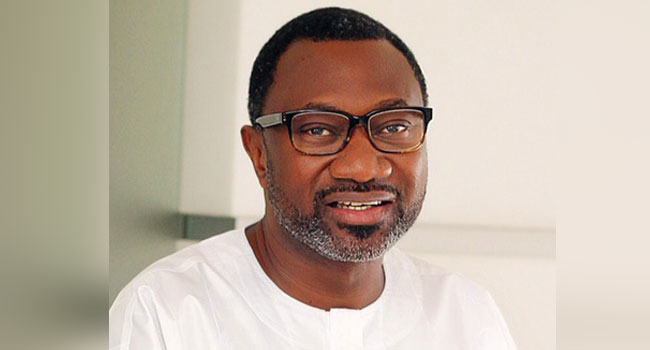
Billionaire Femi Otedola has revealed his journey to building a multi-billion-dollar empire began without a university degree or even a completed high school education.
In his newly released memoir titled ‘Making It Big’, cited by The PUNCH on Tuesday, the 62-year-old energy mogul shares how his academic struggles led him to abandon formal education and dive into the world of business, where he ultimately found his calling.
In the 286-page book, Otedola recounts his early years at the University of Lagos Staff School, starting at the age of six in 1968, and notes that despite being classmates with notable figures like Kola Abiola, son of the late business magnate Moshood Abiola, he struggled academically.
“Academia and I were not compatible,” he writes, noting that he repeated a class and consistently ranked at the bottom of his class, sparking his pivot toward a different path.
READ ALSO:Otedola Bridge Fire: Survivors Recount Harrowing Experiences
“I finished primary school in 1974 because I repeated a class. Even when I was allowed to pass, I consistently anchored the bottom rungs of our end-of-term examination results. My interests were definitely not in academia,” he added.
He noted that after finishing primary school, he proceeded to Methodist Boys’ High School, Lagos, even as his academic struggles continued.
“The school had been founded almost a hundred years earlier, in 1878. Alumni include grand names in Nigerian history: Benjamin Nnamdi Azikiwe, Mobolaji Johnson, Ola Rotimi, Fola Adeola, Olusegun Osoba, and Hezekiah Oladipo Davies. When I joined the student body in 1974, the principal was D. A. Famoroti, who’d taken up the post in 1963 and would leave in 1980,” he recalls. “I started Form 1 at age 12 and was there for three years,” he said.
He pointed out that in 1977, after it became clear that his performance was not improving, his parents transferred him to Olivet Baptist High School, Oyo, a boarding school founded by Southern Baptist missionaries in 1945.
READ ALSO:Singer Mr Eazi Weds Temi Otedola In Iceland [VIDEO]
“My parents’ thinking was that all my siblings were boarders, and they seemed to be doing well,” Mr Otedola writes. “They thought this change would help turn around my attitude towards academia, but nothing changed.
“I started in Form 3 at Olivet, and as I rounded off the first year of my A Levels, my father was establishing his printing company, Impact Press, in Surulere, a residential and commercial district in Lagos State. I grew fascinated with the machines and told myself that my future would be inextricably tied to them. I managed to remain in school until the Lower Sixth examination was over. And then, I was finished; I never returned for my Upper Sixth.
“All I wanted to do was get involved in business. My father kept watch over me and drew me close. My sister taught me shorthand. I knew how to type and began typing letters for my dad. I prepared all his business correspondence. I was fascinated by the way printing machines treat paper. The white paper is placed on one end, the ink and plates are fixed, and the printed material comes out of the other end. It was captivating,” he stressed.
Despite his mother’s protests and tears, Otedola abandoned school to work full-time in his father’s printing business. He rose quickly, becoming managing director of Impact Press in 1987 at the age of 25.
READ ALSO:Otedola Gifts Cuppy £5m Home On 30th Birthday
“However, I soon became restless. I had immersed myself in all aspects of the business and learned the ropes at my dad’s right hand. I certainly enjoyed the job more than grappling with the Pythagoras theorem and struggling through homework at Olivet. As time went by, though, I also thought it was time for a measure of independence from my dad.
“I still wanted to work for him — I really enjoyed hearing the rumbling of machines and savouring the smell of freshly printed material — but I also wanted to do things differently. I told him I wanted to become a sales consultant for the press, and he agreed. He said he would pay me a commission of 10–15% on any work I brought in.
“That was a significant break for me. I invested my money in buying cars for sales and marketing outreach and moved on to the next phase in my nascent professional life.”
With his new role, he began bringing in jobs from major companies and advertising agencies, particularly in calendars and diaries.
READ ALSO:Pregnant Woman, Five Others Killed In Nasarawa Farmer-herder Clash
“We could hardly keep up with the demand. Our unique selling point was quality, thanks to the state-of-the-art machines we owned. We were also always on time with job delivery. We were engaged in healthy competition with Academy Press, a company located in the Ilupeju area of Lagos.
“I served as my dad’s sales exec up until 1991, when he started his Lagos State gubernatorial campaign. It was a run for office — ultimately successful — that I had initiated.”
According to him, the break in his family business gave him the confidence and foundation to strike out on his own. In 1994, he founded Centre Force Ltd. with ₦10 million in starting capital.
“From those beginnings, he built a vast business empire in oil and gas, shipping, real estate, finance, and philanthropy. He went on to chair Forte Oil, invested in power through Geregu Power Plc, and today chairs the board of FirstHoldco Plc, one of Nigeria’s largest financial groups.
READ ALSO:I Still Call My Mum To Ask How Long To Boil Rice – DJ Cuppy
The businessman’s disclosure of his educational history may come as a surprise to many who long believed he was a university graduate. At one point, his Wikipedia page even suggested he studied at the University of Lagos.
But in “Making It Big”, Mr Otedola insists his true classroom was not a lecture hall but the business floor. His lessons, he says, came from watching his father, trusting his instincts, and learning from both failures and triumphs.
“I never returned for my Upper Sixth. All I wanted was to get involved in business,” he writes. That decision, once a source of his mother’s tears, would lay the foundation for a career that has made him one of Africa’s most influential businesspersons.
In the end, Mr Otedola’s memoir delivers a striking message: formal education may have eluded him, but discipline, persistence, and the hunger to build made him — in his own words — “make it big.”



News
UK Court Closes Diezani Trial As Jury Prepares Verdict
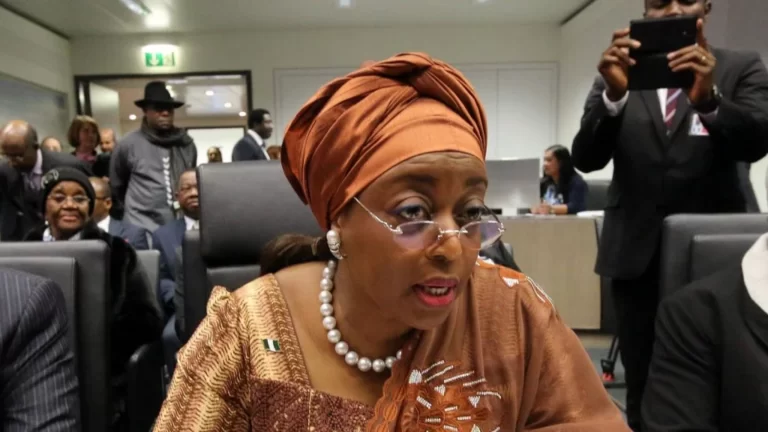
The defence and prosecution have closed their cases in the ongoing trial of former Nigerian Minister of Petroleum Resources, Diezani Alison-Madueke, at the Southwark Crown Court in the United Kingdom, with a jury now set to deliver its verdict later this week.
Alison-Madueke is standing trial alongside oil executive Olatimbo Ayinde and her brother, Doye Agama, on a five-count charge bordering on alleged bribery. All three defendants have pleaded not guilty.
British prosecutors allege that the former minister received bribes in the form of luxury items and high-value properties from oil industry actors seeking favourable treatment in the award of oil contracts during her tenure between 2010 and 2015.
The prosecution maintains that such benefits were improperly received and argues that there is no documentary evidence supporting claims of reimbursement or legitimate financial transactions backing the alleged transfers.
READ ALSO:Court Orders Final Forfeiture Of UK Property Linked To Useni, Ozekhome
In his closing submissions, defence counsel Jonathan Laidlaw accused the prosecution of failing to charge alleged bribe givers and relying on what he described as incomplete and unreliable evidence.
He questioned the handling of evidence from a 2015 raid on Alison-Madueke’s Abuja residence, alleging procedural irregularities, including the absence of key officials during the operation and lack of photographic records of items in their original locations.
Laidlaw further argued that critical documents that could support the defence case—such as records relating to reimbursements and official ministerial duties—were missing. He also faulted the prosecution’s reliance on evidence linked to Nigeria’s Economic and Financial Crimes Commission (EFCC), while challenging its rejection of parts of the same material in relation to co-defendant Ayinde.
He also disputed claims that official travel and financial records relating to the former minister were unavailable, describing the prosecution’s position as inconsistent.
READ ALSO:UK Rolls Out Digital Visit Visas For Nigerians
Responding, lead prosecutor Alexandra Healy maintained that oil executives provided improper benefits to the former minister while their companies benefited from lucrative state contracts. She argued that such arrangements were incompatible with public office and unsupported by any documentary evidence of reimbursement.
Healy further referenced a £1 million payment linked to businessman Benedict Peters, describing the use of intermediary structures as a deliberate attempt to conceal the nature of the transaction.
She also noted that Alison-Madueke had been aware of the investigation for nearly a decade.
With both sides having completed their submissions, the jury is expected to return its verdict later this week.
News
Sleep Timing Irregularity Could Double Risk Of Heart Attack, Experts Warn

Experts have warned that going to bed at different times each night, particularly during midlife, could be an early warning sign of future heart problems.
New research from the University of Oulu found a strong link between irregular bedtimes and an increased risk of major cardiovascular events, especially among people who spend less than eight hours in bed each night.
According to the study, individuals whose sleep schedules varied widely and whose time in bed was under eight hours faced roughly twice the risk of serious heart-related events compared with those who maintained more regular routines.
In contrast, irregular wake-up times did not show a clear association with cardiovascular problems.
READ ALSO:Eating Takeout Food Often May Increase Heart Disease Risk — Study
Major cardiovascular events examined in the study included conditions requiring specialised medical care, such as heart attack and ischaemic stroke.
The research, published in BMC Cardiovascular Disorders, followed 3,231 individuals born in northern Finland in 1966. Their sleep habits were monitored over a one-week period at age 46, while their health outcomes were tracked for more than a decade using healthcare register data.
Researchers measured sleep duration and timing using activity monitors that recorded how long participants remained in bed. The findings pointed to bedtime consistency as a particularly important factor for heart health.
Laura Nauha, a postdoctoral researcher at the University of Oulu, explained that earlier studies had already linked irregular sleep patterns to cardiovascular risks.
READ ALSO:Sleeping Late Can Trigger Heart Disease Later In life, Scientists Warn
However, she noted that this study is the first to show that variability in bedtime, wake-up time, and the midpoint of the sleep period are independently associated with major cardiovascular events.
According to Nauha, everyday routines play a major role in shaping long-term heart health.
“Maintaining a regular sleep schedule is one factor that most of us can influence,” she said.
“Our findings suggest that the regularity of bedtime, in particular, may be important for heart health. It reflects the rhythms of everyday life and how much they fluctuate,” Nauha added.
(Nigerian Tribune)
News
NMA Threatens N1bn Suit Against EFCC Over Alleged Assault On UUTH Professor

The Nigerian Medical Association, NMA, Akwa Ibom State Council, has concluded plans to initiate a one billion naira suit against the Economic and Financial Crimes Commission, EFCC, over the alleged assault of its member, Professor Eyo Ekpe, a Professor of Cardiothoracic Surgery at the University of Uyo Teaching Hospital, UUTH.
This was among the 10 resolutions reached by the body at the end of its emergency virtual meeting on Tuesday in respect of the arrest and alleged assault of Professor Ekpe by the commission.
Recall that EFCC operatives, on the grounds of authenticating a medical report presented by a suspect, were said to have invaded the hospital and subsequently arrested Prof. Ekpe under demeaning circumstances.
It was gathered that when the professor was accosted by the official, he told him that the office was already processing the request. However, the official allegedly went outside, mobilised other colleagues, and returned to hound the professor away after allegedly beating him and making him cry in public.
READ ALSO:EFCC Arraigns Two Over Alleged N8.9m Investment Fraud In Anambra
At a press conference held at Doctors’ Mess, Udoudoma, Uyo, on Wednesday, the NMA Chairman, Prof. Aniekan Peter, who also suffered during the crisis, said it was a slap on the integrity of the NMA as a body to allow anyone assault their member, not to talk of a professor who was only carrying out his lawful duties of saving lives and imparting knowledge.
Reading a communiqué endorsed by the chairman and the secretary, Dr Ighorodje Edesiri, respectively, the assistant secretary of the union expressed dismay that there has been a recurring pattern of harassment and assault of medical professionals and members of the association by security agencies within the state, adding that the union would no longer condone such acts.
The union, while observing that there was no formal invitation extended to Prof. Ekpe or the leadership of the NMA before the incident, described the act as barbaric, degrading, inhuman, and a gross violation of the sanctity of the hospital environment, thereby putting staff and patients at risk and undermining the dignity of the medical profession.
READ ALSO:EFCC Arrests Edo Traditional Ruler, One Other For Alleged fraud
The union, which has since embarked on an indefinite strike, said members would not return to work unless the EFCC tenders an apology to the assaulted professor, chairman, and members of the NMA, and identifies and prosecutes the officials who carried out the operation.
The union further stated that it has resolved not to offer any medical services to EFCC officials or their relatives, as they have chosen the path of cruelty against their member.
The communiqué read in part: “We observed that Prof. Eyo Ekpe was apprehended within the premises of UUTH by masked EFCC operatives who physically assaulted him, beat him to the point of bleeding, and handcuffed him alongside other doctors and hospital staff who attempted to intervene.
READ ALSO:EFCC Arraigns Ex-NRC MD Over Alleged $385,000, N165m Fraud
“Prof. Peter, Akwa Ibom NMA chairman, was shoved and exposed to teargas when he approached the scene seeking clarification from the operatives. Hospitals are sacred environments meant for the preservation of life and should not be subjected to violent invasions by security agencies.
“We shall institute legal action against the EFCC with a demand for damages in the sum of one billion naira (N1,000,000,000) for the physical, emotional, professional, and institutional damages caused. Congress further emphasised that this action shall serve as a deterrent against future harassment, intimidation, or assault of medical practitioners by any security agency. The association reaffirmed its commitment to protecting the welfare, dignity, and safety of all its members.”

 Politics5 days ago
BREAKING: NDC Zones Presidency
- Politics3 days ago
APC Clears Wike Loyalists, Disqualifies All Fubara-aligned Aspirants For State Assembly
- News4 days ago
Edo Bags NECO Excellence Award
- News5 days ago
Presidency Reveals Details Of Ribadu’s Meeting With US VP, Secretary Of State
- Headline5 days ago
Gas Prices In US Edge Down After Two Weeks Of Increases
- News5 days ago
EFCC Declares Ex-humanitarian Minister Sadiya Farouq Wanted
- News4 days ago
Edo Deputy Governor Pays Tribute As Dignitaries Honour Late Mother
- Headline5 days ago
‘Pioneer Of Cable TV News’: Key Facts About CNN Founder, Ted Turner
- Metro5 days ago
‘My Wife Deserted Me 4 Months After We Got Married, Took To Prostitution Abroad’
- Metro5 days ago
My Wife Goes To Mountains To Pray, Denies Me Sex For 9yrs


