

Headline
Overcrowding, Security Lapses Plague Nigerian Prisons —EU




A report by the European Union Agency for Asylum has revealed that Nigeria’s custodial centres are battling “escalating security challenges.”
The report, sighted by Sunday PUNCH, was published in November 2025. It documented a decade-long pattern of prison escapes in the country, explaining why the custodial centres are confronting rising jailbreaks, citing persistent security lapses.
“Over the past decade, Nigeria has experienced a pattern of prison jailbreaks, resulting in thousands of inmates escaping correctional facilities nationwide,” the report noted.
Highlighting systemic weaknesses, the report cited overcrowding, structural deficiencies, and chronic underfunding as major contributors to the problem.
“One incident occurred in March 2025, when 12 inmates escaped from the Koton Karfe Medium Security Custodial Centre in Kogi State. Only five were recaptured.
“This marked the fourth jailbreak at this facility in 13 years, where nearly 700 inmates have fled, including about 100 freed during a 2012 Boko Haram attack,” it stated.
READ ALSO:Anambra: EU Deploys 687 Observers Ahead Of Saturday Gov Election
Observers attribute the recurring breakouts to “security gaps, together with possible insider complicity, which exacerbate the prisons’ vulnerabilities, especially amid attacks by armed groups like Boko Haram.”
Beyond security concerns, the report said overcrowding and poor infrastructure continued to strain the country’s correctional system.
“The country’s more than 240 prisons currently house over 80,000 inmates, with two-thirds awaiting trial.
“The observers also point to systemic issues such as overcrowding, outdated infrastructure, poor inmate conditions, slow judicial processes, and widespread corruption,” the report said.
“International bodies have also criticised the state of Nigeria’s detention system,” it stated.
Following a September 2024 visit, the United Nations Subcommittee on Prevention of Torture described conditions in detention centres as “abysmal,” citing inadequate food, healthcare, and sanitation.
READ ALSO:Anambra: EU Deploys 687 Observers Ahead Of Saturday Gov Election
“Their assessment described conditions in most detention facilities as ‘abysmal.’ Additionally, Nigeria had not yet established a National Preventive Mechanism as required under the Optional Protocol to the Convention against Torture, which Nigeria ratified in 2009.
“The Subcommittee called on Nigeria to urgently implement measures to prevent torture and ill-treatment, improve detention conditions—particularly in police stations and similar facilities—and enforce legal safeguards to end impunity for perpetrators of torture,” the report read.
The report also raised concerns over the continued use of the death penalty.
It added, “In Nigeria, the death penalty is a ‘lawful punishment’ imposed nationwide, including for offences that do not meet the threshold of ‘most serious crimes’ under international law.
“Although no executions have been carried out since 2016, courts across the country still regularly issue death sentences. In 2023, Nigerian courts issued over 246 new death sentences, raising the total number of individuals on death row to more than 3,413.”
In May 2024, the Senate proposed a bill to increase the maximum penalty for drug trafficking from life imprisonment to death, a move that has faced opposition from various stakeholders, including legislators, the United Nations Office on Drugs and Crime country representative, as well as activists and legal professionals.
READ ALSO:FG, EU Unveil $220m Youth Employment Initiative
“Such a proposal has reignited debate over the continued use of the death penalty in the country, with some authorities questioning the sustainability of retaining capital punishment.
“Further, although legal provisions allow for commutation of sentences by governors or chief judges after extended incarceration, inconsistencies in application have left many inmates in legal limbo,” said the report.
The Nigerian Correctional Service revealed in July 2025 that the country had 3,833 inmates on death row.
The report further stated that the African Commission on Human and Peoples’ Rights has urged Nigeria to “impose a moratorium on executions, a stance supported by the European Union and United Nations.”
It added that the detention conditions remained “harsh,” falling short of United Nations minimum standards for prisoner treatment.
Media reports and information from the Nigerian Correctional Service website indicated that thousands of inmates have escaped from 13 custodial facilities between 2019 and 2025, including many awaiting trial for serious offences such as terrorism and armed robbery.
In response to the ongoing wave of jailbreaks that has plagued custodial centres nationwide over the past years, the Controller General of the Nigerian Correctional Service, Sylvester Nwakuche, recently vowed to enforce strict disciplinary action against any officers found to have been negligent.




Headline
Six-year-old Nigerian Girl Dies After Fall From Apartment In Canada

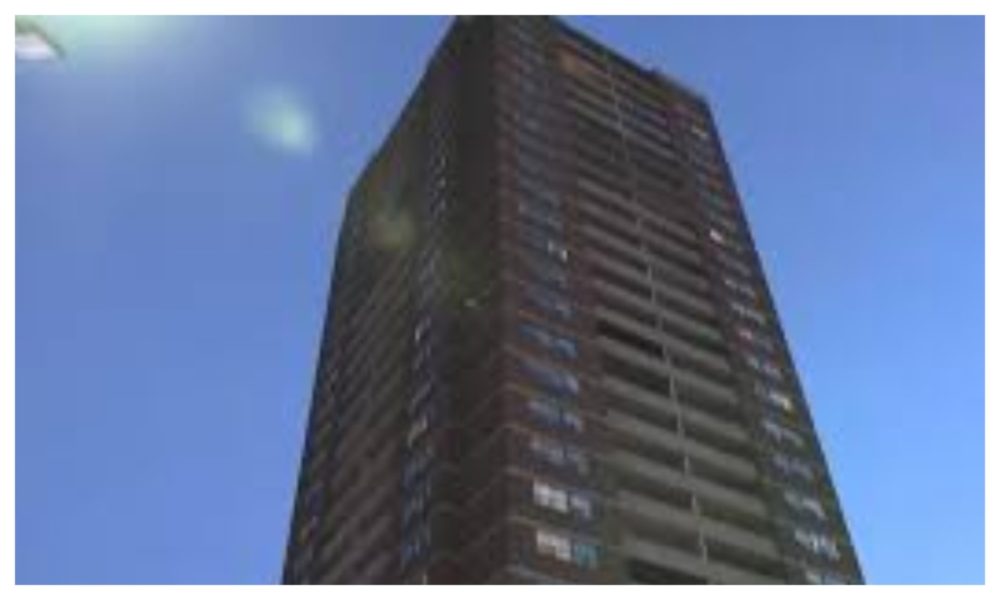
A six-year-old Nigerian girl has died after falling from a high-rise residential building in Toronto, Canada, in a tragic incident that has left the community in shock.
Reports indicate that her mother was in Nigeria at the time of the incident.
The incident occurred at an apartment complex on Chalkfarm Drive in North York, close to Jane Street, at about 8:15 p.m.
Toronto Police Service said officers responded to a report described as “unknown trouble” and later found the child unresponsive on the ground outside the building.
Residents of the building described the girl as cheerful and familiar within the community, saying her death had deeply unsettled neighbours.
READ ALSO:Man With Lengthy Criminal Record Shoots Nigerian To Death Inside Bus In Canada
One resident told CP24 that the child was regularly seen playing around the premises.
“She used to come here all the time and play… she was a lively kid. It’s very, very sad,” the neighbour said.
Another resident said the news had been devastating for people living in the building, adding that the girl was a familiar face during daily routines such as school runs.
“It’s crazy that I will never see this child again. I see her every morning. It’s heartbreaking,” the resident said.
According to neighbours, the girl had been staying with a family friend who lives on the top floor of the building while her mother was away in Nigeria.
READ ALSO:Man With Lengthy Criminal Record Shoots Nigerian To Death Inside Bus In Canada
Some residents also questioned how the incident occurred, noting that the building is fitted with window safety features designed to prevent full opening.
“To be fair, they do have precautions on these windows to make sure these things don’t happen,” one resident said.
Another added that the windows are secured and cannot be fully opened, further adding to uncertainty surrounding the circumstances.
The property management company, Greenwin, which manages the building at 200 Chalkfarm Drive, described the incident as “deeply saddening,” adding that its thoughts are with the child’s family.
READ ALSO:Travel Chaos: Air Canada Shut Down By Flight Attendant Strike
The company confirmed that emergency responders attended the scene promptly and said it is fully cooperating with investigators.
It declined to comment on the condition or inspection history of the windows, citing an ongoing investigation.
Police in Toronto said the case is not being treated as suspicious at this stage, though investigations are continuing pending autopsy results.
Headline
US Govt Finally Releases Files On UFOs, Alien Life


President Donald Trump’s administration has released a batch of previously unseen files, videos and photographs on Unidentified Anomalous Phenomena, UAP.
The government described the development as part of a push for greater transparency on government-held information about extraterrestrial-related sightings.
According to Fox News, the White House said the materials, drawn from across multiple government agencies, have been made publicly accessible without security clearance requirements.
Officials said the release is intended to allow the public to review the information and draw their own conclusions.
READ ALSO:Trump Bows To Pressure, Deletes Post Depicting Self As Jesus
“The latest UAP videos, photos, and original source documents from across the entire United States government are all in one place,” the White House said, adding that past administrations had sought to limit public disclosure.
The release is part of a programme identified as the Presidential Unsealing and Reporting System for UAP Encounters, PURSUE, which officials say will continue with further disclosures.
Among the initial materials are images reportedly linked to Apollo 12 and Apollo 17 space missions, including a photograph from the lunar surface showing three small dots in the sky.
The release also includes transcripts of communications from Apollo 17, in which crew members described observing bright, fast-moving particles or fragments outside their spacecraft.
READ ALSO:Trump Tired Of War In Iran – Shehu Sani
In one exchange, astronauts described seeing “very bright particles” and “jagged, angular fragments” while in orbit, comparing the appearance to fireworks.
Trump previously said he would support declassifying government files related to UFOs and UAPs, following renewed public interest in the subject.
He had earlier directed federal agencies to begin identifying and releasing relevant documents.
Headline
Strait Of Hormuz: Pakistan Thanks Trump For Pausing ‘Project Freedom’
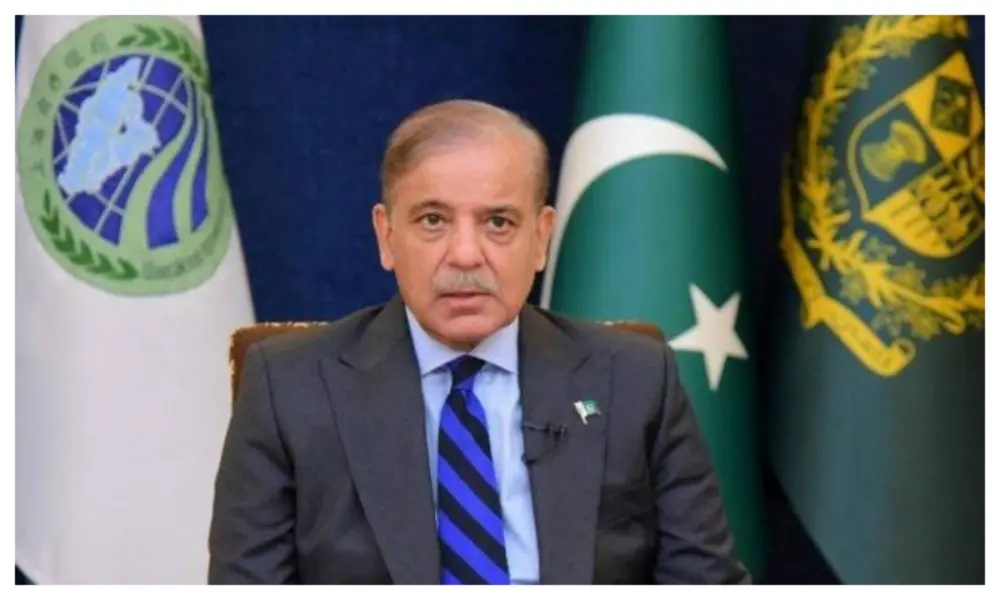
Pakistani Prime Minister Shehbaz Sharif on Wednesday expressed gratitude to United States President Donald Trump for temporarily pausing ‘Project Freedom’, an initiative to secure shipping through the Strait of Hormuz.
In a statement posted on X, Sharif thanked Trump for pausing the “Project Freedom” mission, praising him for his courageous leadership and timely announcement.
According to him, Trump’s decision was made in response to requests from Pakistan, Saudi Arabia and other brotherly countries.
READ ALSO: Oil Prices Drop After Iran Reopens Strait Of Hormuz
He added that the pause would go a long way towards advancing regional peace, stability and reconciliation during the sensitive period.
“Pakistan remains firmly committed to supporting all efforts that promote restraint and a peaceful resolution of conflicts through dialogue and diplomacy.
“We are very hopeful that the current momentum will lead to a lasting agreement that secures durable peace and stability for the region and beyond,” Sharif said.
-

 News4 days ago
BREAKING: Wike Picks Alabo George For Rivers Governorship
-

 Business4 days ago
Why We Sited Our Multi-Billion Naira Automobile Firm Branch in Benin – Skyewise Group CEO
-

 Politics4 days ago
JUST IN: Why I left ADC For NDC With Kwankwaso – Peter Obi Opens Up
-

 Politics4 days ago
BREAKING: 17 ADC Reps Follow Join NDC
-

 Entertainment5 days ago
Why I Stopped Attending Church Service – Funke Akindele
-

 Business3 days ago
Again, Dangote Refinery Hikes Fuel Price
-

 News3 days ago
Xenophobic Attacks: Nigerian Students To Picket MTN, MultiChoice, Other Businesses
-

 News4 days ago
OPINION: APC’s Politics Of Consensus
-

 Entertainment5 days ago
‘My Mum Started Quoting Bible’ — Shank Sparks Debate After Tattoo Confession
-

 News3 days ago
IGP Orders Officers Display Name Tag On Uniform, Gives Update On State Police