
Headline
Palestinians Flee As Israel Intensifies Assault On Gaza City
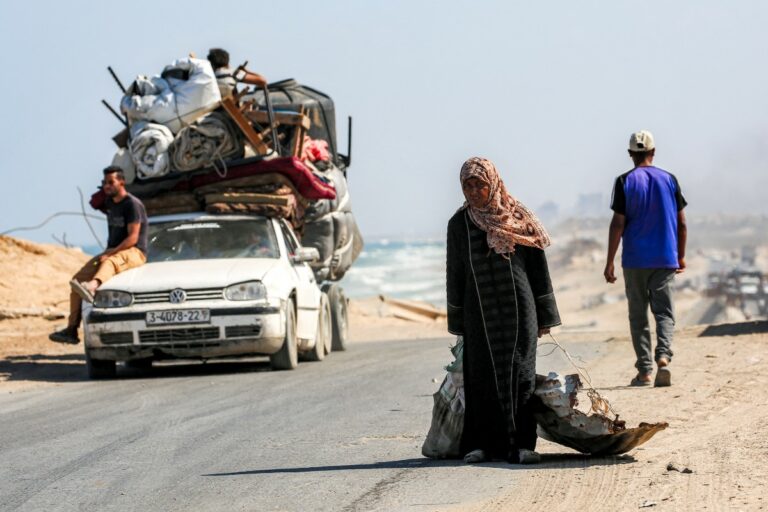
A constant stream of Palestinians fled in tractors, carts and overloaded vans down a coastal road in the central Gaza Strip, the latest mass displacement as Israel intensified its assault on the territory’s main city.
Those escaping the offensive on Gaza City left behind them a scene of utter devastation, where smoke from the aftermath of Israeli strikes wafted behind buildings that had already been reduced to rubble.
The United Nations estimates that nearly a million people live in Gaza City and its surroundings — the Palestinian territory’s largest urban centre, which the Israeli military is gearing up to seize.
The army on Tuesday told all residents to leave immediately and head southwards, saying it would act with “great force” in the city.
READ ALSO:Israel Strikes Hamas Leadership, Explosions Reported In Qatar’s Capital
“We were forcibly displaced to the southern Gaza Strip under intensified shelling,” said Saeb al-Mobayed, who was fleeing Gaza City along the coastal road.
“Many buildings have been destroyed,” he told AFP. “Mosques near areas sheltering displaced people were also targeted, forcing us to leave.”
Israel has come under mounting international pressure to end its offensive in Gaza, where the vast majority of the population has been displaced at least once in nearly two years of war.
Some of those forced into their latest move travelled on trucks and tractor-pulled trailers piled high with people and household furniture, while others had little choice but to push heavy carts by hand.
READ ALSO:Israel Threatens To Level Gaza City Unless Hamas Disarms, Frees Hostages
Ahmed Shamlakh, who had also been displaced from Gaza City, pleaded for an end to the war and for crossings into the Palestinian territory to be opened.
“Allow life to return to normal as it was before — it’s enough,” he said.
The Israeli military is telling Palestinians to head to a “humanitarian zone” in the southern coastal area of Al-Mawasi, where it says aid, medical care and humanitarian infrastructure will be provided.
Israel first declared the area a safe zone early in the war, but has carried out repeated strikes on it since then, saying it is targeting Hamas.
Gazans have said the journey south is prohibitively expensive and that there is no more space to pitch tents in the designated zones.
READ ALSO:Israel Threatens To Level Gaza City Unless Hamas Disarms, Frees Hostages
The spokesman for Gaza’s civil defence agency, Mahmud Bassal, told AFP on Tuesday that even in central and southern areas of the territory, “there are no necessities for life — no shelter, no space for tents, no food, and no drinking water.”
Media restrictions in Gaza and difficulties in accessing many areas mean AFP is unable to independently verify the details provided by the civil defence agency or the Israeli military.
In Gaza City on Tuesday, Israeli army leaflets rained down on Palestinians, ordering them to evacuate.
“I ask Israel: where are we supposed to go?” said 36-year-old Khaled Khuwaiter, who had already fled from Gaza City’s Zeitun neighbourhood.
“People who fled from Gaza City to the Al-Mawasi area… found no place to stay — no tents, no water, no food,” he added.
READ ALSO:Hamas Accepts New Gaza Truce Plan – Official
“Bombing and killings are everywhere. We have only God, because the world watches our slaughter and does nothing.”
Mirvat Abu Muammar, 30, said she had already fled once with her husband and three children and that they now had no basic supplies.
“Evacuation is humiliating,” she said.
“We will wait and see. For two years, we have not known a moment of peace or sleep — only killing, destruction, and despair.”
Hamas’s October 7, 2023, attack on Israel that sparked the war resulted in the deaths of 1,219 people, mostly civilians, according to an AFP tally based on Israeli figures.
Israel’s retaliatory offensive has killed at least 64,522 Palestinians, most of them civilians, according to figures from the health ministry in Hamas-run Gaza that the United Nations considers reliable.



Headline
Coup: Guinea-Bissau Junta Releases Six Held Opposition Politicians
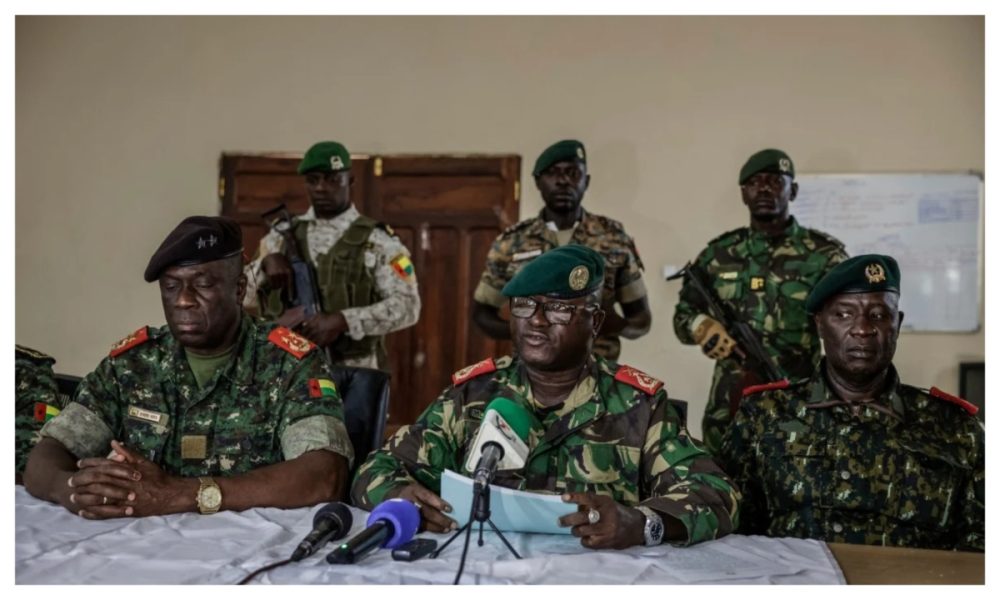
Guinea-Bissau’s ruling junta on Tuesday released six members of the political opposition who had been detained since a coup last month.
The six freed opposition members are said to be close associates of Domingos Simoes Pereira, head of the PAIGC party that led the country to independence in 1974.
Pereira has been in custody since the coup.
In a statement by the High Military Command, the junta’s governing body, the releases are described as a sign of good faith and a step towards the return to constitutional normality and respect for international rights.
READ ALSO:Why West African Troops Overturned Benin’s Coup But Watched Others Pass
The army seized power on 26 November after ousting outgoing President Umaro Sissoco Embalo in the wake of a presidential vote.
After taking over, the military suspended the electoral process and announced it would take control of the West African country for a period of one year.
Recall that another opposition candidate, Fernando Dias, took refuge in Nigeria’s embassy, which granted him asylum, while Embalo fled the country after being briefly detained by the military at the time of the coup.
Meanwhile, Senegal’s Foreign Minister, Cheikh Niang, led a delegation to Guinea-Bissau, where he met with detained opponents and requested their release.
Headline
7 Territories Still Under Colonial Rule

Even though most nations became independent in the last century, some territories are still ruled by other nations.
Contents
1. Western Sahara
2. Guam
3. American Samoa
4. United States Virgin Islands
5. Falkland Islands / Malvinas
6. Gibraltar
7. Bermuda
Many of them remain on the United Nations list of non-self-governing territories, meaning they have not completed the process of decolonization. These places usually depend on bigger countries for laws, passports, defence, or political control.
In this article, Nigerian Tribune highlights 7 territories still under colonial rule:
READ ALSO:Nigeria Ranks World’s 102nd Happiest Nation, US, Germany Not Among 20 Top Counties
1. Western Sahara
Western Sahara remains one of the world’s biggest unresolved colonial issues. Morocco controls most of the territory, but the Polisario Front wants independence for the Sahrawi people. The UN is still trying to help both sides agree on a peaceful solution.
2. Guam
Guam is an important US territory in the Pacific, used heavily for American military operations. The US oversees its defence and foreign relations.
People living there are US citizens, but they cannot vote in presidential elections and do not have full representation in Congress.
READ ALSO:FULL LIST: US To Review Green Cards From 19 ‘Countries Of Concern’ After Washington Shooting
3. American Samoa
American Samoa has more local control than Guam, but the United States still decides immigration, defence, and foreign affairs.
Residents are considered US nationals and must apply if they want full citizenship.
4. United States Virgin Islands
The US Virgin Islands have their own legislature, but the United States makes major constitutional and political decisions. The territory depends heavily on US federal support.
5. Falkland Islands / Malvinas
The Falkland Islands remain controlled by the United Kingdom (UK), but Argentina has long disputed this claim, having been in control of the Islands for a few years before 1833.
The people living there voted strongly to stay British, yet the sovereignty dispute continues to appear in the UN.
READ ALSO:Six Countries With Highest Number Of Billionaires In 2025
6. Gibraltar
Gibraltar sits at the Southern tip of Spain. The United Kingdom controls it, but Spain insists the territory belongs to them.
Gibraltarians have repeatedly voted in favour of remaining British, but the dispute is still discussed within the UN Decolonisation Committee.
7. Bermuda
Bermuda is a British Overseas Territory situated in the North Atlantic Ocean. Although it manages most of its own internal affairs and enjoys a strong economy with modern facilities, the United Kingdom still handles its defence and represents it in global matters.
Headline
Russia-Ukraine War: Pope Leo Calls For Global Christmas Truce
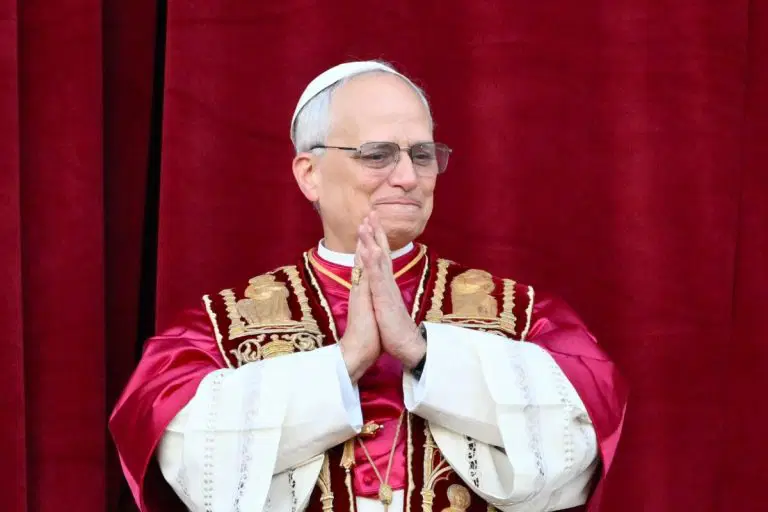
Pope Leo XIV on Tuesday renewed his call for a global truce on Christmas Day, saying he felt “great sadness” after Russia “apparently rejected a request” for a pause in fighting.
Speaking to reporters at his residence in Castel Gandolfo near Rome, the Pope urged all sides involved in conflict to observe at least one day of peace.
“I am renewing my request to all people of goodwill to respect a day of peace — at least on the feast of the birth of our Saviour,” Leo said.
Recall that Russia invaded Ukraine in February 2022 and has repeatedly turned down calls for a ceasefire, arguing that any pause would give Ukraine a military advantage.
READ ALSO:Russian Strikes Kill Five In Ukraine, Cause Power Outages
“Among the things that cause me great sadness is the fact that Russia has apparently rejected a request for a truce,” the pope said.
Referring to conflicts worldwide, Leo added, “I hope they will listen and there will be 24 hours of peace in the whole world.”
The appeal came as fighting continued in eastern Ukraine. On Tuesday, Ukrainian forces withdrew from a town after heavy battles with Russian troops. Russian strikes killed three civilians and left thousands without power during winter temperatures.
READ ALSO:Trump Blasts Ukraine For ‘Zero Gratitude’ Amid Talks To Halt War
There was no indication of progress toward ending the war after separate meetings last weekend in Miami between the United States officials and negotiators from Russia and Ukraine. The conflict is nearing four years with no settlement in sight.
Earlier this month, Pope Leo met Ukrainian President Volodymyr Zelensky. When asked whether he would accept Zelensky’s invitation to visit Ukraine, the pope said, “I hope so,” while noting that it was not possible to say when such a visit could happen.
Leo also warned that efforts to secure peace without European diplomatic involvement were “unrealistic”, expressing optimism that President Donald Trump’s proposed peace plan could bring a “huge change” to the transatlantic alliance.

 News3 days ago
PHOTOS: New Era In Furupagha-Ebijaw As Okpururu 1 Receives Staff Of Office
- Metro5 days ago
JUST IN: Former Edo Information Commissioner Is Dead
- News2 days ago
UBTH CMD Marks 120 Days In Office, Expresses Commitment To Providing Conducive Working Environment
- News3 days ago
FG Declares Public Holidays For Christmas, New Year Celebrations
- News3 days ago
OPINION: Gumi And His Terrorists
- Metro5 days ago
She Grabs, Pulls My Manhood Anytime We Fight — Husband
- News2 days ago
FIRS Confirms NIN As Tax ID
 News2 days ago
OPINION: My Man Of The Season
- Metro5 days ago
Why I Charged My Husband Money For Sex —Woman
- News5 days ago
My Wife Dented My Image, Took Our Marital Crises To Radio Stations — Husband


