
News
PIA To Unlock Investments In Nigeria’s Oil And Gas Sector – Sylva
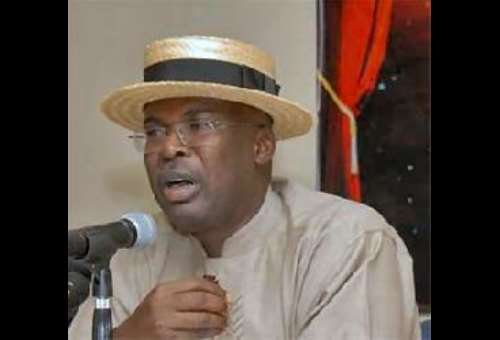
The Minister of State Petroleum Resources, Chief Timipre Sylva, has said that the desire to surmount the challenges bedeviling the oil and gas sector led to the enactment of the Petroleum Industry Act (PIA).
Speaking at the Nigeria International Economic Partnership Forum, in New York, on Wednesday, with the theme: “Nigeria’s Oil and Gas Sector: Reforms, Results and the Road Ahead”, Sylva said the desire of the President Muhammadu Buhari’s government to inject life into the sector hitherto characterized by fiscal and operational challenges led to making proactive reforms in the sector a priority.
The minister said the enactment of the Petroleum Industry Act (PIA) on August 16, 2022 was a “watershed moment for the nation, the industry and all stakeholders alike, signaling the beginning of a more conducive environment for investment, output, industrial and national growth, while also addressing legitimate grievances of resource host-communities most impacted by resource extraction operations”.
Sylva said the “PIA 2021, at full implementation, will create massive investment opportunities, improve transparency, attract investors, and reposition the Nigerian Oil and Gas industry for sustainable growth,” urging investors “to capitalize on the sustainable incentives provided by the PIA 2021 to invest in the oil and gas industry in Nigeria” with no future regret.
The minister told the gathering that the “PIA 2021 has established a legal, governance, regulatory, and fiscal framework for the petroleum industry, host community development, and associated matters” adding that “it provides fiscal certainty, improves regulations and incentives for investment, including up to ten-year tax vacations, while guaranteeing better take for both government and private investors, thereby balancing rewards with risk”.
READ ALSO: PIA: FG Considers First Set Of Regulations For Oil Industry
The minister who said the PIA has set the foundation for a sustainable growth in the sector with the establishment of the Nigerian National Petroleum Company Limited (NNPCL), Nigerian Midstream and Downstream Petroleum Regulatory Authority (NMDPRA) and Nigerian Upstream Petroleum Regulatory Commission (NUPRC) reassured the international investors of government’s commitment in the sector.
“This administration remains committed to ensure a full implementation of these carefully conceived reforms to foster efficiency and attract investments and development of supporting infrastructure along the oil and gas value chain as embedded in our policy aspirations for the sector.
“The government has taken the necessary steps to sustainably implement and operationalize the PIA 2021 within the timelines stipulated in the Act. To this end, the government has inaugurated the steering committee, which I chair, responsible for PIA implementation immediately after the PIA was signed into law,” he further stated.
He noted that the commitment of the Nigerian government to tackle the challenges in the oil and gas sector is a clear move “to reform the industry in order to build a robust, thriving and resilient economic backbone for domestic growth, expansion and consolidation in the era of the global energy transition, and also in a post covid world”.
Reflecting on the theme of the conference “Nigeria’s Oil and Gas Sector: Reforms, Results and the Road Ahead”, Sylva said the theme resonates the aspirations and commitment of President Buhari’s government to reform the sector in order to make it pivot for industrial diversification, economic growth and sustainable development in Nigeria.



News
Nigerian Govt Launches LG Proof Of Address To Improve Citizen Identification
The Federal Government has officially rolled out the Local Government Proof of Address, POA, project, an initiative designed to strengthen national security, improve citizen identification, and enhance service delivery across the country.
The project, initiated by the Association of Local Governments of Nigeria, ALGON, was formally approved through a circular issued by the Office of the Secretary to the Government of the Federation, OSGF, with reference number 5964B/S,13/VBA/T.IIIA/704.
According to the circular, the POA scheme took effect from October 1, 2025. However, implementation is at various stages in different federal and state Ministries, Departments and Agencies, MDAs.
According to the circular, under the new arrangement, all federal and state Ministries, Departments and Agencies, MDAs, government-owned corporations, and public institutions are mandated to replace the long-standing use of utility bills as proof of residence with the standardized Proof of Address issued at the local government level.
READ ALSO:FULL LIST: FG Selects 20 Content Creators For Tax Reform Education
The circular explained that the POA project aligns with President Bola Tinubu’s eight-point development agenda, particularly, in the areas of governance reform, security enhancement, and institutional efficiency.
It is domiciled in the Office of the Secretary to the Government of the Federation, with the Nigerian Postal Service, NIPOST, serving as the coordinating federal agency.
“For years, the reliance on utility bills as proof of residence has posed major challenges. Many Nigerians do not have utility bills in their names, while others rely on outdated or shared documents that do not accurately reflect their current place of residence.
“In the same vein, the increasing use of digital services and prepaid utilities has further reduced the reliability of utility bills as a credible verification tool,” the circular stated.
READ ALSO:FG Offered 4,000 Pregnant Women Free C-section – Report
Also, it noted that while the National Identification Number, NIN, remains a critical component of Nigeria’s identity management framework, a significant number of NIN records do not capture current or accurate residential addresses, limiting their effectiveness for residency verification, security profiling, and service planning.
“The POA is therefore designed to fill this critical gap by providing verified, location-specific, and up-to-date address information directly linked to local governments.
“The POA framework places residency verification at the grassroots, where local authorities have better knowledge of their communities. By anchoring address verification at the local government level, the initiative is expected to improve community-level intelligence, crime prevention, emergency response, and population data accuracy,” it added.
READ ALSO:FG Approves N54tn MTEF For 2026 To 2028
Beyond security, the circular noted that POA data is expected to deliver wide-ranging benefits, including improved public service delivery, equitable resource allocation, disaster management planning, urban development, social intervention targeting and financial inclusion.
The circular directed state governments to lead awareness and sensitisation efforts within their jurisdictions, with technical and institutional support from the OSGF, NIPOST, and ALGON.
News
Tax Reform Law: Reps Minority Caucus Seeks Suspension Of Implementation

The Minority Caucus of the House of Representatives has demanded the immediate suspension of the implementation of the recently enacted tax reform laws.
The demand follows allegations that the statutes were unlawfully altered after being passed by the National Assembly and assented to President Bola Ahmed Tinubu.
The Minority Leader, Rep. Kingsley Chinda, in a statement issued on Monday alongside other principal officers of the caucus, expressed deep concern and overwhelming disappointment over the controversy surrounding the tax reforms.
READ ALSO:New Tax Laws: Suspend January 2026 Implementation — Senator Ndume Tells Tinubu
According to the caucus, the allegations, if proven, strike at the core of Nigeria’s legislative integrity, constitutional order and democratic governance.
While acknowledging that disagreements often accompany major reforms, the caucus stated that the present situation goes far beyond routine policy debate, as it involves claims that the laws were fraudulently altered, gazetted and circulated in a form different from what was duly passed by both chambers of the National Assembly and signed into law by the President.
It recalled that the matter was formally raised on the floor of the House during a recent plenary session, leading to the constitution of a high-powered investigative committee to probe the allegations.
READ ALSO:FIRS Confirms NIN As Tax ID
The caucus pledged its full support for the investigation, assuring Nigerians that the truth would be uncovered and that anyone found culpable would be held accountable.
“We want to assure Nigerians that the Minority Caucus of the House of Representatives will stand with the entire House to ensure that the circumstances surrounding this illegality are exposed and the culprits brought to book in the interest of justice,” the statement read.
News
Outrage, Confusion Trail Rumours Of Mohbad’s Wife Giving Birth Two Years After His Death

Many Nigerians on social media have reacted to the trending news about Wunmi, late singer Mohbad’s wife.
Rumours have emerged online that Wunmi recently welcomed a new baby with another man.
The rumours came a month after Mohbad’s family banned Wunmi from using their surname.
READ ALSO:Nigerian Engineers applaud Gov. Mohammed’s $5bn Investment Deals
The viral rumour that started on X sparked controversy on social media with netizens raising eyebrows – since Mohbad died on September 12, 2023, and his body is still in the morgue.
The development has revived calls for a DNA test on her son with the late singer, Liam, who was five months old when Mohbad died.
Following the controversial circumstances surrounding Mohbad’s death, and allegation of infidelity against Wunmi, the deceased’s father, Joseph Aloba, requested a DNA to determine Liam’s paternity.
Reacting to the development, actor Stanley Ontop in a post on Instagram wrote “Mohbad dled in 2023 Him wife give birth in 2025? What God can not do does not exist! Clap hand for Jesus. Anyways in life as a man try not to kpai, no matter what. Life goes on Anyways congratulations iyawo Mohbad.”
READ ALSO:Mohbad: I Left Immediately – Angela Okorie Speaks On Group Chat Controversy
Also @MasterminddBoB wrote on X; ”Dis is not life pausing ooooo dis is her been a stupid person amid speculation of the requested DNA test for Liam..make una get sense small.”
@AgbafianTV wrote “If the News about mohbad wife allegedly giving birth is through, then know that women are ruthless in all their ways. To be able to deal with women, you’ve to be very ruthless. Don’t die because of any woman.”
@callme_Riken wrote; “I don’t know if the news about Mohbad’s wife, Wunmi, giving birth is true. But if it is. Sooner or later, she was going to move on, whether her father-in-law agreed to bury his son or not. Life doesn’t pause forever.”
@djokaymegamixer wrote on X; “I won’t be surprised if it’s later found out that the story of the late Mohbad’s widow, Wunmi, giving birth was a hoax. There is nothing these guys can’t tweet all in the name of hustling engagements for Elon Musk’s money.”

 Headline4 days ago
JUST IN: US Forces Bomb Terrorists Camps In Nigeria
- News4 days ago
Okpebholo Slams ₦25bn Libel Suit On Edo PDP Chairman
- Headline4 days ago
US Dept Of War Shares Video Of Air Strikes In Nigeria
- News3 days ago
PHOTOS: SGF George Akume Weds Ooni’s Ex-Queen
- News19 hours ago
BREAKING: Anthony Joshua Involved In Road Accident
- News4 days ago
Shehu Sani Reacts To Trump’s Military Strikes In Nigeria
- News4 days ago
Trump’s Airstrikes: Halt Military Cooperation With US Immediately – Sheikh Gumi Tells Tinubu Govt
- Headline4 days ago
U.S. Lawmaker Reacts To Nigeria, U.S. Airstrikes
- News2 days ago
Ex-Edo Gov Obaseki Reacts As His Cousin Is Beaten, Stripped
- News5 days ago
YULETIDE: UBTH CMD Charges Nigerians To Be Hopeful In Coming Year


