
Headline
Pollution: Respect For Human, Environmental Rights Take Centre Stage As NGO Organises Capacity Building In Delta Community
By Joseph Ebi Kanjo
The need to protect and preserve the environment, and respect for human rights took centre stage in Odimodi community during a two-day capacity building seminar organised by a Non-governmental Organisation-Community Development Foundation (CODAF).
Odimodi, an agrarian and fishing community, in Burutu Local Government Area of Delta State, houses Ward 11 with an estimated population of five thousand (5,000), persons, in no fewer than 13 polling units.
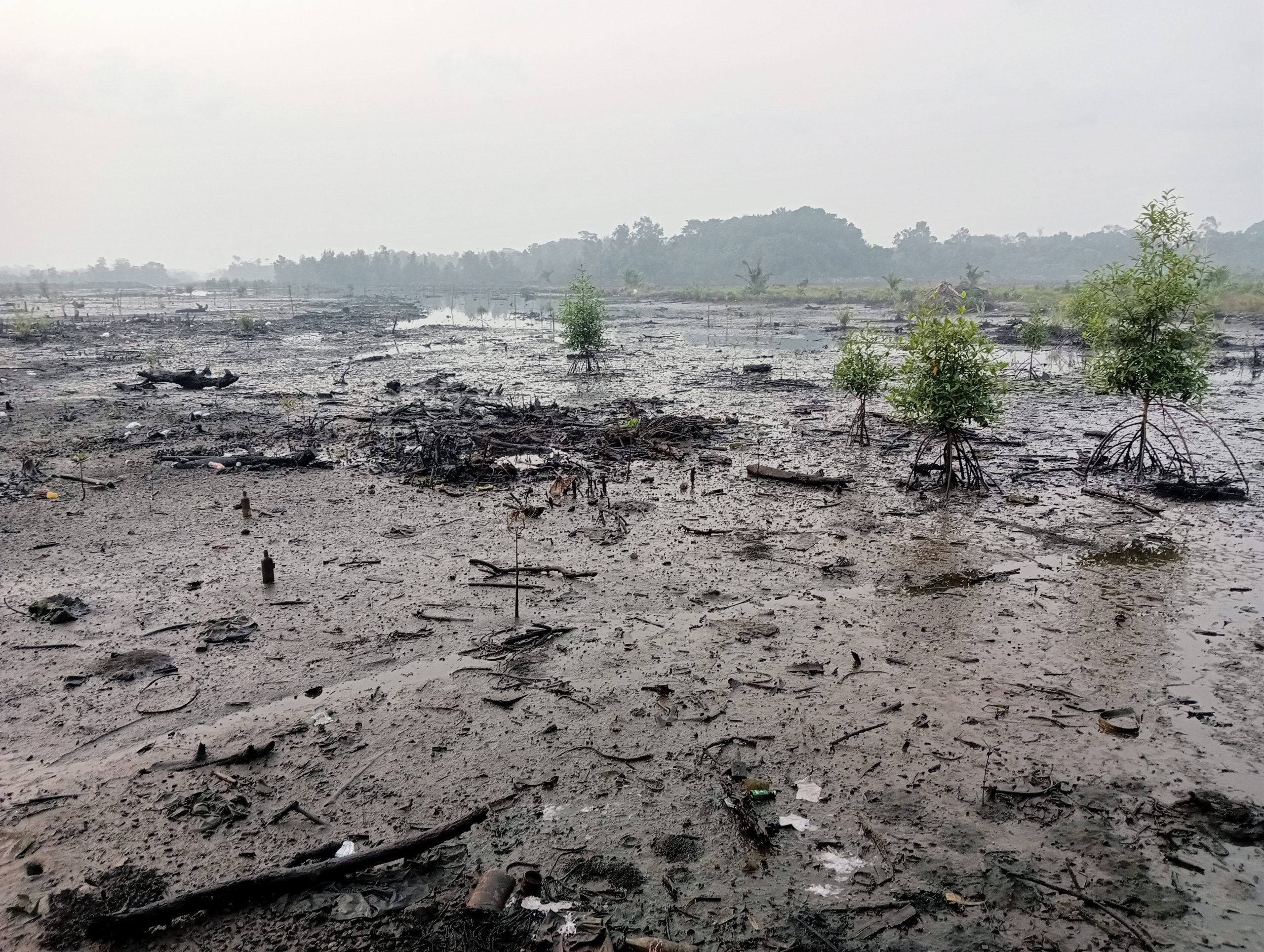
Unfortunately, due to the oil exploration and exploitation activities of multinational companies particularly in the area of pollution of the environment and outright disregard for human rights, the fishing and agricultural activities of dwellers of this community is under threat.
It is worthy to note that the community has one government healthcare centre, which many regard as ‘non-functional.’ According to them, the healthcare centre has no personnel and for drugs apart from Paracetamol, it has no other drugs. Findings showed that the healthcare centre has only one nurse employed by the community. That is, no government staff in the healthcare centre.
Worried by all these and particularly the unabated pollution of oil-rich Odimodi and neighbouring communities and the consequent violation of rights of its dwellers, CODAF, recently organised a Town Hall Meeting/Training to enlighten community dwellers, particularly women about how they can actualise their rights and hold multinationals such as Shell Petroleum Development Company of Nigeria Limited, Nigeria Agip Oil Company and others more accountable.
READ ALSO: Oil Palm Companies: RSPO Deceptive, Promotes Communities Rights Violations, Says ERA/FoEN
For CODAF, the outright violation of human rights and pollution of the environment with no regard to the well-being of the people must stop.
Speaking at the Town Hall Meeting and enlightenment campaign, Executive Director, CODAF, Mr. Richard Benin said his organisation was concerned about the well-being of the people and the need to respect their rights. He told them that his organisation’s past activities in the community about pollution by oil companies and disregard for their rights had already caught attention of stakeholders across the globe.
“We were here in 2021, and in 2022 we were here too, and this is 2023, we are here. I want to gladly announce to your that the plight of Odimodi has caught world attention. We were here in 2022 during the COP27 which was held in Egypt, and we made a shot video and sent online. Odimodi was discussed in that meeting in Egypt. Your matter was discussed. I want to assure you that we as an NGO will not relent until the right thing is done,” Benin assured.

Group photograph of the participants at the training.
In a response on behalf of the community, Vice Chairman of Odimodi, Chief Isepagha Willie, thanked Mr. Richard and his team for fighting the course of the community by coming up with such a development, adding that it will benefit the community a lot.
He lamented that since the inception of Shell operations in the area, all what they used to have in abundance such as fishes, farm produce, etc are no more.
“Because of Shell operations, we have nothing left. All what we you used to have, we are having none. we are suffering,” lamented.
Odimodi Women Lament, Want Shell To Be Responsible
Some women of Odimodi who are majorly into fishing and farming decried Shell operations and outright disregard for their rights, as they called on the multinational to rise up to its Corporate Social Responsibility by providing jobs to indigenes of the community.
Chairlady, Odimodi community, Mrs. Silver Michael, who is a business woman said: “We are suffering. Majority of us fish to train our children in school but activities of oil companies have spoil this, we no more catch fish, and that is why I decided to go into business. We can’t farm anymore to train our children. These are the things community women rely on for a survival. We don’t even have drinkable water. We are into hunger.”
While lamenting that all efforts to make sure Shell doing the right thing had proved abortive, Mrs Michael called on the oil company to provide the woman and youths job so they can use that to cater for themselves and family.
She also urged Shell to provide fishing net, fishing hooks and other things used in fishing to those that are into fishing.
Also lamenting, Mrs Alagua Monday said due to operations of Shell, everywhere is being taken over by crude oil spill.
“Even when you deep your paddle into the water, all what you push out is crude oil, Shell has spoil our river. Fishes in the river are all affected with the crude oil spill. Had it been I know you are coming, I would have kept some fishes from the river for you. You would have seen the mystery I am talking about. Due to oil spill, we now caught fishes that are rotten from the middle to the tail while middle to the head dangle for survival. This is impossible if not for the oil spill. Nothing is working. We are dying of hunger.”
She demanded: “Shell should give us portable water because we do not have water to drink. The one we have is causing us sickness because of the oil pollution. More so, we need a standard hospital or healthcare centre. We do not have any, hence people die before they are rushed out of the community for the next hospital.”
Another pathetic story is a 72-year-old Vero Anoda, a fisherwoman who had leg infractions while fishing in a spot heavy oil spill had occurred. According to her, she fell into the spot and was rescued out. She lamented that since then her children and other well-meaning indigenes of the community have spent a lot on her. She further lamented that Shell has not deem it fit to visit her one day. She called on the oil company to come to her aid.

A cross section of women trained in Odimodi by CODAF.
On his part, former Public Relations Officer, Odimodi community, Mr. Godwin Awese, due to activities of Shell and its consequent pollution of the area, his agriculture are not productive as they ought to be.
While taking members of the NGO and the media round his farm, Awese said: “Look at this plantain three, the leaves are yellow rather than being green, and it is stunted, this is because of the crude oil pollution. It can’t grow how it ought to be. Look at this plantain fruits, it is already having a yellow colour and it is not well matured. All these anomalies is due to the pollution. We can’t get any good farm produce to the pollution,” he lamented.
Calls put out across to Shell Community Liaison Officer, Mrs Ann Utuedor, by INFO DAILY were not picked neither did she reply to SMS sent to her Cell Phone.



Headline
PROPHECY: Primate Ayodele Reveals Trump’s Plot Against Tinubu

Primate Ayodele and Tinubu, Tinubu’s rice palliative, Primate Ayodele to Tinubu
Tinubu and Primate Ayodele
The leader of INRI Evangelical Spiritual Church, Primate Elijah Ayodele, has warned President Bola Ahmed Tinubu that US President Donald Trump is after removing him from office.
This comes amid the removal of Vanezuelan President Nicolás Maduro by Donald Trump.
Primate Ayodele, in a statement signed Sunday by his media aide, Osho Oluwatosin, made it known that the US President has ‘caged’ Tinubu and his plan is to ultimately see that he is removed from office.
READ ALSO:Primate Ayodele Releases Fresh Prophecies On FIRS, FAAN, Others
He stated that the support the US is giving Nigeria to fight insecurity isn’t for nothing other than ways to penetrate the government.
“Trump is adamant to remove President Tinubu. America will be part of those who will be against Tinubu. You may not see it as I am being shown, and that’s why I am saying Trump is after removing Tinubu, that’s it and nothing more.”
The cleric made it known that, despite US’ help, Nigeria will continue to fight insecurity, but the ulterior motive of the US President isn’t about ending insecurity in the country.
READ ALSO:Guber Polls: Primate Ayodele Releases Prophecies On Anambra, Ekiti, Osun
“Nigeria will still continue to fight insecurity, but either they fight it or not, Trump is focused on removing Tinubu from office, but he doesn’t know it yet. He isn’t after ending insecurity in the country, he knows what he wants and won’t stop at nothing towards achieving it.”
He urged the president to take a bold political step to overcome the plans of the US president; otherwise, he will end up succeeding with his plans.
“Tinubu must take a very bold step to overcome the plans of Trump, because he has caged him already. Tinubu must not relent his efforts and bring up strategies for him to succeed otherwise, he would be at the losing end while his defeat would be celebrated,” he added.
Headline
JAPA: Top Six Countries To Obtain Easiest Citizenship

As a Nigerian considering relocation plans, interest in countries with clear and less complicated citizenship pathways is a smart way to not just guarantee greener pastures, but also provide you with the opportunity to feel more at home in a foreign land. While some of the programmes are ancestry-based, others allow Nigerians with such a link to try other means.
Contents
1. Dominica
2. Ireland
3. Turkey
4. Portugal
5. Vanuatu
6. Italy
Though rules vary widely across borders, some nations stand out for offering citizenship through investment or family ties with fewer hurdles and faster processing timelines.
Below are the top six countries with the easiest citizenship:
1. Dominica
Dominica operates a citizenship-by-investment programme that allows applicants to qualify through a contribution to the government’s Economic Diversification Fund or by investing in approved real estate. Processing typically takes a few months. Citizens enjoy visa-free or visa-on-arrival access to over 140 countries, including the Schengen Zone. There is no residency requirement, and dual citizenship is permitted.
READ ALSO:Japa: 5 Affordable European Countries Nigerians Can Relocate To
2. Ireland
Ireland provides a clear citizenship pathway for individuals with Irish ancestry. Those with an Irish-born parent qualify automatically, while people with an Irish-born grandparent can apply through the Foreign Births Register. An Irish passport grants full European Union rights, including freedom of movement across EU countries. Dual citizenship is allowed, and there is no language requirement for applicants applying by descent.
3. Turkey
Turkey offers a fast-track citizenship option through investment. Foreign nationals who purchase qualifying real estate valued at a minimum of $400,000 can obtain citizenship within a few months. The programme does not require residency or renunciation of an existing nationality. Turkish passport holders have visa-free or visa-on-arrival access to several countries, with ongoing efforts to expand travel agreements.
4. Portugal
Portugal’s Golden Visa programme provides a residency-to-citizenship route for foreign investors. After five years of legal residence and meeting programme conditions, applicants may apply for citizenship. Approved investment options include venture capital funds and other qualifying assets. Successful applicants gain an EU passport, access to the Schengen Area, and dual citizenship, subject to passing a basic Portuguese language test.
READ ALSO:Japa: Lagos Suffers Deficit Of 30,000 Doctors, Commissioner Laments
5. Vanuatu
Vanuatu runs one of the world’s fastest citizenship programmes. Through its Development Support Programme, eligible applicants can receive citizenship in as little as two months after making the required financial contribution. The country offers visa-free access to over 100 destinations and has no tax on global income or capital gains. Residency requirements are minimal.
6. Italy
Italy grants citizenship by descent to individuals with an Italian parent or grandparent, following a 2025 legal update that tightened eligibility rules. Applicants must provide official documents proving a direct family link to an Italian ancestor. Italian citizenship comes with full EU rights, wide visa-free travel, and the ability to pass citizenship to future generations. Dual nationality is allowed, and no language test is required for descent-based applications.
(Tribune)
Headline
Japa: 5 Affordable European Countries Nigerians Can Relocate To
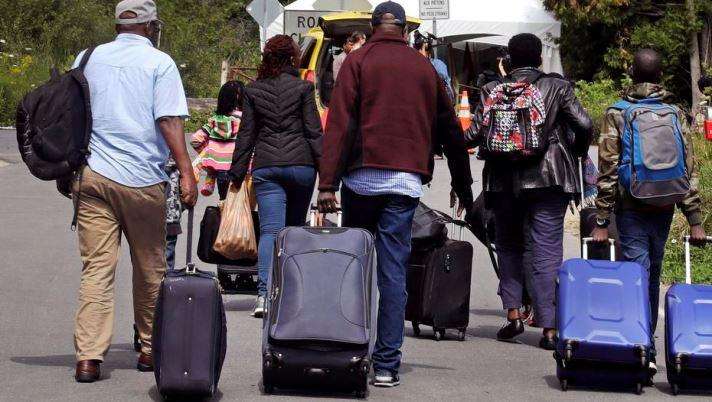
As economic pressures continue to mount, many Nigerians are increasingly exploring relocation as a path toward stability, better opportunities, and an improved quality of life. However, traditional destinations such as the United Kingdom, Canada, and the United States are becoming more difficult to access due to rising living costs and stricter visa policies.
Contents
1. Slovakia
2. Latvia
3. Portugal
4. Hungary
5. Georgia
But beyond these popular options, several lesser-known European countries are emerging as affordable and welcoming alternatives. Offering low tuition fees, flexible visa policies, and a reasonable cost of living, these nations are becoming attractive relocation choices for Nigerians seeking balance and opportunity.
In this article, Tribune Online highlights five budget-friendly countries Nigerians can consider for relocation:
1. Slovakia
Located in Central Europe, Slovakia combines stability, safety, and simplicity; three factors often missing in high-pressure relocation destinations.
READ ALSO:Top 11 Friendliest Countries To Visit
Though it may not feature prominently on social media relocation lists, Slovakia’s affordability and accessibility make it a hidden gem. Students enjoy low tuition fees, while residents benefit from proximity to major European cities like Vienna and Prague. For Nigerians seeking structure and affordability, Slovakia provides a peaceful yet practical alternative.
2. Latvia
The Baltic nation of Latvia is fast becoming a preferred destination for international students and skilled professionals. Known for its low living costs and straightforward residence procedures, Latvia offers a convenient entry point into the European Union.
Riga, its capital city, blends historic charm with modern infrastructure, providing an ideal environment for studying, working, or gradually transitioning to other parts of Europe.
3. Portugal
Situated on Europe’s western coast, Portugal is one of the continent’s most liveable and affordable countries. Known for its mild weather, safety, and reasonable living costs, Portugal offers a soft landing for Nigerians looking to relocate without excessive financial strain. The country’s friendly visa policies and welcoming atmosphere make it ideal for students, remote workers, and small business owners. Beyond its scenic beauty, Portugal provides what many Nigerians desire: peace of mind and an easier start abroad.
READ ALSO:10 Countries With The Strongest Global Reputation In 2025
4. Hungary
Hungary has quietly become a top choice for international students, offering quality education at affordable tuition rates. Living costs are significantly lower than in Western Europe, and cities like Budapest, Szeged, and Debrecen provide vibrant yet budget-friendly environments.
For Nigerians looking to relocate through education, Hungary offers a realistic and sustainable path toward long-term settlement in Europe.
5. Georgia
For Nigerians seeking an easy transition abroad, Georgia presents one of the smoothest relocation routes. The country allows Nigerians to stay visa-free for up to one year, eliminating embassy interviews and lengthy paperwork.
Located between Europe and Asia, Georgia offers a blend of natural beauty and affordability. Rent, transport, and food costs remain moderate, making it an excellent base for digital nomads and young professionals.
As migration trends evolve, success now depends on flexibility and strategic planning. While the dream of relocating abroad remains strong, the path doesn’t always have to lead through the UK or Canada. For Nigerians ready to look beyond the familiar, Europe’s quieter corners still offer accessible and rewarding opportunities.

 Headline11 hours ago
PROPHECY: Primate Ayodele Reveals Trump’s Plot Against Tinubu
- News10 hours ago
What I Saw After A Lady Undressed Herself — Pastor Adeboye
- Politics12 hours ago
Why Kano Governor Postponed Formal Defection To APC
- Metro13 hours ago
Joint Task Force Kills 23 Bandits Fleeing Kano After Attacks
- Metro10 hours ago
Armed Robbers Shot PoS Operator To Death In Edo
- Politics11 hours ago
2027: Rivers APC Pledges To Follow Wike’s Instructions
- Metro10 hours ago
Gunmen Demand N200m Ransom For Kidnapped Brothers In Edo
- News11 hours ago
Reps Release Four Tax Acts For Public Records
 News12 hours ago
NiMet Forecasts Three-day Dust Haze, Sunshine
- Entertainment11 hours ago
Anthony Joshua Returns To UK In Private Jet


