

Business
Presidency: Why Buhari Signed 2022 Budget Despite Insertion Of 6,576 New Schemes

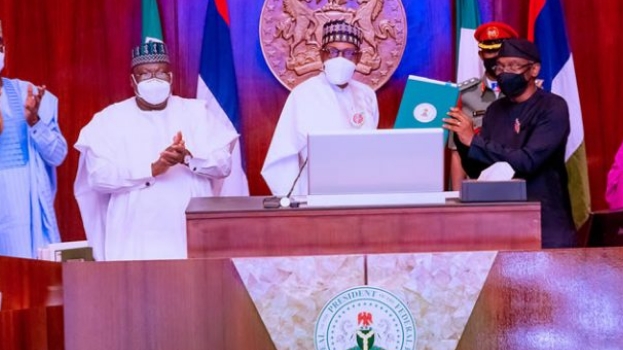


The Presidency Sunday night said that President Muhammadu Buhari signed the 2022 Appropriation Bill into law despite the insertion of 6,576 new schemes worth N37 billion because he did not want to “throw away the baby with the bathwater.”
According to a statement by Garba Shehu, Senior Special Assistant to the President (Media & Publicity) which gave the president’s rationale for the action, even though Buhari had a disagreement with the National Assembly over the changes made in the budget, he was not in conflict with the legislators.
The statement accused unnamed critics of deliberately trying to create a fiasco between the president and the legislature.
Explaining the need for the president to give his assent to the budget because of the other provisions contained in it, the statement said: “Given Mr President’s commitment to improving the lot of the Common Man, it was felt that it would not be wise to throw away the baby with the bathwater. “
READ ALSO: Wike Knocks Buhari For Signing 2022 Budget Despite ‘Worrisome’ Alterations
The statement further explained Buhari’s rationale for assenting to the bill: “Mr President was clear and candid in expressing his reservations with the numerous changes to the 2022 Budget made by the National Assembly, which would hamper its implementation.
“However, to respond to critics that question why assent to the Budget if it was so severely tampered with, we wish to respond as follows:
“Need to Save Value-Additive Projects, Programs & Policies:
“Although over 10,733 projects were reduced and 6,576 new projects were introduced into the budget by the National Assembly, there are tens of thousands more provisions in the 2022 Budget, all of which, when efficiently and effectively implemented, will have a significant developmental impact on the lives and livelihoods of ordinary Nigerians.”
“Ongoing Capital Projects, Critical Recurrent Votes, Priority New Projects – all feature in the 2022 Budget and Mr President’s forbearance in assenting to the Budget will save these provisions from implementation delays and other challenges.
“Dealing with Modern Democratic Norms:
“President Buhari is a democrat who deeply believes in the supremacy of the Constitution, with its checks and balances across the three arms of Government,” it added.
The Presidency maintained that while it is true that the president expressed disagreement with insertions and the other alterations, including the ‘reduction in the provisions for many strategic capital projects to introduce ‘Empowerment Projects,’ “innumerable lies are being spread about the President being ‘angry’ at, had ‘blasted’ or ‘lashed out’ at the Parliament.
“This cannot be farther from the truth.”
The statement pointed out that as the President of the Senate, Dr Ahmed Lawan said shortly after the budget-signing ceremony, disagreements as the ones listed by the president are normal in the everyday Executive-Parliamentary relationship because, as he explained, “executive and legislative judgements don’t always have to be the same.”
The statement added: “While we note that there are people who are trying to create a fiasco between the two arms of government on account of the budget, we assure that they will, in the end, be disappointed.
“The Executive and the 9th National Assembly have since moved away from the wild, destructive political games of the past, conducting themselves in a way that puts national interest supreme in their decisions.
“We doubt if there is a patriotic citizen who wants to see the return of the operating environment engendered by the 8th Senate when an elected government was held in chains, held hostage to the desperate political ambitions of a clique, and the public denied needed services including that which impinged on national security. Happily, the 9th National Assembly is more about policy than politics.
“Under the constitution, both arms of government are coequal and at the same time, independent and interdependent. The rule of the game is cooperation and the President, as a democrat fully accepts this.”
The Presidency affirmed that it is at the discretion of the National Assembly to override the president’s action where if he had vetoed the bill, a measure, it pointed out had not been exercised under the current dispensation.
The statement further said: “In terms of the passage of legislations like the Appropriation Act and other Money Bills, the National Assembly has equal responsibilities with the Executive.
“Indeed, if Mr President had declined assent to the 2022 Appropriation Bill, the National Assembly has powers to override the President’s veto if they can drum up a 2/3 majority vote. This is the constitution.
“Happily, this situation has not arisen during the tenure of Mr President’s Administration, and the Executive’s relationship with the Leadership of the 9th National Assembly is much improved over what happened with the 8th National Assembly.
READ ALSO: Buhari Lists 15 ‘Worrisome Changes’ To 2022 Budget By National Assembly
“It is on account of his confidence in the strength of this excellent working relationship that Mr President has directed that an Amendment Budget Proposal should be prepared and submitted to the National Assembly, once they return from their recess.
“It is hoped that the National Assembly will carefully consider and approve the 2022 Amendment Budget Proposals, once presented to them in due course, for the benefit of all Nigerians.
“It is important therefore that, in place of “anger” or confrontation, President Buhari showed the democracy-loving side of his personality as he signed the budget at the same time calling for dialogue with the parliament to resolve the contentious issues.
“The Presidency under Muhammadu Buhari and the parliament under Lawal and Gbajabiamila are committed to a good neighbourly relationship and this or any other disagreement between the two arms of government will not alter the dynamics of that relationship.”
(TRIBUNE)




Business
Why We Sited Our Multi-Billion Naira Automobile Firm Branch in Benin – Skyewise Group CEO


Dr. Elvis Abuyere, Chief Executive Officer and Managing Director of Skyewise Group, an automobile firm, has explained the reason for establishing a branch of the company in Benin City, the Edo State capital, describing the ancient city as “a growing economy full of enormous potential for vibrant youth.”
He added that the company considers Edo State one of the most interesting states, noting that the decision aligns with its long-term vision.
Abuyere, who spoke in Benin on Monday while taking journalists on a tour of the new automobile facility, said:
“We started very small — from Abuja to Lagos and now Benin. It is a joy and privilege for us to have completed this amazing regional office with Skyewise Group.”
READ ALSO:BREAKING: Wike Picks Alabo George For Rivers Governorship
According to him, beyond the automobile business, Skyewise Group is in Benin to invest in real estate, logistics, youth empowerment, and credit management. “Aand also to lend our support to what the Edo State Government is doing, knowing the fact that there is an agenda,” he added.
The young CEO urged youths in Nigeria, particularly those in Edo State, to embrace entrepreneurship, stressing that “we believe it is the future of Africa,” especially Nigeria.
He said Nigeria stands as the giant of Africa and that its youth must take bold steps in the entrepreneurship landscape.
According to Abuyere, to ensure Edo youths actualise their entrepreneurial potential, the company has prepared soft loans to help them start businesses, adding that Skyewise Group is not limited to automobile operations.
READ ALSO:Senatorial Seat: Ogbakha-Edo Warns Against Imposition Of Candidates In Edo South
He said: “More importantly to us is youth empowerment. We want our youth to be empowered, and this is where the Skyewise Foundation comes in.
“We believe the future of Africa is entrepreneurship, and that future lies in the hands of the young people of Nigeria. We want to empower them to stand the test of time, build something meaningful, and reduce unemployment and insecurity in our land.
“I believe we need to begin taking bold steps by refining the mindset of our young people. We need to give them a sense of belonging and direction.
“We have been addressing the liquidity gap in society by providing microloans to support businesses in our environment and in Benin City.”
When asked why he chose Benin City for the multi-billion naira automobile firm, Abuyere noted: “I think this is the first automobile showroom in Edo State where you can see a car lifted from the ground floor to the first floor and beyond.”
Business
JUST IN: Nigerian Filling Stations Reduce Fuel Price After Hike

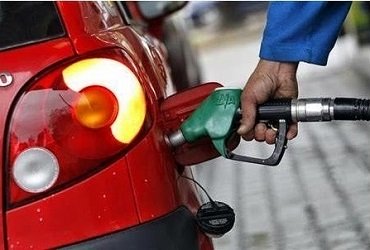
Nigerian filling stations reduced their Premium Motor Spirit price on Saturday, barely 24 hours after the hike.
Checks by DAILY POST showed that Ranoil, Empire Energy, and other filling stations in Abuja adjusted their petrol pumps to N1,365 and N1,375 per litre respectively, down from N1,440 per litre on Friday.
This means that petroleum marketers dropped their fuel price by N65 and N75 per litre. DAILY POST reports that the move was to attract patronage from customers.
Recall that three days ago, Nigerian filling stations had raised their petrol pump price to between N1,365 and N1,440 nationwide after Dangote Refinery and depot owners increased ex-depot prices to around N1,275 and N1,290 per litre.
According to DAILY POST, while the Nigerian National Petroleum Company Limited and MRS Bovas filling stations raised their petrol price to around N1,365 per litre, others adjusted theirs above N1,440 per litre.
READ ALSO:Drivers Protest Fuel Increase, Raise Fares in Benin
However, with the latest fuel price reduction by Ranoil and Empire Energy, the majority of filling station outlets now dispense petrol between N1,365 and N1,375 per litre.
This development comes as the ripple effect of crude oil prices continues to impact Nigeria’s domestic fuel price.
Brent and West Texas Intermediate crude rose to $114 and $105 per barrel before dropping to $108 and $101 after the filing of this report.
Business
Dangote Refinery Hikes Petrol Price


Dangote Refinery has increased the ex-depot price of petrol by N75.
The refinery announced the increase on Wednesday, hiking the the price from N1,200 to N1,275 per litre.
In the same way, coastal prices have gone up to N1,215 per litre.
READ ALSO:Dangote Sugar Announces South New CEO
This adjustment amid Brent crude trading at $114.80 per barrel marks a 3.15% increase.
DAILY POST reports that Brent crude has increased to $115 per barrel, while West Texas Intermediate rose to $103 per barrel on Wednesday.
-

 Politics3 days ago
2027: Tinubu’s Re-election May Put An End To Nigeria — Baba Ahmed Warns
-

 Metro4 days ago
I’m A Street Girl’ – Bimbo Ademoye Clashes With Area Boys [VIDEO]
-

 News5 days ago
VIDEO: Moment S’Court Recognises David Mark-led ADC Leadership
-

 Politics4 days ago
Senatorial Seat: Ogbakha-Edo Warns Against Imposition Of Candidates In Edo South
-

 Politics4 days ago
BREAKING: 2027: Former Adamawa APC Guber Candidate, Aishatu Binani Defects To NDC
-

 Business3 days ago
JUST IN: Nigerian Filling Stations Reduce Fuel Price After Hike
-

 Entertainment4 days ago
Actress Eniola Badmus Gets New Federal Appointment
-

 Metro5 days ago
Robbers Raid Imo Catholic Church, Steal Holy Communion Materials
-

 News4 days ago
10 African Countries With Highest Petrol Prices In Prices In April 2026
-

 Metro5 days ago
VIDEO: Policemen Filmed Assaulting Individual In Viral Clip
