
Business
Reasons Behind Hike In Price Of Cooking Gas Revealed
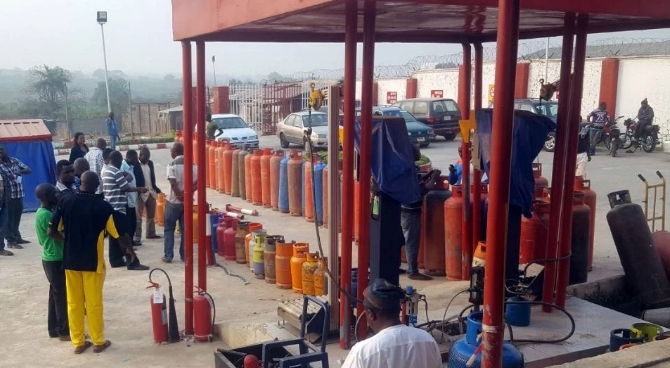
Petroleum Product Retail Outlet Owners Association of Nigeria PETROAN has attributed the hike in the prices of Liquefied Petroleum Gas, LPG also known as cooking gas in Nigeria to the current price in the international market, activities of middle and political factors.
Rivers State Chairman of the PETROAN, Francis Dimkpa in an interview in Port Harcourt on Monday said LPG is traded at the international price in Nigeria, despite the fact that Nigeria produces part of the LPG consumed in the country.
Dimkpa disclosed that some gas plants operators do not have access to LPG from Nigerian Liquefied Natural Gas, NLNG, thereby hiking the prices.
In his word “It very painful and difficult to understand how a country like ours that is producing LPG otherwise known as cooking gas is going through such a hike in the price of domestic gas like this”.
READ ALSO: Customs Seeks Enforcement Of New Taxes, Hike In Price Of Non-alcoholic Drinks Looms
“But I think that it is connected with the international price of LPG. I do not know whether it is clear to all of us that LPG in this country is not traded at the domestic price, it is traded at the international price. Most times NLNG carries this product to Lagos before even coming to Port Harcourt.
“We also import LGP to an extent. The business of LPG is shrouded in a lot of diplomatic and political issues where registered LPG plants do not have, so to say direct access to buy from NLNG. There are a lot of political off-takers in place, making the price of LPG secondary before it gets to the primary consumers.”
Dimkpa also called on the government to step in and regularize the price of LPG, adding that retail outlets owners are willing to buy products directly from NLNG.
(DAILY POST)

Business
Naira Records Massive Appreciation Against US Dollar Into Christmas Holidays
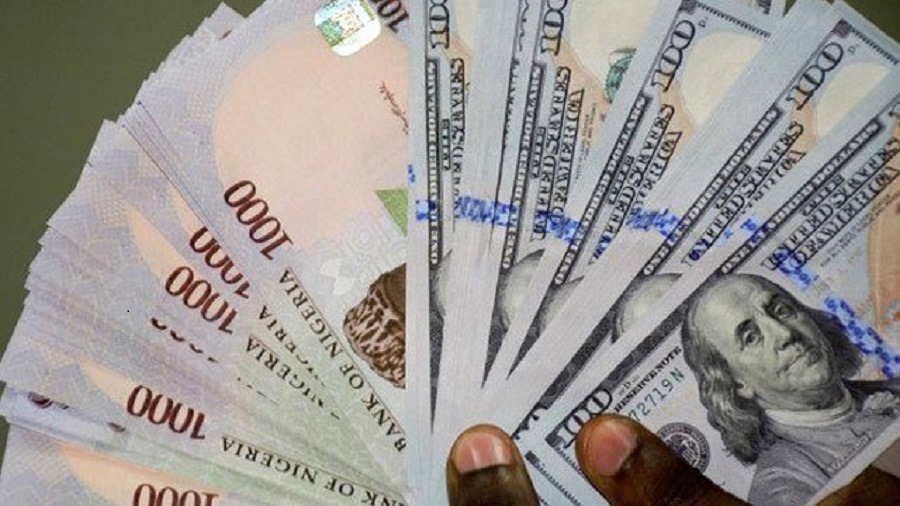
The Naira gained massively against the United States dollar in the last three days at the official foreign exchange as trading ended for the Christmas holidays.
Central Bank of Nigeria data showed that the Naira strengthened further on Wednesday to N1,443.37 per dollar, up from N1,449.99 on Tuesday.
This means that since Monday this week, the Naira has recorded a significant N13.18 gain against the dollar, according to the apex bank data.
READ ALSO:Naira Records Depreciation Against US Dollar Across Official, Black Markets
Similarly, at the black market, the Naira traded on Wednesday at N1,490 per dollar, an appreciation from the N1,500 exchanged on Monday but the same rate as on Tuesday.
The uptrend comes amid the rise in the country’s external reserves to $45.24 as of December 23rd, 2025.
DAILY POST reports that the Naira gained against the dollar at the official market on Monday and Tuesday.
Business
Report Any MRS Filling Stations Selling Fuel Above N739 Per Liter — Dangote Refinery To Nigerians

Dangote Refinery has urged Nigerians to report any MRS filling station outlets nationwide selling fuel above the N739 per liter announced price.
The company disclosed this in a statement on Sunday.
The refinery insisted that its petrol being at retail outlets remain N739 per liter while the gantry price is N699.
It further called on other filling station owners to patronize its refined petroleum products at the N699 rate.
“We also call on other petrol station operators to patronize our products so that the benefits of this price reduction can be passed on to Nigerians across all outlets, ensuring broad-based relief and a more stable downstream market.”
READ ALSO:Dangote Sugar Announces South New CEO
Recall that Aliko Dangote, the president of Dangote Refinery, had pegged the retail price of his petrol at a maximum of N740.
DAILY POST reports that MRS filling and other filling stations had reduced fuel prices to between N739 and N912 per liter in Abuja.
However, reports emerged that some MRS filling stations were selling above the N739 per liter announced price benchmark.
Business
Naira Records Significant Appreciation Against US Dollar
The Naira recorded significant appreciation against the United States dollar on Monday at the official foreign exchange market to begin the week ahead of Yuletide on a good note.
The Central Bank of Nigeria’s data showed that the Naira strengthened to N1,456.56 per dollar on Monday, up from N1,464.49 traded on Friday last week, 19th December 2025.
This means that the Naira gained N7.93 against the dollar when compared with the N1,464.49 was exchanged as of Friday, December 19, 2025. DAILY POST reports that Monday’s gain at the official FX market is the first since December 15th.
READ ALSO:
Meanwhile, at the black market, the Naira remained stable at N1500 per dollar on Monday, according to multiple Bureau De Change operators in Wuse Zone 4, Abuja.
The development comes as the country’s external reserves stood at $44.66 billion as of last week Friday.

 News5 days ago
UBTH CMD Marks 120 Days In Office, Expresses Commitment To Providing Conducive Working Environment
- Metro5 days ago
Fintiri Pardons Man Sentenced To Death For ‘Killing Herdsman In Self-defence’, Others
- News4 days ago
JUST IN: Kano Lawmaker, Sarki Aliyu Daneji, Dies Hours After Colleague’s Passing
- News4 days ago
FULL LIST: Churches That Don’t Celebrate Christmas
- Metro5 days ago
Petrol Tanker Crashes Into Akpabio’s Convoy, Kills Police Dispatch Rider
- Headline2 days ago
JUST IN: US Forces Bomb Terrorists Camps In Nigeria
- News3 days ago
Okpebholo Slams ₦25bn Libel Suit On Edo PDP Chairman
- Business5 days ago
Naira Records Significant Appreciation Against US Dollar
- Politics5 days ago
PDP Crisis: INEC Rejects Turaki-led NWC
- News4 days ago
OPINION: The Day Friendship Died


