

News
Reps Release Four Tax Acts For Public Records

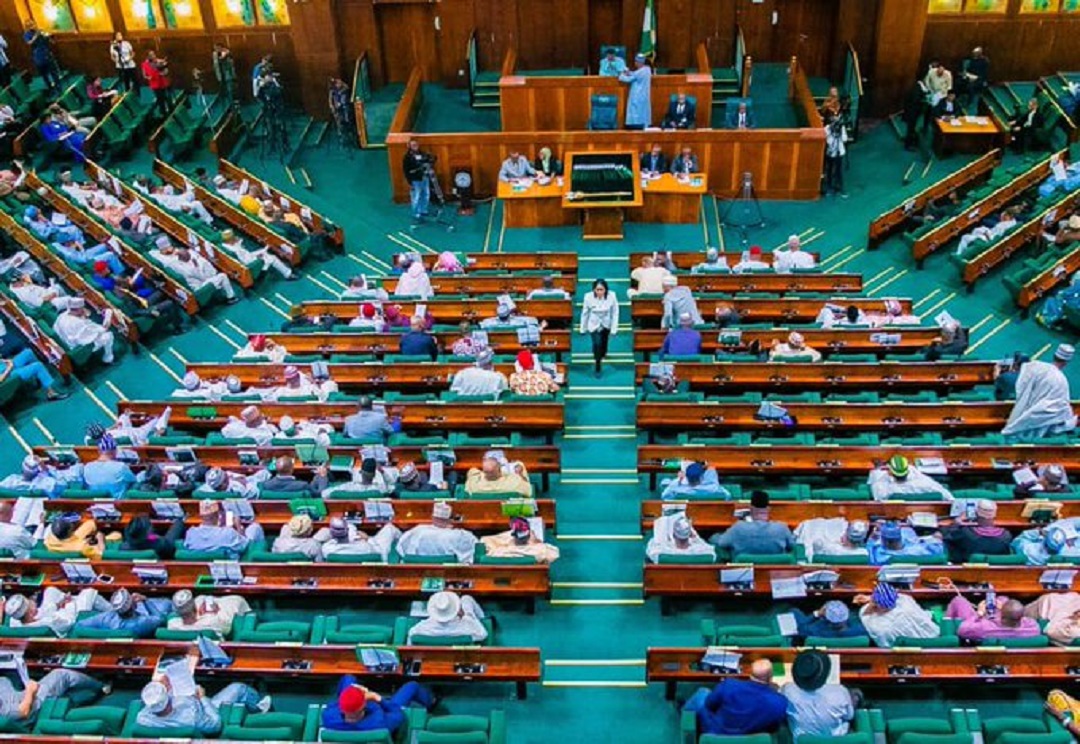


The House of Representatives, under the leadership of the Speaker, Abbas Tajudeen, on Saturday released four tax reform Acts duly signed into law by President Bola Tinubu for public record, verification, and reference.
The four Acts released are: the Nigeria Tax Act, 2025; the Nigeria Tax Administration Act, 2025; the National Revenue Service (Establishment) Act, 2025; and the Joint Revenue Board (Establishment) Act, 2025.
The House Spokesman, Rep. Akin Rotimi, who confirmed this in a statement made available to Parliamentary Correspondents, explained that the Ad-hoc Committee, chaired by Hon. Muktar Aliyu Betara, is expected to continue its work in line with its mandate to determine the circumstances surrounding the circulation of unauthorised versions of the Tax Acts and to recommend measures to prevent a recurrence and preserve the authenticity and reliability of parliamentary records.
Speaker Tajudeen, in concert with the Senate President, Senator Godswill Akpabio, directed the immediate release of the Certified True Copies (CTCs) of the Acts, including the endorsement and assent pages signed by the President, following public concerns and allegations regarding purported alterations and the circulation of unauthorised and misleading versions of the laws.
READ ALSO:Tax Reform Law: Reps Minority Caucus Seeks Suspension Of Implementation
“This decisive intervention underscores Speaker Abbas’ long-standing commitment to transparency, legislative integrity, and public confidence in the law-making process.
“Indeed, the attention of the House was drawn to the existence of inconsistent versions of the tax laws in circulation after a vigilant Honourable Member identified discrepancies, raised the alarm, and formally reported the matter to the House on a point of privilege.
“Acting promptly, the Speaker ordered an internal verification and the immediate public release of the certified Acts to eliminate doubt, restore clarity, and protect the sanctity of the legislative record,” the House Spokesman noted.
According to him, from the initiation of the tax reform process through extensive stakeholder consultations, committee scrutiny, rigorous clause-by-clause consideration, robust plenary debates, and eventual passage, Speaker Tajudeen provided firm and steady leadership to ensure that the reforms were evidence-based, inclusive, and aligned with Nigeria’s fiscal realities and development priorities. Throughout the process, Speaker Abbas consistently emphasised that tax reform must be anchored on clarity, fairness, and strict adherence to constitutional and parliamentary procedures.
READ ALSO:Rep Moore Confirms 12 Tomahawk Missiles Launched In Sokoto
He assured that: “These landmark legislations constitute the backbone of Nigeria’s contemporary tax reform architecture, designed to modernise revenue administration, improve compliance, reduce inefficiencies, eliminate duplication, and strengthen fiscal coordination across the Federation.”
In directing the release of the certified Acts, Speaker Tajudeen reassured Nigerians that the National Assembly remains an institution of records, guided by clearly defined rules, precedents, archival systems, and verification processes that safeguard the authenticity of every law enacted.
He said, “The National Assembly is an institution built on records, procedure, and institutional memory. Every Bill, every amendment, and every Act follows a traceable constitutional and parliamentary pathway.
“Once a law is passed and assented to, its integrity is preserved through certification and custody by the legislature. There is no ambiguity about what constitutes the law.”
READ ALSO:Report Any MRS Filling Stations Selling Fuel Above N739 Per Liter — Dangote Refinery To Nigerians
Speaker Tajudeen further emphasised that the House would remain vigilant and proactive in defending the integrity of its work, clarifying that the only authentic and authoritative versions of the four tax Acts are those certified and released by the National Assembly.
He, therefore, urged members of the public, institutions, professionals, and stakeholders to disregard and discountenance any other documents or versions in circulation that are not certified by the National Assembly, as such materials do not form part of the official legislative record.
“Consequently, the Clerk to the National Assembly has concluded the process of aligning the Acts—duly passed, assented to, and certified, with the Federal Government Printing Press to ensure accuracy, conformity, and uniformity.
READ ALSO:Reps Panel Grills TCN Officials Over Poor Grid Stability
“Hard copies of the certified tax Acts have also been produced and are being circulated to all Honourable Members and Distinguished Senators, and made available to the public, to ensure institutional clarity, uniform reference, and legislative certainty.
“The House affirms that the work of the Ad-hoc Committee, chaired by Rt. Hon. Muktar Aliyu Betara, OON, continues in line with its mandate to determine the circumstances surrounding the circulation of unauthorised versions of the tax Acts and to recommend measures that will prevent a recurrence and preserve the authenticity and reliability of parliamentary records.
“The House of Representatives, under the leadership of Rt. Hon. Abbas Tajudeen reaffirms his unwavering commitment to constitutionalism, the rule of law, transparency, and accountable governance.
“The House will continue to strengthen internal controls, uphold institutional discipline, and protect the integrity of Nigeria’s legislative process in the collective interest of the Nigerian people,” he assured.




News
Migration Agency Warns Migrants Against Irregular Travel Routes


The International Organisation for Migration (IOM), in collaboration with Giving is Healing Foundation, has sensitised residents of Ayobo in Alimosho Local Government Area of Lagos State on the dangers of irregular migration and the need to embrace legal travel procedures.
Speaking during a sensitisation programme held at Megida Ifelodu Community Development Association in Ayobo, the founder of Giving is Healing Foundation, Mr. Gbolahan Ayediran, warned intending migrants against using illegal travel routes.
Ayediran said many Nigerians desire to migrate abroad in search of better opportunities but often ignore proper procedures, thereby exposing themselves to several dangers.
“Lots of people want to migrate and most of them do it in the wrong direction. The reason for the programme is for us to advise people on how they can migrate in the right way. As much as migration is their right, they should do it correctly,” he said.
READ ALSO:How Wike Rescued Me From Political Oblivion — Oshiomhole
He advised intending travellers to obtain the necessary travel documents before embarking on any journey, noting that such documents include international passports, visas, flight tickets and yellow cards, depending on the destination country.
According to him, migrants should also gather adequate information about their destination countries to enable them make informed decisions before travelling.
Ayediran further highlighted some of the dangers associated with irregular migration, including abuse, exploitation, discrimination and forced labour.
Also speaking, the Chairman of Megida Ifelodu Community Development Association, Elder Mathews Amusan, commended the organisers for enlightening members of the community on safe migration practices.
READ ALSO: He Can’t Fix His Party Let Alone Nigeria – Oshiomhole Blasts Atiku
He urged residents planning to travel abroad to always follow legal migration procedures to avoid falling victim to human trafficking and other migration-related challenges.
One of the participants, Mr. Kolawole Adenoko, said the programme enlightened him on the dangers of irregular migration and the importance of travelling through the proper channels.
He added that he would also educate his relatives and friends on the risks associated with illegal migration.
News
Shatta Wale Bailed Burna Boy From Ghana Prison After Arrest For Smoking Weed – Captan


Ghanian singer, Captan, has claimed that his former record label boss, Shatta Wale, once bailed Nigerian singer Burna Boy out of prison in Ghana after he was allegedly arrested for smoking weed.
Speaking in a recent podcast interview, Captan claimed that Shatta Wale sent him and others to free Burna Boy from police custody.
He also claimed that Shatta Wale and his group once accommodated Burna Boy when he was being hunted by some dangerous men.
READ ALSO: Wale Edun Opens Up After Sack
Captan said, “I once bailed Burna Boy out of prison in Ghana when he was arrested for smoking weed. Shatta Wale sent me and some guys to go and free him from police custody.
“There was a time we also accommodated him when some people were after his life. We helped him settle the case.”
He added that he and Burna Boy are no longer in good terms after the Nigerian artist’s fallout with his mentor, Shatta Wale.
He, however, said he and Shatta Wale are open to reconciling with Burna Boy if he asks for it.
Watch the video here
News
Children’s Day: Chaos At Ogbe Stadium As Dozens Faint


Chaos erupted on Wednesday during the Children’s Day celebration as dozens of students reportedly collapsed following a stampede triggered by the use of pepper spray.
The event,
organised by the Edo State Ministry of Education at the Samuel Ogbemudia Stadium was disrupted after some male students of Ihogbe College allegedly made uncompromising advances towards female students at the venue.
A parent who identified himself as Oboh Emmanuel said, “the behaviour of those uncultured students attracted the attention of bouncers stationed at the stadium as they rebuked the male students.”
Oboh said the affected students later regrouped and attacked the bouncers, leading to a confrontation within the crowded arena.
READ ALSO:Children’s Day: Edo Commits To Child Protection
It was gathered that in the ensuing confusion, the bouncers were reported to have deployed pepper spray in an area occupied by a large number of students.
Several students, particularly female students, reportedly fainted after inhaling the substance, while others sustained injuries after being stepped on during the ensuing melee.
The panic was said to have spread across the stadium as students, teachers and parents scampered for safety.
Many of the affected students were reportedly rushed to the Edo Specialist Hospital for medical attention.
READ ALSO: Egor LG Chair, Ogbemudia, Vice, Osawe Impeached
Reacting to the incident, Chief Press Secretary to Governor Monday Okpebholo, Dr Patrick Ebojele, said the security personnel that fired the tear gas had been detained.
He said all the students, except two, that were rushed to the hospital have been discharged.
Ebojele stated that doctors wanted to observe the students till tomorrow before allowing them to go home.
“The two students are not seriously injured. Doctors want to observe them overnight. Permanent Secretary, Ministry of Education is still at the hospital. The man who used pepper spray has been detained.
“The incident did not happen the way it is being exaggerated. All modalities were put in place to ensure the children enjoyed their day.”
-

 Headline4 days ago
Woman Passes Out After Receiving 100 Strokes Of Cane
-

 Headline4 days ago
JUST IN: White House Locked Down Briefly As Gunman Opens Fire At Security Checkpoint
-

 News3 days ago
More Pain For Nigerians As Cooking Gas Price Increases Nationwide
-

 Politics3 days ago
Two Masked Men Gun Down Politician In His Rivers State Hotel
-

 Metro4 days ago
Police Reject N500m Bribe, Recover N7.8bn Illicit Drugs In Lagos
-

 News3 days ago
FG Declares Two Days Public Holiday For Eid-el Kabir Celebration
-

 Politics3 days ago
‘Tinubu’s Borrowing In 24 Months Surpasses 55 Years’ Debt Record’
-

 Politics2 days ago
Court Clears Goodluck Jonathan To Contest 2027 Presidential Election
-

 News3 days ago
OPINION: Boko Haram Comes South
-

 News2 days ago
OPINION: Like Oyedokun, We Are All Decapitated
