
News
Reps Shoot Down Bill Seeking Rotational Presidency
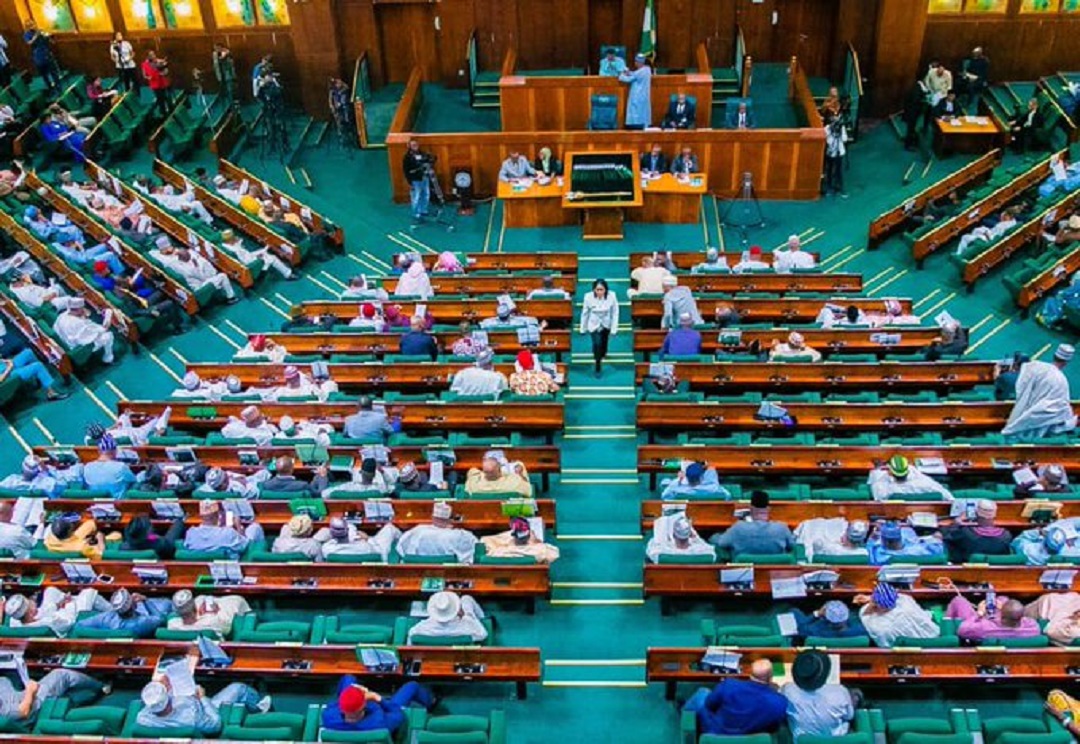
The House of Representatives on Tuesday rejected a constitutional amendment bill seeking to mandate the rotation of the offices of the President and Vice President among the six geopolitical zones.
The bill was one of seven proposed constitutional amendments listed for consideration during the plenary session presided over by the Deputy Speaker, Benjamin Kalu. All seven bills were ultimately rejected.
However, the House resolved to reconsider the bills individually on their merits during Wednesday’s sitting.
To facilitate a more efficient debate, the House had earlier suspended its rules to allow simultaneous discussion of the constitutional amendment bills, permitting members to focus on any of the seven proposals.
The rotational presidency bill attracted the most attention, sparking a contentious debate.
Leading the opposition to the proposal was Deputy Minority Leader, Aliyu Madaki, who argued that the principle of equitable representation was already covered by the Federal Character Commission.
READ ALSO: JUST IN: Three Katsina PDP Reps Defect To APC
“Rotation of the presidency should not be a constitutional matter,” Madaki said.
“Existing political parties already have internal mechanisms to ensure fair and equitable representation in the distribution of offices during elections.”
Sada Soli (APC, Katsina) criticised the bill as “disingenuous,” warning that it could compromise the quality of leadership.
“Adopting a rotational principle for the presidency will not serve the country’s best interests,” he said. “It will fuel regional and ethnic rivalry.”
In contrast, Shina Oyedeji (PDP, Oyo) supported the principle, arguing that it would address the longstanding agitation for fairness among Nigeria’s ethnic nationalities.
However, he cautioned that zoning could also create new challenges.
“If you adopt zoning and it comes to the South-West, for instance, which state will take the slot—Ogun or Oyo?” he asked.
READ ALSO: Bill To Establish Specialised Agric Institutions Passes Second Reading In House Of Reps
Bello El-Rufai (APC, Kaduna) raised a constitutional concern about unforeseen circumstances, such as the death of a sitting president.
“What happens if the President dies in office, as happened in 2010 with President Umaru Musa Yar’Adua? Will the Vice President be forced to vacate office to maintain the zoning arrangement?” he asked.
El-Rufai further argued that a constitutional rotation clause would infringe on Nigerians’ rights to freely contest for any office, and that mistrust would persist regardless of legal provisions.
“No matter what you do in Nigeria, there will always be cries of marginalisation,” he said. “We should not set a dangerous precedent by entrenching this in the Constitution.”
The rotational presidency bill attracted the most attention, sparking a contentious debate.
Leading the opposition to the proposal was Deputy Minority Leader, Aliyu Madaki, who argued that the principle of equitable representation was already covered by the Federal Character Commission.
“Rotation of the presidency should not be a constitutional matter,” Madaki said. “Existing political parties already have internal mechanisms to ensure fair and equitable representation in the distribution of offices during elections.”
READ ALSO: Reps Orders OML18 Resources To Pay $4m Oil Royalties Within Five Days
Olumide Osoba (APC, Ogun) also expressed concerns about the potential infringement on political party autonomy.
“While the amendment is unique, it would be out of place to constitutionally dictate to political parties how to select their candidates,” he said.
However, Minority Whip, Ali Isa, supported the proposal, stating that all six geopolitical zones deserve a fair chance to occupy the presidency.
He also advocated the principle to be extended to the state level, with governorship positions rotating among senatorial districts.
“There are competent individuals in all regions who can govern not just Nigeria, but the West African subregion,” he said. “Even the Federal Character principle supports fairness across all states.”
He praised the Deputy Speaker’s openness to the issue and added, “In 2027, we should allow the Presidency to go to the North-East, for the sake of fairness.”
Clement Jimbo (APC, Akwa Ibom) echoed this sentiment, stating that the bill aimed to address historical injustices against minority groups.
He proposed including a sunset clause to end the rotation principle once all zones have had their turn.
READ ALSO: JUST IN: Reps Approve Rivers Emergency Rule
The House also rejected a bill seeking to remove the power to register and regulate political parties from the Independent National Electoral Commission and transfer it to the Office of the Registrar-General of Political Parties.
Another rejected proposal sought to increase the minimum number of Federal High Court judges to 100, or such number as may be prescribed by an Act of the National Assembly.
Also turned down was a bill to expand the jurisdiction of the Federal High Court to include admiralty matters such as shipping and navigation on the River Niger, River Benue, and other designated inland waterways, federal ports, and sea carriage.
A proposed amendment seeking to establish and grant independence to the Offices of State Auditors-General for Local Governments and the Federal Capital Territory Area Councils was similarly rejected.
It was aimed at improving fiscal oversight and promoting good governance at the grassroots level.
Another bill sought to create Ughelli East Local Government Area in Delta State.
Finally, the House rejected a bill to empower the National Judicial Council, in collaboration with the National Salaries, Incomes and Wages Commission, to determine and review the salaries and allowances of judicial officers and judiciary staff.



News
Industrial Court Bars Resident Doctors From Strike

The National Industrial Court in Abuja has issued an interim injunction restraining the Nigerian Association of Resident Doctors (NARD) and its agents from embarking on any form of industrial action, including strikes, go-slows, picketing, or preparatory steps for protest, from Monday, January 12, 2026.
Justice E.D. Subilim ordered that the injunction remain in force pending the hearing of the motion on January 21. The suit was filed by the Attorney General of the Federation (AGF) and the Federal Government against NARD, its president, Dr Mohammad Suleiman, and Dr Shuaibu Ibrahim.
The court order comes days after resident doctors at the Usmanu Danfodiyo University Teaching Hospital (UDUTH), Sokoto, declared their full support for the nationwide strike announced by NARD over the government’s alleged failure to honour critical welfare and training agreements.
UDUTH doctors cited the non-reinstatement of five disengaged resident doctors at the Federal Teaching Hospital, Lokoja, unpaid promotion and salary arrears, and incomplete implementation of the Professional Allowance Table as key grievances. Other unresolved issues include withheld specialist allowances, delayed house officers’ salaries, postgraduate training certification delays, and deteriorating hospital infrastructure.
READ ALSO:Resident Doctors Suspend Strike, Issue Fresh Four-week Ultimatum
However, NARD had on Tuesday noted that there was no going back on the industrial action, insisting that the strike is necessary and not politically motivated. Speaking in Abuja, Dr Suleiman said the withdrawal of services from midnight on Monday is a response to “unmet commitments, shifting government positions and worsening working conditions for resident doctors, not partisan considerations.”
He argued that none of the demands outlined in the Memorandum of Understanding signed with the Federal Government on November 27, 2025, have been implemented.
“Every issue is either at the same point where it was when we signed the MoU or we have even gone backwards,” Dr Suleiman said, adding that claims by the Ministry of Health that some issues had been resolved were misleading.
He further challenged the government to show where N90 billion, allegedly allocated in the 2026 budget for health workers’ professional allowances, has been provided.
READ ALSO:Doctors’ Strike Continues As NARD Demands Fair Deal, Better Pay
The association also demanded the immediate reinstatement of the five disengaged resident doctors at FTH Lokoja with full back pay and rejected plans to redeploy them elsewhere.
Other grievances include delayed promotion arrears across 62 tertiary institutions, non-recognition of specialist certificates, and outstanding salary and allowance payments affecting nearly 40 percent of resident doctors.
While NARD remains open to dialogue and has appealed to President Bola Ahmed Tinubu for decisive intervention, it warned that unless concrete action is taken, the planned industrial action will go ahead, potentially disrupting healthcare services nationwide. Dr Mujitaba Umar, President of the UDUTH chapter, described the situation as “difficult but unavoidable,” while the chapter’s General Secretary, Dr Muhammad Abdulrahman Hassan, urged the Federal Government to act swiftly “in the interest of the Nigerian populace and the healthcare system.”
News
Nigeria To Get Fresh $9.5m Abacha Loot From UK’s Jersey
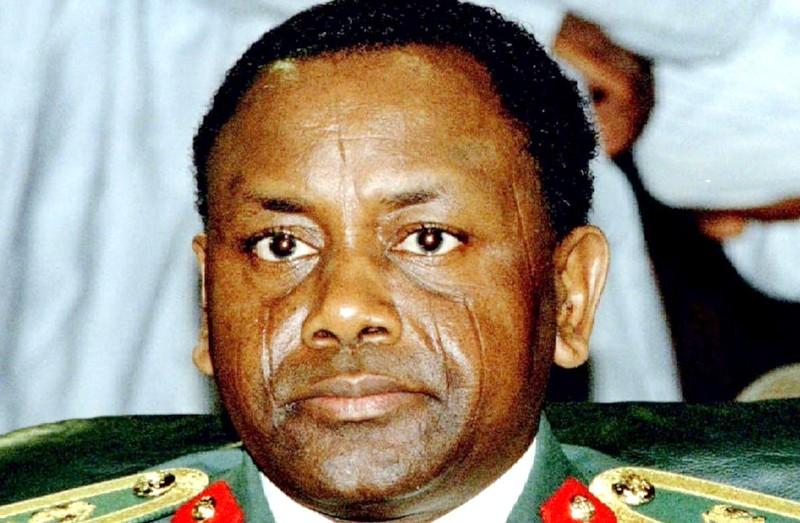
Nigeria to receive fresh $9.5 million (£7 million), believed to be stolen funds linked to former military Head of State, Sani Abacha, from the United Kingdom’s Jersey.
According to the BBC, Jersey has agreed to repatriate the fund to the Nigerian government.
The money, described as proceeds of “tainted property,” is said to be part of the vast fortune stolen by Abacha, who ruled Nigeria between 1993 and 1998.
READ ALSO:How I Transited From Abacha’s Friend To prisoner — Lamido
The funds were kept in a bank account in Jersey and had been tied up in legal proceedings for several years.
Although the assets were first recovered during the administration of former President Goodluck Jonathan, court challenges stalled their return to Nigeria. Progress was made in December 2025 when Jersey’s Attorney-General, Mark Temple, signed a memorandum of understanding, MoU, with Nigerian authorities to enable the repatriation.
The latest agreement builds on two earlier arrangements between Jersey and Nigeria that led to the return of more than $300 million (£230m) in recovered assets.
News
Niger CP Presents Cheques Of Over N56m To Families Of Fallen Police Officers
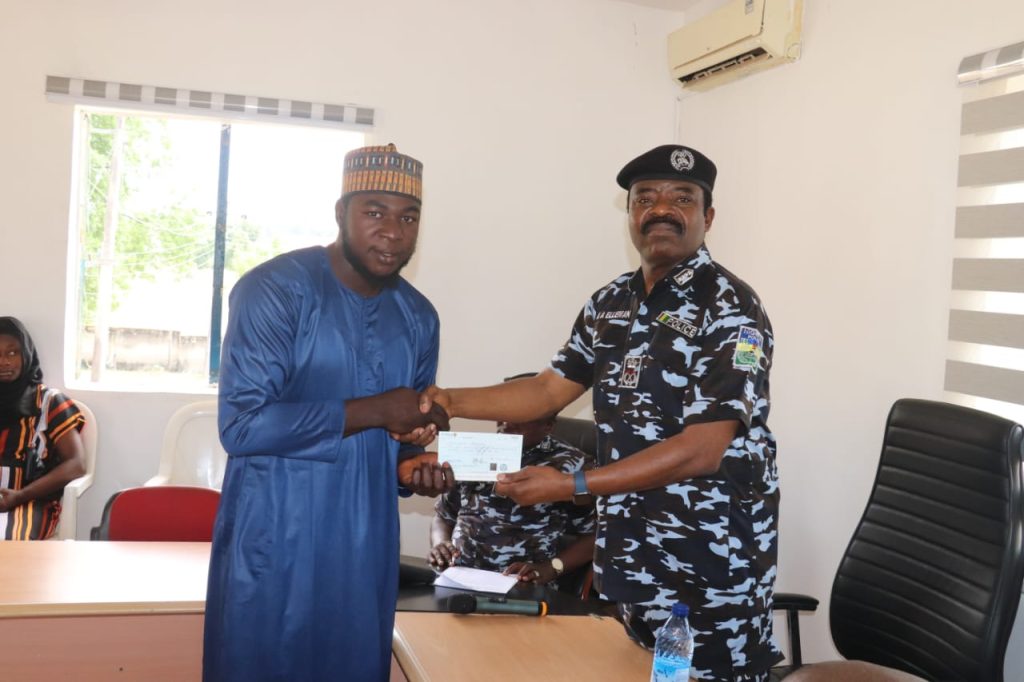
The Niger State Commissioner, CP Adamu Abdullahi Elleman, has presented cheques to the tune of ₦56,942,985 to 20 families of deseaced police personnel who died in active service between 2023 and 2024.
Presenting the cheques to the benefiacries in Minna, Elleman said the gesture is part of the IGP’s Group Life Assurance Scheme, aimed at supporting families of deceased officers.
Condoling with the families, the CP said, “The deceased personnel are not forgotten and their memory will always be fresh in our minds, as they remain in the thoughts and prayers of the Command.”
READ ALSO:Imo Police Arrest Man Accused Of Defilement In Viral Video
He further advised the beneficiaries to put the cheques to judicious use so as to honour the wishes and memory of the fallen officers.
“We pray for God’s blessings in all you do with the token you have received . Even though, no amount of money can be equated to the lives of the personnel, the token is just a gesture to ameliorate and assist the families, ” the CP said.
He further urged them to see the Command as their home, and always visit whenever they are in need of assistance while wishing them a safe journey back to their various destinations.

 News2 days ago
How To Calculate Your Taxable Income
- Business4 days ago
NNPCL Reduces Fuel Price Again
- Metro4 days ago
Edo: Suspected Kidnappers Kill Victim, Hold On To Elder Brother
- Metro4 days ago
AAU Disowns Students Over Protest
- Metro4 days ago
Nine Soldiers Feared Dead In Borno IED Explosion
- Metro3 days ago
JUST IN: Court Grants Malami, Wife, Son N500m Bail Each
- Headline2 days ago
Russia Deploys Navy To Guard Venezuelan Oil Tanker Chased By US In Atlantic
- Metro2 days ago
Edo widow-lawyer Diabolically Blinded Over Contract Seeks Okpebholo’s Intervention
- Entertainment2 days ago
VIDEO: ‘Baba Oko Bournvita,’ Portable Drags His Father, Alleges Bad Parenting, Extortion
- Politics2 days ago
2027: Details Of PDP Leaders, Jonathan’s Meeting Emerge


