
Business
Rising Oil Price: NNPC Subsidiary Foresees Demand Growth
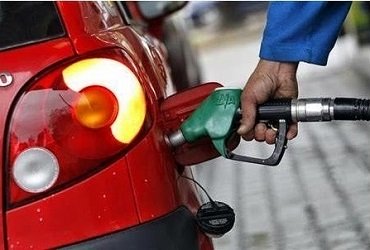
The price of crude oil continued its rise on Thursday, increasing to $113.06/barrel at 5.40pm Nigerian time, as the National Petroleum Investment Management Services projected that the demand for oil would continue to increase till 2050.
NAPIMS, a subsidiary of the Nigerian National Petroleum Company Limited, is the corporate services unit of NNPC mandated to manage the company’s upstream business.
The PUNCH reported on Wednesday that Brent, the crude against which Nigeria’s oil is priced, rose to $111.03/barrel. On Thursday, the commodity moved up further to $113.06/barrel, as the war by Russia in Ukraine entered its first week.
Speaking at the Nigeria International Energy Summit 2022, the Group General Manager, NAPIMS, Bala Wunti, said the products from fossil, particularly the demand for crude oil, would continue to grow.
He said, “You have nuclear also growing, natural gas will grow, the oil will grow. Up to the year 2050, the oil will continue to grow, obviously not at the one or two per cent that we used to know.
“Gas will continue to grow and it, therefore, means that up to 2050 hydrocarbons will continue to grow. So we better do something with the supply.
“When you look at the energy mix equation, we think over 50 per cent of the global energy will be met by hydrocarbon oil and gas.”
READ ALSO: Fuel Scarcity: Federal Fire Service Warns Against Storage Of PMS In Homes
He added, “It is precisely about 52 per cent, and specifically when you talk about oil and gas, that will constitute almost 57 per cent. Therefore, for the world to think that they can ignore and overlook hydrocarbon, it is to put in place a recipe for social destabilisation.
“It is a recipe for bringing down development and growth, causing shortfall in energy supply and that’s why we need investments. However, the reality today is that there’s no investment.”
Wunti told delegates at the summit that Nigeria was sitting on 28 billion barrels of liquid oil reserves and about 160 trillion cubic feet of gas being managed by NAPIMS both in terms of liquid and gaseous forms.
“We manage 75 per cent of the nation’s hydrocarbon reserves,” he stated, adding that there was a need for robust investments in the sector to adequately take advantage of its potentials.



Business
Naira Continues Gain Against US Dollar As Nigeria’s Foreign Reserves Climb To $45.57bn
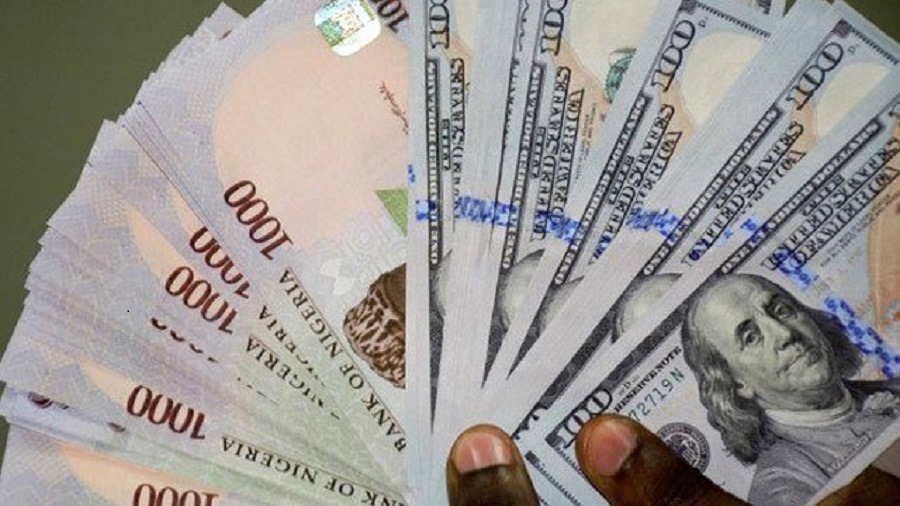
The Naira appreciated further against the United States Dollar at the official foreign exchange market, beginning the week on a good note.
Central Bank of Nigeria data showed that the Naira strengthened on Monday to N1,429.31 per dollar, up from N1,430.85 exchanged on Friday, 2 January 2026.
This means that the Naira gained N1.56 against the dollar on Monday when compared to N1,430.85 last week Friday.
READ ALSO:Naira Records Significant Appreciation Against US Dollar
At the black market, the Naira dropped by N5 to N1480 per dollar on Monday, down from N1475 traded Friday.
The development comes as the country’s external reserves rose to $45.57 billion as of Friday last week.
Business
NNPCL Reduces Fuel Price Again
The Nigerian National Petroleum Company Limited, NNPCL, has again reduced its premium motor spirit price.
In Abuja, on Monday morning, it was gathered that NNPCL retail outlets have reduced their fuel price to N815 per liter, down from N835.
This means that the NNPCL filling stations cut their price by N20.
The fresh price has been implemented at NNPCL filling stations in Wuse Zone 6 and 4 Abuja, Keffi-Abuja Road, and Kubwa Expressway.
READ ALSO:Fuel Price Cut: NNPCL GCEO Ojulari Reveals Biggest Beneficiaries
An NNPCL filling station attendant, who preferred anonymity, told DAILY POST that the new price was implemented on Sunday evening.
However, the N815 per liter is N79 higher than the N739 per liter sold at Dangote Refinery’s backed MRS filling stations nationwide.
DAILY POST recalls that NNPCL on December 19, 2025, cut its price of petrol by N80 to N835 amid a price war among players in the country’s oil downstream sector triggered by Dangote Refinery’s gantry price reduction to N699 per liter.
Business
NNPCL Announces Restoration Of Escravos-Lagos Pipeline
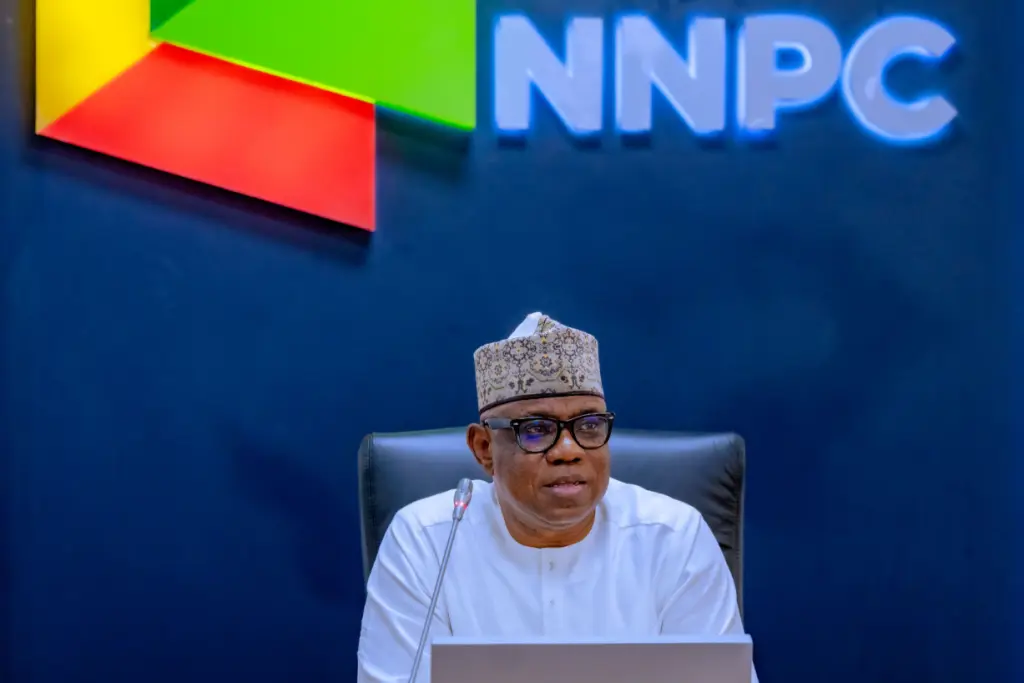
The Nigerian National Petroleum Company Limited (NNPCL) has announced the complete restoration of the Escravos-Lagos Pipeline System (ELPS) in Warri, Delta State, following the recent explosion on the asset.
The chief corporate communications officer (CCCO) of the nation’s oil company, Andy Odeh, in a statement, said that the pipeline is fully operational, reiterating the company’s resilience and commitment to energy security.
“NNPC Limited is pleased to announce the successful restoration of the Escravos-Lagos Pipeline System (ELPS) in Warri, Delta State.
READ ALSO:Fuel Price Cut: NNPCL GCEO Ojulari Reveals Biggest Beneficiaries
“Following the unexpected explosion on December 10, 2025, we immediately activated our emergency response, deployed coordinated containment measures, and worked tirelessly with multidisciplinary teams to ensure the damaged section was repaired, pressure-tested, and safely recommissioned.
“Today, the pipeline is fully operational, reaffirming our resilience and commitment to energy security. This achievement was made possible through the unwavering support of our host communities, the guidance of regulators, the vigilance of security agencies, and the dedication of our partners and staff.
“Together, we turned a challenging moment into a success story, restoring operations in record time while upholding the highest standards of safety and environmental stewardship.
“As we move forward, NNPC Limited remains steadfast in its pledge to protect our environment, safeguard our communities, and maintain the integrity and reliability of our assets. Thank you for your trust as we continue to power progress for Nigeria and beyond,” the statement read.

 Headline3 days ago
PROPHECY: Primate Ayodele Reveals Trump’s Plot Against Tinubu
- News3 days ago
What I Saw After A Lady Undressed Herself — Pastor Adeboye
- Metro3 days ago
Armed Robbers Shot PoS Operator To Death In Edo
- Metro3 days ago
Gunmen Demand N200m Ransom For Kidnapped Brothers In Edo
- Politics3 days ago
2027: Rivers APC Pledges To Follow Wike’s Instructions
- Metro2 days ago
AAU Disowns Students Over Protest
- Entertainment3 days ago
PHOTOS: Anthony Joshua Makes First Social Media Post After Surviving Deadly Car Crash
- Metro3 days ago
Joint Task Force Kills 23 Bandits Fleeing Kano After Attacks
- Politics3 days ago
Why Kano Governor Postponed Formal Defection To APC
- Entertainment3 days ago
Anthony Joshua Returns To UK In Private Jet


