

Headline
Russia Sending Nigerians, Other African Students To War For Visa Renewal – Report

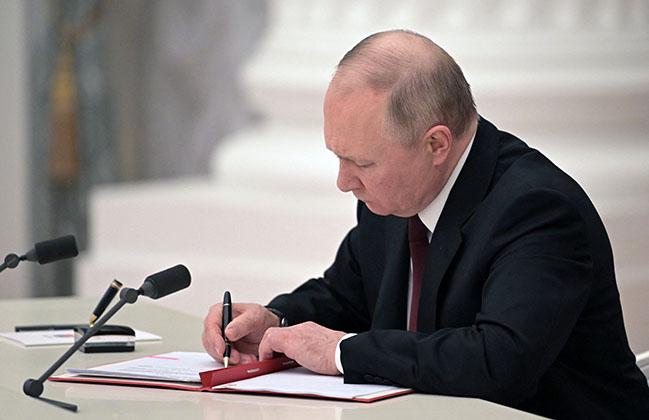


Russia is allegedly sending thousands of migrants and foreign students to fight alongside its troops in the war against Ukraine for visa renewal, reports Bloomberg.
According to the Business news platform, the assessment was done by some European officials who alleged that the Kremlin is doing so to add extra manpower using the tactics first deployed by the Wagner mercenary group.
The report added that Russia has been threatening not to extend the visas of African students and young workers unless they agree to join the military, according to officials familiar with the matter.
Moscow has also been enlisting convicts from its prisons while some Africans in Russia on work visas have been detained and forced to decide between deportation or fighting, one European official said. Some of those people had been able to bribe officials to stay in the country and still avoid military service, said the official, who, like other people cited, spoke on condition of anonymity.
READ ALSO: Labour May Resume Strike Tuesday After Rejecting N62,000, Insists On N250,000
Russia’s practice of sending migrants and students into battle under duress dates back to earlier in the war, another European official said. Those troops suffer especially high casualty rates because they are increasingly deployed in risky offensive maneuvers to protect more highly trained units, the official added.
A spokeswoman for the Russian Foreign Ministry didn’t respond to an email seeking comment.
According to reports citing Ukrainian intelligence, Russia has engaged in a global recruitment drive to enlist foreign mercenaries in at least 21 countries, including several nations in Africa. Army recruitment campaigns offer lucrative signing bonuses and salaries for those who’ll join up as contract soldiers. Recruiters have also targeted migrants and students who previously looked for employment in Russia, and in some cases have lured others over with promises of lucrative work before forcing them to train and deploy to the front.
Russia’s ability to mobilize far greater numbers of troops could become a significant factor in the war as President Vladimir Putin seeks to capitalize on a shift in momentum this year.
READ ALSO: SERAP Sues Tinubu, Demands Details Of Obasanjo, Buhari, Others’ Loans
For now though, his forces have been grinding forward only slowly in northeastern Ukraine and suffering heavy losses, despite a shortage of troops and ammunition on the Ukrainian side.
The Russian military lost more than 1,200 people a day during May, according to the UK Ministry of Defence, its highest casualty rate of the war. Since the beginning of the invasion, Russia has seen some 500,000 personnel killed or wounded, the UK estimates. Bloomberg is unable to independently verify these figures.
At a meeting with foreign media in St. Petersburg late Wednesday, Putin appeared to imply that about 10,000 Russian troops a month are being killed or wounded and that Ukrainian losses are five times higher.
While the Kremlin has failed to achieve a breakthrough on the battlefield, it has stepped up a bombing campaign against Kharkiv, Ukraine’s second-largest city. Western officials say those attacks appear designed to make the city uninhabitable.
READ ALSO: Two Arrested At Cape Town International Airport For Making ‘Threat’ On Flight
As he seeks to maintain public support in Russia, Putin has so far resisted a full-scale mobilisation and Russia says it has been able to make up a significant share of its losses — in terms of numbers if not the standard of the troops — through a voluntary recruitment drive that has attracted tens of thousands of people.
The government in Kathmandu said earlier this year that it is aware of about 400 young Nepali men who have been recruited by Russia but many more have likely signed up without the government knowing. India’s decision to stop recruiting Nepalese Gurkhas for its army, ending a 200-year-old tradition, may have encouraged Nepalis to look for work in Russia and elsewhere.
A senior Ukrainian official said they have seen an uptick in the number of foreign fighters among the prisoners Ukraine has captured on the battlefield. Africans and Nepalis have been particularly common, they said.
Some of Ukraine’s allies have been considering sharing what they know with the affected countries, another European official said.
READ ALSO: 22 States Spent N251bn On Debt Servicing In Nine Months – Report
Group of Seven nations, who will hold a leaders’ summit in Italy next week, have been trying to persuade countries from the so-called Global South to offer more support to Ukraine. But many of those nations have instead remained neutral, while their populations have been a focus for Moscow’s disinformation efforts.
Reuters reported last year that the mercenary group Wagner had recruited several African citizens as part of a drive to enlist convicts from Russian prisons for its forces in Ukraine. The news agency traced the story of three men from Tanzania, Zambia and the Ivory Coast.
There are 35,000-37,000 African students currently in Russia, according to Yevgeny Primakov head of Rossotrudnichestvo, an organization devoted to spreading knowledge about Russia abroad.
“Every year we sign up about 6,500 students from Africa to study in Russia for free,” he said on Thursday at the St. Petersburg International Economic Forum.


Headline
Strait Of Hormuz: Pakistan Thanks Trump For Pausing ‘Project Freedom’

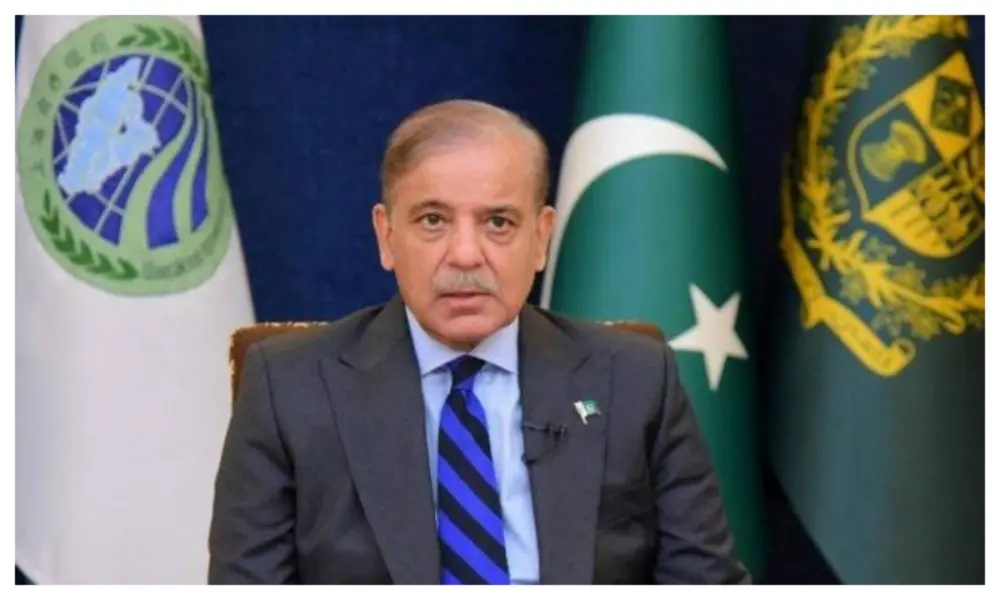
Pakistani Prime Minister Shehbaz Sharif on Wednesday expressed gratitude to United States President Donald Trump for temporarily pausing ‘Project Freedom’, an initiative to secure shipping through the Strait of Hormuz.
In a statement posted on X, Sharif thanked Trump for pausing the “Project Freedom” mission, praising him for his courageous leadership and timely announcement.
According to him, Trump’s decision was made in response to requests from Pakistan, Saudi Arabia and other brotherly countries.
READ ALSO: Oil Prices Drop After Iran Reopens Strait Of Hormuz
He added that the pause would go a long way towards advancing regional peace, stability and reconciliation during the sensitive period.
“Pakistan remains firmly committed to supporting all efforts that promote restraint and a peaceful resolution of conflicts through dialogue and diplomacy.
“We are very hopeful that the current momentum will lead to a lasting agreement that secures durable peace and stability for the region and beyond,” Sharif said.
Headline
FG Summons S. African Envoy Over Rising Xenophobic Attacks On Nigerians

The Federal Government has summoned the Acting High Commissioner of South Africa in Abuja over renewed concerns about xenophobic attacks and protests targeting foreign nationals, including Nigerians, living in that country.
The Ministry of Foreign Affairs said the envoy is expected at its headquarters on Monday, May 4, 2026, for a high-level engagement aimed at addressing the growing tension and safeguarding bilateral relations between both countries.
In a statement issued on Sunday, the spokesperson for the Ministry, Kimiebi Ebienfa, said Nigeria would formally express its “profound concern” over recent developments in South Africa, particularly reports of harassment, violence, and destruction of property belonging to foreign nationals.
According to the ministry, the meeting will focus on ongoing demonstrations by various groups in South Africa and documented cases of attacks on Nigerians and their businesses in parts of the country.
READ ALSO:Group Condemns Tunisian Xenophobic, Racial Attacks On African Migrants
“The objective of this engagement is to formally convey the Nigerian Government’s profound concern regarding recent events that have the potential to impact the established cordial relations between Nigeria and South Africa,” the statement read.
It added that discussions would also address ongoing demonstrations by various groups within South Africa and documented instances of mistreatment of Nigerian citizens and attacks on their businesses.
The ministry acknowledged growing anger among Nigerians over reports of xenophobic violence but urged restraint, stressing that diplomatic engagement remained the preferred channel for resolution.
It assured Nigerians that the Federal Government was actively engaging South African authorities to ensure the protection of its citizens abroad.
READ ALSO:US Visa Adjudication Sparks Concerns Over Diplomatic Relations
“The Ministry is aware of the growing discontent among Nigerians concerning the treatment of their nationals in South Africa. Nevertheless, it implores the Nigerian public to remain calm and reiterates the Federal Government’s commitment to protecting the rights and well-being of Nigerian citizens residing in South Africa,” the statement added.
The latest diplomatic move comes amid renewed reports of xenophobic tensions in parts of South Africa, where foreign-owned businesses have occasionally been targeted during protests linked to unemployment and economic hardship.
South Africa has a history of xenophobic violence dating back to 2008, with subsequent flare-ups in 2015 and 2019, when mobs attacked migrants, looted shops, and displaced thousands of foreign nationals across several provinces.
In past incidents, Nigerians and other African nationals were among those affected, prompting strong diplomatic reactions from Abuja and calls for stronger protection of foreign communities.
While South African authorities have repeatedly condemned such attacks and deployed security forces to restore order during outbreaks of violence, concerns have persisted over recurring hostility in some communities.
Headline
Mississippi Man ‘Kills Mother, Flushes Her Remains Down Toilet’


A 29-year-old Mississippi man, Zachary Lavel Jackson Jr., has been charged with multiple offences, including first-degree murder, over the death of his mother, Lana Brown Bradley, after deputies responded to her Natchez home on April 4 following a missing person report from relatives.
The Adams County Sheriff’s Office said deputies were called to Bradley’s residence after her oldest son was unable to reach her the previous day.
Jackson was initially identified as a family member before investigators confirmed he was her son.
Sheriff Travis Patten described the case as deeply disturbing.“This is by far the most heinous crime that I’ve ever witnessed in my entire life. We weren’t out there that day; this was one of those things when we walked up.
READ ALSO:Bandits Kill Nine, Injure Eight In Fresh Attack On Zamfara Village
“This was one of those cases that you will never, ever forget in your life. This is the type of case that follows you home,” Patten told WJTV.
According to the sheriff, deputies noticed signs of a recent cleanup when they arrived at the home.
“As soon as they walked in the house, they could just see where somebody had been cleaning up, and they could smell chemicals all throughout the house.
“Floor was extremely slippery. And the older son said that this is just unusual for the youngest son to be cleaning up the house like that,” Patten explained.
READ ALSO:US Comedian Reggie Carroll Shot Dead In Mississippi
Jackson, the youngest son, was found in a bathroom, where deputies allegedly made a discovery that became central to the investigation.
“I can say what was in the toilet, and it was her flesh. He chopped her up in pieces and dismembered her in a way that whoever came looking for her would have to do their due diligence to find her, and that’s just what we did,” the sheriff said.
Authorities said Jackson allegedly placed parts of his mother’s body in a suitcase and attempted to dispose of other remains.
Jackson faces charges of first-degree murder, second-degree murder, mayhem and tampering with evidence.
READ ALSO:Popular Influencer Lola Shot
Investigators said Bradley, a retired teacher, had recently sought to evict her son from the home. Patten, citing family interviews, said Jackson was believed to be mentally unstable but also noted that his actions appeared deliberate.
“He had threatened her the day before because she was looking to have him evicted from the home.
“She was in the process of doing so and had just gone to court the day before to have him removed from the home,” Patten explained.
-

 Politics4 days ago
2027: Tinubu’s Re-election May Put An End To Nigeria — Baba Ahmed Warns
-

 Business4 days ago
JUST IN: Nigerian Filling Stations Reduce Fuel Price After Hike
-

 Entertainment5 days ago
Actress Eniola Badmus Gets New Federal Appointment
-

 News2 days ago
BREAKING: Wike Picks Alabo George For Rivers Governorship
-

 News4 days ago
2027: Pastor Adeboye Speaks On Nigeria’s Next President
-

 Politics4 days ago
NDC Speaks On Peter Obi, Kwankwaso Joining Party
-

 News3 days ago
OPINION: Why South Africans Murder Nigerians In Cold Blood
-

 Politics2 days ago
JUST IN: Why I left ADC For NDC With Kwankwaso – Peter Obi Opens Up
-

 Politics5 days ago
2027: Pondi, Otuaro, Other Delta South Stakeholders, Endorse Senator Joel-Onowakpo For Second Term
-

 Business2 days ago
Why We Sited Our Multi-Billion Naira Automobile Firm Branch in Benin – Skyewise Group CEO


