

News
Sanction Nigeria Over Attacks On Journalists, Protesters, SERAP Tells Commonwealth

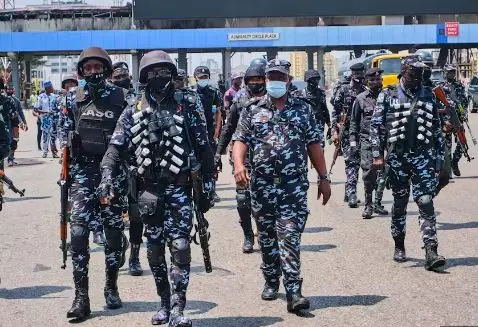


Socio-Economic Rights and Accountability Project (SERAP) has sent an Urgent Appeal to Rt Hon Patricia Scotland QC, Secretary-General of the Commonwealth, urging her to “apply the Commonwealth Charter to hold the Nigerian authorities to account over reports of attacks on journalists covering the #EndHunger protests and peaceful protests in some parts of the country.”
SERAP urged Ms Scotland to “apply the Commonwealth Charter to press the Nigerian authorities to promptly, thoroughly, impartially, independently, transparently and effectively investigate reports of attacks on journalists covering the protests’ in Nigeria and on peaceful protesters.”
SERAP also urged Ms Scotland to “press the Nigerian authorities to publish the outcome of any investigation and to hold suspected perpetrators to account and ensure access to justice and effective remedies for the affected journalists and peaceful protesters for any violations of domestic law and international standards.”
SERAP urged Ms Scotland to “press the Nigerian authorities to uphold the rights of journalists to monitor and report on protests and ensure their safety, as well as ensure that journalists are not detained, threatened, attacked or restricted when covering noteworthy events of interest to the public, such as protests.”
In the Urgent Appeal dated 3 August 2024 and signed by SERAP deputy director Kolawole Oluwadare, the organisation said: “The targeting of journalists with lethal or less-lethal force for doing their work is prohibited under the Nigerian Constitution and international human rights law and contrary to best law enforcement standards.”
SERAP said, “Those violating such standards must be subject to accountability and disciplinary processes. The Commonwealth should take a clear stand to ensure accountability of institutions, media freedom and peaceful assembly in Nigeria.”
READ ALSO: BREAKING: Hoodlums Chase #EndBadGovernance Protesters From Lagos Park
The Urgent Appeal, copied to Mr António Guterres, Secretary-General of the United Nations; and Mr Volker Türk, UN High Commissioner for Human Rights, read in part: “The Nigerian authorities over the years have repeatedly demonstrated that it is not committed to protecting human rights.
“Respect for Commonwealth values is essential for citizens to trust Commonwealth institutions. The Commonwealth ought to take a strong stand for protection of human rights and media freedom in Nigeria, principles which are fundamental to the Commonwealth’s integrity, functioning and effectiveness of its institutions.”
“Nigerian authorities have the legal obligations to protect journalists reporting the news, including covering protests. Nigerian authorities also have an obligation to investigate and punish any violation that occurs within the framework of a public demonstration including attacks on the press.”
“The Commonwealth Charter and declarations recognise media freedom and the inalienable right of individuals to participate in democratic processes, in particular through peaceful exercise of their rights to freedom of expression and assembly, access to information, and media freedom, which apply both offline and online.”
“Any peaceful protesters and journalists detained solely because of their exercise of the right to peaceful assembly and covering the protests should be immediately and unconditionally released.”
“Law enforcement officers should only resort to force in ‘exceptional’ circumstances. Any use of force must only be the minimum amount necessary, targeted at specific individuals, and proportionate to the threat posed.”
READ ALSO: Day 2 Protest: Police Teargas Protesters, Journalist In Akwa Ibom
“The restrictions on the use of force including against journalists covering protests are even more important when security agents use lethal force such as firearms.”
“The Nigerian Constitution 1999 [as amended] and human rights treaties including the International Covenant on Civil and Political Rights and the African Charter on Human and Peoples’ Rights contain language protecting the rights to freedom of expression and access to information.”
“Nigerian authorities have the obligation to consistently promote a culture of accountability for law enforcement officials during protests. Any use of force must be investigated to determine whether the force was necessary and proportionate.”
“Nigerian authorities have an obligation to investigate effectively, impartially and in a timely manner any allegation or reasonable suspicion of unlawful use of force or other violations by law enforcement officials in the context of protests.”
“The presence of journalists in protests promotes transparency and accountability and can deter the commission of such violations and abuses. To assume such a role, journalists have the right to observe, and by extension monitor, protests and to record reactions to protests by officials or other actors.”
“Journalists play an essential watchdog role covering protests. Nigerian security agents have the duty to ensure the safety of journalists who are covering protests and to guarantee the right of the public to seek and receive information about these social mobilisations.”
READ ALSO: Journalists, Potesters Flee As Police Open Fire On Demostrators At MKO Abiola Stadium Abuja
“Nigerian authorities must afford journalists the highest degree of protection in order for them to perform their work freely. This obligation includes both the duty to avoid the use or threat of force against journalists and to protect journalists against third party violence.”
“The confiscation, seizure, and/or destruction of notes and visual or audio recording equipment of journalists without due process should be prohibited and punished.”
“Even if an assembly is declared unlawful or is dispersed, that does not terminate the right of journalists to monitor protests. Nigerian authorities have a legal obligation to adequately compensate journalists for any damaged equipment.”
“According to the UN Special Rapporteurs and Human Rights Committee, the right to peaceful assembly is an individual right, not a collective right, and must be treated as such. Any isolated act of violence by some participants must not be attributed to other participants in the assembly.”
“According to our information, security agents attacked journalists and some peaceful protesters in Abuja and other parts of the country. Security agents reportedly tear gassed and shot at journalists and peaceful protesters, chasing and shooting at fleeing journalists.”
“According to reports, bullets pierced a Premium Times reporter’s car conveying journalists out of the location at three different locations in Abuja. Journalists inside the car shot by security agents are those of The PUNCH, The Cable, Premium Times, and Peoples Gazette.”
READ ALSO: #EndBadGovernance: Protesters, Police Clash Averted In Rivers
“Also, a commuter vehicle’s glass was reportedly shattered with bullets. These journalists visibly identified themselves as press. Security agents also reportedly arrested a freelance journalist, Ayoola Babalola and some peaceful protesters in Abuja, the Federal Capital Territory, on Saturday.”
“Over 50 journalists have been reportedly arrested simply for covering the protests.” Journalist Abdulqudus Ogundapo reportedly said he was scared for his safety when caught in the gunfire.”
“On Thursday, some law enforcement officials reportedly abducted and carted away the camera and phones of The PUNCH photojournalist, Kayode Jaiyeola. On Friday in the Federal Capital Territory, police officers reportedly fired teargas at journalists covering the protest at the Berger roundabout.”
“In Borno State, nine Radio Ndarason Internationale staff members were reportedly arrested by security officials in Maiduguri as they were covering the protests.”




News
Transfer: Premier League Clubs Scramble For Dele-Bashiru

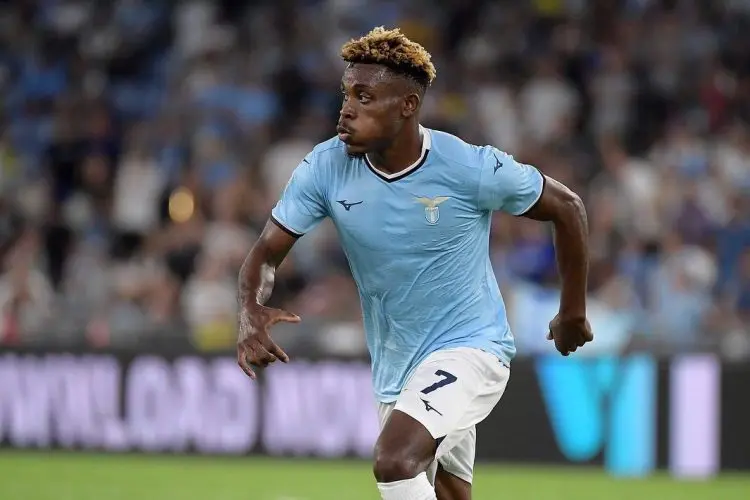
Lazio midfielder, Fisayo Dele-Bashiru is a subject of interest from three Premier League clubs, according to Sky Sports.
Lazio reportedly rejected offers from Nottingham Forest and Bournemouth for the Nigeria international in January.
READ ALSO:Film Premiere: Edo In Talks With Embassies To Promote Safe Migration —Agazuma
La Biancolesti are bracing for more interest in Dele-Bashiru ahead of the summer transfer window, according to Sky Sports.
The 24-year-old has two years left on his contract with the Serie A club.
The attacking midfielder joined the Rome-based club from Turkish Super Lig outfit Hatayspor in 2024.
He has been a regular feature for Lazio this season.
News
Xenophobic Attacks: Nigerian Students To Picket MTN, MultiChoice, Other Businesses


The leadership of the National Association of Nigerian Students, NANS South-West Zone D, has announced plans to picket South African companies in Nigeria following the ongoing xenophobic attacks in the country.
DAILY POST reports that some Nigerians were recently killed in South Africa over the violent attacks.
A statement issued to newsmen by Comrade Adeyemo Josiah Kayode, Coordinator, NANS South-West, Zone D, said that the association is mobilizing to take decisive and lawful action by organizing peaceful picketing and mass advocacy against South African business interests operating in Nigeria.
READ ALSO:Xenophobic Attacks: Oshiomhole Tells FG To Retaliate Against South African Companies In Nigeria
“We categorically state that the continued targeting of Nigerians under any guise is unacceptable and must come to an immediate end.
“This will include major corporations such as MTN Group and MultiChoice Group. It is morally indefensible for businesses to thrive in an environment where the lives of Nigerians are protected, while Nigerians are subjected to fear and violence elsewhere.
“This contradiction will no longer be tolerated,” the statement said.
News
N5m, N10m Zero-interest Loans: SheVentures Opens Applications For Women Entrepreneurs


First City Monument Bank (FCMB) has opened a new round of applications for its SheVentures proposition, offering zero-interest loans of up to ₦10 million to women entrepreneurs to ease access to working capital and support business growth.
The facility provides loans ranging from ₦500,000 to ₦5 million under a general category, and ₦5 million to ₦10 million for sector-specific businesses, with funding capped at up to 50% of an applicant’s average monthly turnover.
At the centre of the offering is a 0% interest rate, with all charges embedded in a transparent structure.
Repayment is structured over four or six months, allowing businesses to match obligations with their cash flow cycles.
READ ALSO:I’ve Been Blacklisted In Music Industry For 13 Years – Seun Kuti
Yemisi Edun, Managing Director and Chief Executive of First City Monument Bank (FCMB), said the initiative reflects a deliberate approach to inclusive growth.
“Inclusive growth requires access to capital and the right conditions for businesses to deploy that capital effectively.
“Women-led enterprises are critical to economic activity, yet they face structural barriers.
This intervention aims to help close that gap by providing financing that supports job creation, business expansion, and long-term sustainability for women entrepreneurs.”
“Access to affordable finance remains a major constraint for women entrepreneurs,” said Nnenna Jacob-Ogogo, Group Head, SheVentures and Impact Segments at First City Monument Bank (FCMB).
READ ALSO:My Beef With Wizkid Is For Life – Seun Kuti
“By removing the cost barrier and offering quick, flexible funding, this zero-interest loan is designed to safeguard existing jobs, enable businesses to invest in growth initiatives, and foster resilience in challenging economic conditions.”
Women-owned businesses account for a significant share of Nigeria’s small and medium-sized enterprises but continue to face high borrowing costs and limited access to credit.
Through these efforts, SheVentures tackles persistent financing gaps facing women-led businesses, combining targeted funding with broader support to empower women entrepreneurs, encourage business innovation, and enhance their ability to compete on a national scale.
Applications for the zero-interest loan are now open.Apply now.
-

 Politics4 days ago
2027: Tinubu’s Re-election May Put An End To Nigeria — Baba Ahmed Warns
-

 Business4 days ago
JUST IN: Nigerian Filling Stations Reduce Fuel Price After Hike
-

 Entertainment5 days ago
Actress Eniola Badmus Gets New Federal Appointment
-

 News2 days ago
BREAKING: Wike Picks Alabo George For Rivers Governorship
-

 News4 days ago
2027: Pastor Adeboye Speaks On Nigeria’s Next President
-

 Politics4 days ago
NDC Speaks On Peter Obi, Kwankwaso Joining Party
-

 News3 days ago
OPINION: Why South Africans Murder Nigerians In Cold Blood
-

 Politics2 days ago
JUST IN: Why I left ADC For NDC With Kwankwaso – Peter Obi Opens Up
-

 Politics5 days ago
2027: Pondi, Otuaro, Other Delta South Stakeholders, Endorse Senator Joel-Onowakpo For Second Term
-

 Business2 days ago
Why We Sited Our Multi-Billion Naira Automobile Firm Branch in Benin – Skyewise Group CEO
