
Headline
‘Santa Claus’ Arrested For Possessing, Distributing Child Sexual Abuse Material

A 64-year-old man from Hamilton Township has been arrested in the United States after investigators linked him to the possession and distribution of child sexual abuse material.
The suspect, identified as Mark Paulino, had been working as a “Santa for hire” at holiday events, a role that placed him in repeated contact with children.
Mercer County officials said the investigation began on 4 December when detectives were alerted to suspicious online activity involving the uploading of child pornography from a residence in Hamilton Township. The probe quickly identified Paulino, a retired elementary school teacher, as the person involved.
READ ALSO:Nigerian Ringleader Of Nationwide Bank Fraud, Money Laundering Jailed In US, Says FBI
Police stated that Paulino had presented himself online as a retired teacher and had recently performed as Santa Claus for photographs and private, corporate, and organisational events. “Because this role involved direct, repeated contact with children, detectives worked around the clock to secure a search warrant,” authorities explained.
The warrant was executed on 5 December, during which police seized multiple items regarded as evidentiary. Paulino was taken into custody without incident and charged with possession and distribution of child sexual abuse materials, as well as endangering the welfare of a child.
Prosecutors have filed a motion to detain him pending trial. The investigation remains ongoing, and authorities have urged members of the public with relevant information to come forward.

Headline
Why West African Troops Overturned Benin’s Coup But Watched Others Pass
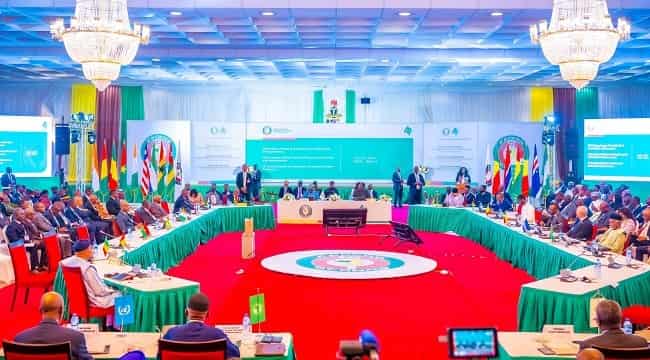
When Benin’s government over the weekend fought back a coup attempt, they had unlikely help: troops and air strikes from neighbouring countries.
West Africa has seen a series of coups over the past five years, leaving critics to cast the regional political bloc ECOWAS as having little more than stern communiques at its disposal to stop them.
But in Benin, Nigerian jets and troops were quickly dispatched to help their smaller neighbour foil the putsch attempt, while the Economic Community of West African States promised more were on their way, from Ghana, Ivory Coast and Sierra Leone.
Multiple factors were at play, analysts, diplomats and government officials told AFP, from the critical period where President Patrice Talon remained in partial control of his country and loyal army forces to the high economic and political stakes — especially for regional power Nigeria — of a country like Benin falling under a junta.
READ ALSO:How I and Obey’s Son Escaped Getting Caught In Benin’s Coup —Dele Momodu
Perhaps most important was the fact that Talon was not taken prisoner as the soldiers declared their takeover, and was able to call on Nigeria — and presumably ECOWAS directly — for assistance.
The Nigerian presidency said that Benin’s foreign ministry requested air support.
A source within ECOWAS told AFP meanwhile that regional leaders, including the presidents of Ivory Coast, Nigeria and Sierra Leone decided “to stand firm and not repeat their error in Niger”.
The toppling of the civilian government in Niamey in 2023 sparked sanctions and threats of military intervention.
The isolation — and empty threats — potentially exacerbated the situation: the junta not only remains in place but left ECOWAS and formed the Alliance of Sahel States with fellow breakaway nations Burkina Faso and Mali, also under military control.
READ ALSO:Coup In Guinea-Bissau? Soldiers Deployed Near Presidential Palace After Gunfire
– Nigerian security, economic links –
While pushing back on the coup offered an opening for Nigeria to regain a bit of its lost diplomatic shine of decades past, when it was a regional and continental heavyweight, there were also tangible economic and security reasons to intervene, analysts said.
“Unrest in Benin poses a direct risk to Nigeria’s economic and security priorities,” motivating a “fast Nigerian-fronted ECOWAS reaction,” Usman Ibrahim, a Nigerian security analyst at SARI Global, told AFP.
A former west African government minister said that the ECOWAS intervention heavily “depended on Nigeria’s willingness.”
Benin, like Burkina Faso, Mali and Niger, is battling jihadist insurgents in its north.
In October, jihadists from the Al-Qaeda affiliated Group for the Support of Islam and Muslims (JNIM) claimed their first attack in Nigeria last month, appearing to have crossed from the Beninese border.
READ ALSO:Coup Prophecy: It’s False Spirit -Mahdi Shehu Tells Primate Ayodele
“If the military takes over and mismanages the security situation… it’s a front in western Nigeria that the Tinubu administration has to address at a time when the international spotlight is obviously on Nigeria’s national security predicament,” said Ryan Cummings, director of Signal Risk, referencing a recent US diplomatic offensive against Nigeria over the handling of its own myriad conflicts.
Analysts also pointed out that Nigeria’s apparent lead in shoring up the pro-western civilian government of Benin, a former French colony, comes at a time when Abuja and Paris are increasing security ties.
“Troops were mobilised rapidly and Paris decided to support the operation,” the ECOWAS source said.
At the request of the Beninese authorities, France provided “in terms of surveillance, observation and logistical” assistance to the Benin armed force, an aide to President Emmanuel Macron told reporters Tuesday.
– Breakaway juntas –
Another likely worry was whether the putschists in Benin would join the AES, who maintain uneasy relations with their neighbours, said Nnamdi Obasi, senior Nigeria adviser at International Crisis Group.
READ ALSO:OPINION: Pastor Adeboye, Tinubu, Trump And Truth
But while some within and outside ECOWAS have painted the response to the coup in Benin as a turning point for ECOWAS, others aren’t convinced.
Critics often point out that ECOWAS does little when civilian presidents cement their rule without military means — extending term limits, altering the constitution to stay in power or cracking down on dissent.
Just last month, a coup in Guinea Bissau attracted the typical diplomatic-only playbook of harsh statements and communiques.
Guinea Bissau has fallen under military rule five times, and the latest putsch is suspected to have been ordered by the president himself — a “tough situation to handle”, noted Confidence MacHarry of SBM Intelligence.
Benin also commands a certain “prestige” as a “stable democracy in West Africa”, said analyst Ibrahim.
“The reaction to events in Benin does not firmly establish a novel or uniform protocol for ECOWAS,” Ibrahim said. “Rather, it underscores the continued selective and politically calculated nature of its engagements.”
(AFP)
Headline
US Congressman Meets Benue Leaders On ‘Genocidal Campaign By Fulani’
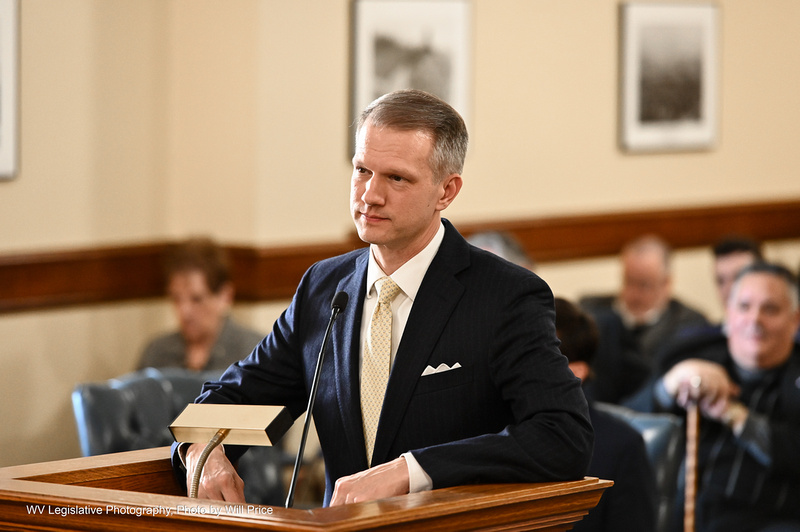
United States Congressman, Rep Riley Moore, has held talks with traditional and religious leaders in Benue State concerning what he described as an ongoing genocidal campaign by Fulani in the state.
Moore and other delegates from the US government are in Nigeria to meet with Christians who have suffered persecution and attacks by Jihadists.
He has so far met with Catholic Bishop Wilfred Anagbe of the Diocese of Makurdi, Catholic Bishop Isaac Duru of Katsina-Ala Diocese, and his Royal Highness, Tor Tiv James Ioruza.
Moore, who represents West Virginia’s 2nd District in Congress, said they discussed “the ongoing genocidal campaign by the Fulani in Benue State.”
READ ALSO:US Congressman Makes Shocking Revelation, Reveals How USAID Funded Boko Haram, Other Terror Groups
“Our brothers and sisters in Christ will no longer suffer in silence. The United States has heard your cries, and we are working diligently toward solutions,” he added.
The meeting took place five months after about 200 residents of Yelwata in Benue State were massacred by terrorists, with many injured and displaced.
Moore has been acting on directives issued by US President Donald Trump, who threatened months back that if the government does not stop the killing of Christians in Nigeria, the US might have to invade the country “guns-a-blazing”.
Trump’s words have led to a cooperation between Nigeria and the US, which Moore confirmed, saying that “there is an openness and willingness on the part of the Nigerian government to work with the United States to tackle these critical issues. Now, that openness has to translate to concrete action.”
READ ALSO:Trump’s Military Threat To Nigeria Reckless – US Congresswoman
He went on to thank President Bola Tinubu for rescuing the 100 Catholic school children abducted recently by terrorists. He described the action as a positive demonstration of the government’s growing response to the security situation, adding that Nigeria has shown its commitment to the emergency declaration issued by President Tinubu.
“The US’ sense of urgency on our concerns was positively received. I feel that a cooperative security framework is within sight. The now-established joint task force between Nigeria and the US is a great example,” Moore added.
Meanwhile, Nigeria’s National Security Adviser, Nuhu Ribadu, has expressed confidence that the engagement with the US delegation in Nigeria “will deepen trust, collaboration, and shared commitment to peace and security.”
The delegation included Rep Mario Díaz-Balart, Rep Norma Torres, Rep Scott Franklin, Rep Juan Ciscomani, and Rep Riley M. Moore.
It is not yet clear whether the delegation will also visit other states in the Middle Belt region of Nigeria, which are also facing terrorist attacks.
Headline
Africa Coups: 10 In Five Years
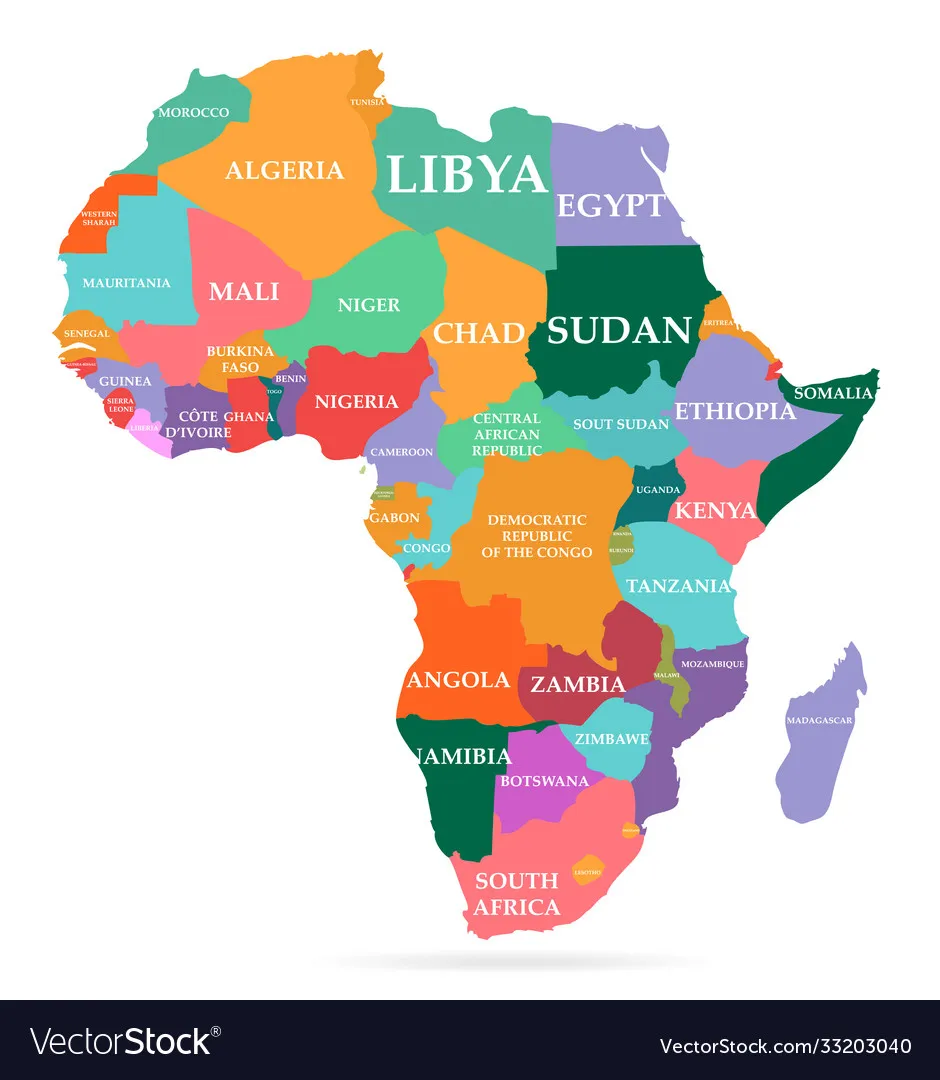
A military coup attempt in Benin Sunday adds to a list of such incidents on the turbulent African continent.
A group of soldiers announced that they had ousted President Patrice Talon, although his entourage said he was safe and the army was regaining control.
Here is a recap of the 10 successful coups in Africa in the last five years:
Mali
Malian President Ibrahim Boubacar Keita is overthrown by five army colonels in August 2020.
In May 2021, the Malian military takes over from the civilian leaders of an interim government.
Colonel Assimi Goita, who led both coups, is sworn in as transitional president.
After promising to hold elections in February 2024, the military puts them off indefinitely, pointing to the jihadist violence plaguing the country.
READ ALSO:Guinea-Bissau Military Takeover Is ‘Ceremonial Coup’ – Jonathan
In July 2025, Goita approves a law granting himself a five-year presidential mandate, renewable without election.
In September jihadists launch a fuel blockade, weakening the ruling junta.
Guinea
On September 5, 2021, mutinous troops led by lieutenant-colonel Mamady Doumbouya take over in Guinea, arresting President Alpha Conde.
Doumbouya in early November 2025 submits his candidacy ahead of December 28 elections that are meant to restore constitutional order.
Sudan
After weeks of tension between the military and civilian leaders who had shared power since the ousting of dictator Omar al-Bashir, the armed forces led by army chief Abdel Fattah al-Burhan stage a new coup on October 25, 2021.
Since April 2023 war has raged between the regular armed forces led by Burhan and the paramilitary Rapid Support Forces, led by his former deputy Mohammed Hamdan Daglo.
READ ALSO:Guinea-Bissau Coup: FG Gives Update On Ex-President Jonathan
The conflict has so far killed tens of thousands of people and created one of the world’s worst humanitarian crises.
Burkina Faso
Burkina Faso underwent two military coups in 2022.
In January that year mutinous soldiers led by Lieutenant-Colonel Paul-Henri Sandaogo Damiba arrest President Roch Marc Christian Kabore.
Then in September army officers announce they have dismissed Damiba. Captain Ibrahim Traore becomes transitional president, but elections he promised do not materialise. In May 2024 the junta authorises him to stay for another five years in a country wracked by Islamist violence.
Niger
On July 26, 2023, members of the presidential guard overthrow Niger’s President Mohamed Bazoum, elected in 2021. General Abdourahamane Tiani, head of the presidential guard, takes over.
In March 2025, the junta extends by at least five years its transitional leadership of the country which is plagued by jihadist violence.
READ ALSO:Coup In Guinea-Bissau? Soldiers Deployed Near Presidential Palace After Gunfire
Gabon
In Gabon, ruled for 55 years by the Bongo family, army officers on August 30, 2023 overthrow President Ali Bongo Ondimba, less than an hour after he is declared winner of an election the opposition says was fraudulent.
General Brice Oligui Nguema is named transitional president.
In April 2025 he is elected president with 94.85 percent of the vote. He is sworn in on the basis of a new constitution approved by referendum during the transition.
Madagascar
In October 2025, the military ousts Madagascar’s president Andry Rajoelina and takes power following weeks of “Gen Z” anti-government protests.
Army colonel Michael Randrianirina is sworn in as Madagascar’s new president, promising elections within 18 to 24 months.
Guinea-Bissau
In November 2025, military officers in Guinea-Bissau declare they have “total control” of the coup-prone west African country, closing its borders and suspending its electoral process three days after general elections.
The military says a command “composed of all branches of the armed forces” is taking over the leadership of the country “until further notice”.

 Metro4 days ago
Edo: How Pastor Hypnotised My Daughter, Made Her Abandoned NNPCL- Mother
- News5 days ago
9 Common Resume Mistakes Graduates Make – And How To Avoid Them
- News4 days ago
Oba Of Benin Suspends Priest, Reaffirms Appointment Of Okao
- Metro4 days ago
My Husband Felt Insecure After I Got A Job, Accused Me Of Infidelity —Wife
- Headline2 days ago
JUST IN: Soldiers Announce Military Takeover Of Govt In Benin Republic
- Sports4 days ago
JUST IN: Full Draw For 2026 World Cup Group Stages Confirmed
- News2 days ago
Rufai Oseni Breaks Silence On Alleged Suspension From Arise TV
- News4 days ago
Okpebholo Declares Edo Business-friendly
- Metro5 days ago
Gunmen Kill Three In Zamfara Community Over N3,500 Yoghurt
- News4 days ago
Malami Breaks Silence On Alleged Terrorism Financing


