
Headline
SERAP Sues Tinubu, Demands Details Of Obasanjo, Buhari, Others’ Loans
The Socio-Economic Rights and Accountability Project has taken legal action against President Bola Tinubu’s administration.
The organisation described the move as necessary so as to ensure financial transparency.
The lawsuit demands the publication of detailed spending reports and agreements related to loans acquired by the administrations of former Presidents Olusegun Obasanjo, Umaru Yar’Adua, Goodluck Jonathan, and Muhammadu Buhari.
Filed last Friday at the Federal High Court in Lagos, the suit aims to compel the Minister of Finance, Wale Edun, and the Debt Management Office to disclose how these loans, totaling billions of dollars, were utilised.
SERAP contends that the citizens’ right to know how public funds are spent is fundamental to democratic governance and accountability.
The organisation argued that transparency in loan agreements and expenditures is critical for Nigerians to evaluate their government’s performance, especially in light of persistent extreme poverty and inadequate public services despite substantial borrowing.
According to a Sunday statement signed by its Deputy Director, Kolawole Oluwadare, SERAP said the outcome of the case could significantly impact the transparency and accountability mechanisms in Nigeria’s financial management.
The statement was titled, “SERAP sues Tinubu govt over failure to account for loans by ex-presidents.”
READ ALSO: SERAP Sues 36 Governors, FCT Minister Over FAAC Allocations
In the suit number FHC/L/CS/353/2024 filed last Friday at the Federal High Court, Lagos, SERAP is asking the court to “direct and compel the Tinubu government to publish the loan agreements obtained by the governments of former Presidents Olusegun Obasanjo, Umaru Musa Yar’Adua, Goodluck Jonathan and Muhammadu Buhari.”
SERAP is also asking the court to “direct and compel the Tinubu government to publish the spending details of any such loans, including the interests and other payments so far made on the loans.”
In the suit, SERAP is arguing that, “No one should be able to pull curtains of secrecy around decisions on the spending of public funds which can be revealed without injury to the public interest. Democracy requires accountability and accountability requires transparency.”
SERAP is also arguing that “The Tinubu government should make it possible for citizens to have access to the agreements and spending details to judge whether their government is working for them or not.”
“The information may help to explain why, despite several billions of dollars in loans obtained by successive governments, millions of Nigerians continue to face extreme poverty and lack access to basic public goods and services,” the statement added.
SERAP is arguing that, “Nigerians’ right to a democratic governance allows them to appreciably influence the direction of government, and have an opportunity to assess progress and assign blame.”
SERAP is also arguing that, “The accountability of government to the general public is a hallmark of democratic governance, which Nigeria seeks to achieve.”
READ ALSO: SERAP, BudgIT, Others Drag CBN To Court Over Cybersecurity Levy
The suit filed on behalf of SERAP by its lawyers Kolawole Oluwadare and Andrew Nwankwo, read in part: “Publishing the loan agreements would improve public accountability in ministries, departments and agencies (MDAs).”
“Nigerians are entitled to information about what their government is doing in their name. This is part of their right to information.
“Publishing the agreements and spending details would allow the public to see how and on what these governments spent the loans and foster transparency and accountability.
“Publishing the loan agreements signed by the governments of former presidents Olusegun Obasanjo, Umaru Musa Yar’Adua, Goodluck Jonathan and Muhammadu Buhari, and widely publishing the agreements would allow Nigerians to scrutinise it and to demand accountability for the spending of the loans.
“According to Nigeria’s Debt Management Office, the total public domestic debt portfolio for the country’s is N97.3 trillion ($108 billion). The Federal Government’s debt is N87.3 trillion ($97 billion).”
“Nigeria paid $6.2 billion in 2019 as interest on loans while the country paid $6.5 as interest in 2018. Nigeria also paid $5 billion as interest on loans in 2017 while the country paid $4.4 billion as interest in 2016. For 2015, the interest paid on loans was $5.5 billion.
“Substantial parts of the loans obtained by successive governments since the return of democracy in 1999 may have been mismanaged, diverted or stolen, and in any case remain unaccounted for.
“Persons with public responsibilities ought to be answerable to the people for the performance of their duties including the management of the loans obtained between May 1999 and May 2023,” the statement read.
READ ALSO: ‘Disclose Details Of SIECs’ Members, LGA Results’, Or Face Legal Action, SERAP Tells 36 Governors
The organisation noted that this action becomes necessary to curb corruption and financial mismanagement.
“The Tinubu government has a responsibility to ensure transparency and accountability in how any loans obtained by the Federal Government are spent, to reduce vulnerability to corruption and mismanagement.”
“The Freedom of Information Act, Section 39 of the Nigerian Constitution, article 9 of the African Charter on Human and Peoples’ Rights and article 19 of the International Covenant on Civil and Political Rights guarantee to everyone the right to information, including to copies of the loan agreements obtained by successive governments since 1999.”
“By the combined reading of the provisions of the Constitution of Nigeria, the Freedom of Information Act 2011, the International Covenant on Civil and Political Rights, and the African Charter on Human and Peoples’ Rights, there are transparency obligations imposed on the Tinubu government to widely publish the agreements and details of the projects on which the loans were spent.”
“The Nigerian Constitution, Freedom of Information Act, and the country’s anti-corruption and human rights obligations rest on the principle that citizens should have access to information regarding their government’s activities,” it further read.
Meanwhile, the statement asserted that no date has yet to be fixed for the hearing of the suit.



Headline
U.S. Lawmaker Reacts To Nigeria, U.S. Airstrikes
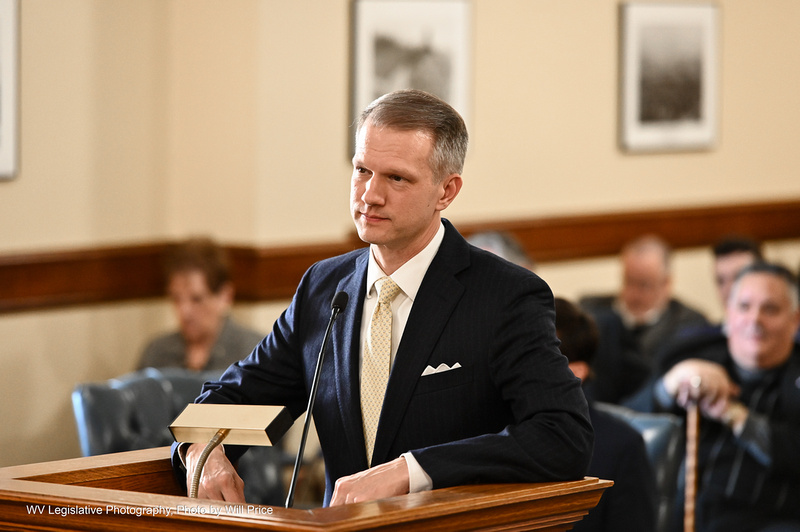
United States Congressman, Riley Moore, has stated that President Donald Trump is determined to put an end to the killing of Christians in Nigeria, warning that further action may follow if the violence persists.
Moore made the statement on Friday via his official X handle.
According to the lawmaker, the strike represents the first step in addressing what he described as the ongoing slaughter of Christians and the broader security crisis affecting Nigerians across religious and ethnic lines.
READ ALSO:US Dept Of War Shares Video Of Air Strikes In Nigeria
“President Trump has been clear that the killing of Christians in Nigeria must end,” he said.
He that the administration’s resolve on the matter should not be underestimated.
“As I stated at the outset: Do not test President Trump‘s resolved in this matter.
READ ALSO:JUST IN: US Forces Bomb Terrorists Camps In Nigeria
“Tonight’s strike in coordination with the Nigerian government is just the first step to ending the slaughter of Christians and the security crisis affecting all Nigerians,” he said.
He stressed that the operation signals a stronger stance by the United States in support of Nigeria’s efforts to tackle terrorism and violent extremism, noting that further measures could be taken if the situation does not improve.
Headline
US Dept Of War Shares Video Of Air Strikes In Nigeria
A video footage of the US military air strikes in Nigeria has emerged.
The video was released by the US Department of War following its air strikes against terrorists in Sokoto.
Earlier, the US secretary of War, Pete Hegseth had confirmed that military air strikes hit terrorists in Nigerians, saying it was deadly.
Later on, the US. African Command, confirmed that it conducted the attacks described as very deadly by President Donald Trump.
Trump said he was only keeping the promise he made earlier last month to strike the terrorists he believes are killing innocent Christians.
READ ALSO:JUST IN: US Forces Bomb Terrorists Camps In Nigeria
Although described as powerful and deadly, the casualty caused by the attack is yet to be released.
Explaining further, security expert, Brant Philip, said the strikes may have been launched “from the USS Paul Ignatius, using a Tomahawk missile.”
The Nigerian government through its ministry of foreign affairs has also confirmed that the strikes were successful.
Watch video here
Headline
JUST IN: US Forces Bomb Terrorists Camps In Nigeria
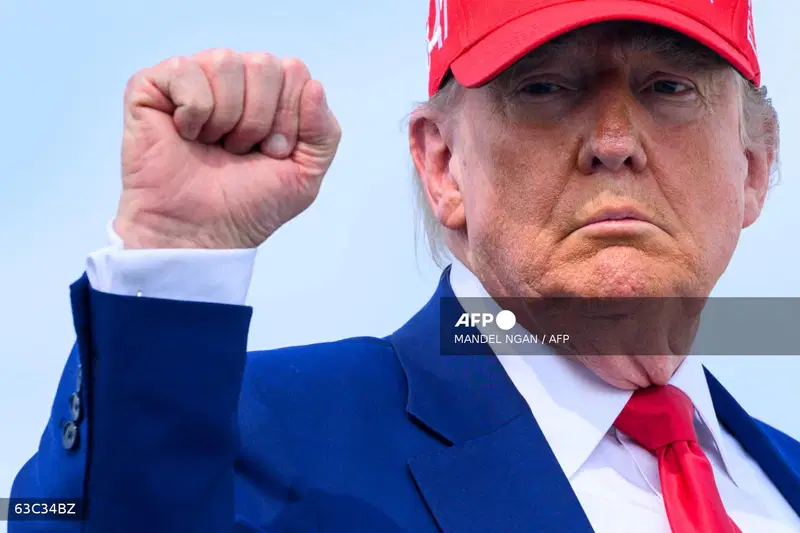
United States President Donald Trump said US forces conducted deadly strikes against Islamic State terrorists in northwestern Nigeria, and vowed more attacks if the militants keep killing Christians.
“I have previously warned these Terrorists that if they did not stop the slaughtering of Christians, there would be hell to pay, and tonight, there was,” Trump posted on his Truth Social platform, adding that “the Department of War executed numerous perfect strikes.”
READ ALSO:JUST IN: Kano Lawmaker, Sarki Aliyu Daneji, Dies Hours After Colleague’s Passing
Trump stated that the Department of War “executed numerous perfect strikes, as only the United States is capable of doing. Under my leadership, our Country will not allow Radical Islamic Terrorism to prosper.”
The US president wished everyone Merry Christmas, “including the dead Terrorists, of which there will be many more if their slaughter of Christians continues.”
Details later.

 News4 days ago
PHOTOS: New Era In Furupagha-Ebijaw As Okpururu 1 Receives Staff Of Office
- News3 days ago
UBTH CMD Marks 120 Days In Office, Expresses Commitment To Providing Conducive Working Environment
- News3 days ago
FIRS Confirms NIN As Tax ID
- News4 days ago
OPINION: Gumi And His Terrorists
- News4 days ago
FG Declares Public Holidays For Christmas, New Year Celebrations
- Metro3 days ago
Fintiri Pardons Man Sentenced To Death For ‘Killing Herdsman In Self-defence’, Others
- News4 days ago
OPINION: Christmas And A Motherless Child
- News2 days ago
JUST IN: Kano Lawmaker, Sarki Aliyu Daneji, Dies Hours After Colleague’s Passing
 News3 days ago
OPINION: My Man Of The Season
- News3 days ago
KWAM 1 Withdraws From Awujale Race, Ends Court Challenge


