
News
Soyinka Decries Seyi Tinubu’s ‘Excessive’ Security Escort
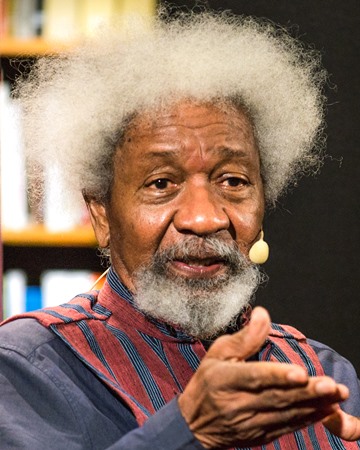
Professor Wole Soyinka says President Bola Tinubu must be cautious about his approach to regional security, domestic governance, and the use of state protection for privileged individuals.
The nobel laureate said this at the 20th Wole Soyinka Centre for Investigative Journalism Awards in Lagos on Tuesday.
All these were captured in a now viral four-minute, 25-second video shared on Tuesday night by #Nigeriastories on X.
Soyinka had recounted an encounter which he described as recent in his hotel room in Ikoyi, Lagos State, that left him shocked at what he considered an extravagant display of state security.
He described seeing “an excessively large security battalion assigned to a young individual close to the Presidency,” an entourage he said was “sufficient to take over a small country.”
Soyinka revealed that the young man turned out to be Seyi Tinubu, the President’s son.
READ ALSO:Wole Soyinka Slams NBC For Banning Eedris Abdulkareem’s Protest Song
Soyinka on Tinubu’s son
He said the discovery concerned him enough to contact National Security Adviser Nuhu Ribadu.
“I was so astonished that I started looking for the national security adviser. I said track him down for me. I think they got him somewhere in Paris. But he was with the president; he was in a meeting.
“Then, I said I’ve just seen something I can’t believe I don’t understand and I described the scene to him I said do you mean that a child of the head of state goes around with an army for his protection or whatever.
“I couldn’t believe it. Later on, I did some investigative journalism, and I found that apparently this is how this young man goes around with his battalion, his heavy armed soldiers,” he said.
“I was astonished,” Soyinka said, adding that “children must understand their place. They are not elected leaders, and they must not inherit the architecture of state power simply by proximity.”
In a separate remark captured at the same event in honour of veteran poet Odia Ofeimum and many others, Soyinka urged Tinubu to reconsider the scale of security personnel attached to Seyi, stressing that such resources are urgently needed elsewhere.
READ ALSO:FULL LIST: Tinubu Confers National Honours On Kudirat Abiola, Soyinka, Ken Saro-Wiwa, Others
He humorously observed that if a major insurgency were to break out, perhaps the President should ask Seyi to “go and handle it,” given the size of his escort — but added that “beyond the humour lies a serious matter of priority and fairness.”
He warned that concentrating a battalion of operatives around one individual is inconsistent with a nation battling kidnappings, rural attacks, insurgency and criminal violence, insisting that security deployments must reflect national realities, not privilege.
Turning to the media, Soyinka praised journalists for resilience but urged stronger editorial discipline in an era of escalating misinformation.
He cautioned that “the next great conflict may well be triggered by the misuse of social platforms,” calling for renewed commitment to truth and verification, and describing credible journalism as one of Nigeria’s strongest defences against chaos.
The video shared at about 22.18pm on Tuesday night had garnered over 27,000 views, 466 reposts and 81 quotes.
Benin coup, Lagos demolitions
Also in the viral footage, Soyinka warned that Nigeria’s involvement in the recently halted coup attempt in the Republic of Benin carries significant risks.
READ ALSO:Soyinka Criticizes Tinubu’s Emergency Rule In Rivers, Calls For Constitutional Reform
Soyinka described the intervention as “another unnecessary military entanglement next door,” arguing that Nigeria should focus on reinforcing democratic institutions rather than resorting to reflex military deployment.
He cautioned that instability in neighbouring countries inevitably spills into Nigeria.
He noted, “What happens in Benin inevitably affects us. Instability anywhere in the region echoes across our own sense of security.”
Beyond regional matters, Soyinka turned to domestic issues, criticising the ongoing wave of demolitions across Lagos.
He said he had personally received photos and testimonies of displaced families and stressed that even necessary urban reforms must prioritise dignity.
READ ALSO:Why I Considered Myself Failed Mechanic — Wole Soyinka
“Let us not strip away the humanity of the people affected,” he said, calling for evacuation procedures that protect the vulnerable.
The trending video continues to circulate widely on X, drawing public comment and discussion on governance, accountability in the country.
Late November, Tinubu ordered the withdrawal of police officers attached to Very Important Persons across the country, directing that they be redeployed to core policing duties.
While, there are no official communication or light response yet from the Presidency as of Tuesday night, The PUNCH reports that no video confirmation or acceptance that the individual Soyinka raised the alarm about is indeed Seyi Tinubu.



News
Eating Takeout Food Often May Increase Heart Disease Risk — Study
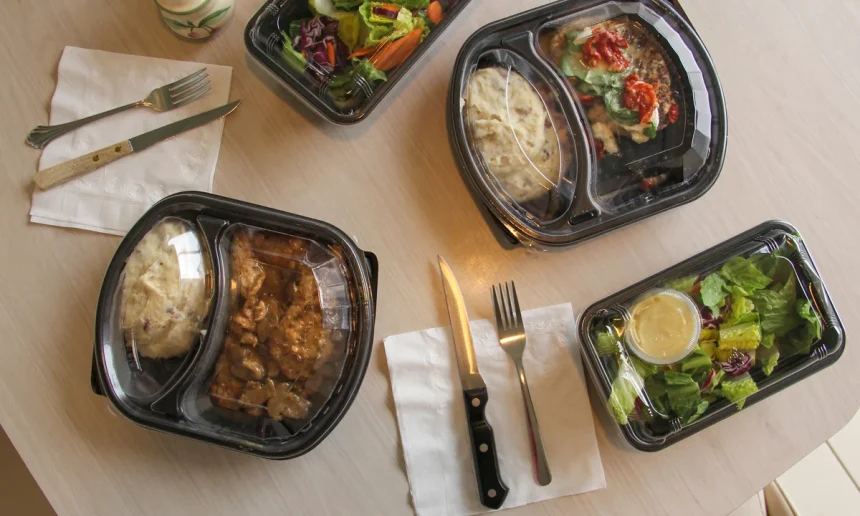
Research suggests that higher takeout food consumption may increase a person’s risk of cardiovascular disease, like heart disease.
In a new study, published in Food Science & Nutrition, researchers said eating takeout food too often can influence systemic inflammation that underlies much cardiovascular disease.
The study of over eight thousand people in the 2009 to 2018 U.S. National Health and Nutrition Examination Survey (NHANES) found that those who eat greater amounts of takeout food are likely to have various elevated risk factors for heart disease.
They were interviewed in their homes and also visited a mobile examination centre, where they recalled their food intake, received cardiometabolic health assessments, and had blood collected.
READ ALSO:23 Ships With Fuel, Food Items To Arrive Lagos Ports – NPA
Mammograms may predict heart disease risk in women — Study
The researchers found a correlation between the amount of takeout food a person consumes and their likelihood of developing chronic low-level inflammation, a key driver of cardiovascular pathology.
Deaths from cardiovascular disease and the consumption of takeout foods are both on the rise, and while that does not prove a causal relationship, the study explores whether there is a connection between the two.
The study tracked degrees of systemic inflammation according to the Dietary Inflammatory Index (DII), a scale that quantifies the risk of inflammation related to the intake of specific dietary substances.
READ ALSO:Food Security: 14,000 Smallholder Farmers To Benefit From N4bn Smart Agriculture Training In Bauchi
The three major takeaways from the analysis included that a higher level of takeout food consumption corresponded to an unfavourable cardiometabolic profile consisting of lower HDL, as well as higher triglycerides, fasting glucose, serum insulin, and insulin resistance.
Jayne Morgan, MD, cardiologist and Vice President of Medical Affairs in a reaction, who was not involved in the study, explained that “Takeout food raises the cardiovascular risk not because of one ingredient, but because of a predictable combination of nutrients, additives, and preparation methods that adversely affect blood pressure, lipids, insulin sensitivity, inflammation, and endothelial function.”
“This includes excess sodium that increases blood volume and blood vessel stiffness, and unhealthy fats, usually saturated fats or trans fats, that increase cholesterol level and atherosclerosis, a condition that can lead to heart attack and stroke.”
Michelle Routhenstein, Preventive Cardiology Dietitian at Entirely Nourished, also not involved in this study, declared, “It is also important to recognise that frequent takeout use often reflects broader lifestyle pressures such as demanding schedules, limited access to cooking resources, irregular meals, and disrupted sleep, all of which can quietly compound cardiovascular risk.”
News
How To Identify Fake Kiss Condoms In Circulation
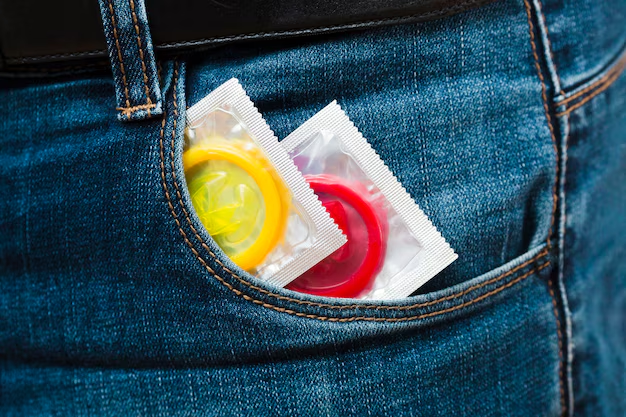
The National Agency for Food and Drug Administration and Control (NAFDAC) has recently warned Nigerians about the circulation of counterfeit Kiss brand condoms in major markets across the country.
Contents
Original DKT Kiss condoms
Fake Kiss condoms
In a public alert published on its website recently and referenced as Public Alert No. 042/2025, the agency said the warning followed information received from DKT International Nigeria, a non-governmental organisation involved in contraceptive social marketing and HIV/AIDS prevention.
NAFDAC stated, “The National Agency for Food and Drug Administration and Control is notifying the public about the sale and distribution of fake Kiss condoms in various Nigerian markets.
“The information was received from the MAH-DKT International Nigeria, a leading non-governmental organisation focused on contraceptive social marketing. Its mission is to provide Nigerians with affordable and safe options for family planning and HIV/AIDS prevention.
“The fake Kiss condoms have been reported to be found in Onitsha Market, Idumota Market, Trade Fair Market, and various markets in Kano, Abuja, Uyo, Gombe, Enugu, and others.”
READ ALSO:Married Man Denies Wife At Brazil Concert To Kiss Tems On Stage [VIDEO]
Kiss condom is a brand of male latex condoms designed to offer sexual protection, including the prevention of unwanted pregnancy and sexually transmitted infections such as HIV, gonorrhoea and syphilis.
To help consumers avoid counterfeit products, NAFDAC outlined key differences between original and fake Kiss condoms.
Original DKT Kiss condoms
The original product comes in a light red box pack with clear instructions printed on the lower part of the pack, including single-use warnings and storage and caution information. The box contains detailed medical device information, including MDSS GmbH, Germany, and a complete Nigerian address at Isolo Industrial Layout, Oshodi-Apapa Expressway.
The condom pack is light red, with the word “Kiss” closely written on six lines. The wallet outer pack is lighter red, carries the Oshodi-Apapa address, manufacturer details, and a clear product description beside the condom image. The hidden flap includes revision dates, medical device details, and caution information, while the wallet inner contains detailed instructions and eight bullet points under important notes.
READ ALSO:Lagos Names Mandy Kiss Anti-drug Abuse Ambassador
The original condom is large, oval-shaped, well-lubricated, and has a large teat end for semen collection.
Fake Kiss condoms
In contrast, fake Kiss condoms come in darker-coloured box packs with little or no additional information. Some boxes are plain white inside and lack condom images. The address is wrongly listed as 42, Montgomery Road, Yaba, Lagos, while the manufacturer’s address is incomplete or missing. Storage and caution information is absent.
The condom pack is darker, with “Kiss” loosely written on five lines and wide spacing. The condom strip is longer than the original. The wallet outer pack is also darker red, carries incorrect or missing addresses, lacks colour wave designs, and shows inconsistencies in barcode lines. Medical device and caution information are missing, and the hidden flap contains no details.
Inside the wallet, information is summarised with only six bullet points. The fake condom is thinner, round-shaped, less lubricated, and has a smaller teat end.
(TRIBUNE)
News
Lagos: Police Arrest 14 Suspected Traffic Robbers On Lekki-Epe Expressway

Fourteen persons suspected to be involved in traffic-related robbery have been arrested at various points along the Lekki-Epe Expressway in Lagos over the past two weeks.
The arrests were confirmed on Tuesday by the Lagos State Police Command spokesperson, SP Abimbola Adebisi, via a post on her official X handle, @AbimbolaShotayo.
According to her, operatives of the Command’s Tactical Squad based in Elemoro carried out the operations that led to the suspects’ apprehension.
READ ALSO:VIDEO: Chaos As Last-minute Shoppers Overwhelm Lagos Balogun Market
She explained that the arrests followed sustained patrols and intelligence-driven operations aimed at curbing criminal activities associated with traffic congestion and improving the safety of motorists and other road users along the busy corridor.
Adebisi noted that the development reflects the Command’s determination to strengthen security and uphold law and order on the Lekki-Epe axis, adding that the Tactical Squad has continued to proactively identify crime-prone areas and respond swiftly to threats posed by criminal elements.
She called on residents and commuters to support police efforts by providing timely and credible information that could assist in preventing and detecting crime.
READ ALSO:VIDEO: Chaos As Last-minute Shoppers Overwhelm Lagos Balogun Market
“Security is a shared responsibility. Members of the public are encouraged to stay alert and promptly report any suspicious movements or activities to the nearest police station,” she said.
The police spokesperson further reassured residents and road users of the Command’s commitment to maintaining aggressive patrols and security operations to protect lives and property in the area.
She reiterated the Command’s community policing message, “See Something, Say Something,” stressing the importance of cooperation between the police and the public in sustaining peace and security.

 Headline5 days ago
JUST IN: US Forces Bomb Terrorists Camps In Nigeria
- Headline5 days ago
US Dept Of War Shares Video Of Air Strikes In Nigeria
- News4 days ago
PHOTOS: SGF George Akume Weds Ooni’s Ex-Queen
- News1 day ago
BREAKING: Anthony Joshua Involved In Road Accident
- News2 days ago
Ex-Edo Gov Obaseki Reacts As His Cousin Is Beaten, Stripped
- News5 days ago
Shehu Sani Reacts To Trump’s Military Strikes In Nigeria
- News5 days ago
Trump’s Airstrikes: Halt Military Cooperation With US Immediately – Sheikh Gumi Tells Tinubu Govt
- Headline5 days ago
U.S. Lawmaker Reacts To Nigeria, U.S. Airstrikes
- Politics1 day ago
You’re Not 001 – Wike Rubbishes Claims Of Fubara Being APC Leader In Rivers
- Metro2 days ago
Obaseki Beaten, Stripped In Edo


