

News
Soyinka Decries Seyi Tinubu’s ‘Excessive’ Security Escort

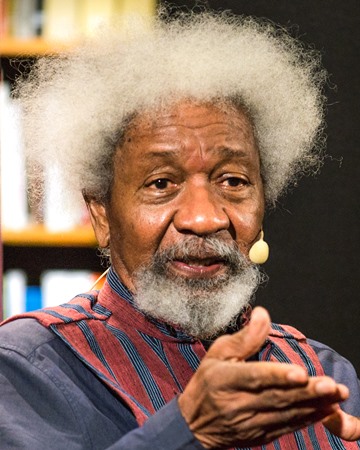


Professor Wole Soyinka says President Bola Tinubu must be cautious about his approach to regional security, domestic governance, and the use of state protection for privileged individuals.
The nobel laureate said this at the 20th Wole Soyinka Centre for Investigative Journalism Awards in Lagos on Tuesday.
All these were captured in a now viral four-minute, 25-second video shared on Tuesday night by #Nigeriastories on X.
Soyinka had recounted an encounter which he described as recent in his hotel room in Ikoyi, Lagos State, that left him shocked at what he considered an extravagant display of state security.
He described seeing “an excessively large security battalion assigned to a young individual close to the Presidency,” an entourage he said was “sufficient to take over a small country.”
Soyinka revealed that the young man turned out to be Seyi Tinubu, the President’s son.
READ ALSO:Wole Soyinka Slams NBC For Banning Eedris Abdulkareem’s Protest Song
Soyinka on Tinubu’s son
He said the discovery concerned him enough to contact National Security Adviser Nuhu Ribadu.
“I was so astonished that I started looking for the national security adviser. I said track him down for me. I think they got him somewhere in Paris. But he was with the president; he was in a meeting.
“Then, I said I’ve just seen something I can’t believe I don’t understand and I described the scene to him I said do you mean that a child of the head of state goes around with an army for his protection or whatever.
“I couldn’t believe it. Later on, I did some investigative journalism, and I found that apparently this is how this young man goes around with his battalion, his heavy armed soldiers,” he said.
“I was astonished,” Soyinka said, adding that “children must understand their place. They are not elected leaders, and they must not inherit the architecture of state power simply by proximity.”
In a separate remark captured at the same event in honour of veteran poet Odia Ofeimum and many others, Soyinka urged Tinubu to reconsider the scale of security personnel attached to Seyi, stressing that such resources are urgently needed elsewhere.
READ ALSO:FULL LIST: Tinubu Confers National Honours On Kudirat Abiola, Soyinka, Ken Saro-Wiwa, Others
He humorously observed that if a major insurgency were to break out, perhaps the President should ask Seyi to “go and handle it,” given the size of his escort — but added that “beyond the humour lies a serious matter of priority and fairness.”
He warned that concentrating a battalion of operatives around one individual is inconsistent with a nation battling kidnappings, rural attacks, insurgency and criminal violence, insisting that security deployments must reflect national realities, not privilege.
Turning to the media, Soyinka praised journalists for resilience but urged stronger editorial discipline in an era of escalating misinformation.
He cautioned that “the next great conflict may well be triggered by the misuse of social platforms,” calling for renewed commitment to truth and verification, and describing credible journalism as one of Nigeria’s strongest defences against chaos.
The video shared at about 22.18pm on Tuesday night had garnered over 27,000 views, 466 reposts and 81 quotes.
Benin coup, Lagos demolitions
Also in the viral footage, Soyinka warned that Nigeria’s involvement in the recently halted coup attempt in the Republic of Benin carries significant risks.
READ ALSO:Soyinka Criticizes Tinubu’s Emergency Rule In Rivers, Calls For Constitutional Reform
Soyinka described the intervention as “another unnecessary military entanglement next door,” arguing that Nigeria should focus on reinforcing democratic institutions rather than resorting to reflex military deployment.
He cautioned that instability in neighbouring countries inevitably spills into Nigeria.
He noted, “What happens in Benin inevitably affects us. Instability anywhere in the region echoes across our own sense of security.”
Beyond regional matters, Soyinka turned to domestic issues, criticising the ongoing wave of demolitions across Lagos.
He said he had personally received photos and testimonies of displaced families and stressed that even necessary urban reforms must prioritise dignity.
READ ALSO:Why I Considered Myself Failed Mechanic — Wole Soyinka
“Let us not strip away the humanity of the people affected,” he said, calling for evacuation procedures that protect the vulnerable.
The trending video continues to circulate widely on X, drawing public comment and discussion on governance, accountability in the country.
Late November, Tinubu ordered the withdrawal of police officers attached to Very Important Persons across the country, directing that they be redeployed to core policing duties.
While, there are no official communication or light response yet from the Presidency as of Tuesday night, The PUNCH reports that no video confirmation or acceptance that the individual Soyinka raised the alarm about is indeed Seyi Tinubu.




News
Migration Agency Warns Migrants Against Irregular Travel Routes


The International Organisation for Migration (IOM), in collaboration with Giving is Healing Foundation, has sensitised residents of Ayobo in Alimosho Local Government Area of Lagos State on the dangers of irregular migration and the need to embrace legal travel procedures.
Speaking during a sensitisation programme held at Megida Ifelodu Community Development Association in Ayobo, the founder of Giving is Healing Foundation, Mr. Gbolahan Ayediran, warned intending migrants against using illegal travel routes.
Ayediran said many Nigerians desire to migrate abroad in search of better opportunities but often ignore proper procedures, thereby exposing themselves to several dangers.
“Lots of people want to migrate and most of them do it in the wrong direction. The reason for the programme is for us to advise people on how they can migrate in the right way. As much as migration is their right, they should do it correctly,” he said.
READ ALSO:How Wike Rescued Me From Political Oblivion — Oshiomhole
He advised intending travellers to obtain the necessary travel documents before embarking on any journey, noting that such documents include international passports, visas, flight tickets and yellow cards, depending on the destination country.
According to him, migrants should also gather adequate information about their destination countries to enable them make informed decisions before travelling.
Ayediran further highlighted some of the dangers associated with irregular migration, including abuse, exploitation, discrimination and forced labour.
Also speaking, the Chairman of Megida Ifelodu Community Development Association, Elder Mathews Amusan, commended the organisers for enlightening members of the community on safe migration practices.
READ ALSO: He Can’t Fix His Party Let Alone Nigeria – Oshiomhole Blasts Atiku
He urged residents planning to travel abroad to always follow legal migration procedures to avoid falling victim to human trafficking and other migration-related challenges.
One of the participants, Mr. Kolawole Adenoko, said the programme enlightened him on the dangers of irregular migration and the importance of travelling through the proper channels.
He added that he would also educate his relatives and friends on the risks associated with illegal migration.
News
Shatta Wale Bailed Burna Boy From Ghana Prison After Arrest For Smoking Weed – Captan

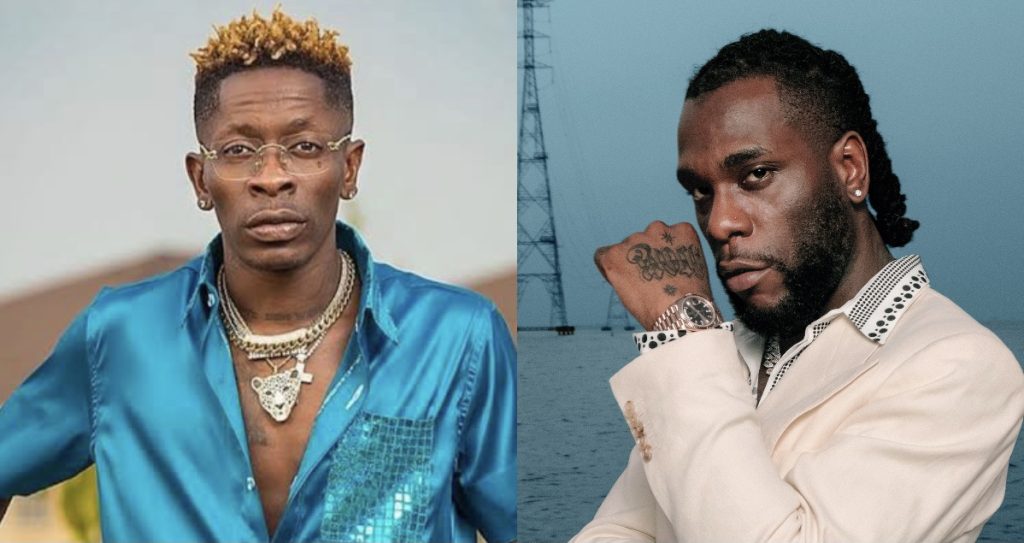
Ghanian singer, Captan, has claimed that his former record label boss, Shatta Wale, once bailed Nigerian singer Burna Boy out of prison in Ghana after he was allegedly arrested for smoking weed.
Speaking in a recent podcast interview, Captan claimed that Shatta Wale sent him and others to free Burna Boy from police custody.
He also claimed that Shatta Wale and his group once accommodated Burna Boy when he was being hunted by some dangerous men.
READ ALSO: Wale Edun Opens Up After Sack
Captan said, “I once bailed Burna Boy out of prison in Ghana when he was arrested for smoking weed. Shatta Wale sent me and some guys to go and free him from police custody.
“There was a time we also accommodated him when some people were after his life. We helped him settle the case.”
He added that he and Burna Boy are no longer in good terms after the Nigerian artist’s fallout with his mentor, Shatta Wale.
He, however, said he and Shatta Wale are open to reconciling with Burna Boy if he asks for it.
Watch the video here
News
Children’s Day: Chaos At Ogbe Stadium As Dozens Faint

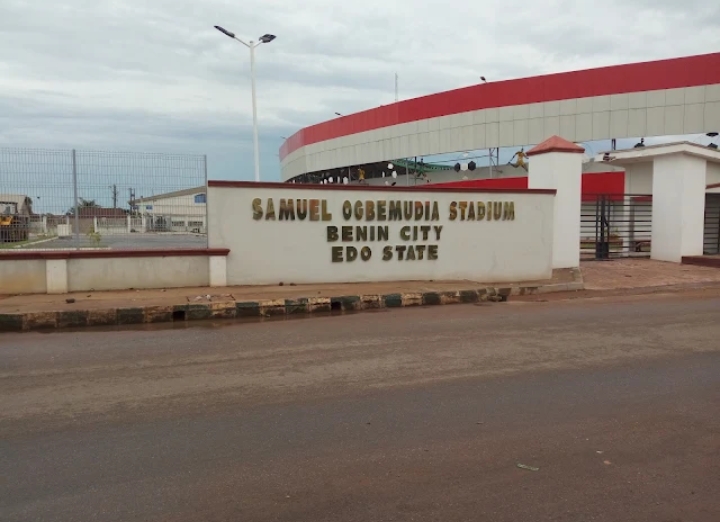
Chaos erupted on Wednesday during the Children’s Day celebration as dozens of students reportedly collapsed following a stampede triggered by the use of pepper spray.
The event,
organised by the Edo State Ministry of Education at the Samuel Ogbemudia Stadium was disrupted after some male students of Ihogbe College allegedly made uncompromising advances towards female students at the venue.
A parent who identified himself as Oboh Emmanuel said, “the behaviour of those uncultured students attracted the attention of bouncers stationed at the stadium as they rebuked the male students.”
Oboh said the affected students later regrouped and attacked the bouncers, leading to a confrontation within the crowded arena.
READ ALSO:Children’s Day: Edo Commits To Child Protection
It was gathered that in the ensuing confusion, the bouncers were reported to have deployed pepper spray in an area occupied by a large number of students.
Several students, particularly female students, reportedly fainted after inhaling the substance, while others sustained injuries after being stepped on during the ensuing melee.
The panic was said to have spread across the stadium as students, teachers and parents scampered for safety.
Many of the affected students were reportedly rushed to the Edo Specialist Hospital for medical attention.
READ ALSO: Egor LG Chair, Ogbemudia, Vice, Osawe Impeached
Reacting to the incident, Chief Press Secretary to Governor Monday Okpebholo, Dr Patrick Ebojele, said the security personnel that fired the tear gas had been detained.
He said all the students, except two, that were rushed to the hospital have been discharged.
Ebojele stated that doctors wanted to observe the students till tomorrow before allowing them to go home.
“The two students are not seriously injured. Doctors want to observe them overnight. Permanent Secretary, Ministry of Education is still at the hospital. The man who used pepper spray has been detained.
“The incident did not happen the way it is being exaggerated. All modalities were put in place to ensure the children enjoyed their day.”
-

 Headline4 days ago
Woman Passes Out After Receiving 100 Strokes Of Cane
-

 Headline4 days ago
JUST IN: White House Locked Down Briefly As Gunman Opens Fire At Security Checkpoint
-

 Politics3 days ago
Two Masked Men Gun Down Politician In His Rivers State Hotel
-

 News3 days ago
More Pain For Nigerians As Cooking Gas Price Increases Nationwide
-

 Metro4 days ago
Police Reject N500m Bribe, Recover N7.8bn Illicit Drugs In Lagos
-

 Politics5 days ago
What I’ll Do As President Of Nigeria — Amaechi
-

 News3 days ago
FG Declares Two Days Public Holiday For Eid-el Kabir Celebration
-

 Politics3 days ago
‘Tinubu’s Borrowing In 24 Months Surpasses 55 Years’ Debt Record’
-

 Politics2 days ago
Court Clears Goodluck Jonathan To Contest 2027 Presidential Election
-

 News5 days ago
TCN Seeks Edo Govt, Community Support Against Power Infrastructure Vandalism