
Business
Stakeholders Explain Why Nigerian Airlines May Not Cut Ticket Fares
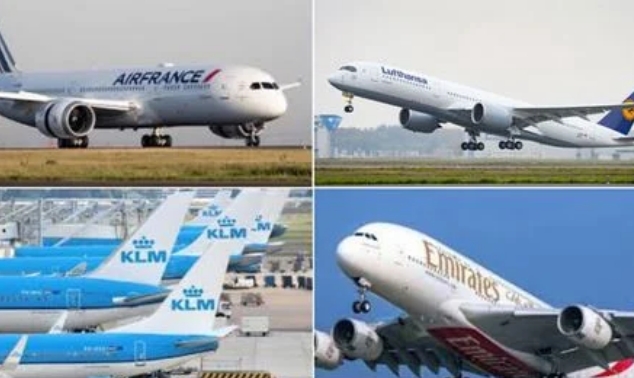
Stakeholders in the aviation industry have said the charges paid by airlines in Nigeria and the cost of operation make it difficult for them to reduce their ticket fares.
A member of Aviation Round Table, Olumide Ohunayo, in an interview with our correspondent, said the cost of tickets was still rising due to the naira-dollar exchange rate.
He said, “Most of the expenses of the airline are denominated in dollars; they have to buy spares, train their crew and spend money on certification. When you put all these together, it is a big cost to them.
“Also, the aviation fuel price keeps getting worse. We do not refine, we transport. As you leave Lagos, the cost of the aviation fuel keeps rising.”
READ ALSO: Naira Recovery Against Dollar To Begin February 2021 – CBN
He added that the insecurity in the country had prevented airlines from expanding, as they had to spend so much providing security for some of their personnel, including expatriates, and other important guests.
Ohunayo said, “Almost all charges and payments to agencies have increased by ratio. All of these would return to the passengers. The tax collected by the Federal Airports Authority of Nigeria has also doubled.”
The Managing Partner, Aglow Aviation Support Services Limited, Tayo Ojuri, said, “At the moment, we might not anticipate low ticket fare because airlines have to put some factors into consideration such as the crew, maintenance insurance, as well as the cost of operations, including the aviation fuel.
“Airlines put these into considerations before determining their ticket fare. The lease is major; your lease is dollarised. Whatever money you make on your lease, you have to convert it to dollars. However, dollar does not exist at a preferential rate at the moment.
“Also the crew, operational staff down to the pilot, inflight crew have to go for their training every six months which is also dollarised.
“We do not have simulators for ATRs yet in Nigeria; maintenance also has to be put into consideration, likewise the insurance cost.”
According to him, other charges include landing and parking charges.
An aviation security expert, Group Capt. John Ojikutu (retd.), said airlines must carefully examine the cost of operation, and set reasonable fares for their tickets in order to make profits.
“You cannot fly to Abuja now that you are importing fuel, buying aircraft from foreign countries, importing spare parts in dollars, yet sell tickets cheap and expect to make profit.”
READ ALSO: Naira Slumps Further, Exchanges For 504/$ At Parallel Market
The Chief Operating Officer, Ibom Airlines, George Uriesi, said the price of aviation fuel have a major impact on ticket fares.
He said, “We have to fly, so we have as much as possible tried to take as much fuel as we can out of Lagos which is the cheapest fuel. But you still have to refuel everywhere you go. Every two or three days, they announce a new price to us and on the average, we are paying double.
“When you are paying twice the amount of what you were paying before for fuel, then you have to try to be efficient in all your other expenses. You have to look for a way to add a little to the ticket price.”
(PUNCH)

Business
Again, Dangote Refinery Hikes Fuel Price

Dangote Refinery has increased the ex-depot price of petrol by N75, bringing the price up to N1,350 per litre from the previous price of N1,275.
This is the first fuel increase by the Refinery in the month of May.
READ ALSO:JUST IN: Dangote Refinery Reduces Petrol Price
This latest development is coming seven days after the refinery raised its ex-depot price from N1,200 to N1,275 per litre.
Recall that the refinery on April 29 increased the ex-depot price of petrol by N75.
Business
Why We Sited Our Multi-Billion Naira Automobile Firm Branch in Benin – Skyewise Group CEO

Dr. Elvis Abuyere, Chief Executive Officer and Managing Director of Skyewise Group, an automobile firm, has explained the reason for establishing a branch of the company in Benin City, the Edo State capital, describing the ancient city as “a growing economy full of enormous potential for vibrant youth.”
He added that the company considers Edo State one of the most interesting states, noting that the decision aligns with its long-term vision.
Abuyere, who spoke in Benin on Monday while taking journalists on a tour of the new automobile facility, said:
“We started very small — from Abuja to Lagos and now Benin. It is a joy and privilege for us to have completed this amazing regional office with Skyewise Group.”
READ ALSO:BREAKING: Wike Picks Alabo George For Rivers Governorship
According to him, beyond the automobile business, Skyewise Group is in Benin to invest in real estate, logistics, youth empowerment, and credit management. “Aand also to lend our support to what the Edo State Government is doing, knowing the fact that there is an agenda,” he added.
The young CEO urged youths in Nigeria, particularly those in Edo State, to embrace entrepreneurship, stressing that “we believe it is the future of Africa,” especially Nigeria.
He said Nigeria stands as the giant of Africa and that its youth must take bold steps in the entrepreneurship landscape.
According to Abuyere, to ensure Edo youths actualise their entrepreneurial potential, the company has prepared soft loans to help them start businesses, adding that Skyewise Group is not limited to automobile operations.
READ ALSO:Senatorial Seat: Ogbakha-Edo Warns Against Imposition Of Candidates In Edo South
He said: “More importantly to us is youth empowerment. We want our youth to be empowered, and this is where the Skyewise Foundation comes in.
“We believe the future of Africa is entrepreneurship, and that future lies in the hands of the young people of Nigeria. We want to empower them to stand the test of time, build something meaningful, and reduce unemployment and insecurity in our land.
“I believe we need to begin taking bold steps by refining the mindset of our young people. We need to give them a sense of belonging and direction.
“We have been addressing the liquidity gap in society by providing microloans to support businesses in our environment and in Benin City.”
When asked why he chose Benin City for the multi-billion naira automobile firm, Abuyere noted: “I think this is the first automobile showroom in Edo State where you can see a car lifted from the ground floor to the first floor and beyond.”
Business
JUST IN: Nigerian Filling Stations Reduce Fuel Price After Hike
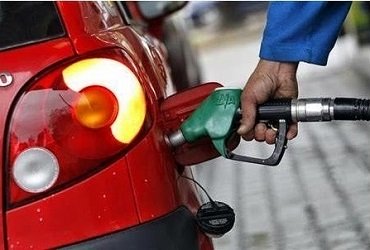
Nigerian filling stations reduced their Premium Motor Spirit price on Saturday, barely 24 hours after the hike.
Checks by DAILY POST showed that Ranoil, Empire Energy, and other filling stations in Abuja adjusted their petrol pumps to N1,365 and N1,375 per litre respectively, down from N1,440 per litre on Friday.
This means that petroleum marketers dropped their fuel price by N65 and N75 per litre. DAILY POST reports that the move was to attract patronage from customers.
Recall that three days ago, Nigerian filling stations had raised their petrol pump price to between N1,365 and N1,440 nationwide after Dangote Refinery and depot owners increased ex-depot prices to around N1,275 and N1,290 per litre.
According to DAILY POST, while the Nigerian National Petroleum Company Limited and MRS Bovas filling stations raised their petrol price to around N1,365 per litre, others adjusted theirs above N1,440 per litre.
READ ALSO:Drivers Protest Fuel Increase, Raise Fares in Benin
However, with the latest fuel price reduction by Ranoil and Empire Energy, the majority of filling station outlets now dispense petrol between N1,365 and N1,375 per litre.
This development comes as the ripple effect of crude oil prices continues to impact Nigeria’s domestic fuel price.
Brent and West Texas Intermediate crude rose to $114 and $105 per barrel before dropping to $108 and $101 after the filing of this report.

 Headline4 days ago
Woman Passes Out After Receiving 100 Strokes Of Cane
- Headline4 days ago
JUST IN: White House Locked Down Briefly As Gunman Opens Fire At Security Checkpoint
- News3 days ago
More Pain For Nigerians As Cooking Gas Price Increases Nationwide
- Politics3 days ago
Two Masked Men Gun Down Politician In His Rivers State Hotel
- Metro4 days ago
Police Reject N500m Bribe, Recover N7.8bn Illicit Drugs In Lagos
- News3 days ago
FG Declares Two Days Public Holiday For Eid-el Kabir Celebration
- Politics3 days ago
‘Tinubu’s Borrowing In 24 Months Surpasses 55 Years’ Debt Record’
- Politics2 days ago
Court Clears Goodluck Jonathan To Contest 2027 Presidential Election
- News3 days ago
OPINION: Boko Haram Comes South
- News4 days ago
OPINION: Boko Haram’s Slaughter Of Mathematics In Oyo


