
Business
Subsidy: Oil Marketers Plan Petrol Import As CBN Floats Forex
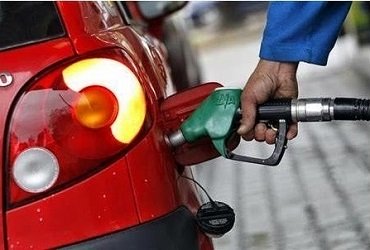
Oil marketers have intensified efforts to import petrol into the country, following the liberalisation of foreign exchange rates by the Central Bank of Nigeria, CBN.
The prevalence of multiple foreign exchange rates and other problems had prevented the marketers from importing the product, forcing them to depend on NNPC Limited for domestic supplies.
But with the CBN’s action, the oil marketers, who spoke with Vanguard, yesterday, expressed optimism that their first shipment would arrive the country in the next few weeks.
Chief Executive Officer/Executive Secretary, Major Oil Marketers Association of Nigeria, MOMAN, Clement Isong, said: “We intend to import in the next few weeks.”
READ ALSO: Banks Total Assets Rise 17.8% To N87.35trn In Q1’23
Similarly, Managing Director/CEO of 11 Plc, Adetunji Oyebanji, said: “We will take a look. I think we are getting closer than ever.”
On his part, National President of Independent Petroleum Marketers Association of Nigeria, IPMAN, Chinedu Okoronkwo, said the association was currently considering importation.
Chairman of Depots and Petroleum Products Marketers Association of Nigeria, DAPPMAN, Dame Winifred Akpani, who led stakeholders to visit President Bola Tinubu, had tasked him to adopt measures capable of ending fuel crises in the country, while achieving stability in Nigeria’s downstream sector.
She had said: “Our further humble request to the president is that all dues and levies to government agencies, particularly NPA Plc and NIMASA, be reduced to the barest minimum and payable in naira. This will drastically reduce the pressure on our foreign exchange rate reserve and keep in check the pump price of petrol.
“All charges and taxes imposed by the regulator, NMDPRA, as stipulated in the Petroleum Industry Act, PIA 2021 be suspended until we achieve market stability.
READ ALSO: Inflation Hits 18yr High at 22.4%, To Surpass 23% This Month
“The 2.5 per cent security deposit requested by NNPC Limited for all purchases be scrapped as they overload marketers. The government should revise the clause in the PIA 2021, which restricts importation to only companies with active local refining licenses and/or proven track records of international crude oil and petroleum products trading.
“In conclusion, we would add that stability in the petroleum industry will ultimately lead to the much-needed energy transition.
“We anticipate less dependence on fossil fuels which will result in more investment and faster development of gas and electricity as alternative sources of energy.
“We thank you once again for this opportunity and pray that our beloved nation will experience sustainable growth and economic prosperity under your astute leadership.”



Business
Report Any MRS Filling Stations Selling Fuel Above N739 Per Liter — Dangote Refinery To Nigerians

Dangote Refinery has urged Nigerians to report any MRS filling station outlets nationwide selling fuel above the N739 per liter announced price.
The company disclosed this in a statement on Sunday.
The refinery insisted that its petrol being at retail outlets remain N739 per liter while the gantry price is N699.
It further called on other filling station owners to patronize its refined petroleum products at the N699 rate.
“We also call on other petrol station operators to patronize our products so that the benefits of this price reduction can be passed on to Nigerians across all outlets, ensuring broad-based relief and a more stable downstream market.”
READ ALSO:Dangote Sugar Announces South New CEO
Recall that Aliko Dangote, the president of Dangote Refinery, had pegged the retail price of his petrol at a maximum of N740.
DAILY POST reports that MRS filling and other filling stations had reduced fuel prices to between N739 and N912 per liter in Abuja.
However, reports emerged that some MRS filling stations were selling above the N739 per liter announced price benchmark.
Business
Naira Records Significant Appreciation Against US Dollar
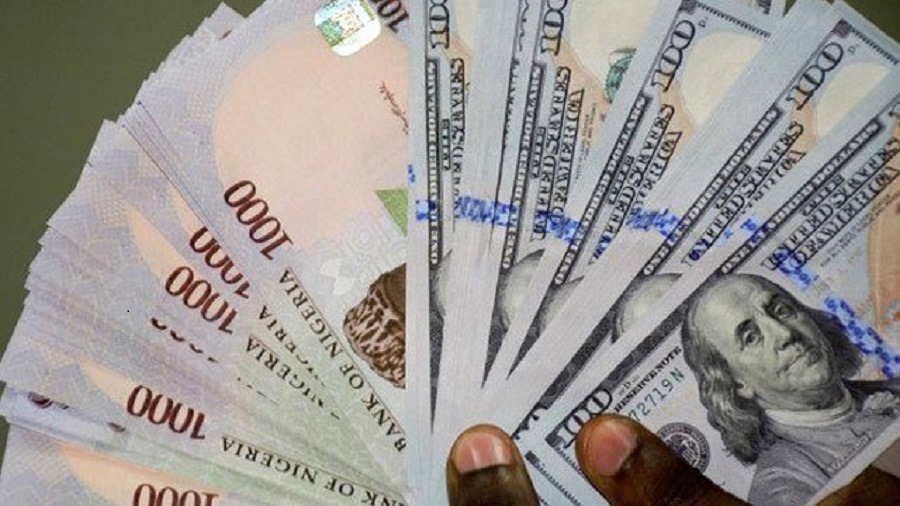
The Naira recorded significant appreciation against the United States dollar on Monday at the official foreign exchange market to begin the week ahead of Yuletide on a good note.
The Central Bank of Nigeria’s data showed that the Naira strengthened to N1,456.56 per dollar on Monday, up from N1,464.49 traded on Friday last week, 19th December 2025.
This means that the Naira gained N7.93 against the dollar when compared with the N1,464.49 was exchanged as of Friday, December 19, 2025. DAILY POST reports that Monday’s gain at the official FX market is the first since December 15th.
READ ALSO:
Meanwhile, at the black market, the Naira remained stable at N1500 per dollar on Monday, according to multiple Bureau De Change operators in Wuse Zone 4, Abuja.
The development comes as the country’s external reserves stood at $44.66 billion as of last week Friday.
Business
CBN Revokes Licences Of Aso Savings, Union Homes As NDIC Begins Deposit Payments
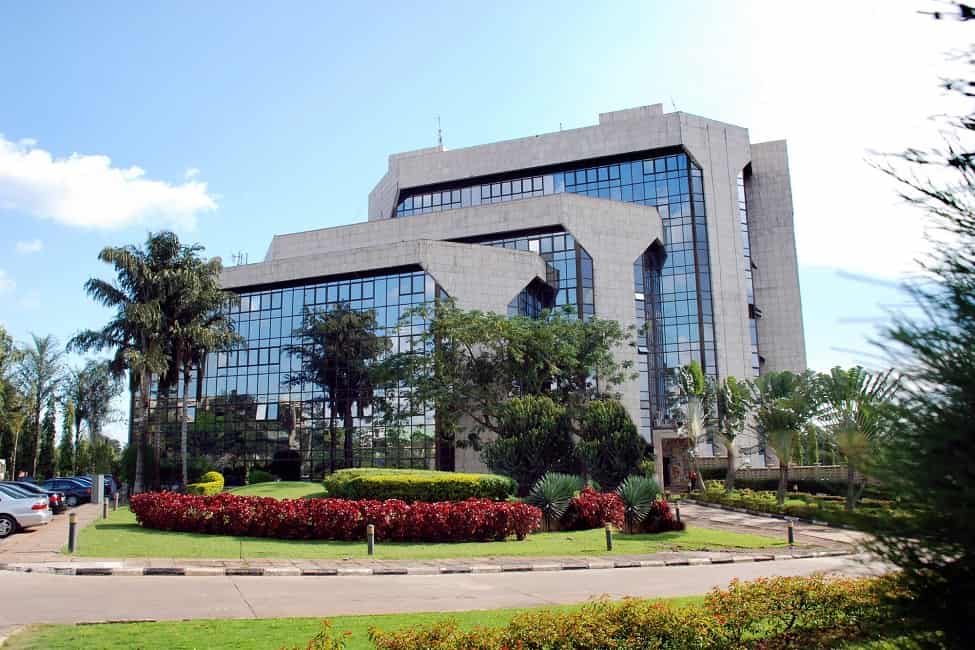
The Central Bank of Nigeria (CBN) has revoked the operating licences of Aso Savings and Loans Plc and Union Homes Savings and Loans Plc, citing persistent regulatory infractions and deepening financial distress in the two primary mortgage banks.
The revocation, which took effect on December 15, 2025, was carried out under Section 12 of the Banks and Other Financial Institutions Act (BOFIA) 2020 and Section 7.3 of the Revised Guidelines for Mortgage Banks in Nigeria, the CBN said in a statement issued on Tuesday.
According to the apex bank, the affected institutions failed to meet minimum paid-up share capital requirements, had insufficient assets to cover their liabilities, recorded capital adequacy ratios below prudential thresholds, and consistently breached regulatory directives.
“The CBN remains committed to its core mandate of ensuring financial system stability,” a statement, signed by the apex bank’s Acting Director, Corporate Communications, Mrs Hakama Sidi Ali said.
READ ALSO:CBN Directs Nigerian Banks To Withdraw Misleading Advertisement
Following the licence revocation, the Nigeria Deposit Insurance Corporation (NDIC) was appointed liquidator of the defunct banks in line with the law.
The Corporation said it has commenced the liquidation process and begun verification and payment of insured deposits to customers.
Under the deposit insurance framework, depositors are entitled to receive up to two million naira per depositor, with payments made through BVN-linked alternate bank accounts.
Depositors with balances above the insured limit will receive the initial two million naira while the remaining sums will be paid as liquidation dividends after the realisation of the banks’ assets and recovery of outstanding loans.
READ ALSO:CBN Issues Directive Clarifying Holding Companies’ Minimum Capital
The NDIC said depositors may submit claims either online or physically at designated branches of the closed banks, while creditors will be paid after all depositors have been fully settled, in accordance with statutory provisions.
The two mortgage banks have faced prolonged operational challenges, including depositor complaints, governance concerns, and delisting from the Nigerian Exchange (NGX) in 2024 for failure to submit audited financial statements for more than six years.
The CBN assured the public that the action was taken to strengthen the mortgage banking sub-sector and protect depositors, adding that banks whose licences have not been revoked remain safe and sound.
This means the two financial institutions can no longer operate as licensed financial institutions.

 News3 days ago
PHOTOS: New Era In Furupagha-Ebijaw As Okpururu 1 Receives Staff Of Office
- News2 days ago
UBTH CMD Marks 120 Days In Office, Expresses Commitment To Providing Conducive Working Environment
- News3 days ago
FG Declares Public Holidays For Christmas, New Year Celebrations
- News3 days ago
OPINION: Gumi And His Terrorists
- News2 days ago
FIRS Confirms NIN As Tax ID
 News3 days ago
OPINION: My Man Of The Season
- Metro2 days ago
Fintiri Pardons Man Sentenced To Death For ‘Killing Herdsman In Self-defence’, Others
- News3 days ago
OPINION: Christmas And A Motherless Child
- News2 days ago
KWAM 1 Withdraws From Awujale Race, Ends Court Challenge
- Metro2 days ago
Petrol Tanker Crashes Into Akpabio’s Convoy, Kills Police Dispatch Rider


