

Business
Subsidy Removal: Marketers Galvanise For CNG Rollout At N100/litre



Nigeria’s transportation industry will soon begin to see relief after the federal government’s petrol subsidy removal spiked exponential rise in the price of the product across the country.
The national president of the Independent Petroleum Marketers Association of Nigeria (IPMAN), Elder Chinedu Okoronkwo, said the Association is 90 per cent ready to roll out Compressed Natural Gas (CNG) as alternative automotive fuel, which it is going to sell between N100 to N110 per litre before the end of June.
Okoronkwo, who confirmed said this on Channels Television’s Business Morning programme on Monday, stressed that CNG has come to serve as an alternative to petrol.
Okoronkwo, explained that CNG would help bring down the cost of energy in the country, adding, “Very soon, we will roll out. We are 90 per cent close to that, and that will also unveil many possibilities.”
He noted that fuel subsidy removal had reduced the speed with which Nigeria could have gotten another energy mix.
READ ALSO: BREAKING: CBN Directs Banks To Trade Forex At Any Rate
“IPMAN has brought relief to a lot of families. We have got the usage of our natural energy, CNG, to power vehicles, generators, and even cooking,” the IPMAN president said.
The CNG is expected to reduce, to a large extent, the country’s exposure to fuel importation as natural gas would not be imported.
Okoronkwo noted that CNG-powered cars had started gaining momentum in the country because of increased awareness about its efficiency and affordability, compared to traditional fuels like diesel and petrol.
“If the government buys into what we are saying, it will act as an assistance, bring relief, and create job opportunities.
READ ALSO: 10th House: How Abbas, Kalu Emerged As Reps’ Speaker, Deputy
“What we need the government to do is create the market. The demand is there,” the IPMAN president said.
He added that IPMAN had gotten a lot of buy-in from companies overseas.
On what the CNG brings to the value-chain, he said, “I don’t know if you have seen what is trending this week where people with their I-pass-my- neighbour generators are beginning to use liquified petroleum gas. LPG is close to N700 per kilogramme, but this natural gas we are talking about is under N100 to N110.
“When you check what the impact will be, it will reduce the cost of food because people coming from the hinterlands bring food to the cities. From Kano, it takes them about N1.2 million to fuel trucks with diesel, but with this CNG, it will cost them about N150,000 to N200,000. About a million naira is saved that will translate to cheaper food and open up a lot of other businesses.
“It will provide cheaper energy to drive the processing zones like the agro-based industries, where the gas will also create a lot of impact.
“CNG does not replace PMS, but it is a choice. We are talking of something that will help your purse and not deepen it.”
READ ALSO: Emefiele Ran CBN Like Cabal’s ATM, Canteen — Shehu Sani
The director of Gas Analytics and Solutions Limited, Shuaibu Bello, who also spoke at the Channels Television programme, said the CNG would be a game-changer for Nigerians.
“This is the best palliative you can give the nation. If you talk of palliative, it is not just sharing money with people, it is creating a system that will reach the rich and the poor.
“If you compare CNG price at N110 per litre with petrol now at N540 or its former price of N185, still you will have a reduction,” he said.
IPMAN had in April 2023 wrote to the Finance ministry to request that the Central Bank of Nigeria (CBN) be mandated to release N250 billion intervention fund for the implementation of the National Gas Expansion Programme (NGEP).
IPMAN explained it asked for the fund to provide access to the Gas Expansion Fund for vehicle, commercial tricycle and truck owners to access loans to finance the acquisition of natural gas conversion kits.
READ ALSO: JUST IN: Tinubu Signs Data Protection Bill Into Law
At the time, IPMAN said that it had partnered with Gas Analytics & Solutions Limited to co-locate natural gas dispensers on their network of over 30,000 filling stations in Nigeria.
According to IPMAN, it controls over 80 per cent of the downstream oil sector, and as such, the collocation model would help to reduce the exposure in building new filling stations.
Similarly, the manager corporate Communications of NipCo, Biodun Lawal, speaking on the company’s desire to depeen investment in the gas sector, said the savings that will accrue from subsidy removal offers more vista of opportunities to fund the enormous gas infrastructure deficit in the nation .
“We are still investing more infrastructure with a proviso that clientele will improve sporadically
“Some of the challenges in harnessing the abundant gas resources in the country includes – paucity of pipelines to transport gas across the country ,cost of conversion to use gas as auto fuel , access to gas through stations.”
“With all modesty NIPCO gas Limited is the only company with over 12 CNG get to get gas for motorist” he said.
Continuing, Lawal, said motorist can now see the innate benefits in running their vehicles on gas rather than fossil fuels which government has in the past graciously subsidised even at the expense of the overall economic growth and other socio -economic development of the nation.
READ ALSO: Naira Depreciates By 0.64% Amid CBN Gov’s Suspension
According to him, CNG as a preferred alternative to petrol is good for gas companies as the nation at large as or offered veritable opportunity of creating more employment opportunities ,better value creation in the Industry ,better utilisation of the endowed gas resources of the country .
He said, “the benefits are enormous for motorist in terms of savings and life span of such automobiles and that the conversion cost should not be a drawback with support from government especially with fiscal policies to encourage investors to go into kits manufacturing and ancillary items like cylinders etc .
“In the interim policies can be put in place for exemption from levies of imported accessories pending when the environment will be made more conducive for it’s manufacturing in Nigeria CNG business has a good horizon in the country with the challenges tacked headlong.”
Lawal, said as pioneers NipCo gas, is looking forward to more inroads in the sector.
SOURCE: LEADERSHIP




Business
Why We Sited Our Multi-Billion Naira Automobile Firm Branch in Benin – Skyewise Group CEO


Dr. Elvis Abuyere, Chief Executive Officer and Managing Director of Skyewise Group, an automobile firm, has explained the reason for establishing a branch of the company in Benin City, the Edo State capital, describing the ancient city as “a growing economy full of enormous potential for vibrant youth.”
He added that the company considers Edo State one of the most interesting states, noting that the decision aligns with its long-term vision.
Abuyere, who spoke in Benin on Monday while taking journalists on a tour of the new automobile facility, said:
“We started very small — from Abuja to Lagos and now Benin. It is a joy and privilege for us to have completed this amazing regional office with Skyewise Group.”
READ ALSO:BREAKING: Wike Picks Alabo George For Rivers Governorship
According to him, beyond the automobile business, Skyewise Group is in Benin to invest in real estate, logistics, youth empowerment, and credit management. “Aand also to lend our support to what the Edo State Government is doing, knowing the fact that there is an agenda,” he added.
The young CEO urged youths in Nigeria, particularly those in Edo State, to embrace entrepreneurship, stressing that “we believe it is the future of Africa,” especially Nigeria.
He said Nigeria stands as the giant of Africa and that its youth must take bold steps in the entrepreneurship landscape.
According to Abuyere, to ensure Edo youths actualise their entrepreneurial potential, the company has prepared soft loans to help them start businesses, adding that Skyewise Group is not limited to automobile operations.
READ ALSO:Senatorial Seat: Ogbakha-Edo Warns Against Imposition Of Candidates In Edo South
He said: “More importantly to us is youth empowerment. We want our youth to be empowered, and this is where the Skyewise Foundation comes in.
“We believe the future of Africa is entrepreneurship, and that future lies in the hands of the young people of Nigeria. We want to empower them to stand the test of time, build something meaningful, and reduce unemployment and insecurity in our land.
“I believe we need to begin taking bold steps by refining the mindset of our young people. We need to give them a sense of belonging and direction.
“We have been addressing the liquidity gap in society by providing microloans to support businesses in our environment and in Benin City.”
When asked why he chose Benin City for the multi-billion naira automobile firm, Abuyere noted: “I think this is the first automobile showroom in Edo State where you can see a car lifted from the ground floor to the first floor and beyond.”
Business
JUST IN: Nigerian Filling Stations Reduce Fuel Price After Hike

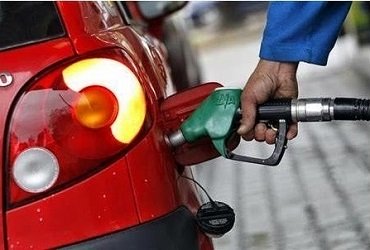
Nigerian filling stations reduced their Premium Motor Spirit price on Saturday, barely 24 hours after the hike.
Checks by DAILY POST showed that Ranoil, Empire Energy, and other filling stations in Abuja adjusted their petrol pumps to N1,365 and N1,375 per litre respectively, down from N1,440 per litre on Friday.
This means that petroleum marketers dropped their fuel price by N65 and N75 per litre. DAILY POST reports that the move was to attract patronage from customers.
Recall that three days ago, Nigerian filling stations had raised their petrol pump price to between N1,365 and N1,440 nationwide after Dangote Refinery and depot owners increased ex-depot prices to around N1,275 and N1,290 per litre.
According to DAILY POST, while the Nigerian National Petroleum Company Limited and MRS Bovas filling stations raised their petrol price to around N1,365 per litre, others adjusted theirs above N1,440 per litre.
READ ALSO:Drivers Protest Fuel Increase, Raise Fares in Benin
However, with the latest fuel price reduction by Ranoil and Empire Energy, the majority of filling station outlets now dispense petrol between N1,365 and N1,375 per litre.
This development comes as the ripple effect of crude oil prices continues to impact Nigeria’s domestic fuel price.
Brent and West Texas Intermediate crude rose to $114 and $105 per barrel before dropping to $108 and $101 after the filing of this report.
Business
Dangote Refinery Hikes Petrol Price


Dangote Refinery has increased the ex-depot price of petrol by N75.
The refinery announced the increase on Wednesday, hiking the the price from N1,200 to N1,275 per litre.
In the same way, coastal prices have gone up to N1,215 per litre.
READ ALSO:Dangote Sugar Announces South New CEO
This adjustment amid Brent crude trading at $114.80 per barrel marks a 3.15% increase.
DAILY POST reports that Brent crude has increased to $115 per barrel, while West Texas Intermediate rose to $103 per barrel on Wednesday.
-

 Politics3 days ago
2027: Tinubu’s Re-election May Put An End To Nigeria — Baba Ahmed Warns
-

 Metro4 days ago
I’m A Street Girl’ – Bimbo Ademoye Clashes With Area Boys [VIDEO]
-

 News5 days ago
VIDEO: Moment S’Court Recognises David Mark-led ADC Leadership
-

 Politics4 days ago
BREAKING: 2027: Former Adamawa APC Guber Candidate, Aishatu Binani Defects To NDC
-

 Politics4 days ago
Senatorial Seat: Ogbakha-Edo Warns Against Imposition Of Candidates In Edo South
-

 Business3 days ago
JUST IN: Nigerian Filling Stations Reduce Fuel Price After Hike
-

 Entertainment4 days ago
Actress Eniola Badmus Gets New Federal Appointment
-

 Metro5 days ago
Robbers Raid Imo Catholic Church, Steal Holy Communion Materials
-

 News4 days ago
10 African Countries With Highest Petrol Prices In Prices In April 2026
-

 Metro5 days ago
VIDEO: Policemen Filmed Assaulting Individual In Viral Clip
