
Headline
Sudan: Death Toll Passes 100, Aid Suspended
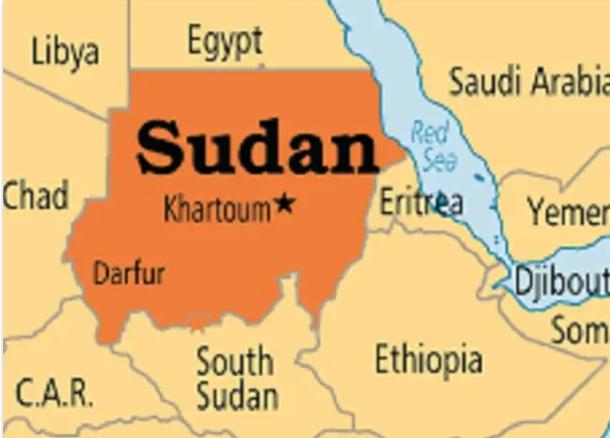
Explosions rocked the Sudanese capital Khartoum Monday as fighting between the army and paramilitary forces led by rival generals raged for a third day with the death toll surpassing 100.
The violence erupted Saturday after weeks of power struggles between the two generals who seized power in a 2021 coup, Sudan’s army chief Abdel Fattah al-Burhan and his deputy, Mohamed Hamdan Daglo, who commands the powerful paramilitary Rapid Support Forces (RSF).
The conflict has seen air strikes, tanks on the streets, artillery fire and heavy gunfire in crowded neighbourhoods both in Khartoum and other cities across Sudan.
It has triggered international demands for an immediate ceasefire.
On Monday, UN Secretary-General Antonio Guterres again called on Sudan’s warring parties to “immediately cease hostilities”. He warned that further escalation “could be devastating for the country and the region.”
READ ALSO: Sudanese Power Struggle Erupts Into Violence
As the fighting showed no sign of abating, Daglo took to Twitter to call for the international community to intervene against Burhan, branding him a “radical Islamist who is bombing civilians from the air”.
“We will continue to pursue Al-Burhan and bring him to justice,” said Daglo, whose RSF and its predecessor the Janjaweed in Darfur have previously been accused of atrocities.
“The fight that we are waging now is the price of democracy,” he said.
In his only statement since the fighting flared, Burhan told Al Jazeera on Saturday that he was “surprised by Rapid Support Forces attacking his home” and that what was happening “should prevent the formation of forces outside the army”.
READ ALSO: US, UK Seek End To Violence In Sudan
The conflict has claimed the lives of at least 97 civilians and “dozens” of fighters from both sides, medics said, adding about 942 people have been injured.
But the number of casualties is thought to be far higher, with many wounded unable to reach hospitals due to the danger of movement during fighting.
The doctors’ union warned the fighting had “heavily damaged” multiple hospitals in Khartoum and other cities, with some rendered completely “out of service”.
The World Health Organization had already warned that several of Khartoum’s nine hospitals receiving injured civilians “have run out of blood, transfusion equipment, intravenous fluids and other vital supplies”.
READ ALSO: Deadly Fighting Between Army, Paramilitaries In Sudan Capital
UN Special Representative Volker Perthes, who is in Khartoum, said he was “extremely disappointed” by the failure of both sides to abide by an agreed humanitarian pause on Sunday to evacuate the wounded.
The violence has forced terrified people to shelter in their homes with fears of a prolonged conflict that could plunge Sudan into deeper chaos, dashing hopes for return to civilian rule disrupted by the 2021 coup which Burhan and Daglo orchestrated.
Vital aid suspended
The RSF was created under former autocrat Omar al-Bashir in 2013. It emerged from the Janjaweed militia that his government unleashed against non-Arab ethnic minorities in Darfur a decade earlier, drawing accusations of war crimes.
The fighting broke out after bitter disagreements between Burhan and Daglo over the planned integration of the RSF into the regular army — a key condition for a final deal aimed at ending a crisis since the 2021 coup.
READ ALSO: Sudan’s Prime Minister, Detained After Coup, Returns Home
The two sides accuse each other of starting the fighting, and both claim to be in control of key sites, including the airport and the presidential palace — none of which could be independently verified.
On Monday, the army said it was in control of the state broadcaster in the capital’s twin city of Omdurman.
After being cut for hours, state television went on the air again, showing footage of soldiers filming themselves on military bases claiming they control them.
Three UN staff from the World Food Programme were among those killed in the western region of Darfur, which WFP said forced a “temporary halt” to all its operations in a country where one-third of the population needs aid.
READ ALSO: Six Journalists Detained Over Viral Video Of South Sudan President Peeing On Camera
On Monday morning, loud gunfire and deafening explosions again shook buildings and echoed across the streets of Khartoum as street fighting continued, AFP journalists said.
Power has been off across swathes of the city, and the few grocery stores remaining open warn they will only last a few days if no supplies can enter the city.
Appeals to end the fighting have come from across the region and the globe, including the African Union, Arab League and East African bloc IGAD.
‘Unprecedented’ violence
Despite the wide calls for a ceasefire, the two generals have appeared in no mood for talks with each one calling the other “criminal”.
While Sudan has endured decades of multiple bitter civil wars, coups and rebellions since independence, Sudanese analyst Kholood Khair said the level of fighting inside the capital was “unprecedented”.
READ ALSO: Sudanese Migrants In Israel Fear Deportation After Coup
“This is the first time in Sudan’s history — certainly in its independence history — that there has been this level of violence in the centre, in Khartoum,” she said.
Fighting also raged in other parts of Sudan including Darfur and in the eastern border state of Kassala.
The generals’ coup derailed a transition to civilian rule following the 2019 ouster of Bashir, triggering international aid cuts and sparked near-weekly protests met by a deadly crackdown.
Burhan, who rose through the ranks under the three-decade rule of now-jailed Bashir, has said the coup “necessary” to include more factions in politics.
Daglo, a former Darfur militia chief, later called the coup a “mistake” that failed to bring about change and reinvigorated remnants of Bashir’s regime ousted by the army in 2019 following mass protests.
AFP



Headline
Indian Court Denies Bail To Nigerian Man Over Drug Charges
A court in India has denied bail to a 44-year-old Nigerian national, Cristian Soporuchukwu, who is currently facing drug trafficking charges in the country.
Cristian Soporuchukwu initially entered India on a business visa but was later arrested over allegations of involvement in the sale of hard drugs.
Reports indicated that after arriving in India, Soporuchukwu travelled through Goa, Delhi, and Mumbai, where he allegedly established links with suspected drug traffickers.
READ ALSO:Indian National Arraigned In Lagos Over Alleged N22m Supermarket Fraud
He was accused of purchasing MDMA crystals and distributing them to college students and information technology workers.
According to reports, operatives of the Beguru Police arrested Cristian Soporuchukwu in April 2025 for allegedly selling MDMA crystals around Begur Lake and the AECS Layout Road area.
The New Indian Express reported that the High Court of Karnataka subsequently dismissed the Nigerian’s bail application.
READ ALSO:NDLEA Intercepts Indian Lady With 72 Parcels Of Heroin ON n Chocolate Wraps
“The anti-narcotics wing seized about 1 kg of MDMA crystals, a pocket weighing machine, 10 zip-lock covers, a mobile phone and a scooter from him,” the report stated.
Justice V. Srishananda, while ruling on the bail application, reportedly held that errors relating to the grounds of arrest could not automatically justify bail in serious narcotics-related offences under the Narcotic Drugs and Psychotropic Substances, NDPS, Act.
The court further noted that Cristian Soporuchukwu had allegedly overstayed his visa in India, according to the report.
Headline
Strait Of Hormuz: US Announces Sanctions Against Iran

The United States Treasury has announced sanctions against Iran’s Persian Gulf Strait Authority.
Treasury Secretary, Scott Bessent, said this in a statement on Wednesday.
The statement extended the threat of sanctions to anyone paying the fees, saying they may be providing support to and receiving services from Iran’s Revolutionary Guards, and therefore may be exposed to sanctions risk.
READ ALSO:Strait Of Hormuz: Pakistan Thanks Trump For Pausing ‘Project Freedom’
“The Iranian military’s latest attempt to extort global maritime trade is proof that Economic Fury has left the regime desperate for cash.
“Treasury has deprived the Iranian regime of revenue for their weapons programs, terrorist proxies, and nuclear ambitions,” Bessent said.
Bessent added that the US has succeeded in disrupting tens of billions of dollars’ worth of revenue from being accessible to Tehran.
Headline
US Launches New Airstrikes On Iran
The United States has launched new airstrikes in southern Iran.
The strike shot down four one-way attack drones that posed a threat around the Strait of Hormuz and then a ground control site.
A US official revealed that American forces struck an Iranian ground control station in Bandar Abbas that was about to launch a fifth drone.
READ ALSO:US Restricts Entry Routes For Travellers From DRC, Uganda, South Sudan Over Ebola Outbreak
The official described the strikes as purely defensive, saying the US intended to maintain the ceasefire.
Report says this is the second time in three days that the US has carried out self-defense strikes against Iranian military targets in southern Iran.
Recall that on Monday the US carried out airstrikes against Iranian missile locations and boats that US Central Command said were preparing to launch mines in the Strait of Hormuz.

 Headline4 days ago
Woman Passes Out After Receiving 100 Strokes Of Cane
- Politics5 days ago
Warri Ijaw Hail INEC Delineation Report, Call For Additional Electoral Wards, Others
- Headline4 days ago
JUST IN: White House Locked Down Briefly As Gunman Opens Fire At Security Checkpoint
- Politics3 days ago
Two Masked Men Gun Down Politician In His Rivers State Hotel
- Metro4 days ago
Police Reject N500m Bribe, Recover N7.8bn Illicit Drugs In Lagos
- News3 days ago
More Pain For Nigerians As Cooking Gas Price Increases Nationwide
- Politics5 days ago
What I’ll Do As President Of Nigeria — Amaechi
- News3 days ago
FG Declares Two Days Public Holiday For Eid-el Kabir Celebration
- Politics3 days ago
‘Tinubu’s Borrowing In 24 Months Surpasses 55 Years’ Debt Record’
- Politics2 days ago
Court Clears Goodluck Jonathan To Contest 2027 Presidential Election


