
News
T. B. Joshua: Let The Dead Rest [OPINION]
By Suyi Ayodele
A few years ago, the self-acclaimed ‘Living Perfect Master’, Sat Guru Maharaj Ji visited the Omo N’Oba N’Edo Uku Akpolokpolo, Oba of Benin, Oba Erediauwa, of blessed memory. The visitor arrived late. God bless Oba Erediauwa. He did not cancel the visit. After all, the palace goes nowhere, the people say. The monarch waited till Guru Maharaj Ji arrived. Palace functionaries went to inform the Omo N’Oba that his guest had arrived. A diplomat to the core, Oba Erediauwa came out of the inner recess to receive the visitor from Ibadan.
After the traditional formalities, Guru Maharaj Ji was asked to speak. He apologised to Uku Akpolokpolo for coming late. Then he gave the excuse for the delay. The vehicle conveying him from Ibadan to Benin had broken down on the way, and it took quite a time before it was fixed. The Omo N’Oba listened to him with rapt attention. He betrayed no emotion. That is what makes him the Uku Akpolokpolo! Done, the microphone was taken to the Oba. He welcomed his guest with his signature tripod “thank you, thank you; thank you.” The Benin monarch said some other wonderful things about Guru Maharaj Ji. Finally, the Omo N’Oba showed why he is hailed as the Ogidigan. He asked:
“By the way, did I hear you say that your vehicle broke down on the way to Benin?” The Living Perfect Master affirmed that. The Oba said: “Well, that’s strange. I don’t know that the Living Perfect Master also suffers the same fate as those of us mere mortals. I don’t know that the vehicle of the Living Perfect Master can also break down.” The entire Benin in the palace chorused “Oba Agha to pere e, Ise”. End of story. The Omo N’Oba rose and retired to his inner recess amidst laughter from the crowd. Sat Guru Maharaj Ji and his entourage also left. How and in what form? Like my late boss, Ayo Asagba, would say: “I don’t talk to the press!” The message was delivered in the most royal way. There is no Living Perfect Master anywhere. May Omo N’Oba N’Edo Uku Akpolokpolo Oba Erediauwa continue to occupy his prime position among his ancestors and gods. Ise!
FROM THE AUTHOR: OPINION: Tinubu, Scrap The Scam
Fake prophets do exist. Fake miracle workers abound. Many call themselves God here on earth. We have had Jesus of Oyingbo before. At a time, one Reverend King was the miracle worker of Lagos. In the Western World, there was once a Reverend Jim Jones, who claimed to have a God-given healing power and convinced hundreds of his devotees to commit mass suicide before he killed himself on November 18, 1978 in jungles of Guyana, South America. The wisdom of the Omo N’Oba in his encounter with Sat Guru Maharaj Ji was that no man should judge another man. The Benin monarch never called the ‘Living Perfect Master fake. The Oba merely expressed surprise that someone who is ‘God’ himself could also suffer the same human misfortune like the case of a broken-down vehicle. The deductions were left for the audience to make. That is African wisdom in its undiluted form. It requires no ‘investigative journalism’ of the so-called ‘civilised’ world to point that out!
Africans lived a normal lifestyle before the Europeans came with their ‘civilisation’. Africans had no banks before the Western world introduced banking systems. There were no certified accountants in a typical African setting before the coming of the whites. Yet, in those African societies, ‘accounts’ were always balanced and there were no negative ledgers. The White man came and told our forebears to throw away everything that made their lives easy and pleasant. The Whites called the beautiful sculptures and artefacts made by those African legends of old, “graven images”. They told our fathers not to pour libations to the gods and ancestors. Our forebears listened to the White man. But at any opportunity the White man had, he stole the objects he tagged earthen, took them to his museums in Europe and asked the children of the original owners to come and pay to see the creative works of their fathers! What a civilisation!. As recent as year 2022, the entire Benin Kingdom was still asking the United Kingdom and other European countries to return the artworks the British imperialist soldiers stole when they invaded the ancient Benin Kingdom in 1897, in what is known in World History as the Benin Massacre. E. Ola Abiola, one of the greatest historians of this generation, introduced the 1897 Benin Massacre as “one of the unpardonable atrocities perpetrated by the agents of the Royal Niger Company in their bid to secure for Britain the dominion over the Niger Delta” (See A Textbook of West African History: A.D 100 to Present Day, 1974). What type of civilisation encourages stealing, slave trade and complete annihilation of a people who resisted being ruled by strangers. For over a hundred years, the British people and other nefarious Europeans subjugated Africa and Africans to untold hardship. They did this through the instrumentality of religion, Christianity. Whatever education the Whites ‘gave’ the Black Race during the colonial era was not meant to liberate the race or to give them equal rights and opportunities. The Blacks were educated to work in the colonial offices; nothing more.
FROM THE AUTHOR: OPINION: Fubara, Wike And Day I Broke Duck’s Eggs
Thankfully, the few educated Africans began the agitation for the end of colonialism. Those early nationalists saw through the hypocrisy of the Western education and the new religion, Christianity. They therefore rose, using the weapon of education, to demand for self-rule for the subjugated Africans. For instance, David Diop, the Senegalese poet (1927-1960), in his poem, The Vultures, described Christianity as a form of “civilisation” that “kicked us in the face”. The practice of baptism, he says, is “holy water”, which “slapped our cringing brows”. The Whites, he rightly describes, as “The vultures” that “built in the shadow of their talons/The bloodstained monument of tutelage”. He goes further to express the hypocrisy of the early missionaries, who sang, and “drowned the howling on the plantations”, and who also engaged in “extorted kisses”, leaving the new ‘converts’ with “bitter memories of promises broken at the point of gun”. He describes the White missionaries cum colonial masters as “foreigners who did not seem human/Who knew all the books did not know love”. David Diop’s imagery of the vulture speaks volume of the atrocities of that era, when the Whites who claimed to be on liberation mission to the dark world, did the most appalling! Diop ends the poem on a positive note by expressing the confidence that “In spite of the desolate villages of torn Africa/ Hope was preserved in us as in a fortress.” Since Africans gained independence from the Europeans, the Western World has not been the same. And all they do is try to bring down Africa at all cost. Everything from the Back Race is never considered good in the eyes of the White man. It is like the case of the rival wife and her set of twins. Those beautiful creatures are never regarded as “two bouncing babies in the eyes of the other wife, but two tiny things.” Unfortunate for Africans, our leaders have not helped matters. They have, through their perfidy, sold us to second slavery. The only difference is that we have no padlocks yet on our lips.
It is this idea of bringing down anything African that informed, to a larger extent, the documentary by the British Broadcasting Corporation (BBC), on the late Nigerian tele-evangelist, Temitope Balogun Joshua, otherwise known as T. B. Joshua, the founder of the Synagogue Church of All Nations (SCOAN). T.B. Joshua passed on June 5, 2021. While alive, the preacher never enjoyed the best of public relations. Many of his ‘fellow Christians’ never loved him and they did not hide it. At his death in 2021, many preachers rose in his condemnation. He was called all sorts of names. His ministry was branded ‘satanic’. His ‘anointing’ was interrogated. Some could not stand the fact that T.B. Joshua did not have a “spiritual godfather”, who “poured the anointing on him” as if that is the ticket to heaven! I did a piece with the title: “T.B. Joshua and the gatekeepers of heaven”, published on this page on June 22, 2021. The major accusation against T.B. Joshua was that he performed some of his miracles using other forces other than the name of the Lord. For the purpose of this discourse, let us agree that it was true then that all the “miracles” the late preacher performed were procured through the devil itself. The question we should ask is, how is that the problem of any mortal? Why are we fighting a battle that belongs to God for Him? If Joshua claimed that he healed people through the name of Jesus, and it turned out to be false, are we Jesus? The Lord, in whose name the late preacher claimed to have ‘healed’, and ‘delivered’ people is not dead. Can’t we wait for the expected day of judgement to see if the miracles of T.B. Joshua were of the Lord or not?
FROM THE AUTHOR: OPINION: Time Ticks For Nigerian Ruling Elite
The most cowardly of all the attacks on the person of T.B. Joshua, came last week from the BBC, which claimed among other things that the miracles were fake, and that he tortured and raped women. The British broadcasting station equally alleged that T.B. Joshua was a serial abortionist. Why on earth did it take the BBC over two years to come up with these allegations? Why were these grievous allegations levelled against a dead man who is no longer in any position to defend himself? Who does that but a coward? I don’t want to hold any brief for Joshua on his miracles. I was never a participant in his miracle sessions. But like I pointed out in the piece referenced above, I saw one of those miracles with my korokoro eyes. And I say this, even if the devil itself was the one that gave the healing potion to T. B. Joshua in that instance, I think, without prejudice to what my Sunday School teacher will say, that the devil deserves accolades for that singular act!
T. B. Joshua could be fake and devilish. That is not my business. I am just like that blind man who was healed by Jesus and he declared, when he was asked if he knew that Jesus was a sinner thus: “Whether he be a sinner or no, I know not; one thing I know, that, whereas I was blind, now I see.” Why do I push this position? My Lord Jesus Christ Himself was not spared of the allegation of procuring miracles by other means. And when He was confronted, this was how Jesus responded as recorded in Luke 11:18-19: “If Satan also be divided against himself, how shall his kingdom stand? because ye say that I cast out devils through Beelzebub. Now, if I drive out demons by Beelzebub, by whom do your followers drive them out? So then, they will be your judge.” I think this is apt for the BBC and its hate-filled documentary. If T.B. Joshua’s miracles were fake, let the BBC go and perform genuine miracles! As for the ‘victims of serial rape, abortion and tortures’, they have my ‘sympathy’. I wish they could go and press charges. If there is any one of them in Nigeria, I volunteer to foot the litigation bills provided they have not washed off the evidence! What a way to accuse a man! I sincerely hope Mrs. Evelyn Joshua, the widow of T. B. Joshua, is not in any way moved by these ‘new’ allegations. Madam Joshua, if I may counsel, should be consoled by the admonition by Gamaliel in Acts 5: 38-39: “…for if this counsel or this work be of men, it will come to nought; But if if it be of God, ye cannot overthrow it; lest haply ye be found even to fight against God.” The BBC can hold on to its documentary, I preach no more on this matter! Let the dead rest!



News
Man Charged After Fatal Southall Collision
A 20-year-old man has been charged after a fatal road collision in Southall, west London, which claimed the life of a 17-year-old passenger.
The Metropolitan Police said officers were called at about 1:04 a.m. on Saturday, September 19, following reports of a collision involving a Ford Mustang on South Road, Southall.
Officers attended the scene alongside paramedics from the London Ambulance Service and firefighters from the London Fire Brigade.
Despite efforts by emergency responders, 17-year-old passenger Ranbir Singh died at the scene.
His next of kin have been informed and are being supported by specialist officers.
READ ALSO:
Another passenger, a 26-year-old man, sustained serious injuries in the collision and remains in hospital, according to police.
The driver of the vehicle, Sukhveer Singh, 20, of Townsend Road, Southall, was arrested at the scene.
He was subsequently charged on Sunday, September 20, with causing death by dangerous driving, aggravated vehicle taking and dangerous driving.
He was also charged with driving otherwise than in accordance with a licence and using a vehicle without insurance.
Singh appeared before Uxbridge Magistrates’ Court on Monday, September 21, and was remanded in custody.
He is due to appear at the Old Bailey on Monday, October 19.
READ ALSO:
Detective Inspector Fiaz Janjua, from the Serious Collision Investigation Unit, said: “This is a truly tragic incident in which a young man has lost his life and another remains in hospital with serious injuries.
“Our deepest sympathies remain with Ranbir’s family and friends, who continue to be supported by specially trained officers. during this extremely difficult time.
“While a man has now been charged in connection with this collision, our investigation remains ongoing and we are continuing to establish the full circumstances leading up to the incident.
READ ALSO:
“I would ask anyone who witnessed the collision, the manner of driving beforehand, or the movements of the Ford Mustang in the Southall area during the early hours of Saturday, 19 September, to come forward.”
Police are particularly appealing to anyone who may have CCTV footage, doorbell recordings, mobile phone footage or dashcam recordings that could assist the investigation.
The Met urged anyone with information to contact police on 101, quoting reference 01/8080469/26.
The force said the investigation remains ongoing as detectives work to establish the circumstances leading up to the collision.
(MetPolice)
News
Iranian Airlines Hit By US Sanctions As Oil Prices Rise On Saudi Attacks
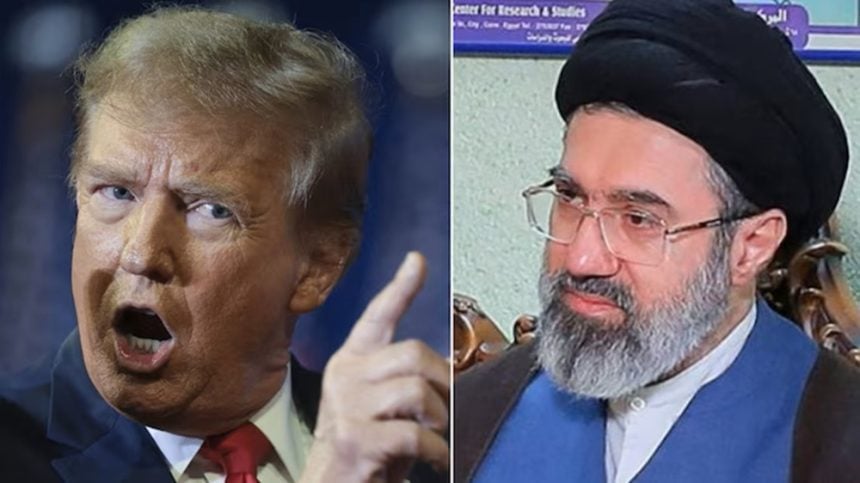
Iranian airlines have been barred from operating in several neighbouring countries following the implementation of new US sanctions, as the wider Middle East conflict continued to put pressure on regional energy supplies and push oil prices higher.
The United Arab Emirates suspended all flights operated by Iranian airlines until further notice after a US deadline for companies around the world to stop doing business with Iran’s aviation sector expired.
Iran’s Tasnim news agency also reported that flights to Oman, Georgia, Azerbaijan and Baghdad had been halted. Iranian authorities were reportedly working to redirect some services to Najaf in Iraq.
The measures are part of a broader US effort to isolate Iran economically by imposing sanctions on companies in third countries that continue doing business with Iranian firms.
Washington had set September 23 as the deadline for companies worldwide to comply with restrictions targeting Iranian airlines, with the stated aim of grounding Iran’s entire civilian aircraft fleet.
READ ALSO: Iran War Is ‘Small Potatoes’ For US – Trump
The restrictions have already affected Iran’s international air links, with Tehran’s Imam Khomeini Airport showing scheduled services to countries including Afghanistan, Armenia, China, Iraq, Pakistan, Tajikistan and Turkey, but no flights to or from several Gulf states.
Iran has warned that neighbouring countries complying with the US restrictions could face retaliation.
A senior Iranian official warned on Wednesday that airports in countries enforcing the ban could be made “unusable”.
The latest sanctions came as tensions across the region continued to affect global energy markets.
Oil prices rose sharply on Thursday after Yemen’s Iran-backed Houthi fighters launched missile attacks against Saudi Arabia, raising fresh concerns about disruptions to crude supplies.
READ ALSO: Iran Plans New Restricted Gulf Zone As Hormuz Tensions Rise
Saudi Arabia said it intercepted six ballistic missiles fired by the Houthis towards areas including Taif and the Yanbu region on the Red Sea.
Yanbu is particularly important to Saudi Arabia’s oil-export strategy because the port provides an alternative route for crude when shipments through the Strait of Hormuz are disrupted.
Brent crude futures settled at $106.60 a barrel, gaining $3.52, or 3.4 per cent, while US West Texas Intermediate crude rose $2.45, or 2.7 per cent, to settle at $94.61.
Both benchmarks had risen by about 5 per cent at their session highs. Brent recorded its highest closing price since September 15, while the gain represented WTI’s first rise after six consecutive sessions of losses.
The price increase came despite signs that diplomatic efforts between Washington and Tehran could eventually ease pressure on oil supplies.
READ ALSO: Iran Executes Man Accused Of Aiding US, Israel
Reuters reported that US and Iranian negotiators in New York were exploring a possible phased agreement under which Iran would reopen the Strait of Hormuz while the United States eased its economic blockade of Iran.
The Strait of Hormuz is a crucial global oil route and its disruption has been a major factor behind the volatility in energy markets during the conflict.
The prospect of negotiations helped crude prices retreat from their intraday highs.
The wider conflict has also affected Saudi Arabia’s ability to export crude. Saudi Arabia has been using its East-West pipeline to divert oil towards the Red Sea after disruptions to Gulf shipping routes. The country has been working to restore export capacity through Yanbu.
READ ALSO: Burutu Ex-Aspirants Trash Vote Of Confidence On Takeme, Demand Probe Of ₦23.7bn Council Funds
Meanwhile, the latest US sanctions threaten to deepen Iran’s economic isolation.
President Donald Trump previously described the expanded sanctions strategy as “economic D-Day”, referring to Washington’s attempt to increase pressure on Tehran by targeting companies outside Iran that continue to do business with sanctioned Iranian entities.
Iranian authorities have warned that the sanctions and wider blockade could worsen the country’s economic difficulties.
The latest developments have therefore created two competing pressures for oil markets: continued military escalation around major energy infrastructure and shipping routes could push prices higher, while progress in US-Iran negotiations and a reopening of the Strait of Hormuz could ease supply concerns.
(Reuters)
News
Report: UK Considers Raising Tax-free Allowance To £15,570

The UK government is reportedly considering increasing the personal income tax allowance from £12,570 to £15,570, a move that could leave millions of workers with more disposable income and prevent most state pensioners from paying tax on part of next year’s pension increase.
The proposal, reported by Sky News citing The Telegraph, would represent the first increase in the personal allowance in five years. The threshold has remained frozen at £12,570 since 2021.
If implemented, the new threshold would be close to the level the allowance might have reached had it continued rising instead of being frozen.
The proposal is being considered by Chancellor John Healey and Prime Minister Andy Burnham, according to the report. It was suggested by Labour donor and Ecotricity owner Dale Vince.
READ ALSO: UK Inflation Rises To Five-month High, Putting Pressure On Bank Of England
Vince said: “If Labour wants to get the economy moving, it should put money into the pockets of people who will spend it.”
He added: “Raising the personal allowance to £15,570 would give millions of people a meaningful boost, with the biggest benefit going to those on the lowest incomes.”
He proposed funding the measure through changes to capital gains tax and by ending interest payments on Bank of England reserves.
“We can pay for it by making the tax system fairer – starting with capital gains and the billions we currently hand to banks in interest,” Vince said.
READ ALSO:Fish Virus Outbreak Hits UK Facilities
However, the government has not confirmed that the proposal will be included in the upcoming Budget.
A Treasury spokesperson said decisions on taxation were matters for the Chancellor to announce at fiscal events, rather than issues the department would “routinely comment on rumour, speculation or proposals”.
The proposed increase could also address an issue facing pensioners.
The UK’s state pension is expected to rise by 3.9% next April under the government’s triple lock system, which guarantees an annual increase based on whichever is highest among inflation, average wage growth or 2.5%.
Provisional wage figures show growth of 3.9%, meaning the full new state pension could increase from £12,547.60 to about £13,036.60.
READ ALSO:Over 150 UK Flights Cancelled After Air Traffic Glitch
That would put the state pension above the current £12,570 personal allowance by approximately £457.
For pensioners with total retirement income below £50,270, that amount would normally be subject to the basic 20% income tax rate, potentially resulting in an annual tax bill of about £91.40.
Increasing the personal allowance to £15,570 would place the projected state pension below the new threshold, meaning pensioners would not pay income tax on the state pension itself, assuming they had no other taxable income.
The proposal comes as the government faces pressure over its finances ahead of the next Budget.
READ ALSO:Top 10 Degrees That Provide Fastest Payback In UK
Official figures showed that the UK public sector borrowed £18.3bn in August, the second-highest borrowing figure recorded for the month. Borrowing for the financial year so far was also £8.1bn above the level forecast by the Office for Budget Responsibility.
The government is therefore expected to face difficult decisions over taxation and spending when the Chancellor delivers the Budget.
Other possible tax changes under discussion include changes to capital gains tax and the proposed high-value council tax surcharge on expensive properties.
No decision on the personal allowance has been announced, and the final policy will depend on the Chancellor’s Budget decisions.
(skynews)

 News4 days ago
BREAKING: Tinubu Extends Working Vacation
- News5 days ago
2027: Step-by-step Guide To Applying For INEC Ad Hoc Staff Recruitment
- Headline4 days ago
How To Format An Academic CV For US Master’s, PhD Applications
- Headline5 days ago
Nigerian Man Jailed After Masturbating In Front Of Woman On UK Train
 News3 days ago
OPINION: The Stranger In APC’s Kitchen
- News4 days ago
Benue Govt Suspends Muslim Pilgrims Welfare Board Chairman, Secretary
- News5 days ago
[OPINION] Wike-APC: Fights Always End Adultery
- Entertainment4 days ago
Why Funke Akindele Was Not At My Movie Premiere – Kamo State
- Politics4 days ago
Crisis Rocks NDC Over Obi-Kwankwaso Campaign Council
- Sports4 days ago
5 Football Players Who Excelled In Multiple Positions


