

Headline
Tanzanian Abdulrazak Gurnah Awarded Nobel Literature Prize

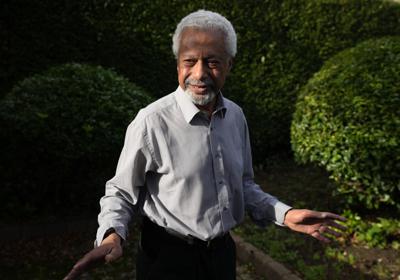


U.K.-based Tanzanian writer Abdulrazak Gurnah, whose experience of crossing continents and cultures has fed his novels about the impact of migration on individuals and societies, won the Nobel Prize for Literature on Thursday.
The Swedish Academy said the award was in recognition of Gurnah’s “uncompromising and compassionate penetration of the effects of colonialism and the fate of the refugee.”
Gurnah, who recently retired as a professor of post-colonial literatures at the University of Kent, got the call from the Swedish Academy in the kitchen of his home in southeast England — and initially thought it was a prank.
He said he was “surprised and humbled” by the award.
Gurnah said the themes of migration and displacement that he explored “are things that are with us every day” — even more now than when he came to Britain in the 1960s.
“People are dying, people are being hurt around the world. We must deal with these issues in the most kind way,” he said.
“It’s still sinking in that the Academy has chosen to highlight these themes which are present throughout my work, it’s important to address and speak about them.”
Born in 1948 on the island of Zanzibar, now part of Tanzania, Gurnah moved to Britain as a teenage refugee in 1968, fleeing a repressive regime that persecuted the Arab Muslim community to which he belonged.
He has said he “stumbled into” writing after arriving in England as a way of exploring both the loss and liberation of the emigrant experience.
Gurnah is the author of 10 novels, including “Memory of Departure,” “Pilgrims Way,” “Paradise” — shortlisted for the Booker Prize in 1994 — “By the Sea,” “Desertion” and “Afterlives.” The settings range from East Africa under German colonialism to modern-day England. Many explore what he has called “one of the stories of our times”: the profound impact of migration both on uprooted people and the places they make their new homes.
Gurnah, whose native language is Swahili but who writes in English, is only the sixth Africa-born author to be awarded the Nobel for literature, which has been dominated by European and North American writers since it was founded in 1901.
Nigerian writer Wole Soyinka, who won the Nobel Literature prize in 1986, welcomed the latest African Nobel laureate as proof that “the Arts — and literature in particular — are well and thriving, a sturdy flag waved above depressing actualities” in “a continent in permanent travail.”
READ ALSO: Full Speech Of President Buhari’s 2022 Budget Presentation
“May the tribe increase!” Soyinka told the AP in an email.
Anders Olsson, chairman of the Nobel Committee for literature, called Gurnah “one of the world’s most prominent post-colonial writers.” He said it was significant that Gurnah’s roots are in Zanzibar, a polyglot place that “was cosmopolitan long before globalization.”
“His work gives us a vivid and very precise picture of another Africa not so well known for many readers, a coastal area in and around the Indian Ocean marked by slavery and shifting forms of repression under different regimes and colonial powers: Portuguese, Indian, Arab, German and the British,” Olsson said.
He said Gurnah’s characters “find themselves in the gulf between cultures … between the life left behind and the life to come, confronting racism and prejudice, but also compelling themselves to silence the truth or reinventing a biography to avoid conflict with reality.”
Luca Prono said on the British Council website that in Gurnah’s work, “identity is a matter of constant change.” The academic said Gurnah’s characters “unsettle the fixed identities of the people they encounter in the environments to where they migrate.”
News of the award was greeted with excitement in Zanzibar, where many remembered Gurnah and his family — though few had actually read his books.
Gurnah’s books are not required reading in schools there and “are hardly to be found,” said the local education minister, Simai Mohammed Said, whose wife is Gurnah’s niece. But, he added, “a son of Zanzibar has brought so much pride.”
“The reaction is fantastic. Many are happy but many don’t know him, though the young people are proud that he’s Zanzibari,” said Farid Himid, who described himself as a local historian whose father had been a teacher of the Quran to the young Gurnah. “I have not had the chance to read any of his books, but my family talked about it.”
Gurnah didn’t often visit Zanzibar, he said, but he has suddenly become the talk of young people in the semiautonomous island region.
“And many elder people are very, very happy. Also me, as a Zanzibari. It’s a new step to make people read books again, since the internet has taken over.”
The prestigious award comes with a gold medal and 10 million Swedish kronor (over $1.14 million). The money comes from a bequest left by the prize’s creator, Swedish inventor Alfred Nobel, who died in 1895.
Last year’s prize went to American poet Louise Glück. Glück was a popular choice after several years of controversy. In 2018, the award was postponed after sex abuse allegations rocked the Swedish Academy, the secretive body that chooses the winners. The awarding of the 2019 prize to Austrian writer Peter Handke caused protests because of his strong support for the Serbs during the 1990s Balkan wars.
On Monday, the Nobel Committee awarded the prize in physiology or medicine to Americans David Julius and Ardem Patapoutian for their discoveries into how the human body perceives temperature and touch.
The Nobel Prize in physics was awarded Tuesday to three scientists whose work found order in seeming disorder, helping to explain and predict complex forces of nature, including expanding our understanding of climate change.
Benjamin List and David W.C. MacMillan were named as laureates of the Nobel Prize for chemistry Wednesday for finding an easier and environmentally cleaner way to build molecules that can be used to make compounds, including medicines and pesticides.
Still to come are prizes for outstanding work in the fields of peace, on Friday, and economics, on Monday.
(AP)


Headline
FG Summons S. African Envoy Over Rising Xenophobic Attacks On Nigerians

The Federal Government has summoned the Acting High Commissioner of South Africa in Abuja over renewed concerns about xenophobic attacks and protests targeting foreign nationals, including Nigerians, living in that country.
The Ministry of Foreign Affairs said the envoy is expected at its headquarters on Monday, May 4, 2026, for a high-level engagement aimed at addressing the growing tension and safeguarding bilateral relations between both countries.
In a statement issued on Sunday, the spokesperson for the Ministry, Kimiebi Ebienfa, said Nigeria would formally express its “profound concern” over recent developments in South Africa, particularly reports of harassment, violence, and destruction of property belonging to foreign nationals.
According to the ministry, the meeting will focus on ongoing demonstrations by various groups in South Africa and documented cases of attacks on Nigerians and their businesses in parts of the country.
READ ALSO:Group Condemns Tunisian Xenophobic, Racial Attacks On African Migrants
“The objective of this engagement is to formally convey the Nigerian Government’s profound concern regarding recent events that have the potential to impact the established cordial relations between Nigeria and South Africa,” the statement read.
It added that discussions would also address ongoing demonstrations by various groups within South Africa and documented instances of mistreatment of Nigerian citizens and attacks on their businesses.
The ministry acknowledged growing anger among Nigerians over reports of xenophobic violence but urged restraint, stressing that diplomatic engagement remained the preferred channel for resolution.
It assured Nigerians that the Federal Government was actively engaging South African authorities to ensure the protection of its citizens abroad.
READ ALSO:US Visa Adjudication Sparks Concerns Over Diplomatic Relations
“The Ministry is aware of the growing discontent among Nigerians concerning the treatment of their nationals in South Africa. Nevertheless, it implores the Nigerian public to remain calm and reiterates the Federal Government’s commitment to protecting the rights and well-being of Nigerian citizens residing in South Africa,” the statement added.
The latest diplomatic move comes amid renewed reports of xenophobic tensions in parts of South Africa, where foreign-owned businesses have occasionally been targeted during protests linked to unemployment and economic hardship.
South Africa has a history of xenophobic violence dating back to 2008, with subsequent flare-ups in 2015 and 2019, when mobs attacked migrants, looted shops, and displaced thousands of foreign nationals across several provinces.
In past incidents, Nigerians and other African nationals were among those affected, prompting strong diplomatic reactions from Abuja and calls for stronger protection of foreign communities.
While South African authorities have repeatedly condemned such attacks and deployed security forces to restore order during outbreaks of violence, concerns have persisted over recurring hostility in some communities.
Headline
Mississippi Man ‘Kills Mother, Flushes Her Remains Down Toilet’


A 29-year-old Mississippi man, Zachary Lavel Jackson Jr., has been charged with multiple offences, including first-degree murder, over the death of his mother, Lana Brown Bradley, after deputies responded to her Natchez home on April 4 following a missing person report from relatives.
The Adams County Sheriff’s Office said deputies were called to Bradley’s residence after her oldest son was unable to reach her the previous day.
Jackson was initially identified as a family member before investigators confirmed he was her son.
Sheriff Travis Patten described the case as deeply disturbing.“This is by far the most heinous crime that I’ve ever witnessed in my entire life. We weren’t out there that day; this was one of those things when we walked up.
READ ALSO:Bandits Kill Nine, Injure Eight In Fresh Attack On Zamfara Village
“This was one of those cases that you will never, ever forget in your life. This is the type of case that follows you home,” Patten told WJTV.
According to the sheriff, deputies noticed signs of a recent cleanup when they arrived at the home.
“As soon as they walked in the house, they could just see where somebody had been cleaning up, and they could smell chemicals all throughout the house.
“Floor was extremely slippery. And the older son said that this is just unusual for the youngest son to be cleaning up the house like that,” Patten explained.
READ ALSO:US Comedian Reggie Carroll Shot Dead In Mississippi
Jackson, the youngest son, was found in a bathroom, where deputies allegedly made a discovery that became central to the investigation.
“I can say what was in the toilet, and it was her flesh. He chopped her up in pieces and dismembered her in a way that whoever came looking for her would have to do their due diligence to find her, and that’s just what we did,” the sheriff said.
Authorities said Jackson allegedly placed parts of his mother’s body in a suitcase and attempted to dispose of other remains.
Jackson faces charges of first-degree murder, second-degree murder, mayhem and tampering with evidence.
READ ALSO:Popular Influencer Lola Shot
Investigators said Bradley, a retired teacher, had recently sought to evict her son from the home. Patten, citing family interviews, said Jackson was believed to be mentally unstable but also noted that his actions appeared deliberate.
“He had threatened her the day before because she was looking to have him evicted from the home.
“She was in the process of doing so and had just gone to court the day before to have him removed from the home,” Patten explained.
Headline
Iran Says War With US May Resume As Trump Rejects Proposal

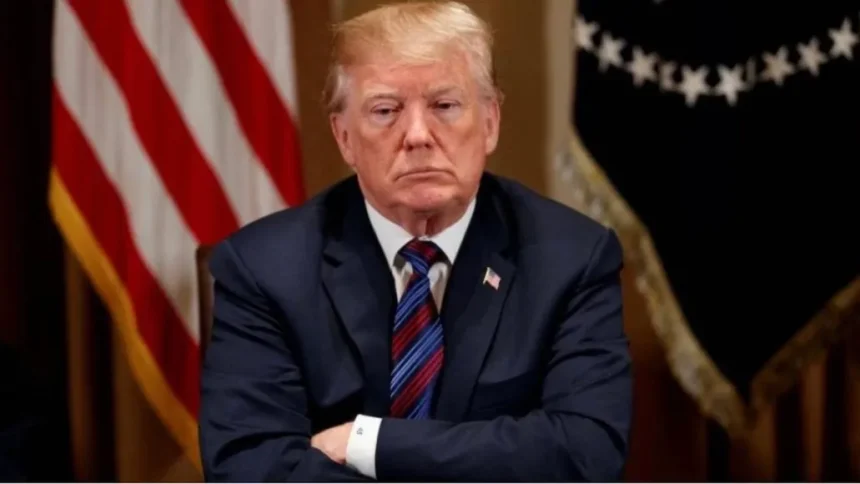
Iran’s military has warned that the war with the United States and Israel could resume, declaring that it is fully prepared for any renewed confrontation as tensions between the sides continue to deepen.
In a statement reported by Iranian state-affiliated media, senior military officials said a return to hostilities is “likely”, citing what they described as Washington’s lack of commitment to previous agreements and negotiations.
The warning comes after US President Donald Trump expressed dissatisfaction with Iran’s latest peace proposal, saying the terms presented by Tehran included demands he “can’t agree to”.
READ ALSO:US Underestimated Iran Before War – France’s Bardella
According to officials in Tehran, Iran believes it showed flexibility during earlier negotiations, including talks held in Islamabad and during the ceasefire period. However, authorities argue that the United States has instead taken a tougher stance, widening the gap between both sides.
Iranian officials insist that key issues such as sanctions relief and the status of the Strait of Hormuz must be resolved before any broader agreement, including discussions around its nuclear programme, can progress. They also reject what they describe as US demands amounting to “surrender”.
The growing diplomatic deadlock has raised fears that another round of fighting may be imminent, with Iranian authorities indicating that preparations are already underway.
READ ALSO:Iran Allows 20 More Pakistani Ships To Pass Through Strait Of Hormuz
Meanwhile, the prolonged conflict continues to have far-reaching consequences within Iran. Internet monitoring group NetBlocks reports that the country has entered its 64th day of near-total internet disruption, effectively isolating it from global online networks.
The shutdown, which began after renewed anti-government protests earlier in the year and intensified following the outbreak of the war, has significantly disrupted businesses and livelihoods across the country.
Beyond Iran, the conflict is also reshaping global dynamics. Rising oil prices linked to the war have placed pressure on international markets, while geopolitical tensions have strained alliances, including between the United States and European partners.
As both sides remain far apart on key issues, analysts warn that without a breakthrough in negotiations, the fragile pause in fighting could collapse, paving the way for renewed military escalation in the region.
-

 News5 days ago
BREAKING: Tinubu Nominates New Minister Of Power
-

 News5 days ago
Tinubu Swears In Four Permanent Secretaries, INEC Commissioner
-

 Politics3 days ago
2027: Tinubu’s Re-election May Put An End To Nigeria — Baba Ahmed Warns
-

 Metro4 days ago
I’m A Street Girl’ – Bimbo Ademoye Clashes With Area Boys [VIDEO]
-

 News5 days ago
VIDEO: Moment S’Court Recognises David Mark-led ADC Leadership
-

 Politics4 days ago
Senatorial Seat: Ogbakha-Edo Warns Against Imposition Of Candidates In Edo South
-

 Politics4 days ago
BREAKING: 2027: Former Adamawa APC Guber Candidate, Aishatu Binani Defects To NDC
-

 Business3 days ago
JUST IN: Nigerian Filling Stations Reduce Fuel Price After Hike
-

 Entertainment4 days ago
Actress Eniola Badmus Gets New Federal Appointment
-

 News4 days ago
10 African Countries With Highest Petrol Prices In Prices In April 2026


