
Headline
Teen, 15, Charged In Oxford School Shooting

A teenager accused of killing four students at a Michigan high school was called to the office before the shooting but “no discipline was warranted,” the superintendent said Thursday in his first extended remarks since the tragedy.
Tim Throne, leader of Oxford Community Schools, said Oxford High School looks like a “war zone” and won’t be ready for weeks. But he repeatedly credited students and staff for how they responded to the violence Tuesday.
“To say that I am still in shock and numb is probably an understatement. These events that have occurred will not define us,” Throne, grim-faced and speaking slowly, said in a 12-minute video.
Ethan Crumbley, 15, has been charged as an adult with two dozen crimes, including murder, attempted murder and terrorism, for the shooting at the Oakland County school, roughly 30 miles (50 kilometers) north of Detroit.
“I want you to know that there’s been a lot of talk about the student who was apprehended, that he was called up to the office and all that kind of stuff. No discipline was warranted,” Throne said. “There are no discipline records at the high school. Yes this student did have contact with our front office, and, yes, his parents were on campus Nov. 30.”
Throne said he couldn’t immediately release additional details. Sheriff Mike Bouchard has said Crumbley’s classroom behavior was a concern on the day of the shooting.
READ ALSO: EndSARS Report: Lagos Accepts 11 Of 32 Recommendations, Rejects One
In his remarks, the superintendent said he was asking the sheriff’s office to publicly release school video from Tuesday.
“I want you to be as proud of your sons and daughters as I am,” Throne said.
Earlier Thursday, a prosecutor repeated her criticism of Crumbley’s parents, saying their actions went “far beyond negligence” and that a charging decision would come by Friday.
“The parents were the only individuals in the position to know the access to weapons,” Oakland County prosecutor Karen McDonald said. The gun “seems to have been just freely available to that individual.”
Four students were killed and seven more people were injured, while three were hospitalized though in stable condition.
The semi-automatic gun was purchased legally by Crumbley’s father last week, according to investigators.
Parents in the U.S. are rarely charged in school shootings involving their children, even as most minors get guns from a parent or relative’s house, according to experts.
There’s no Michigan law that requires gun owners keep weapons locked away from children. McDonald, however, suggested there’s more to build a case on.
“All I can say at this point is those actions on mom and dad’s behalf go far beyond negligence,” she told WJR-AM. “We obviously are prosecuting the shooter to the fullest extent. … There are other individuals who should be held accountable.”
Later at a news conference, McDonald said she hoped to have an announcement “in the next 24 hours.” She had firmly signaled that Crumbley’s parents were under scrutiny when she filed charges against their son Wednesday.
Jennifer and James Crumbley did not return a message left by The Associated Press.
The sheriff disclosed Wednesday that the parents met with school officials about their son’s classroom behavior, just a few hours before the shooting.
Crumbley stayed in school Tuesday and later emerged from a bathroom with a gun, firing at students in the hallway, police said.
“Should there have been different decisions made?” McDonald said when asked about keeping the teen in school. “Probably they will come to that conclusion. … I have not seen anything that would make me think that there’s criminal culpability. It’s a terrible, terrible tragedy.”
William Swor, a defense lawyer who is not involved in the case, said charging the parents would require a “very fact-intensive investigation.”
“What did they know and when did they know it?” Swor said. “What advance information did they have about all these things? Did they know anything about his attitude, things of that nature. You’re talking about a very heavy burden to bring on the parents.”
Just over half of U.S. states have child access prevention laws related to guns, but they vary widely. Gun control advocates say the laws are often not enforced and the penalties are weak.
READ ALSO: 2023: Group Advises Politicians Above 60 Not To Contest Election
“Our laws haven’t really adapted to the reality of school shootings and the closest we have are these child access prevention laws,” said Kris Brown, president of the Brady gun control advocacy group.
In 2000, a Flint-area man pleaded no contest to involuntary manslaughter and was sentenced to two years in prison. A 6-year-old boy who was living with him had found a gun in a shoebox and killed a classmate at school.
In 2020, the mother of an Indiana teen was placed on probation for failing to remove guns from her home after her mentally ill son threatened to kill students. He fired shots inside his school in 2018. No one was injured but the boy killed himself.
In Texas, the parents of a student who was accused of killing 10 people at a school in 2018 have been sued over his access to guns.
Meanwhile, dozens of schools in southeastern Michigan canceled classes Thursday due to concerns about threatening messages on social media following the Oxford shooting. Others planned to join them and close on Friday.
“We know from research and experience that learning is nearly impossible when students and staff do not feel safe,” Grosse Pointe Superintendent Jon Dean told families.
Bouchard said no threats in Oakland County were found to be credible. Just to the north in Genesee County, a Flint teenager was charged with making a false threat when she recorded a video while riding a school bus and posted it online.
“If you’re making threats, we’re going to find you,” Bouchard said. “It is ridiculous you’re inflaming the fears of parents, teachers in the community in the midst of a real tragedy.”
READ ALSO: BREAKING: APC Splits As Faction Attacks Buhari, Sacks Buni, Names Names Chairman

Headline
How Our Airstrikes Stopped Christmas Attacks In Nigeria — US Lawmaker
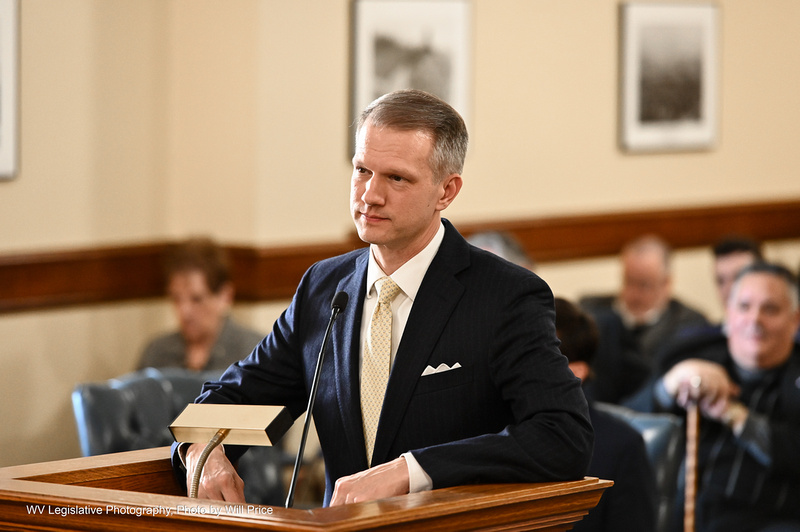
Riley Moore, a member of the United States House of Representatives from West Virginia’s 2nd District, has linked the absence of Christmas attacks in Nigeria this year to US military airstrikes carried out against Islamist militants on Christmas Day.
In a post on his official X account on Saturday, Moore contrasted the situation with the past two Christmas seasons, during which he claimed Christians were killed in attacks across parts of Nigeria.
The lawmaker noted that this year’s response targeted extremist groups instead of marking another period of violence.
READ ALSO:Rep Moore Confirms 12 Tomahawk Missiles Launched In Sokoto
He added that US forces acted decisively against militants in coordination with the Nigerian government.
“For the past two Christmases, Christians have been murdered in Nigeria. This year, thanks to @POTUS, Radical Islamic Terrorists were on the receiving end of 12 Tomahawk missiles as a present.
“The successful strikes on ISIS, in coordination with the Nigerian government, are just the first step to secure the country and end the slaughter of our brothers and sisters in Christ,” Moore wrote.
US President Donald Trump said on Thursday that American forces had conducted deadly strikes against Islamic State terrorists in north-western Nigeria.
Trump, who spoke via his Truth Social platform, warned that more attacks would follow if the militants continued killing Christians, adding that the Department of War executed numerous “perfect strikes.”
Headline
U.S. Lawmaker Reacts To Nigeria, U.S. Airstrikes
United States Congressman, Riley Moore, has stated that President Donald Trump is determined to put an end to the killing of Christians in Nigeria, warning that further action may follow if the violence persists.
Moore made the statement on Friday via his official X handle.
According to the lawmaker, the strike represents the first step in addressing what he described as the ongoing slaughter of Christians and the broader security crisis affecting Nigerians across religious and ethnic lines.
READ ALSO:US Dept Of War Shares Video Of Air Strikes In Nigeria
“President Trump has been clear that the killing of Christians in Nigeria must end,” he said.
He that the administration’s resolve on the matter should not be underestimated.
“As I stated at the outset: Do not test President Trump‘s resolved in this matter.
READ ALSO:JUST IN: US Forces Bomb Terrorists Camps In Nigeria
“Tonight’s strike in coordination with the Nigerian government is just the first step to ending the slaughter of Christians and the security crisis affecting all Nigerians,” he said.
He stressed that the operation signals a stronger stance by the United States in support of Nigeria’s efforts to tackle terrorism and violent extremism, noting that further measures could be taken if the situation does not improve.
Headline
US Dept Of War Shares Video Of Air Strikes In Nigeria

A video footage of the US military air strikes in Nigeria has emerged.
The video was released by the US Department of War following its air strikes against terrorists in Sokoto.
Earlier, the US secretary of War, Pete Hegseth had confirmed that military air strikes hit terrorists in Nigerians, saying it was deadly.
Later on, the US. African Command, confirmed that it conducted the attacks described as very deadly by President Donald Trump.
Trump said he was only keeping the promise he made earlier last month to strike the terrorists he believes are killing innocent Christians.
READ ALSO:JUST IN: US Forces Bomb Terrorists Camps In Nigeria
Although described as powerful and deadly, the casualty caused by the attack is yet to be released.
Explaining further, security expert, Brant Philip, said the strikes may have been launched “from the USS Paul Ignatius, using a Tomahawk missile.”
The Nigerian government through its ministry of foreign affairs has also confirmed that the strikes were successful.
Watch video here

 News5 days ago
PHOTOS: New Era In Furupagha-Ebijaw As Okpururu 1 Receives Staff Of Office
- News4 days ago
UBTH CMD Marks 120 Days In Office, Expresses Commitment To Providing Conducive Working Environment
- News5 days ago
OPINION: Gumi And His Terrorists
- News4 days ago
FIRS Confirms NIN As Tax ID
- News5 days ago
FG Declares Public Holidays For Christmas, New Year Celebrations
- Metro4 days ago
Fintiri Pardons Man Sentenced To Death For ‘Killing Herdsman In Self-defence’, Others
- News5 days ago
OPINION: Christmas And A Motherless Child
- News3 days ago
JUST IN: Kano Lawmaker, Sarki Aliyu Daneji, Dies Hours After Colleague’s Passing
- News4 days ago
KWAM 1 Withdraws From Awujale Race, Ends Court Challenge
 News4 days ago
OPINION: My Man Of The Season


