
Headline
Ten Key Moments In Israel’s War With Hamas
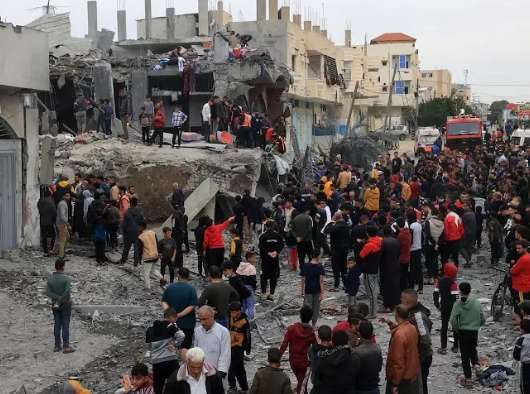
The war between Israel and Hamas began on October 7 when Palestinian militants rampaged through southern Israel.
The Hamas attack resulted in the deaths of around 1,140 people, according to an AFP tally based on official Israeli figures.
Israel responded with a devastating military campaign in Hamas-ruled Gaza that has killed at least 22,600 people, mostly civilians, according to the health ministry in the besieged territory.
AFP looks back at key moments in the three-month war which has devastated the Gaza Strip and sent shockwaves across the region.
READ ALSO: Gaza Population In ‘Grave Peril’, Says WHO
Oct. 7: Hamas attacks
At dawn on October 7, at the end of the Jewish holiday of Sukkot, hundreds of Hamas fighters infiltrate Israel from Gaza by land, sea and air.
They kill civilians indiscriminately in the streets, in their homes and at a desert music festival, and attack troops in army bases, in the worst ever attack in Israel’s history.
They also take about 250 people hostage.
Israel vows to destroy Hamas and begins bombarding Gaza.
Oct. 13: exodus from north Gaza
On October 13, Israel calls on civilians in northern Gaza to move south within 24 hours, declaring the north, which includes Gaza City, a war zone.
Hundreds of thousands of Palestinians flee to the south as entire districts in the north are razed to the ground.
READ ALSO: Israel Again Pounds Gaza; Army Chief Says War To Last ‘Many More Months
Oct. 17: hospital blast
On October 17, an explosion in the car park of Gaza’s Al-Ahli hospital leaves scores of people dead.
Hamas accuses Israel, which denies responsibility and blames a misfired rocket launched by Islamic Jihad, another Palestinian militant group — a claim backed by the United States.
Oct. 27: tanks enter Gaza
On October 27, Israeli tanks roll into Gaza at the start of a much-feared ground offensive.
The troops fight their way towards Gaza City.
Nov. 15: outcry over hospital raid
On November 15, Israeli troops launch a night-time raid on Al-Shifa hospital, Gaza’s biggest medical facility where bodies had been piling up after food, fuel and anaesthetics ran out.
The raid causes an international outcry, and Israel claims Hamas is running a command centre below the hospital, which the armed group denies.
READ ALSO: Gaza War Rages On Christmas Eve As Biden Urges Caution
Nov. 24: truce and hostage swap
On November 24, a week-long truce between Israel and Hamas takes effect.
Hamas releases 80 hostages over seven days in return for 240 Palestinians held in Israeli prisons, and aid shipments are allowed into Gaza.
Twenty-five other hostages, mainly Thai farm workers, are released outside of the scope of the deal.
Dec. 4: tanks in south Gaza
As the war resumes Israel expands its actions against Hamas into southern Gaza, which had previously been considered relatively safe.
On December 4, dozens of tanks entered the south of the territory, which is packed with internally displaced Palestinians.
Dec. 8: US veto
The United States vetoes a UN Security Council resolution calling for an immediate ceasefire, despite a growing international clamour for an end to Israel’s campaign.
Two weeks later Washington approves a resolution demanding more aid be allowed into Gaza but not a halt in the fighting.
READ ALSO: Soldier Blasts Sanwo-Olu, Defends Soldiers’ Right To Drive Against Traffic
Dec. 18: Red Sea coalition
The US announces the formation of an international naval coalition to protect container ships in the Red Sea from a surge in attacks by Iran-backed Huthi rebels in Yemen.
The Huthis say the drone and missile strikes are in solidarity with Gazans.
Jan. 2: Hamas deputy leader killed
Hamas’s deputy leader Saleh al-Aruri is killed along with six other Hamas members in a missile strike on south Beirut.
He is the most high-profile Hamas member to be killed since the war began.
Israel does not deny responsibility.
AFP



Headline
Indian Court Denies Bail To Nigerian Man Over Drug Charges
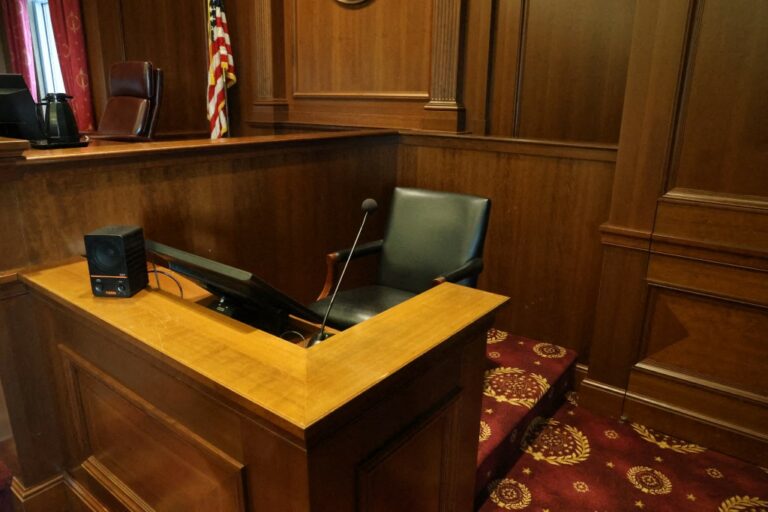
A court in India has denied bail to a 44-year-old Nigerian national, Cristian Soporuchukwu, who is currently facing drug trafficking charges in the country.
Cristian Soporuchukwu initially entered India on a business visa but was later arrested over allegations of involvement in the sale of hard drugs.
Reports indicated that after arriving in India, Soporuchukwu travelled through Goa, Delhi, and Mumbai, where he allegedly established links with suspected drug traffickers.
READ ALSO:Indian National Arraigned In Lagos Over Alleged N22m Supermarket Fraud
He was accused of purchasing MDMA crystals and distributing them to college students and information technology workers.
According to reports, operatives of the Beguru Police arrested Cristian Soporuchukwu in April 2025 for allegedly selling MDMA crystals around Begur Lake and the AECS Layout Road area.
The New Indian Express reported that the High Court of Karnataka subsequently dismissed the Nigerian’s bail application.
READ ALSO:NDLEA Intercepts Indian Lady With 72 Parcels Of Heroin ON n Chocolate Wraps
“The anti-narcotics wing seized about 1 kg of MDMA crystals, a pocket weighing machine, 10 zip-lock covers, a mobile phone and a scooter from him,” the report stated.
Justice V. Srishananda, while ruling on the bail application, reportedly held that errors relating to the grounds of arrest could not automatically justify bail in serious narcotics-related offences under the Narcotic Drugs and Psychotropic Substances, NDPS, Act.
The court further noted that Cristian Soporuchukwu had allegedly overstayed his visa in India, according to the report.
Headline
Strait Of Hormuz: US Announces Sanctions Against Iran

The United States Treasury has announced sanctions against Iran’s Persian Gulf Strait Authority.
Treasury Secretary, Scott Bessent, said this in a statement on Wednesday.
The statement extended the threat of sanctions to anyone paying the fees, saying they may be providing support to and receiving services from Iran’s Revolutionary Guards, and therefore may be exposed to sanctions risk.
READ ALSO:Strait Of Hormuz: Pakistan Thanks Trump For Pausing ‘Project Freedom’
“The Iranian military’s latest attempt to extort global maritime trade is proof that Economic Fury has left the regime desperate for cash.
“Treasury has deprived the Iranian regime of revenue for their weapons programs, terrorist proxies, and nuclear ambitions,” Bessent said.
Bessent added that the US has succeeded in disrupting tens of billions of dollars’ worth of revenue from being accessible to Tehran.
Headline
US Launches New Airstrikes On Iran
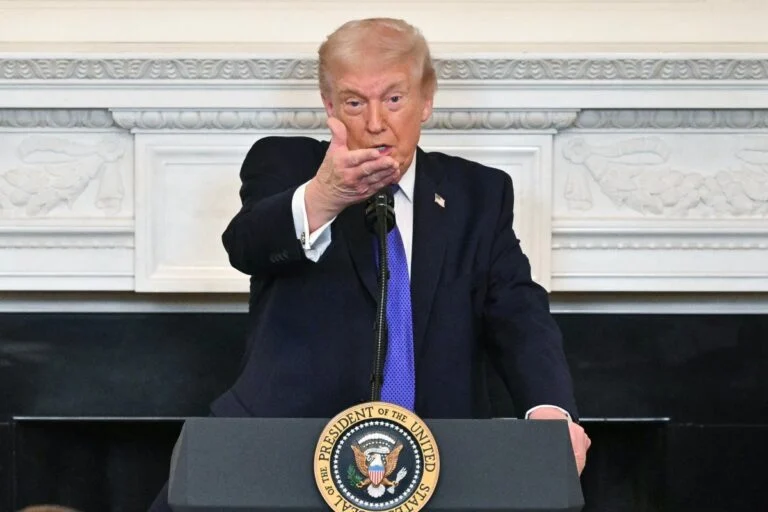
The United States has launched new airstrikes in southern Iran.
The strike shot down four one-way attack drones that posed a threat around the Strait of Hormuz and then a ground control site.
A US official revealed that American forces struck an Iranian ground control station in Bandar Abbas that was about to launch a fifth drone.
READ ALSO:US Restricts Entry Routes For Travellers From DRC, Uganda, South Sudan Over Ebola Outbreak
The official described the strikes as purely defensive, saying the US intended to maintain the ceasefire.
Report says this is the second time in three days that the US has carried out self-defense strikes against Iranian military targets in southern Iran.
Recall that on Monday the US carried out airstrikes against Iranian missile locations and boats that US Central Command said were preparing to launch mines in the Strait of Hormuz.

 Headline4 days ago
Woman Passes Out After Receiving 100 Strokes Of Cane
- Headline4 days ago
JUST IN: White House Locked Down Briefly As Gunman Opens Fire At Security Checkpoint
- Politics5 days ago
Warri Ijaw Hail INEC Delineation Report, Call For Additional Electoral Wards, Others
- Politics3 days ago
Two Masked Men Gun Down Politician In His Rivers State Hotel
- Metro4 days ago
Police Reject N500m Bribe, Recover N7.8bn Illicit Drugs In Lagos
- News3 days ago
More Pain For Nigerians As Cooking Gas Price Increases Nationwide
- Politics5 days ago
What I’ll Do As President Of Nigeria — Amaechi
- News3 days ago
FG Declares Two Days Public Holiday For Eid-el Kabir Celebration
- Politics3 days ago
‘Tinubu’s Borrowing In 24 Months Surpasses 55 Years’ Debt Record’
- Politics2 days ago
Court Clears Goodluck Jonathan To Contest 2027 Presidential Election


