
Business
They’ve Hidden Plans – Mixed Reactions Trail CBN’s New Naira Notes
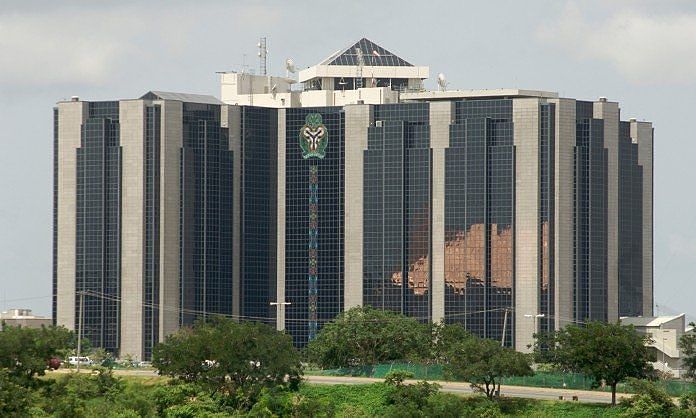
Nigerians have shared divergent opinions on the recently released new banknotes by the President Muhammadu Buhari administration.
The Central Bank of Nigeria, CBN, on Wednesday announced the entry of the new notes into the country’s financial space.
The CBN boss, while explaining the features of the redesigned notes, told State House Correspondents that it was in line with global best practices, noting that it was mandatory for the naira to be redesigned and re-issued every five to eight years.
The last time the bank redesigned the naira was in 2014 when it changed the design of just the 100 naira note to commemorate Nigeria’s centenary.
According to him, it is regrettable that the naira has not been redesigned for the past 19 years owing to lack of political will from previous administrations.
“In the past, I have to confess that attempts by the CBN to redesign and re-issue the naira notes have been resisted. It is only President Muhammadu Buhari that has exhibited the courage to do so,” he stated.
Emefiele said it was the mandate of the CBN to redesign and re-issue the notes, stressing that the exercise would become a regular trend after five to eight years.
Meanwhile, Nigeria has in recent years undertaken the redesigning of her currency for various reasons.
READ ALSO: Why I Approved Redesign Of Naira Notes – Buhari
For instance, in response to the expansion in economic activities and to facilitate an efficient payments system, the ₦100, ₦200, ₦500 and ₦1000 banknotes were introduced in December 1999, November 2000, April 2001 and October 2005 respectively.
On 28th February, 2007, as part of the economic reforms, ₦20 was issued for the first time in a polymer substrate, while the ₦50, ₦10 and ₦5 banknotes, as well as ₦1 and 50K coins were reissued in new designs, and the ₦2 coin was introduced.
On 30th September, 2009, the redesigned ₦50, ₦10 and ₦5 banknotes were converted to polymer substrate following the successful performance of the ₦20 (polymer) banknote. Thus, all lower denomination banknotes were now printed in the polymer substrate.
Speaking on the development, Godwin Emefiele, added that the move to introduce newly designed notes became imperative following the abnormalities bedevilling Nigerian financial, monetary and security systems.
The circulation of the new designs will begin on December 15, 2022.
But the introduction of the new naira banknotes has received a lot of reactions from Nigerians .
Some economic experts have pointed out that apart from the change in colour of the redesigned N200, N500 and N1000 naira notes, its security features have been enhanced.
But the presidential candidate of the African Action Congress, AAC, Omoyele Sowore knocked President Buhari and Emefiele, accusing them of playing Nigerians by redesigning the banknotes.
Sowore slammed Buhari, saying that no significant change occurred to the naira, and it seems Nigerians have been deceived again.
For Shehu Sani, a former Nigerian lawmaker, it was only a colour change that was introduced in the new notes, saying, “If it’s Naira colour, the CBN should have just engaged Snapchat.”
A senior lecturer of the Department of Economics, Kaduna State University, Professor Abdulmalik Abdulkadir, said with the current redesign of banknotes, embezzlement of public money by those in position of power, would be minimised
Speaking to Journalists in Kaduna on Wednesday, Prof Abdulmalik noted that since the new notes are yet to be in circulation, what everyone is after is how to change the old currency which may soon fade away.
READ ALSO: JUST IN: CBN Gov, Emefiele Explains Features Of New Naira Notes
According to him, some public servants in positions of authority are also scared of stealing public funds as they would be caught anytime, anywhere.
Few Nigerians, who spoke to our correspondent on the streets of Abuja, also shared their thoughts. While some of them believe that it is a good way to stop politicians from money laundering ahead of the 2023 general elections, some others feel it is a waste of time.
Jennifer Adimso said, “I’m surprised that people still believe in this government and their policies. You’re talking about preventing politicians from laundering money but that’s a lie. Who is Emefiele working for? He is working for the APC. In fact, he is a member of the APC. He was contesting for the APC presidential primary if not for the pressure from Nigerians.
“In fact he went to court to challenge Nigerians against him. He is working for his party and if anybody is planning to launder money, it is APC. You’ll see bullion vans parked in the compound of some individuals and no one will question them. I believe they have some politicians they’re targeting. They’ve concluded their plans. These people think way ahead of us. Changing the colours of the N200, N500 and N1000 notes is just another way to distract Nigerians. Nothing more.”
David Sam Ade said, “All I can say is that the colour of those banknotes have changed. I’m not an expert to know the security features but all I can tell you is that the change won’t contribute anything. Now tell me, will it change the prices of garri, rice, yam, onions and other food items in the market? Buhari and his team are bent on deceiving Nigerians. We can’t wait for their tenure to end. People are suffering and all you can do is change the colour of money. It makes no sense to me. The reason why Emefiele is still there as the CBN governor is because he’s as clueless as the President himself.”
Pastor Jewel Abianso said, “Nigerians should be prayerful. Nigeria is drifting under the current government. See, the redesigning of the naira note may be good to many of us but we may not know the idea behind it. The question is why is it happening now? They said it is to stop money laundering against the election but how do we know the other underlying reasons? When a government has established itself on deceit, it becomes difficult to know when it is taking a good measure that would be beneficial to its people. I believe Nigeria has more significant problems than changing the colour of some currency denominations. Once again, I’ll encourage Nigerians to pray hard ahead of the forthcoming elections. Let’s pray for change and to have a government we can trust.”
Meanwhile, Abdulrasheed Bawa, Chairman of the Economic and Financial Crimes Commission (EFCC), had described the development as apt and commendable.
He said it was “a well-considered and timely response” to the challenges of currency management.



Business
JUST IN: Otedola Sells Shares In Geregu Power For N1trn
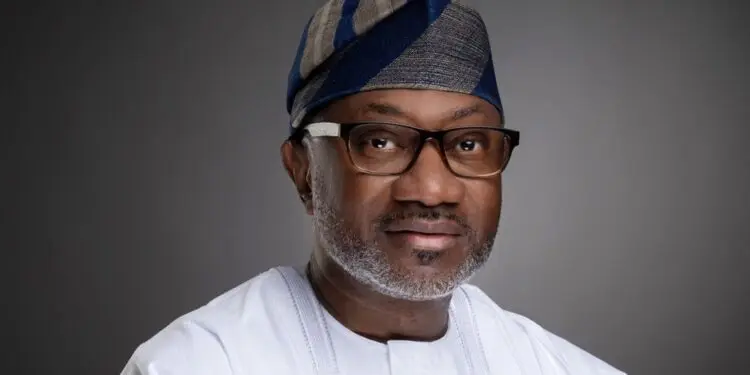
Billionaire businessman, Femi Otedola, has sold his majority stake in Geregu Power Plc for N1.088 trillion in a deal financed by a consortium of banks led by Zenith Bank Plc.
The Nigerian Exchange, NGX, made this announcement on Monday.
Otedola’s Amperion Power Distribution Company Ltd reportedly held nearly 80 percent of the power generating company.
READ ALSO:N200b Agric Credit Dispute: Appeal Court Slams NAIC, Upholds First Bank Victory
With this new development, Otedola, Chairman of First Holdco Ltd, parent company of First Bank of Nigeria Plc, will reportedly now concentrate on expanding his interest in the Nigerian banking sector, although he still retains some shares in Geregu.
Otedola is said to currently own 17.01 percent of First Bank — its single largest shareholder since the bank was established in 1894.
Business
Fuel Price Cut: NNPCL GCEO Ojulari Reveals Biggest Beneficiaries
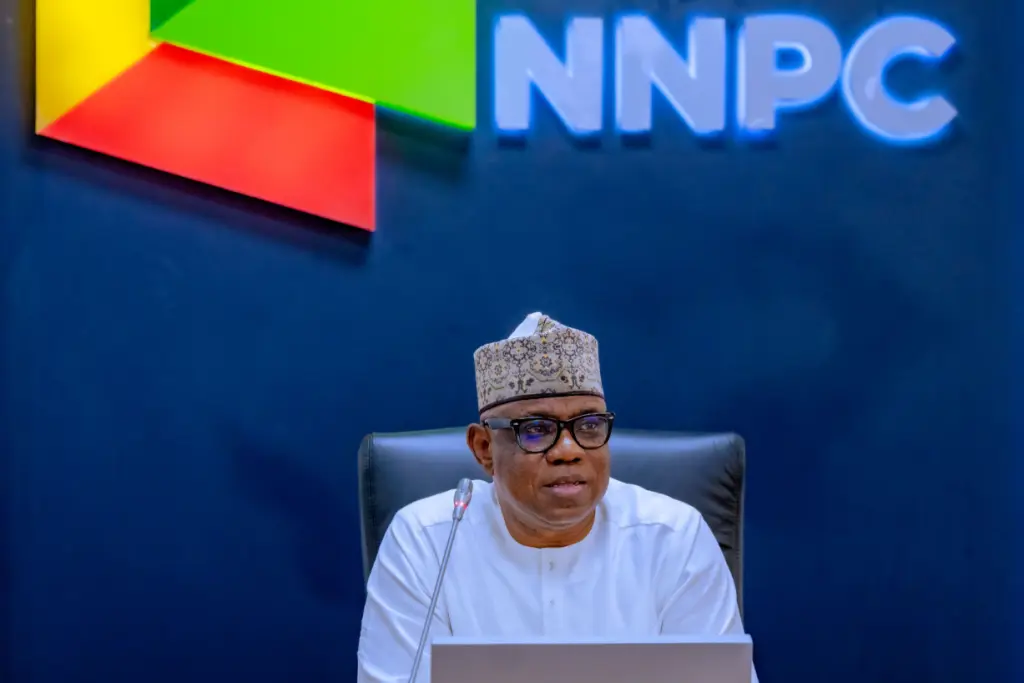
The Group Chief Executive Officer of the Nigerian National Petroleum Company Limited (NNPCL), Bayo Ojulari, has said Nigerians are the biggest beneficiaries of the ongoing fuel price reductions, triggered by competition in the downstream oil sector.
Ojulari made the remarks on Sunday while speaking with journalists after briefing President Bola Tinubu in Lagos.
He described the current fluctuations in petrol prices as a natural outcome of Nigeria’s transition away from dependence on fuel imports.
READ ALSO:NNPCL Revenue, Profit Soar To N5.08tn, N447bn In October
According to him, increased competition in the market ultimately favors consumers, adding that the present volatility will ease over time.
“Where there is healthy competition, the buyers are the ultimate beneficiaries. We should also bear in mind that the market will stabilise,” Ojulari said. “There may be some tension along the way because we are undergoing a major transition.”
His comments come amid an ongoing fuel price war that has resulted in successive reductions at petrol stations across the country in recent weeks.
Earlier in December 2025, Dangote Refinery cut its gantry price to about N699 per litre. Following this move, MRS filling stations, NNPCL outlets, and other marketers reduced pump prices to between N739 and N901 per litre in Abuja.
Business
Naira Records Massive Appreciation Against US Dollar Into Christmas Holidays
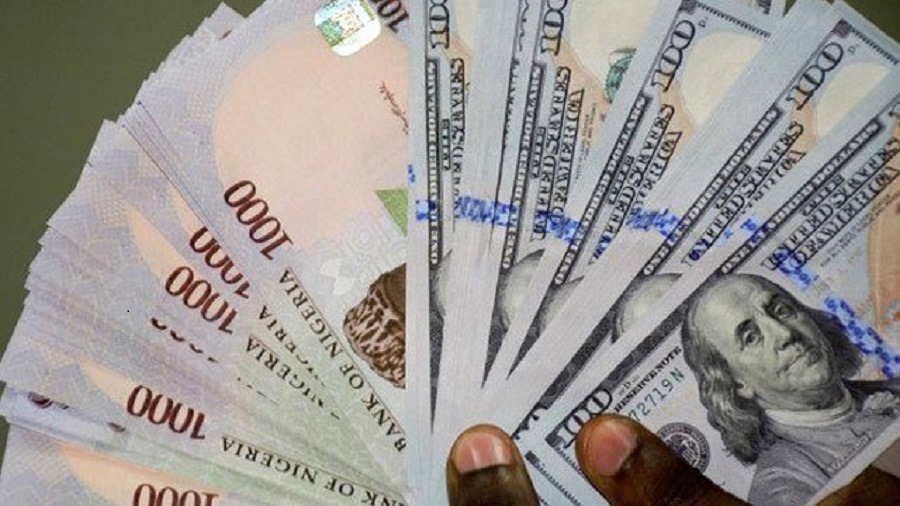
The Naira gained massively against the United States dollar in the last three days at the official foreign exchange as trading ended for the Christmas holidays.
Central Bank of Nigeria data showed that the Naira strengthened further on Wednesday to N1,443.37 per dollar, up from N1,449.99 on Tuesday.
This means that since Monday this week, the Naira has recorded a significant N13.18 gain against the dollar, according to the apex bank data.
READ ALSO:Naira Records Depreciation Against US Dollar Across Official, Black Markets
Similarly, at the black market, the Naira traded on Wednesday at N1,490 per dollar, an appreciation from the N1,500 exchanged on Monday but the same rate as on Tuesday.
The uptrend comes amid the rise in the country’s external reserves to $45.24 as of December 23rd, 2025.
DAILY POST reports that the Naira gained against the dollar at the official market on Monday and Tuesday.

 Headline4 days ago
JUST IN: US Forces Bomb Terrorists Camps In Nigeria
- News5 days ago
Okpebholo Slams ₦25bn Libel Suit On Edo PDP Chairman
- Headline4 days ago
US Dept Of War Shares Video Of Air Strikes In Nigeria
- News4 days ago
PHOTOS: SGF George Akume Weds Ooni’s Ex-Queen
- News1 day ago
BREAKING: Anthony Joshua Involved In Road Accident
- News2 days ago
Ex-Edo Gov Obaseki Reacts As His Cousin Is Beaten, Stripped
- News4 days ago
Trump’s Airstrikes: Halt Military Cooperation With US Immediately – Sheikh Gumi Tells Tinubu Govt
- News4 days ago
Shehu Sani Reacts To Trump’s Military Strikes In Nigeria
- Headline4 days ago
U.S. Lawmaker Reacts To Nigeria, U.S. Airstrikes
- Metro2 days ago
Obaseki Beaten, Stripped In Edo


