
Headline
Thousands Reported To Have Fled DR Congo Fighting As M23 Closes On Key City

Fierce fighting rocked the eastern Democratic Republic of Congo on Tuesday as the Rwanda-backed M23 militia rapidly advanced towards the strategic city of Uvira, with tens of thousands of people fleeing over the nearby border into Burundi, sources said.
The armed group and its Rwandan allies were just a few kilometres (miles) north of Uvira, security and military sources told AFP.
The renewed violence undermined a peace agreement brokered by US President Donald Trump that Kinshasa and Kigali signed less than a week ago, on December 4.
Trump had boasted that the Rwanda-DRC conflict was one of eight he has ended since returning to power in America in January.
READ ALSO:Ambassadorial Nominees: Ndume Asks Tinubu To Withdraw List
With the new fighting, more than 30,000 people have fled the area around Uvira for Burundi in the space of a week, a UN source and a Burundian administrative source told AFP.
The Burundian source told AFP on condition of anonymity he had recorded more than 8,000 daily arrivals over the past two days, and 30,000 arrivals in one week. A source in the UN refugee agency confirmed the figure.
The Rwanda-backed M23 offensive comes nearly a year after the group seized control of Goma and Bukavu, the two largest cities in eastern DRC, a strategic region rich in natural resources and plagued by conflict for 30 years.
Local people described a state of growing panic as bombardments struck the hills above Uvira, a city of several hundred thousand residents.
“Three bombs have just exploded in the hills. It’s every man for himself,” said one resident reached by telephone.
READ ALSO:South Africa Beat DR Congo In shootout To Finish Third At AFCON
“We are all under the beds in Uvira — that’s the reality,” another resident said, while a representative of civil society who would not give their name described fighting on the city’s outskirts.
Fighting was also reported in Runingo, another small locality some 20 kilometres (12 miles) from Uvira, as the M23 and the Rwandan army closed in.
Burundi views the prospect of Uvira falling to Rwanda-backed forces as an existential threat, given that it sits across Lake Tanganyika from Burundi’s economic capital Bujumbura.
The city is the main sizeable locality in the area yet to fall to the M23 and its capture would essentially cut off the zone from DRC control.
READ ALSO:Stampede Kills 37 During Army Recruitment In Congo Capital
Burundi deployed about 10,000 soldiers to eastern DRC in October 2023 as part of a military cooperation agreement, and security sources say reinforcements have since taken that presence to around 18,000 men.
The M23 and Rwandan forces launched their Uvira offensive on December 1.
Rich in natural resources, eastern DRC has been choked by successive conflicts for around three decades.
Violence in the region intensified early this year when M23 fighters seized the key eastern city of Goma in January, followed by Bukavu, capital of South Kivu province, a few weeks later.
– Regional risk –
The peace deal meant to quell the fighting was signed last Thursday in Washington by Congolese President Felix Tshisekedi and his Rwandan counterpart Paul Kagame, with Trump — who called it a “miracle” deal — also putting his signature to it.
READ ALSO:FULL LIST: US To Review Green Cards From 19 ‘Countries Of Concern’ After Washington Shooting
The agreement includes an economic component intended to secure US supplies of critical minerals present in the region, as America seeks to challenge China’s dominance in the sector.
But even on the day of the signing, intense fighting took place in South Kivu, where Uvira is located, which included the bombing of houses and schools.
Witnesses and military sources in Uvira said that Congolese soldiers fleeing the fighting had arrived in the city overnight Monday and shops were looted at dawn.
Several hundred Congolese and Burundian soldiers had already fled to Burundi on Monday, according to military sources, since the M23 fighters embarked on their latest offensive from Kamanyola, some 70 kilometres north of Uvira.
Since the M23’s lightning offensive early this year, the front had largely stabilised over the past nine months.
Burundian President Evariste Ndayishimiye warned in February there was a danger of the conflict escalating into a broader regional war, a fear echoed by the United Nations.



Headline
Insecurity: US Congressman Riley Moore Reveals Trump’s Mission In Nigeria
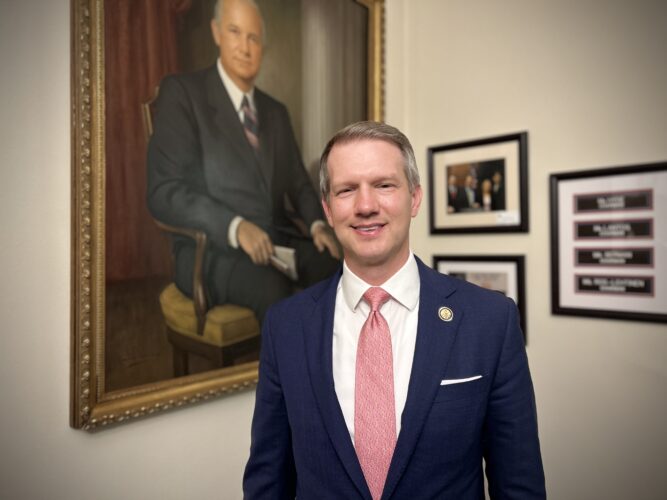
US Congressman Riley Moore has dismissed insinuations that President Donald Trump is attempting to bring war to Nigeria.
Moore made the remark in a post on his verified X handle on Monday.
His comments followed a US military airstrike on a terrorist enclave in north-west Nigeria on Christmas Day, reportedly carried out on the directive of President Trump.
“President Trump is not trying to bring war to Nigeria, he’s bringing peace and security to Nigeria and to the thousands of Christians who face horrific violence and death.
READ ALSO:Russia Calls up 135,000 Military Personnel
“The strikes against ISIS on Christmas, in coordination with the Nigerian government, have given hope to the Christians in Nigeria,” he said.
Recall that the lawmaker had previously stated that President Trump is focused on ending the killing of Christians in Nigeria.
It will be recalled that Moore led a US delegation on a fact-finding mission into alleged Christian genocide in Nigeria some weeks ago.
During his brief stay in the country, Moore travelled to Benue State, where he interfaced with religious and traditional leaders, as well as internally displaced persons.
Headline
Russia Calls up 135,000 Military Personnel
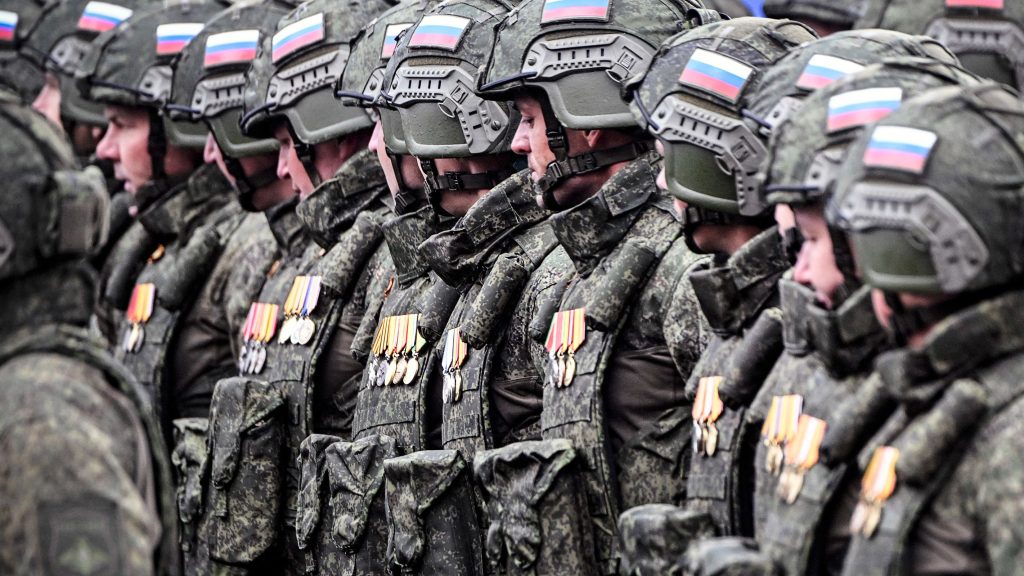
Russia has enlisted 135,000 conscripts for military service in 2026, following the conclusion of the autumn army draft by the Defense Ministry.
A statement on Monday said most personnel have been assigned to training units and military formations where they will “get a military specialty and learn to operate modern military hardware.”
The conscripts can choose to serve in any of the various military branches and armed services after an assessment of their health condition and the results of psychological examinations.
READ ALSO:Russian Strike On Odesa Region Kills Eight, Injures 27
The ministry disclosed that 680 recruits have joined scientific and research-production units, while 240 from the country’s national teams in Olympic disciplines joined sports companies.
However, military personnel who have served the established term of military service have been discharged and sent to their places of residence.
The latest enlistment confirms Russia is shoring up its troops deployed to the ongoing special military operation in Ukraine ahead of the new year.
READ ALSO:Putin Says Russia Ready For War, Blames Europe For Sabotaging Peace
A fortnight ago, European leaders reaffirmed their pledge to form a multinational force–under the aegis of the Coalition of the Willing–to assist Ukraine in securing land, skies, and seas.
The pledge is one of the six commitments the EU and heads of state developed for Ukraine’s security and economic recovery support measures.
In an interview with TASS on Sunday, Russian Foreign Minister Sergey Lavrov condemned Europe’s insistence on sending military forces to Ukraine.
“We have said many times that our Armed Forces would view them as a legitimate target,” he said, warning that anyone who attacks Russia would face “a devastating blow.”
Headline
How Our Airstrikes Stopped Christmas Attacks In Nigeria — US Lawmaker
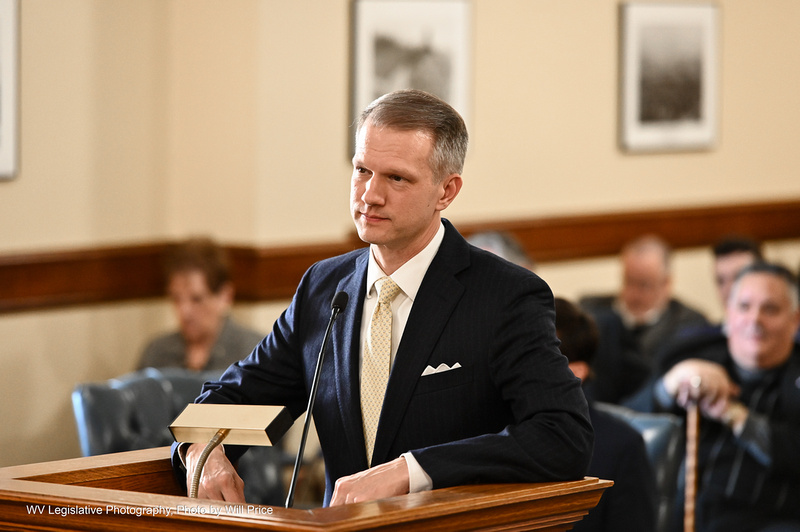
Riley Moore, a member of the United States House of Representatives from West Virginia’s 2nd District, has linked the absence of Christmas attacks in Nigeria this year to US military airstrikes carried out against Islamist militants on Christmas Day.
In a post on his official X account on Saturday, Moore contrasted the situation with the past two Christmas seasons, during which he claimed Christians were killed in attacks across parts of Nigeria.
The lawmaker noted that this year’s response targeted extremist groups instead of marking another period of violence.
READ ALSO:Rep Moore Confirms 12 Tomahawk Missiles Launched In Sokoto
He added that US forces acted decisively against militants in coordination with the Nigerian government.
“For the past two Christmases, Christians have been murdered in Nigeria. This year, thanks to @POTUS, Radical Islamic Terrorists were on the receiving end of 12 Tomahawk missiles as a present.
“The successful strikes on ISIS, in coordination with the Nigerian government, are just the first step to secure the country and end the slaughter of our brothers and sisters in Christ,” Moore wrote.
US President Donald Trump said on Thursday that American forces had conducted deadly strikes against Islamic State terrorists in north-western Nigeria.
Trump, who spoke via his Truth Social platform, warned that more attacks would follow if the militants continued killing Christians, adding that the Department of War executed numerous “perfect strikes.”

 Headline4 days ago
JUST IN: US Forces Bomb Terrorists Camps In Nigeria
- News5 days ago
Okpebholo Slams ₦25bn Libel Suit On Edo PDP Chairman
- Headline4 days ago
US Dept Of War Shares Video Of Air Strikes In Nigeria
- News4 days ago
PHOTOS: SGF George Akume Weds Ooni’s Ex-Queen
- News1 day ago
BREAKING: Anthony Joshua Involved In Road Accident
- News2 days ago
Ex-Edo Gov Obaseki Reacts As His Cousin Is Beaten, Stripped
- News4 days ago
Trump’s Airstrikes: Halt Military Cooperation With US Immediately – Sheikh Gumi Tells Tinubu Govt
- News4 days ago
Shehu Sani Reacts To Trump’s Military Strikes In Nigeria
- Headline4 days ago
U.S. Lawmaker Reacts To Nigeria, U.S. Airstrikes
- News5 days ago
YULETIDE: UBTH CMD Charges Nigerians To Be Hopeful In Coming Year


