
News
Tinubu Gives D’Tigress $100,000 Each, Flats, National Honour

President Bola Tinubu has honoured Nigeria’s national women’s basketball team, D’Tigress, with a reward package that includes $100,000 for each player, $50,000 for every member of the 11-man coaching and technical crew.
Tinubu also rewarded all team members and staff with a three-bedroom flat at the Renewed Hope Estate.
In addition, the President conferred on the players and their technical crew the prestigious national honour of Officer of the Order of the Niger.
This was announced by Vice President Kashim Shettima at the presidential reception in their honour at the State House Banquet hall, Abuja.
The triumphant D’Tigress alongside their officials, were warmly welcomed by First Lady Oluremi Tinubu, supported by the wife of the Vice President, Nana Shettima, at the New Banquet Hall in the Presidential Villa at 5:05 pm.
On behalf of President Bola Tinubu, Shettima received the team in recognition of their outstanding achievement.
READ ALSO:JUST IN: Tinubu Confers National Honours On Super Falcons
Also in attendance at the reception were Chief of Staff to the President, Femi Gbajabiamila; Chairman of the Senate Committee on Youths and Sports Development, Garba Maidoki; and Chairman of the House Committee on Sports, Kabiru Amadou.
The D’Tigress arrived after clinching their historic fifth consecutive AfroBasket title, outplaying Mali 78–64 in the final held at the Palais des Sports de Treichville in Abidjan, Côte d’Ivoire.
This win marks their seventh overall championship, reinforcing their supremacy in African women’s basketball.
The ceremony at the Presidential Villa mirrors a similar reception President Tinubu hosted a week earlier for the national female football team, the Super Falcons, who recently secured their tenth WAFCON title in Rabat, Morocco.
Tinubu’s remarks, delivered by Shettima at the reception noted, “Beyond being ambassadors of our nation and symbols of excellence, you have reminded us all of the power of sports to unite a diverse nation. Your victory is a testament to what we can achieve when we work together. You have brought home not just a trophy, but valuable lessons for all Nigerians.
“It is a great honour, on behalf of President Bola Ahmed Tinubu GCFR, to welcome our formidable D’Tigress to the State House. Once again, you are continental champions and now the top African team to qualify for the 2026 FIBA Women’s World Cup pre-qualifying tournament. You conquered Africa with a score of 78 to 64—showcasing not just tactical skill, but remarkable determination and resilience. The entire nation stands behind you with pride and support.
READ ALSO:Fintiri Gifts Super Falcons Coach N50m, House For WAFCON Victory
“My dear daughters, you faced challenges bravely, especially in the final quarter, responding not with panic but with poise. When you wore the green and white, it was more than just a uniform—you wore it with purpose, and now you wear the crown of African basketball for the fifth consecutive time.”
The President hailed Rena Wakama’s strength and inspiring young girls in the country.
“Coach Rena Wakama, you embody the evolution of leadership in Nigerian sports. Your quiet strength and remarkable achievements have shattered ceilings and inspired countless young girls across Nigeria. You truly deserve your accolades as the best coach in Africa and beyond.
“To Amy Okonkwo, the tournament’s Most Valuable Player, and Ezinne Kalu, the top scorer in the final, your brilliance lifted the whole team, but most importantly, you played for Nigeria and made us all proud.
“Let us reflect on one profound truth: Nigerian women have never failed the nation in sports. From the Super Falcons on the world stage, to record-breakers on the track, and now a basketball dynasty, our women have consistently been a source of pride and have proven that where preparation meets opportunity, Nigerian excellence prevails.”
Tinubu said the administration is prioritizing sports as a crucial driver of national development and economic growth, viewing it as more than entertainment but also infrastructure, education, diplomacy, and a tool for youth employment and transformation.
READ ALSO:Gov Aiyedatiwa Gifts Ondo-born Super Falcons Player N30m, House
He also recognised the National Sports Commission, led by Mallam Alabi, for its efforts in athlete welfare, institutional reform, grassroots support, and performance-driven development, with visible positive results.
“Special appreciation goes to the National Sports Commission, under Mallam Alabi, for renewed focus on athlete welfare, institutional reform, grassroots support, and performance-based development. The results are evident, and we are proud of you. The Nigerian Basketball Federation, led by Malam Ahmadu Musa Kida, also deserves recognition for consistent team development and dedication to Nigeria’s sporting glory.
“Our government will ensure that D’Tigress, their technical team, and sports leadership in Nigeria are appropriately recognized and rewarded. You have made us proud, and we will stand by you as you prepare for the global stage.
“To all Nigerian youth, let the story of D’Tigress inspire you. Greatness stems from hard work, discipline, and belief. Nigeria belongs to those who dare to dream and are willing to give their all to realize those dreams.
“D’Tigress: you are champions, role models, pathfinders, and true daughters of this land. It is my honor and privilege, on behalf of President Tinubu, to announce national honors for the team, coach, and technical staff; $100,000 for each player; $50,000 for the coach and technical team; and more rewards to come.
“This is true leadership—recognizing and rewarding those who have excelled for our nation. May God bless you all, may God bless Nigerian sports, and may God bless the Federal Republic of Nigeria,” he concluded.



News
Eating Takeout Food Often May Increase Heart Disease Risk — Study
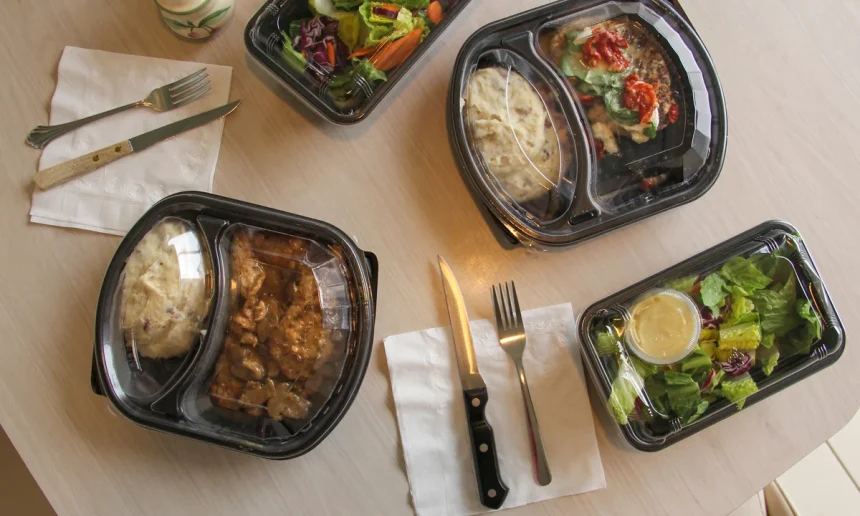
Research suggests that higher takeout food consumption may increase a person’s risk of cardiovascular disease, like heart disease.
In a new study, published in Food Science & Nutrition, researchers said eating takeout food too often can influence systemic inflammation that underlies much cardiovascular disease.
The study of over eight thousand people in the 2009 to 2018 U.S. National Health and Nutrition Examination Survey (NHANES) found that those who eat greater amounts of takeout food are likely to have various elevated risk factors for heart disease.
They were interviewed in their homes and also visited a mobile examination centre, where they recalled their food intake, received cardiometabolic health assessments, and had blood collected.
READ ALSO:23 Ships With Fuel, Food Items To Arrive Lagos Ports – NPA
Mammograms may predict heart disease risk in women — Study
The researchers found a correlation between the amount of takeout food a person consumes and their likelihood of developing chronic low-level inflammation, a key driver of cardiovascular pathology.
Deaths from cardiovascular disease and the consumption of takeout foods are both on the rise, and while that does not prove a causal relationship, the study explores whether there is a connection between the two.
The study tracked degrees of systemic inflammation according to the Dietary Inflammatory Index (DII), a scale that quantifies the risk of inflammation related to the intake of specific dietary substances.
READ ALSO:Food Security: 14,000 Smallholder Farmers To Benefit From N4bn Smart Agriculture Training In Bauchi
The three major takeaways from the analysis included that a higher level of takeout food consumption corresponded to an unfavourable cardiometabolic profile consisting of lower HDL, as well as higher triglycerides, fasting glucose, serum insulin, and insulin resistance.
Jayne Morgan, MD, cardiologist and Vice President of Medical Affairs in a reaction, who was not involved in the study, explained that “Takeout food raises the cardiovascular risk not because of one ingredient, but because of a predictable combination of nutrients, additives, and preparation methods that adversely affect blood pressure, lipids, insulin sensitivity, inflammation, and endothelial function.”
“This includes excess sodium that increases blood volume and blood vessel stiffness, and unhealthy fats, usually saturated fats or trans fats, that increase cholesterol level and atherosclerosis, a condition that can lead to heart attack and stroke.”
Michelle Routhenstein, Preventive Cardiology Dietitian at Entirely Nourished, also not involved in this study, declared, “It is also important to recognise that frequent takeout use often reflects broader lifestyle pressures such as demanding schedules, limited access to cooking resources, irregular meals, and disrupted sleep, all of which can quietly compound cardiovascular risk.”
News
How To Identify Fake Kiss Condoms In Circulation
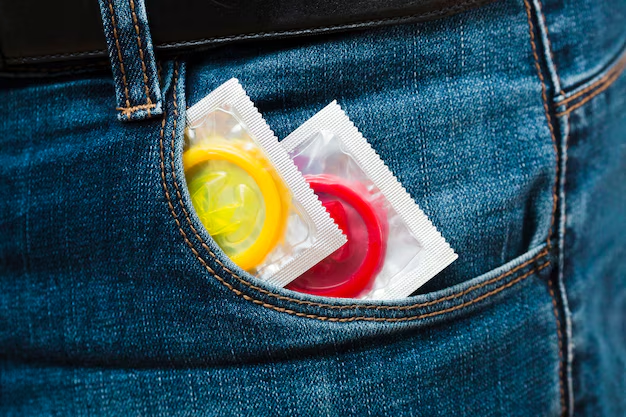
The National Agency for Food and Drug Administration and Control (NAFDAC) has recently warned Nigerians about the circulation of counterfeit Kiss brand condoms in major markets across the country.
Contents
Original DKT Kiss condoms
Fake Kiss condoms
In a public alert published on its website recently and referenced as Public Alert No. 042/2025, the agency said the warning followed information received from DKT International Nigeria, a non-governmental organisation involved in contraceptive social marketing and HIV/AIDS prevention.
NAFDAC stated, “The National Agency for Food and Drug Administration and Control is notifying the public about the sale and distribution of fake Kiss condoms in various Nigerian markets.
“The information was received from the MAH-DKT International Nigeria, a leading non-governmental organisation focused on contraceptive social marketing. Its mission is to provide Nigerians with affordable and safe options for family planning and HIV/AIDS prevention.
“The fake Kiss condoms have been reported to be found in Onitsha Market, Idumota Market, Trade Fair Market, and various markets in Kano, Abuja, Uyo, Gombe, Enugu, and others.”
READ ALSO:Married Man Denies Wife At Brazil Concert To Kiss Tems On Stage [VIDEO]
Kiss condom is a brand of male latex condoms designed to offer sexual protection, including the prevention of unwanted pregnancy and sexually transmitted infections such as HIV, gonorrhoea and syphilis.
To help consumers avoid counterfeit products, NAFDAC outlined key differences between original and fake Kiss condoms.
Original DKT Kiss condoms
The original product comes in a light red box pack with clear instructions printed on the lower part of the pack, including single-use warnings and storage and caution information. The box contains detailed medical device information, including MDSS GmbH, Germany, and a complete Nigerian address at Isolo Industrial Layout, Oshodi-Apapa Expressway.
The condom pack is light red, with the word “Kiss” closely written on six lines. The wallet outer pack is lighter red, carries the Oshodi-Apapa address, manufacturer details, and a clear product description beside the condom image. The hidden flap includes revision dates, medical device details, and caution information, while the wallet inner contains detailed instructions and eight bullet points under important notes.
READ ALSO:Lagos Names Mandy Kiss Anti-drug Abuse Ambassador
The original condom is large, oval-shaped, well-lubricated, and has a large teat end for semen collection.
Fake Kiss condoms
In contrast, fake Kiss condoms come in darker-coloured box packs with little or no additional information. Some boxes are plain white inside and lack condom images. The address is wrongly listed as 42, Montgomery Road, Yaba, Lagos, while the manufacturer’s address is incomplete or missing. Storage and caution information is absent.
The condom pack is darker, with “Kiss” loosely written on five lines and wide spacing. The condom strip is longer than the original. The wallet outer pack is also darker red, carries incorrect or missing addresses, lacks colour wave designs, and shows inconsistencies in barcode lines. Medical device and caution information are missing, and the hidden flap contains no details.
Inside the wallet, information is summarised with only six bullet points. The fake condom is thinner, round-shaped, less lubricated, and has a smaller teat end.
(TRIBUNE)
News
Lagos: Police Arrest 14 Suspected Traffic Robbers On Lekki-Epe Expressway

Fourteen persons suspected to be involved in traffic-related robbery have been arrested at various points along the Lekki-Epe Expressway in Lagos over the past two weeks.
The arrests were confirmed on Tuesday by the Lagos State Police Command spokesperson, SP Abimbola Adebisi, via a post on her official X handle, @AbimbolaShotayo.
According to her, operatives of the Command’s Tactical Squad based in Elemoro carried out the operations that led to the suspects’ apprehension.
READ ALSO:VIDEO: Chaos As Last-minute Shoppers Overwhelm Lagos Balogun Market
She explained that the arrests followed sustained patrols and intelligence-driven operations aimed at curbing criminal activities associated with traffic congestion and improving the safety of motorists and other road users along the busy corridor.
Adebisi noted that the development reflects the Command’s determination to strengthen security and uphold law and order on the Lekki-Epe axis, adding that the Tactical Squad has continued to proactively identify crime-prone areas and respond swiftly to threats posed by criminal elements.
She called on residents and commuters to support police efforts by providing timely and credible information that could assist in preventing and detecting crime.
READ ALSO:VIDEO: Chaos As Last-minute Shoppers Overwhelm Lagos Balogun Market
“Security is a shared responsibility. Members of the public are encouraged to stay alert and promptly report any suspicious movements or activities to the nearest police station,” she said.
The police spokesperson further reassured residents and road users of the Command’s commitment to maintaining aggressive patrols and security operations to protect lives and property in the area.
She reiterated the Command’s community policing message, “See Something, Say Something,” stressing the importance of cooperation between the police and the public in sustaining peace and security.

 News3 days ago
BREAKING: Anthony Joshua Involved In Road Accident
- News4 days ago
Ex-Edo Gov Obaseki Reacts As His Cousin Is Beaten, Stripped
- Politics3 days ago
You’re Not 001 – Wike Rubbishes Claims Of Fubara Being APC Leader In Rivers
- Metro4 days ago
Obaseki Beaten, Stripped In Edo
- Politics3 days ago
Wike Speaks On Defecting To APC
- Politics3 days ago
JUST IN: INEC Excludes PDP From Ekiti Governorship Election
- Politics3 days ago
Go To Hell, You Didn’t Pay My School Fees – Wike Hits Seyi Makinde
- News3 days ago
NAF Neutralizes Bandits At Turba Hill, Kachalla Dogo Sule Camps
- News3 days ago
Doris Ogala: How Pastor Chris Knelt Before Church, Begged For Forgiveness [Video]
- Metro3 days ago
JUST IN: Court Orders Remand Of Ex-AGF Malami, Son, Wife In Kuje Prison


