
Headline
Top 10 Countries With Highest Number Of Churches 2024
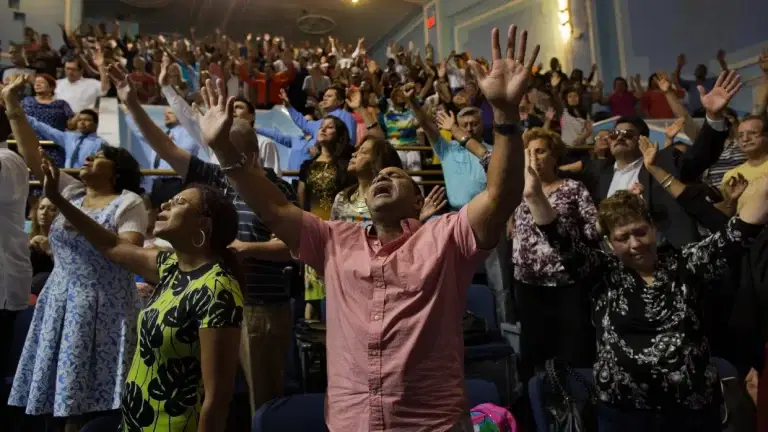
As Christianity continues to be one of the world’s most practiced religions, certain countries stand out for their sheer number of churches
When it comes to the expression of faith and spirituality, few things are as significant as places of worship. Churches, in particular, have played a central role in the spiritual lives of millions worldwide.
These sacred spaces not only serve as venues for worship but also act as pillars of community life, education, and social support. As Christianity continues to be one of the world’s most practiced religions, certain countries stand out for their sheer number of churches.
This article explores the top 10 countries with the highest number of churches, per ratings from Bscholarly, delving into the historical, cultural, and social factors that have led to their proliferation.
1. Vatican City
While Vatican City is the smallest country in Europe by population, it holds a unique distinction: it boasts the highest concentration of churches. With around 1,700 churches, Vatican City has more churches per capita than any other country. This small, yet powerful state, located within Rome, Italy, is home to about 1,000 residents and hosts St. Peter’s Basilica, one of the holiest sites for Catholics worldwide.
READ ALSO: PHOTOS: 10 Wonders Of The World And Countries To Find Them
2. Rwanda
Rwanda, with a Christian population of 93.6%, is predominantly Roman Catholic. Despite being one of Africa’s smallest and most densely populated countries, it has an estimated population of 11 million people, with around 1 million identifying as Christians. The country’s rich history and significant Christian presence have earned it the nickname “the Jerusalem of Africa” by some Westerners, particularly after the 1967 conflict between Christians and Muslims.
3. Malawi
Malawi stands out with the highest number of churches per capita, with one church for every 132 people. The country has approximately 10,000 churches spread across its territory, reflecting its deep-rooted Christian heritage. Many of these churches date back to colonial times when missionaries established numerous Catholic churches and chapels independently of government support. Before gaining independence from Britain in 1964, Malawi was known as Nyasaland, meaning “the land of lakes.”
4. Angola
Christianity is the dominant religion in Angola, with 95% of the population identifying as Christians. The majority are Roman Catholics, while the rest belong to various Protestant denominations like Methodists, Congregationalists, and Baptists. Christian missionaries played a crucial role in spreading Christianity across Angola, also contributing to the country’s social development through initiatives like free medical care and education.
READ ALSO: 10 Most Corrupt Countries In Africa In 2024
5. Romania
Romania, located in Southeastern Europe with Bucharest as its capital, is home to approximately 1,800 churches. The country’s cultural and ethnic identity is deeply influenced by Roman history, shaped by its strategic location along major migration routes in Europe. The Orthodox Church, one of the three major Christian denominations, is predominant in Romania, where about 200 million people adhere to Orthodox Christianity.
6. Italy
Italy, with a population of 60.6 million, is the fourth-largest economy in Europe and a founding member of the European Union. It has a rich cultural heritage, reflected in its art and architecture, with masterpieces like Michelangelo’s David, Leonardo da Vinci’s Mona Lisa, and Brunelleschi’s Duomo in Florence. Italy is also home to a significant number of churches, a testament to its deep-rooted Christian traditions.
7. Poland
Poland, situated in Central Europe with a population of 38.5 million, is home to over 10,000 churches. The country’s history is steeped in Catholic tradition, which plays a central role in Polish culture and identity. Polish cuisine, influenced by Russian, Ukrainian, Lithuanian, and German culinary traditions, reflects the country’s rich heritage, with dishes passed down through generations.
READ ALSO: Top 10 Most Dangerous Countries In The World 2024
8. Spain
Spain is a country with a deep European heritage, influenced by significant historical events such as the discovery of the Americas and its neutral stance during the world wars. The Catholic Church has long played a pivotal role in Spanish history, influencing both political and social landscapes. The Church in Spain grew as new members shared their faith with their communities, further solidifying its influence.
9. Portugal
Portugal, one of Europe’s most religious countries, has a long-standing Christian heritage, with 90% of its population identifying as Catholic. Despite its relatively small size, Portugal maintains strong ties with religious institutions, offering benefits such as tax rebates for clergy. The Catholic faith continues to be a significant aspect of Portuguese society.
10. São Tomé and Príncipe
The small island nation of São Tomé and Príncipe, located in the Gulf of Guinea off the coast of Central Africa, was settled in the 15th century by Portuguese explorers. The islands became a crucial hub for the African slave trade, and today, Roman Catholicism is the dominant religion, with 55.7% of the population identifying as Catholic, a legacy of Portuguese colonialism.
SOURCE: VANGUARD



Headline
Judge Orders Trump White House To Restore Access To Banned Media Outlets
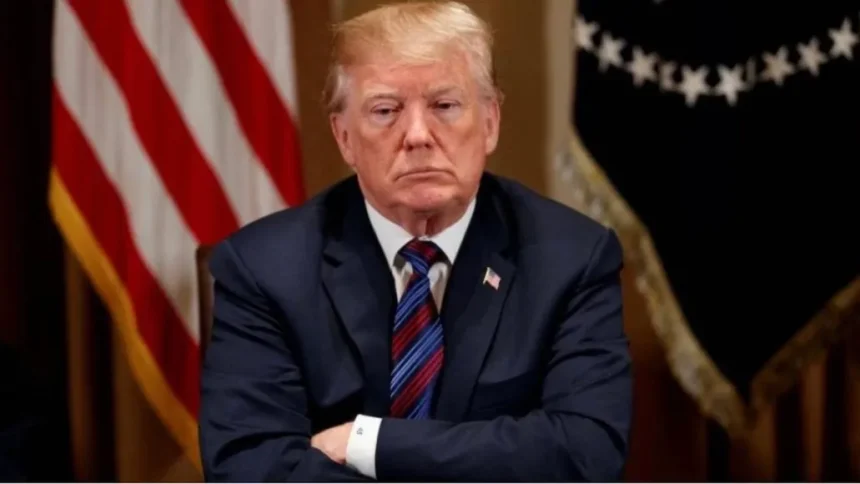
A US federal judge has ordered the Trump administration to temporarily restore White House access to journalists from CNN, MS NOW and Politico after the three news organisations challenged their exclusion from the presidential complex.
US District Judge Timothy Kelly issued a 14-day temporary restraining order early Thursday, directing the White House to immediately return, reinstate and restore the press credentials of journalists from the three outlets.
The ruling followed a lawsuit filed on Monday by CNN, MS NOW and Politico, which challenged President Donald Trump’s decision to bar their reporters from the White House.
Trump announced the ban on September 18, accusing the outlets of repeatedly publishing what he described as “FAKE NEWS” and negative coverage of his administration.
READ ALSO: US: White House Launches Trump TV After CNN, Others’ Ban Backfires
The three organisations argued that the administration’s action violated their First Amendment rights and deprived their journalists of due process under the Fifth Amendment.
In his ruling, Kelly said the outlets were likely to succeed in showing that their press credentials had been revoked without constitutionally adequate due process.
The judge also rejected the administration’s argument that national security concerns justified the restrictions.
“The record lacks factual support for defendants’ contention that the revocation of plaintiffs’ hard passes will in fact protect national security or that national security will be endangered if the court orders their passes reinstated while this litigation proceeds,” Kelly wrote.
READ ALSO: Trump Bans CNN, Others From White House Coverage, Gives Reason
He also noted that Trump had focused on the outlets’ reporting when announcing the ban rather than national security concerns.
“Certainly, that is not what President Trump said when he announced that he was ‘banning’ plaintiffs from the White House—instead, he focused on the alleged lack of truthfulness and negativity of plaintiffs’ reporting,” the judge wrote.
The administration had argued in court that access to the White House was a privilege rather than a right and that the outlets’ reporting raised concerns about national security and professionalism.
The Justice Department is expected to appeal the ruling.
READ ALSO: Trump Launches Task Force To Tackle Birth Tourism, Revokes Over 600 Visas
Trump had previously said he would probably allow the three organisations back into the White House if a court ruled against his decision.
The dispute began when reporters from CNN, MS NOW and Politico were turned away from the White House after their press credentials were revoked.
The decision also affected the White House television pool. CNN had been scheduled to travel with Trump to New York for the United Nations General Assembly as part of the pool, but its removal led the other participating television networks to suspend the pool in solidarity.
READ ALSO: Trump Confirms Secret Plane Swap Over Possible Iranian Missile Threat
Other media organisations also joined the legal challenge indirectly by filing a friend-of-the-court brief supporting the three outlets.
The case now moves forward with the temporary restraining order in place for 14 days. During that period, the court is expected to consider whether longer-lasting relief should be granted.
The ruling comes as Trump faces a series of high-profile events at the White House, including his scheduled meeting with Chinese President Xi Jinping.
The administration and the three news organisations are expected to continue their legal arguments as the court considers the broader dispute over press access and the constitutional rights of journalists covering the president.
(TimeMagazine)
Headline
Man Charged After Fatal Southall Collision
A 20-year-old man has been charged after a fatal road collision in Southall, west London, which claimed the life of a 17-year-old passenger.
The Metropolitan Police said officers were called at about 1:04 a.m. on Saturday, September 19, following reports of a collision involving a Ford Mustang on South Road, Southall.
Officers attended the scene alongside paramedics from the London Ambulance Service and firefighters from the London Fire Brigade.
Despite efforts by emergency responders, 17-year-old passenger Ranbir Singh died at the scene.
His next of kin have been informed and are being supported by specialist officers.
READ ALSO: US Boxer Mylik Birdsong Shot, Killed In LA Drive-by Shooting
Another passenger, a 26-year-old man, sustained serious injuries in the collision and remains in hospital, according to police.
The driver of the vehicle, Sukhveer Singh, 20, of Townsend Road, Southall, was arrested at the scene.
He was subsequently charged on Sunday, September 20, with causing death by dangerous driving, aggravated vehicle taking and dangerous driving.
He was also charged with driving otherwise than in accordance with a licence and using a vehicle without insurance.
Singh appeared before Uxbridge Magistrates’ Court on Monday, September 21, and was remanded in custody.
He is due to appear at the Old Bailey on Monday, October 19.
READ ALSO: Reps Shoot Down Bill Seeking Rotational Presidency
Detective Inspector Fiaz Janjua, from the Serious Collision Investigation Unit, said: “This is a truly tragic incident in which a young man has lost his life and another remains in hospital with serious injuries.
“Our deepest sympathies remain with Ranbir’s family and friends, who continue to be supported by specially trained officers. during this extremely difficult time.
“While a man has now been charged in connection with this collision, our investigation remains ongoing and we are continuing to establish the full circumstances leading up to the incident.
READ ALSO: Heated Rhetoric As Republicans Blame Biden For Trump Shooting
“I would ask anyone who witnessed the collision, the manner of driving beforehand, or the movements of the Ford Mustang in the Southall area during the early hours of Saturday, 19 September, to come forward.”
Police are particularly appealing to anyone who may have CCTV footage, doorbell recordings, mobile phone footage or dashcam recordings that could assist the investigation.
The Met urged anyone with information to contact police on 101, quoting reference 01/8080469/26.
The force said the investigation remains ongoing as detectives work to establish the circumstances leading up to the collision.
(MetPolice)
Headline
Four Nations Back Permanent African Seat On UN Security Council
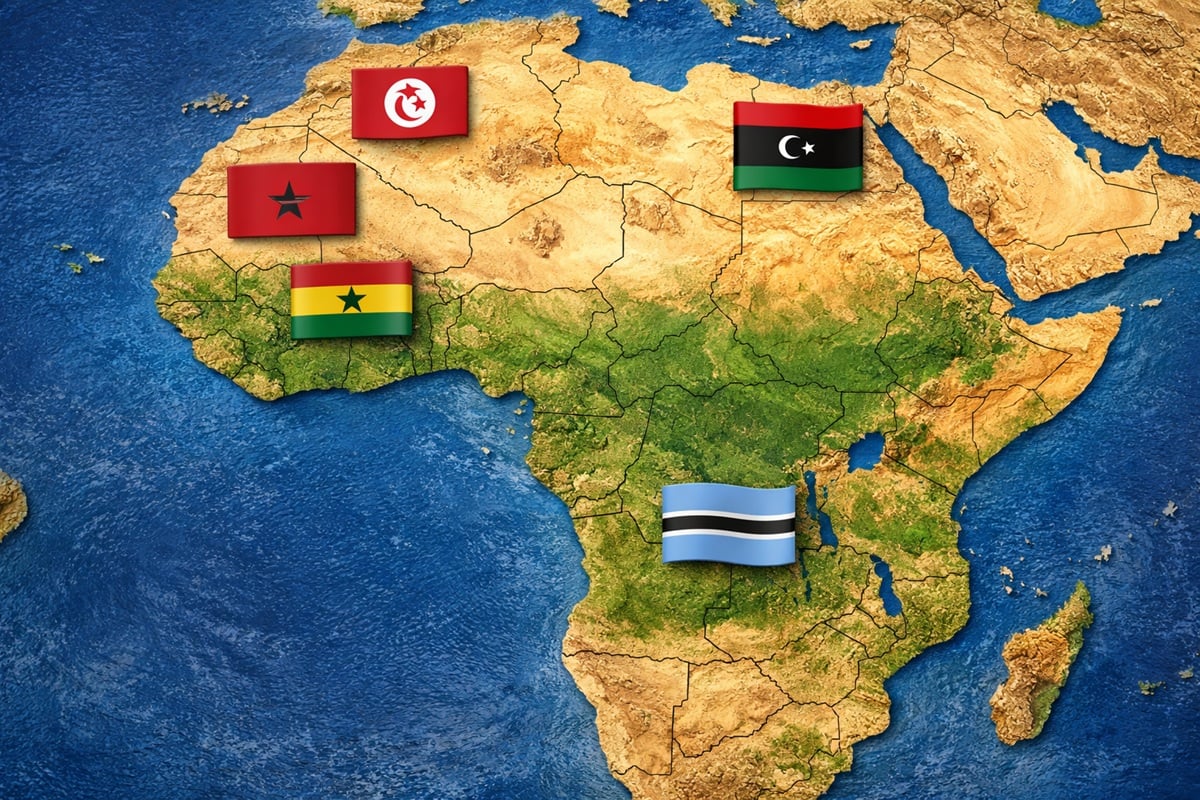
Four nations, Brazil, Germany, India and Japan, have backed a permanent African seat on the United Nations Security Council (UNSC), calling for urgent reform of the Council to reflect contemporary geopolitical realities.
The four countries, under the Group of Four (G4), made their position known in a joint statement issued after their foreign ministers met in New York on Tuesday on the margins of the 81st session of the UN General Assembly.
The ministers said reform of the Security Council had become more necessary than ever, given the increasingly challenging global geopolitical environment.
They said the Council was currently unable to effectively discharge its core responsibility of maintaining international peace and security, with its representativeness, legitimacy, credibility and efficacy in question.
READ ALSO: Six Hidden Health Benefits Of Unsweetened Zobo
According to them, the Council’s eight-decade-old structure was “not reflective of contemporary geopolitical realities” and had become an impediment to addressing present and future challenges to international peace and security.
The ministers stressed that expansion of the Security Council in both the permanent and non-permanent categories was central to meaningful reform.
They called for greater representation of under-represented and unrepresented regions and groups, particularly Africa, Asia-Pacific, and Latin America and the Caribbean.
The four nations also welcomed the reform model presented by the African Group during the Inter-governmental Negotiations (IGN) on Security Council reform in the 80th session of the General Assembly.
READ ALSO: Italy PM Meloni Announces Plan To Ban Niqabs, Burqas In Schools
They reaffirmed their support for Africa’s case for enhanced representation on the Security Council, including in the permanent category.
The ministers, however, expressed concern over the slow pace of negotiations, noting that the IGN process had produced no concrete outcome towards substantive Security Council reform despite 18 years of discussions.
They also expressed reservations over the presentation of what they described as a “bridging proposal” before the commencement of text-based negotiations.
According to them, the proposal failed to take into account the position of a clear majority of UN member states in favour of expansion in both permanent and non-permanent categories.
READ ALSO: Gridlock: Hundred Of Passengers Stranded Along Lokoja-Abuja Road
The ministers further maintained that consensus should not be the benchmark for decision-making on Security Council reform, citing the UN Charter and the mandate of the IGN.
They said Brazil, Germany, India and Japan would work with other reform-oriented groups to develop a consolidated model that reflects the views of the majority of UN member states.
The four countries said commencing text-based negotiations should be treated as a priority towards achieving substantive reform of the Security Council.
They said this would help restore the Council’s representativeness, legitimacy, credibility and effectiveness, while strengthening the multilateral system with the UN at its centre.
READ ALSO: NDLEA Intercepts Colos Shipments From UK, Uncovers Opioids In Loaves Of Bread, Speakers
The ministers also said discussions on reform should not be restricted to the IGN, expressing willingness to engage the wider UN membership through other platforms, including the General Assembly.
They pledged to continue coordinating closely during the 81st session of the General Assembly and directed their officials to follow up on the discussions.
Progress on the issue is expected to be reviewed at the next Director General-level meeting in New Delhi.

 News4 days ago
BREAKING: Tinubu Extends Working Vacation
- Headline4 days ago
How To Format An Academic CV For US Master’s, PhD Applications
- News4 days ago
Benue Govt Suspends Muslim Pilgrims Welfare Board Chairman, Secretary
- Entertainment4 days ago
Why Funke Akindele Was Not At My Movie Premiere – Kamo State
 News3 days ago
OPINION: The Stranger In APC’s Kitchen
- News4 days ago
FULL LIST: Names Of 37 Illegal Miners Who Died In NSCDC Custody
- Politics4 days ago
Crisis Rocks NDC Over Obi-Kwankwaso Campaign Council
- Sports4 days ago
5 Football Players Who Excelled In Multiple Positions
- News5 days ago
[OPINION] Wike-APC: Fights Always End Adultery
- Headline4 days ago
Italy PM Meloni Announces Plan To Ban Niqabs, Burqas In Schools


