
Business
Two Edo Refineries To Boost Nigeria’s 1.5 Million Bpd Refining Capacity By 2025, Says Wabote

The Executive Secretary, Nigerian Content Development and Monitoring Board (NCDMB), Simbi Wabote, has said that the two refineries in Edo State, the Edo Refinery and Duport Midstream Refinery, which are currently refining petrochemical products, are well positioned to contribute to Nigeria’s 1.5 million barrels per day refining capacity by 2025.
Wabote disclosed this while delivering a keynote address at the third Biennial International Conference on Hydrocarbon Science and Technology, organised by the Petroleum Training Institute (PTI) in Abuja, with the theme, “The Future of the Oil and Gas Industry: Opportunities, Challenges, and Development.”
The two refineries in Edo State have placed a combined order of 300,000 barrels of crude from the Oza oil field and currently produce diesel, naphtha and Lour Pour Fuel Oil (LPFO).
READ ALSO: Refineries: Reps Call For Forensic Audit Of N11.34trn Spent On Rehabilitation
While the Edo Refinery and Petrochemical Company (ERPC) runs the 6000bpd plant in Ologbo, Ikpoba Okha Local Government Area, Duport Midstream Company Limited (DMCL) operates the Duport Refinery, which is part of an integrated energy park, located in Egbokor, Orhionmwon Local Government Area of the State.
The Edo Refinery was midwifed through a N700m investment by the Governor Godwin Obaseki-led government in 2019, and is already being expanded into a 12,000bpd facility.
Wabote’s NCDMB has stakes in the Duport Refinery and is committed to the expansion of the facility.
READ ALSO: Nigeria, Others Need $7.5bn To Deepen LPG Usage – Refiners
According to Wabote, “If all plans go well, Nigeria would meet the target of 1.5 million bpd by 2025 through the various refining investments such as the 650,000 barrels per day Dangote refinery and the Bua Group refinery project.
He also listed the Waltersmith modular refinery, Duport Midstream refinery, OPAC Refinery, Edo Refinery, Aradel Holdings refinery as well as the existing 445,000 barrels per day capacity from the Kaduna, Warri, and Port Harcourt refineries as some of the projects that would help Nigeria hit the 1.5 million bpd refining target.
“The realisation of these projects would culminate in Nigeria achieving a combined refining capacity of approximately 1.5 million barrels per day by 2025,” he added.

Business
Fuel Price Cut: NNPCL GCEO Ojulari Reveals Biggest Beneficiaries

The Group Chief Executive Officer of the Nigerian National Petroleum Company Limited (NNPCL), Bayo Ojulari, has said Nigerians are the biggest beneficiaries of the ongoing fuel price reductions, triggered by competition in the downstream oil sector.
Ojulari made the remarks on Sunday while speaking with journalists after briefing President Bola Tinubu in Lagos.
He described the current fluctuations in petrol prices as a natural outcome of Nigeria’s transition away from dependence on fuel imports.
READ ALSO:NNPCL Revenue, Profit Soar To N5.08tn, N447bn In October
According to him, increased competition in the market ultimately favors consumers, adding that the present volatility will ease over time.
“Where there is healthy competition, the buyers are the ultimate beneficiaries. We should also bear in mind that the market will stabilise,” Ojulari said. “There may be some tension along the way because we are undergoing a major transition.”
His comments come amid an ongoing fuel price war that has resulted in successive reductions at petrol stations across the country in recent weeks.
Earlier in December 2025, Dangote Refinery cut its gantry price to about N699 per litre. Following this move, MRS filling stations, NNPCL outlets, and other marketers reduced pump prices to between N739 and N901 per litre in Abuja.
Business
Naira Records Massive Appreciation Against US Dollar Into Christmas Holidays
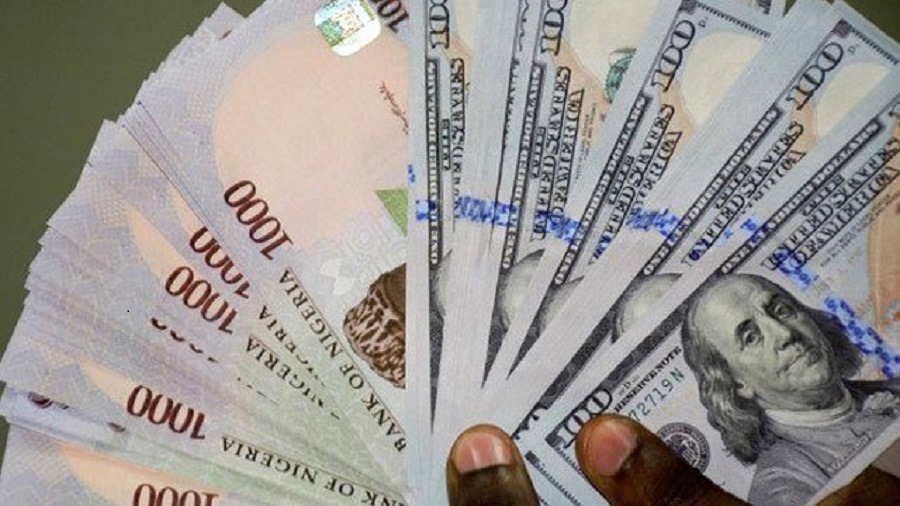
The Naira gained massively against the United States dollar in the last three days at the official foreign exchange as trading ended for the Christmas holidays.
Central Bank of Nigeria data showed that the Naira strengthened further on Wednesday to N1,443.37 per dollar, up from N1,449.99 on Tuesday.
This means that since Monday this week, the Naira has recorded a significant N13.18 gain against the dollar, according to the apex bank data.
READ ALSO:Naira Records Depreciation Against US Dollar Across Official, Black Markets
Similarly, at the black market, the Naira traded on Wednesday at N1,490 per dollar, an appreciation from the N1,500 exchanged on Monday but the same rate as on Tuesday.
The uptrend comes amid the rise in the country’s external reserves to $45.24 as of December 23rd, 2025.
DAILY POST reports that the Naira gained against the dollar at the official market on Monday and Tuesday.
Business
Report Any MRS Filling Stations Selling Fuel Above N739 Per Liter — Dangote Refinery To Nigerians

Dangote Refinery has urged Nigerians to report any MRS filling station outlets nationwide selling fuel above the N739 per liter announced price.
The company disclosed this in a statement on Sunday.
The refinery insisted that its petrol being at retail outlets remain N739 per liter while the gantry price is N699.
It further called on other filling station owners to patronize its refined petroleum products at the N699 rate.
“We also call on other petrol station operators to patronize our products so that the benefits of this price reduction can be passed on to Nigerians across all outlets, ensuring broad-based relief and a more stable downstream market.”
READ ALSO:Dangote Sugar Announces South New CEO
Recall that Aliko Dangote, the president of Dangote Refinery, had pegged the retail price of his petrol at a maximum of N740.
DAILY POST reports that MRS filling and other filling stations had reduced fuel prices to between N739 and N912 per liter in Abuja.
However, reports emerged that some MRS filling stations were selling above the N739 per liter announced price benchmark.

 News5 days ago
JUST IN: Kano Lawmaker, Sarki Aliyu Daneji, Dies Hours After Colleague’s Passing
- News5 days ago
FULL LIST: Churches That Don’t Celebrate Christmas
- Headline3 days ago
JUST IN: US Forces Bomb Terrorists Camps In Nigeria
- News4 days ago
Okpebholo Slams ₦25bn Libel Suit On Edo PDP Chairman
- Headline3 days ago
US Dept Of War Shares Video Of Air Strikes In Nigeria
- Entertainment5 days ago
AFCON 2025: Davido Wins $96,000 After Super Eagles Beat Tanzania
- News5 days ago
Sheikh Gummi Sues Two Over Alleged False Facebook Publication
- News5 days ago
7 Health Risks Of Owning A Cat
- Headline5 days ago
Coup: Guinea-Bissau Junta Releases Six Held Opposition Politicians
- News3 days ago
PHOTOS: SGF George Akume Weds Ooni’s Ex-Queen


