
Headline
UK Govt Offers Chevening Scholarship To PWDs In Nigeria

The British High Commission in Nigeria has offered the prestigious Chevening scholarship for the 2024/2025 academic year to some Persons Living With Disabilities(PWDs).
The gesture according to the commission is to guarantee fairness and equal access to education for all in line with international conventions.
Ms Gill Atkinson, Deputy Commissioner of British High Commission in Nigeria, announced this on Wednesday in Abuja during a presentation to showcase the Chevening Scholarship to some persons with disabilities and putting them through the application process.
Atkinson noted Chevening, is one of the best things done between the UK and Nigeria government to deepen its cooperation especially in the education sector and to foster PWDs inclusion in the society.
“Chevening is designed not to discriminate against any particular group of people but to give them the opportunities to study, meet their passions and bring those skills and experiences that they have discovered and developed back to Nigeria.
READ ALSO: Nigeria Deepens Bilateral Relations With EU On Security Cooperation
“The reason we are doing this is to help Nigeria’s brightest and best take their country forward. We really want to see young Nigerians equipped to move their country forward.
“The inclusion of persons with disabilities into the programmes is a way the UK government shows them that they are just like every other person with great abilities.
“Persons with disabilities cannot be left out because they also have a lot to impact on society which is why the inclusion,”Atkinson said.
Mrs Oluwafunmilayo Ladepo, Chevening Programme Officer in Nigeria, said the inclusion of persons with disability was also aimed at providing Nigeria with the positive impact they will bring to the country.
“We are not giving PWDs only because of their disabilities but because they have the ability that many have overlooked due to their disability.
READ ALSO: 2 brothers sentenced to death for killing farmer in A-Ibom
“We have someone from the previous set who is a Journalist with Visual impairment who completed his Masters program and got an internship with BBC.
“This is because of his ability and intelligence and he will be back after his internship to contribute to the media.
“So this is the basic thing, partnering with Nigeria, to improve Nigeria and also to gain from Nigeria because if we have these people going, we are also having strong people coming back to build Nigeria.”
She noted that about forty seven persons with disabilities have benefitted from the programme since 2014 when the UK government started including Persons with Disabilities as beneficiaries.
She also urged as many others to apply for the 2024 session to the UK institutions listed on the Chevening site and ensure that they meet the deadline.
In his remarks, Mr James Lalu, Executive Secretary, National Commission for Persons with Disabilities and Dr Adebayo Adebukola, appreciated the U.K government for including Persons with Disabilities in the programme.
READ ALSO: Police Arrest 2 Over Romance Scam In Abuja
Adebukola said it is an opportunity which would be properly utilised, adding that he looks forward to more Persons with Disabilities benefitting.
“I am very happy for the detailed explanation which will guide Persons with Disabilities through the application process and what to expect in the UK.
“It is also an opportunity to learn from the UK and bring back to Nigeria and build our own country because the UK and other developed countries were built by their own people and not spirits.
“We need people to go there and learn and bring in policies that will help push for more inclusion of Persons with Disabilities in the Nigerian society”, Adebukola said.
READ ALSO: FG Announces N75 billion Interest-free Loan For 1.5m Market Women
The News Agency of Nigeria (NAN) reports that the event also had Persons with Disabilities who have benefitted from previous Chevening Scholarship share their experiences, and give inspirations to others.
NAN also reports that the Chevening Scholarships are the UK government’s global scholarship programme, funded by the Foreign and Commonwealth Office and partner organisations.
The scholarship is worth about £35,000 to £45,000 pounds per scholar which is about thirty five million naira.
The programme which has been in Nigeria since 1984 offers awards to outstanding scholars with leadership potential to study for a master’s degree in any subject at any UK university.
The UK Government had earlier awarded 44 Nigerians including Persons with Disabilities in the Chevening 2023/2024 cycle.



Headline
How Our Airstrikes Stopped Christmas Attacks In Nigeria — US Lawmaker
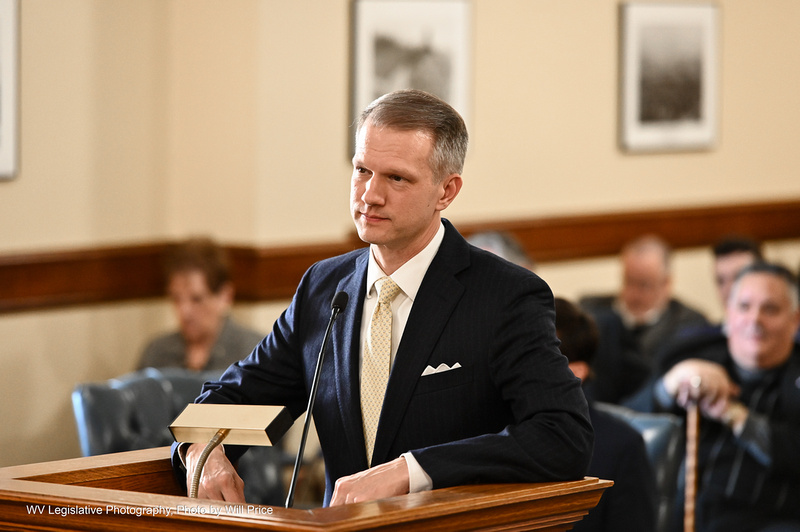
Riley Moore, a member of the United States House of Representatives from West Virginia’s 2nd District, has linked the absence of Christmas attacks in Nigeria this year to US military airstrikes carried out against Islamist militants on Christmas Day.
In a post on his official X account on Saturday, Moore contrasted the situation with the past two Christmas seasons, during which he claimed Christians were killed in attacks across parts of Nigeria.
The lawmaker noted that this year’s response targeted extremist groups instead of marking another period of violence.
READ ALSO:Rep Moore Confirms 12 Tomahawk Missiles Launched In Sokoto
He added that US forces acted decisively against militants in coordination with the Nigerian government.
“For the past two Christmases, Christians have been murdered in Nigeria. This year, thanks to @POTUS, Radical Islamic Terrorists were on the receiving end of 12 Tomahawk missiles as a present.
“The successful strikes on ISIS, in coordination with the Nigerian government, are just the first step to secure the country and end the slaughter of our brothers and sisters in Christ,” Moore wrote.
US President Donald Trump said on Thursday that American forces had conducted deadly strikes against Islamic State terrorists in north-western Nigeria.
Trump, who spoke via his Truth Social platform, warned that more attacks would follow if the militants continued killing Christians, adding that the Department of War executed numerous “perfect strikes.”
Headline
U.S. Lawmaker Reacts To Nigeria, U.S. Airstrikes
United States Congressman, Riley Moore, has stated that President Donald Trump is determined to put an end to the killing of Christians in Nigeria, warning that further action may follow if the violence persists.
Moore made the statement on Friday via his official X handle.
According to the lawmaker, the strike represents the first step in addressing what he described as the ongoing slaughter of Christians and the broader security crisis affecting Nigerians across religious and ethnic lines.
READ ALSO:US Dept Of War Shares Video Of Air Strikes In Nigeria
“President Trump has been clear that the killing of Christians in Nigeria must end,” he said.
He that the administration’s resolve on the matter should not be underestimated.
“As I stated at the outset: Do not test President Trump‘s resolved in this matter.
READ ALSO:JUST IN: US Forces Bomb Terrorists Camps In Nigeria
“Tonight’s strike in coordination with the Nigerian government is just the first step to ending the slaughter of Christians and the security crisis affecting all Nigerians,” he said.
He stressed that the operation signals a stronger stance by the United States in support of Nigeria’s efforts to tackle terrorism and violent extremism, noting that further measures could be taken if the situation does not improve.
Headline
US Dept Of War Shares Video Of Air Strikes In Nigeria
A video footage of the US military air strikes in Nigeria has emerged.
The video was released by the US Department of War following its air strikes against terrorists in Sokoto.
Earlier, the US secretary of War, Pete Hegseth had confirmed that military air strikes hit terrorists in Nigerians, saying it was deadly.
Later on, the US. African Command, confirmed that it conducted the attacks described as very deadly by President Donald Trump.
Trump said he was only keeping the promise he made earlier last month to strike the terrorists he believes are killing innocent Christians.
READ ALSO:JUST IN: US Forces Bomb Terrorists Camps In Nigeria
Although described as powerful and deadly, the casualty caused by the attack is yet to be released.
Explaining further, security expert, Brant Philip, said the strikes may have been launched “from the USS Paul Ignatius, using a Tomahawk missile.”
The Nigerian government through its ministry of foreign affairs has also confirmed that the strikes were successful.
Watch video here

 News5 days ago
UBTH CMD Marks 120 Days In Office, Expresses Commitment To Providing Conducive Working Environment
- Metro5 days ago
Fintiri Pardons Man Sentenced To Death For ‘Killing Herdsman In Self-defence’, Others
- News4 days ago
JUST IN: Kano Lawmaker, Sarki Aliyu Daneji, Dies Hours After Colleague’s Passing
- News4 days ago
FULL LIST: Churches That Don’t Celebrate Christmas
- Metro5 days ago
Petrol Tanker Crashes Into Akpabio’s Convoy, Kills Police Dispatch Rider
- Headline2 days ago
JUST IN: US Forces Bomb Terrorists Camps In Nigeria
- News3 days ago
Okpebholo Slams ₦25bn Libel Suit On Edo PDP Chairman
- Business5 days ago
Naira Records Significant Appreciation Against US Dollar
- Politics5 days ago
PDP Crisis: INEC Rejects Turaki-led NWC
- News4 days ago
OPINION: The Day Friendship Died


