
Headline
UK Police Dismiss Nigerian-British Officer For ‘biting’ Colleague
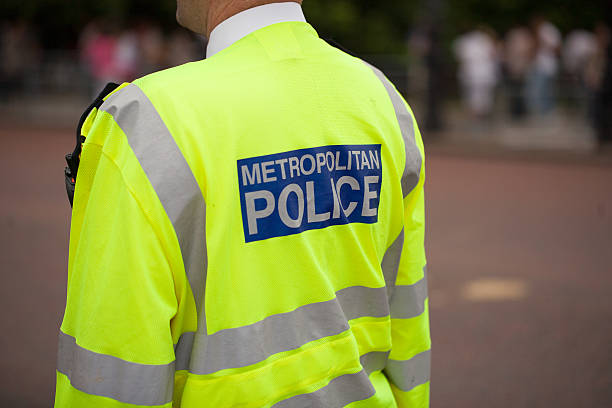
The Metropolitan Police Service of the United Kingdom has dismissed a Nigerian-British officer, Shola Balogun of Bromley Police Station, for biting a colleague (name withheld) at a birthday party in Bexleyheath, Kent.
This was disclosed in a hearing that was held from October 21-23, 2024, and chaired by a high-ranking officer, Christopher McKay, with IPM Amanda Harvey and Assessor-Detective Superintendent, Kirsty Mead as the panel members.
The document of the hearing notice sighted by our correspondent revealed that Balogun, a Police Constable, had attended a 40th birthday party of another police officer with about 70 other persons in attendance at Goals Sports Bar, stressing that he and the officer (victim) were the two police officers present at the event aside from the celebrant.
The document also explained that the incident happened on April 22, 2022, as a result of a light-hearted horseplay between them in the past but with no significant falling out.
READ ALSO: Nigeria, West African Nations To Adopt Unified Driver’s License, Others
It read, “On the 22nd of April 2022 about 70 people attended a 40th birthday party for a police officer at Goals Sports Bar in Bexleyheath, Kent. Among those attending were members of her work team, ERT C, who were based at Bromley Police Station. PC Shola Balogun and PC (name withheld) were two of those police officers who were present at the party. The officers knew each other well as work colleagues, having been based at Bromley Police Station together since June 2018.
“There had been light-hearted horseplay between them in the past but no significant falling out. Both describe a good friendly working relationship. The victim said he arrived at the party at about 9 pm after meeting other officers in a nearby pub. PC Balogun arrived after the victim and he admitted that had been drinking alcohol before his arrival. There is a dispute about the incidents that took place between them during that evening.
“The victim says that at around 23.30 he walked up a flight of stairs from the dancefloor and found PC Balogun in front of him. PC Balogun was about an arms-length away when he reached out and grabbed the victim’s spectacles off his face and dropped them on the floor. This surprised the victim and he claimed to have then approached PC Balogun in a friendly manner whereupon PC Balogun responded by pushing him with his right hand to the victim’s throat area. When the victim then complained about PC Balogun’s actions in a conversation at a time when they were only a foot apart because the music was so loud, PC Balogun is alleged to have leaned forward and bitten the victim on the right side of his face.”
However, Balogun’s account of the event was different from that of the victim as he claimed to have only knocked the victim’s glasses off by accident.
READ ALSO: Meet John Dabiri, Nigerian Aeronautics Engineer Who Became A Professor At 25
He also denied pushing the victim or biting him in the face as alleged but medical reports and diagnosis revealed that the victim was bitten.
The findings in the document read, “The Regulation 30 Notice alleges that by acting in the way described PC Balogun brought discredit to the police service and undermined public trust in the Metropolitan Police Service (MPS). This is alleged to have been a breach of the standard of Discreditable Conduct.
“Discreditable Conduct is explained in the College of Policing Code of Ethics as not behaving in a manner, whether on or off duty, which brings discredit to the police service or undermines public confidence in policing. This is further explained as being a requirement that police officers must keep in mind at all times that the public expects police officers to maintain the highest standards of behaviour. Police officers are instructed to always think about how a member of the public may regard their behaviour, whether on or off duty. The Panel is satisfied that PC Balogun breached this standard by biting the victim. Assaulting a fellow officer is clearly unacceptable and discreditable behaviour.”
Meanwhile, the panel claimed to have spoken to people including an inspector who had been his line manager for close to five years about Balogun’s behavioural history and they all spoke highly of him and his qualities as a police officer, adding, “To counter-balance the evidence of his good character the Panel has received evidence of his previous disciplinary history.”
READ ALSO: Meet Dr. Who Successfully Removed Tumour From A Baby In Her Mother’s Womb
“The Panel bears in mind the words of Lord Justice Maurice Kay in the well-known case of Salter v Chief Constable OF Dorset [2012] EWCA Civ 1047 when he said, “As to personal mitigation, just as an unexpectedly errant solicitor can usually refer to an unblemished past and the esteem of his colleagues, so will a police officer often be able so to do. However, because of the importance of public confidence, the potential of such mitigation is necessarily limited.”
The panel further agreed on dismissal without notice as the outcome of Balogun’s action.
“In the present case, PC Balogun does not have an unblemished past and the previous misconduct proved against him is serious. In the present case, he committed a deliberate assault on a colleague without any explanation or justification. He humiliated PC Final Written Warning is not appropriate in this case. The only appropriate and proportionate outcome in this case is Dismissal Without Notice,” the document added.



Headline
U.S. Lawmaker Reacts To Nigeria, U.S. Airstrikes
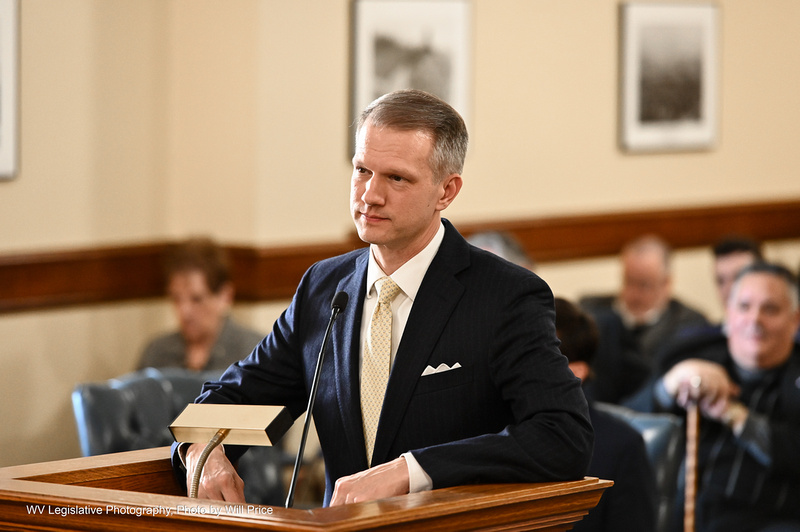
United States Congressman, Riley Moore, has stated that President Donald Trump is determined to put an end to the killing of Christians in Nigeria, warning that further action may follow if the violence persists.
Moore made the statement on Friday via his official X handle.
According to the lawmaker, the strike represents the first step in addressing what he described as the ongoing slaughter of Christians and the broader security crisis affecting Nigerians across religious and ethnic lines.
READ ALSO:US Dept Of War Shares Video Of Air Strikes In Nigeria
“President Trump has been clear that the killing of Christians in Nigeria must end,” he said.
He that the administration’s resolve on the matter should not be underestimated.
“As I stated at the outset: Do not test President Trump‘s resolved in this matter.
READ ALSO:JUST IN: US Forces Bomb Terrorists Camps In Nigeria
“Tonight’s strike in coordination with the Nigerian government is just the first step to ending the slaughter of Christians and the security crisis affecting all Nigerians,” he said.
He stressed that the operation signals a stronger stance by the United States in support of Nigeria’s efforts to tackle terrorism and violent extremism, noting that further measures could be taken if the situation does not improve.
Headline
US Dept Of War Shares Video Of Air Strikes In Nigeria
A video footage of the US military air strikes in Nigeria has emerged.
The video was released by the US Department of War following its air strikes against terrorists in Sokoto.
Earlier, the US secretary of War, Pete Hegseth had confirmed that military air strikes hit terrorists in Nigerians, saying it was deadly.
Later on, the US. African Command, confirmed that it conducted the attacks described as very deadly by President Donald Trump.
Trump said he was only keeping the promise he made earlier last month to strike the terrorists he believes are killing innocent Christians.
READ ALSO:JUST IN: US Forces Bomb Terrorists Camps In Nigeria
Although described as powerful and deadly, the casualty caused by the attack is yet to be released.
Explaining further, security expert, Brant Philip, said the strikes may have been launched “from the USS Paul Ignatius, using a Tomahawk missile.”
The Nigerian government through its ministry of foreign affairs has also confirmed that the strikes were successful.
Watch video here
Headline
JUST IN: US Forces Bomb Terrorists Camps In Nigeria
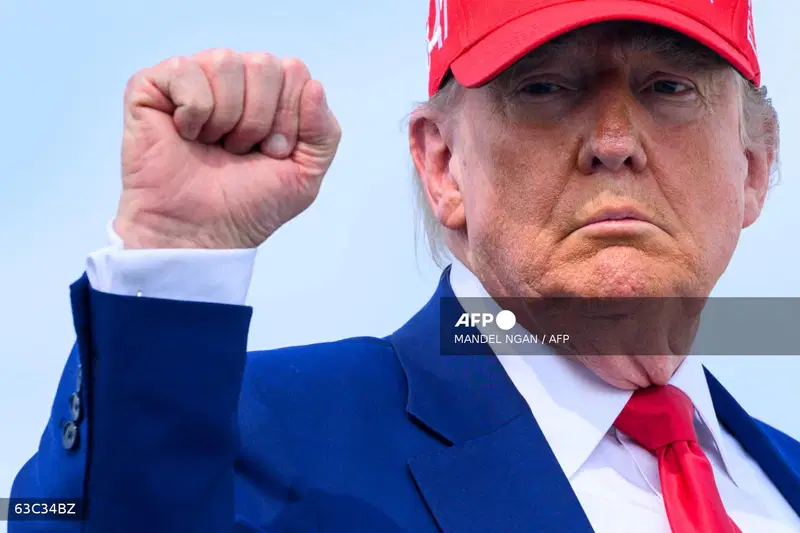
United States President Donald Trump said US forces conducted deadly strikes against Islamic State terrorists in northwestern Nigeria, and vowed more attacks if the militants keep killing Christians.
“I have previously warned these Terrorists that if they did not stop the slaughtering of Christians, there would be hell to pay, and tonight, there was,” Trump posted on his Truth Social platform, adding that “the Department of War executed numerous perfect strikes.”
READ ALSO:JUST IN: Kano Lawmaker, Sarki Aliyu Daneji, Dies Hours After Colleague’s Passing
Trump stated that the Department of War “executed numerous perfect strikes, as only the United States is capable of doing. Under my leadership, our Country will not allow Radical Islamic Terrorism to prosper.”
The US president wished everyone Merry Christmas, “including the dead Terrorists, of which there will be many more if their slaughter of Christians continues.”
Details later.

 News4 days ago
PHOTOS: New Era In Furupagha-Ebijaw As Okpururu 1 Receives Staff Of Office
- News3 days ago
UBTH CMD Marks 120 Days In Office, Expresses Commitment To Providing Conducive Working Environment
- News3 days ago
OPINION: Gumi And His Terrorists
- News3 days ago
FIRS Confirms NIN As Tax ID
- News4 days ago
FG Declares Public Holidays For Christmas, New Year Celebrations
- Metro3 days ago
Fintiri Pardons Man Sentenced To Death For ‘Killing Herdsman In Self-defence’, Others
- News4 days ago
OPINION: Christmas And A Motherless Child
 News3 days ago
OPINION: My Man Of The Season
- News2 days ago
JUST IN: Kano Lawmaker, Sarki Aliyu Daneji, Dies Hours After Colleague’s Passing
- Metro3 days ago
Petrol Tanker Crashes Into Akpabio’s Convoy, Kills Police Dispatch Rider


