
Headline
UK Withdraws Serving Judges From Hong Kong Court Over National Security Law
Following discussions with the UK government, the president and deputy president of the UK Supreme Court on Wednesday resigned from their roles in the Hong Kong Court of Final Appeal (HKCFA).
UK Supreme Court judges have long sat on the HKCFA “in fulfillment” of the government’s obligations towards the former British colony and have done so with the support of the government, which assessed their participation “was in the UK’s national interests,” according to Supreme Court President Robert Reed.
Citing concerns over the Beijing-imposed national security law, Reed said in a statement that he and Lord Patrick Hodge had resigned as non-permanent judges in the Hong Kong court because UK Supreme court judges “cannot continue to sit in Hong Kong without appearing to endorse an administration which has departed from values of political freedom, and freedom of expression, to which the Justices of the Supreme Court are deeply committed.”
The senior judge said he had come to the conclusion in agreement with the government.
In a separate statement, Foreign Secretary Liz Truss and Deputy Prime Minister Dominic Raab supported the withdrawal of serving UK judges from the HKCFA.
“We have seen a systematic erosion of liberty and democracy in Hong Kong. Since the National Security Law was imposed, authorities have cracked down on free speech, the free press, and free association,” Truss said.
The foreign secretary said she welcomes and “wholeheartedly” supports the withdrawal as the situation in Hong Kong has “reached a tipping point where it is no longer tenable for British judges to sit on Hong Kong’s leading court, and would risk legitimizing oppression.”
Raab said the introduction of the national security law “flies in the face” of the Sino–British Joint Declaration.
Therefore, “having discussed at length with [the] Foreign Secretary and the President of the Supreme Court, we regretfully agree that it is no longer appropriate for serving UK judges to continue sitting in Hong Kong courts,” Raab said.
Foreign Secretary Liz Truss meeting European Commission vice-president Maros Sefcovic for talks in central London on Feb. 11, 2022. (Rob Pinney/PA)
READ ALSO: Ukrainian Presidential Adviser, Arestovich Reveals When War Will Be Over
Alistair Carmichael, chair of the All-Party Parliamentary Group on Hong Kong, said the withdrawal is “a positive step” and called on the government to do more to support Hongkongers.
“The foreign secretary’s announcement sends a clear and vital message that the government does not support UK judges lending credibility to the corrupt Hong Kong judicial system. The imposition of the national security law has proven beyond doubt that those leading Hong Kong intend to govern by totalitarian force rather than by the will of the people. It is right that UK judges should no longer be a part of that system,” the Scottish Liberal Democrat MP said in an email to The Epoch Times.
“Today’s announcement from the foreign secretary is a positive step but it cannot be the last. Hongkongers, both those still in the city and here in the UK, still need our support,” he said.
Alan Mendoza, co-founder and executive director of foreign policy and national security at the Henry Jackson Society think tank, said the decision is “overdue but welcome.
Reacting to the news on Twitter, Mendoza said the withdrawal of British judges is “a recognition that justice is no longer being administered through the rule of law, but instead dispensed by Chinese Communist Party diktat.”



Headline
How Our Airstrikes Stopped Christmas Attacks In Nigeria — US Lawmaker
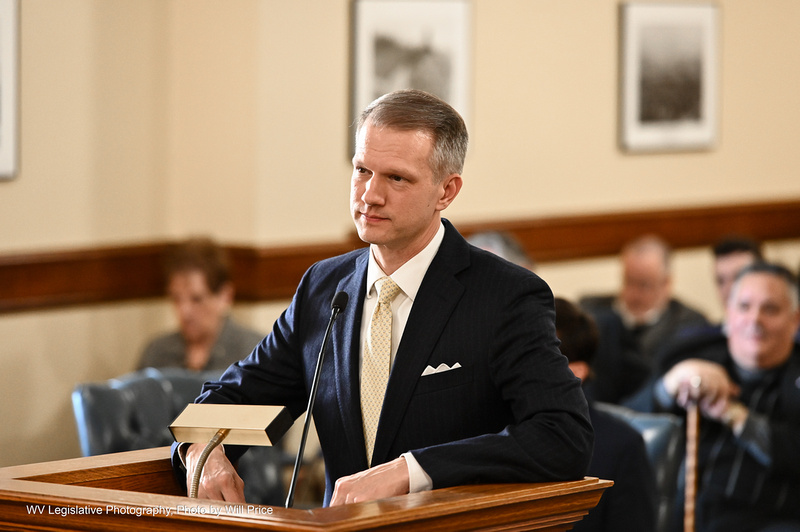
Riley Moore, a member of the United States House of Representatives from West Virginia’s 2nd District, has linked the absence of Christmas attacks in Nigeria this year to US military airstrikes carried out against Islamist militants on Christmas Day.
In a post on his official X account on Saturday, Moore contrasted the situation with the past two Christmas seasons, during which he claimed Christians were killed in attacks across parts of Nigeria.
The lawmaker noted that this year’s response targeted extremist groups instead of marking another period of violence.
READ ALSO:Rep Moore Confirms 12 Tomahawk Missiles Launched In Sokoto
He added that US forces acted decisively against militants in coordination with the Nigerian government.
“For the past two Christmases, Christians have been murdered in Nigeria. This year, thanks to @POTUS, Radical Islamic Terrorists were on the receiving end of 12 Tomahawk missiles as a present.
“The successful strikes on ISIS, in coordination with the Nigerian government, are just the first step to secure the country and end the slaughter of our brothers and sisters in Christ,” Moore wrote.
US President Donald Trump said on Thursday that American forces had conducted deadly strikes against Islamic State terrorists in north-western Nigeria.
Trump, who spoke via his Truth Social platform, warned that more attacks would follow if the militants continued killing Christians, adding that the Department of War executed numerous “perfect strikes.”
Headline
U.S. Lawmaker Reacts To Nigeria, U.S. Airstrikes
United States Congressman, Riley Moore, has stated that President Donald Trump is determined to put an end to the killing of Christians in Nigeria, warning that further action may follow if the violence persists.
Moore made the statement on Friday via his official X handle.
According to the lawmaker, the strike represents the first step in addressing what he described as the ongoing slaughter of Christians and the broader security crisis affecting Nigerians across religious and ethnic lines.
READ ALSO:US Dept Of War Shares Video Of Air Strikes In Nigeria
“President Trump has been clear that the killing of Christians in Nigeria must end,” he said.
He that the administration’s resolve on the matter should not be underestimated.
“As I stated at the outset: Do not test President Trump‘s resolved in this matter.
READ ALSO:JUST IN: US Forces Bomb Terrorists Camps In Nigeria
“Tonight’s strike in coordination with the Nigerian government is just the first step to ending the slaughter of Christians and the security crisis affecting all Nigerians,” he said.
He stressed that the operation signals a stronger stance by the United States in support of Nigeria’s efforts to tackle terrorism and violent extremism, noting that further measures could be taken if the situation does not improve.
Headline
US Dept Of War Shares Video Of Air Strikes In Nigeria
A video footage of the US military air strikes in Nigeria has emerged.
The video was released by the US Department of War following its air strikes against terrorists in Sokoto.
Earlier, the US secretary of War, Pete Hegseth had confirmed that military air strikes hit terrorists in Nigerians, saying it was deadly.
Later on, the US. African Command, confirmed that it conducted the attacks described as very deadly by President Donald Trump.
Trump said he was only keeping the promise he made earlier last month to strike the terrorists he believes are killing innocent Christians.
READ ALSO:JUST IN: US Forces Bomb Terrorists Camps In Nigeria
Although described as powerful and deadly, the casualty caused by the attack is yet to be released.
Explaining further, security expert, Brant Philip, said the strikes may have been launched “from the USS Paul Ignatius, using a Tomahawk missile.”
The Nigerian government through its ministry of foreign affairs has also confirmed that the strikes were successful.
Watch video here

 News4 days ago
FULL LIST: Churches That Don’t Celebrate Christmas
- News4 days ago
JUST IN: Kano Lawmaker, Sarki Aliyu Daneji, Dies Hours After Colleague’s Passing
- Headline3 days ago
JUST IN: US Forces Bomb Terrorists Camps In Nigeria
- News3 days ago
Okpebholo Slams ₦25bn Libel Suit On Edo PDP Chairman
- Headline3 days ago
US Dept Of War Shares Video Of Air Strikes In Nigeria
- Entertainment4 days ago
AFCON 2025: Davido Wins $96,000 After Super Eagles Beat Tanzania
- Politics5 days ago
PDP Crisis: INEC Rejects Turaki-led NWC
- News5 days ago
OPINION: The Day Friendship Died
- News4 days ago
Sheikh Gummi Sues Two Over Alleged False Facebook Publication
- News4 days ago
7 Health Risks Of Owning A Cat


