
Headline
UN Backs Global Carbon Pricing Scheme For Shipping Industry

In a landmark move, the United Nations’ International Maritime Organization (IMO) has agreed on a global carbon pricing mechanism for the shipping industry, marking a significant step toward tackling emissions from one of the world’s most polluting sectors.
The policy, expected to be formally adopted in October 2025, is projected to generate between $30–40 billion in revenues by 2030—roughly $10 billion annually. These funds will be ringfenced exclusively for decarbonising maritime transport, rather than contributing to broader climate finance for developing nations.
While hailed as a major breakthrough, the agreement is expected to deliver only a 10% absolute emissions reduction in the shipping sector by 2030—well below the IMO’s own revised strategy from 2023, which calls for at least a 20% reduction by the same year, and a stretch goal of 30%.
From 2028, vessels will either have to adopt lower-carbon fuel mixes or pay for excess emissions. Ships continuing to use conventional fossil fuels will face a charge of $380 per tonne for the most carbon-intensive portion of their emissions, and $100 per tonne for the remainder above a set threshold.
READ ALSO: NBS Names Top Five Exports, Imports Destinations For Nigeria
The agreement, supported by 63 countries—including Brazil, China, the EU, South Africa, Kenya, Senegal, and Namibia—sets a global precedent. However, the policy faced strong opposition from oil-rich nations including Saudi Arabia, the UAE, Russia, and Venezuela, who challenged both the substance and process of the deal. Despite the resistance, a compromise proposal championed by Norway, which chaired the negotiations, passed in the final vote.
Notably, the United States delegation was absent during the vote, having earlier circulated a proposal urging countries to withdraw from negotiations—a move that drew criticism from multiple quarters.
A bloc of over 60 nations, led by Pacific Island states, had advocated for the revenue to support broader climate resilience efforts in vulnerable nations. Speaking on behalf of the Pacific, Tuvalu expressed frustration at the lack of transparency and inclusion in the talks, warning that the new plan may fail to incentivise cleaner fuel adoption effectively.
While the agreement allows initial use of fossil-based liquefied natural gas (LNG), the pricing mechanism is designed to gradually penalise such fuels over time.
READ ALSO: Polio Eradication: All Eyes On Nigeria – UNICEF
Minister Antony Derjacques of the Seychelles criticised the limited ambition of the deal.
He said, “The developing countries with the greatest need came here and offered a solution. How can the other major economies ask us to take a weak deal home to our people, who are suffering as a result of the climate crisis?”
Maria Ogbugo of the African Future Policies Hub viewed the outcome more positively.
She said, “The best possible outcome was achieved. African delegations, including Kenya, Namibia, Senegal, and South Africa, must be commended. The shipping industry has taken the lead in showing that climate action is possible—even for hard-to-abate sectors.”
The Executive Director at the same organisation, Faten Aggad added “Reaching consensus on decarbonisation measures was never going to be easy. Yet the result still puts a price on emissions, which is a crucial starting point—especially for vulnerable economies.”
READ ALSO: Refund N300m Confab Hosting Rights, Rivers Tells NBA
The maritime advisor at the Micronesian Centre for Sustainable Transport, Eldine Glees, highlighted the link between climate levies and sustainable development.
The advisor said, “Several African delegations showed exemplary leadership by tying the levy to food security, resilience, and equitable revenue distribution. Maintaining unity will be vital as implementation begins.”
The CEO of the European Climate Foundation and a key architect of the Paris Agreement, Laurence Tubiana, said the agreement was a step forward but not enough.
The CEO said, “The lack of a broader shipping levy is a missed opportunity. The world needs more cooperation, and progressive partners can still push for breakthroughs in climate finance.”
Vanuatu’s Climate Change Minister Ralph Regenvanu said, “Let us be clear about who has abandoned 1.5°C. Saudi Arabia, the US, and other fossil fuel allies blocked progress at every turn. This was a chance to fund climate-vulnerable nations. It was lost.”
Ambassador Albon Ishoda of the Marshall Islands concluded with a note of resilience.



Headline
‘Pioneer Of Cable TV News’: Key Facts About CNN Founder, Ted Turner
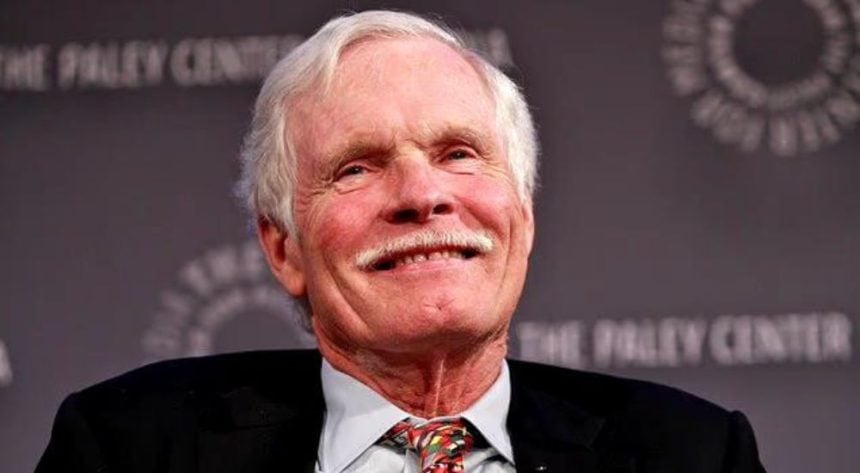
Ted Turner, the media businessman who founded CNN died at the age of 87. He died peacefully on Wednesday, surrounded by family, according to Turner Enterprises.
Contents
Launched 24-hour news television
Built a media network
Expanded through sports
Recognition and influence
Philanthropy and global causes
Environmental efforts
Health and later years
Early career path
Leadership and legacy
Personal life
Exit from business
Family
Below are key facts about his life and impact:
Launched 24-hour news television
Turner founded CNN on June 1, 1980, introducing the first 24-hour news channel and changing how audiences follow global events.
READ ALSO:CNN To Layoff 200 Staff Amid Attempts To Modernise Business
Built a media network
He moved from billboards into broadcasting, turning an Atlanta TV station into a national superstation in 1976. His business later grew to include CNN International, TNT, Turner Classic Movies and Cartoon Network.
Expanded through sports
Turner invested in sports broadcasting and owned teams including the Atlanta Braves and the Atlanta Hawks, using television to reach wider audiences.
Recognition and influence
In 1991, he was named Time magazine’s Man of the Year for his role in shaping modern news coverage.
Philanthropy and global causes
He founded the United Nations Foundation and supported campaigns against nuclear weapons. In 1997, he pledged $1 billion to the United Nations.
READ ALSO:CNN President, Jeff Zucker Resigns After Failing To Disclose Secret Affair With Colleague
Turner supported conservation work, including reintroducing bison in the United States, and backed environmental education through the “Captain Planet” cartoon.
Health and later years
In 2018, Turner revealed he had Lewy body dementia. He also recovered from a mild case of pneumonia in early 2025.
Early career path
He took over his father’s billboard company at 24 after his father’s death and later expanded into radio and television, despite limited experience in journalism.
“I worked until 7 o’clock, and when I got home the news was over,” he once said. “So I missed television news completely. And I figured there were lots of people like me.”
Leadership and legacy
READ ALSO:CNN Reporter Protests Nigeria’s $215 Single Entry Visa Fee
“Ted was an intensely involved and committed leader, intrepid, fearless and always willing to back a hunch and trust his own judgement,” Mark Thompson, Chairman and CEO of CNN Worldwide, said in a statement. “He was and always will be the presiding spirit of CNN. Ted is the giant on whose shoulders we stand, and we will all take a moment today to recognize him and his impact on our lives and the world.”
Personal life
Turner married actress Jane Fonda in 1991, and they later divorced after 10 years, though they remained close.
“I would never love anyone like I love him,” she said. “But I just couldn’t keep moving in his world, along the surface for the rest of my life. I knew that I would get to the end of my life and regret not doing the things that I also needed to do for me.”
Exit from business
He sold his company to Time Warner in 1996 and later stepped away following its merger with AOL.
Reflecting on his life, Turner once said: “I lost Jane. I lost my job here. I lost my fortune, most of it. Got a billion or two left. You can get by on that if you economize.”
Family
He is survived by his five children, 14 grandchildren and two great-grandchildren.
Headline
Iran’s Nationwide Internet Shutdown Hits 70 Days

NetBlocks, a monitoring group, has disclosed that an internet shutdown enforced by the Iranian regime has entered its 70th day, severing key access from swathes of the population under the shadow of war.
NetBlocks reported on Friday that the blackout has now surpassed 1,656 hours, marking more than two months since US-Israeli strikes pounded Tehran and escalated across the Middle East.
“Digital connectivity is vital in times of crisis,” NetBlocks said in a post on X. “Limiting service harms those most in need – people with disabilities, students, small businesses and the general public.”
READ ALSO:US Underestimated Iran Before War – France’s Bardella
According to CNN, Iran imposed a separate internet shutdown on the country’s 92 million people earlier this year, when it launched the most lethal crackdown on anti-government protesters since the Islamic Republic’s founding 47 years ago.
CNN further reports that the latest blackout has cut off another potential lifeline for Iranian residents faced with high unemployment and economic pressure exacerbated by the US-Israeli campaign.
(CNN)
Headline
Gas Prices In US Edge Down After Two Weeks Of Increases
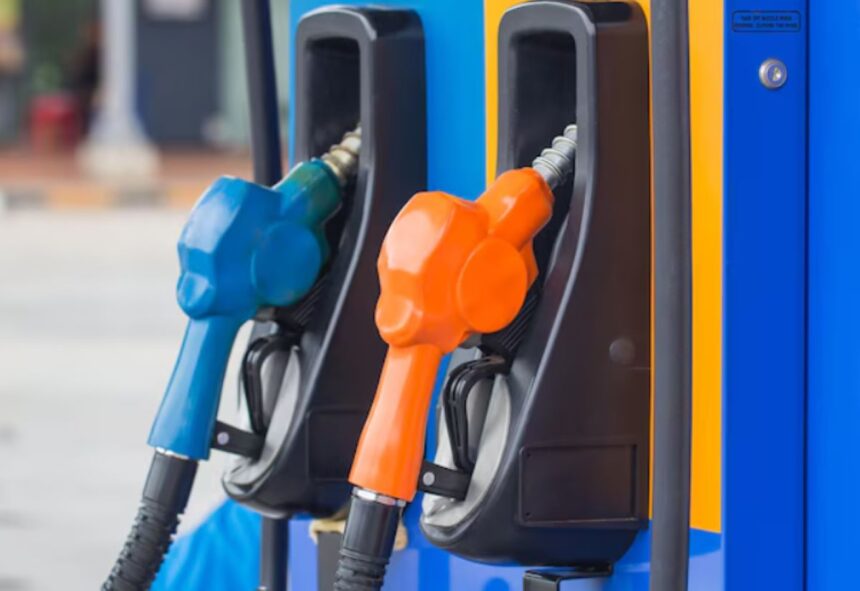
The cost of a gallon of regular gas in the United States (US) has edged down a little more than a penny to $4.55.
According to AAA’s readings, this marks the first decline in the average gas price after 15 straight days of increases.
The decline is minuscule compared to the large increases in gas prices over the last two weeks.
According to CNN, gasoline costs rose an average of nearly 4 cents a day during that period and had several daily increases of between 7 and 9 cents.
READ ALSO:Gas Station Explosion Rocks Calabar, Scores Injured, Property Destroyed
Also Read: Trump insists US-Iran ceasefire intact despite recent exchange of fire
CNN also reports that based on past gas spikes, it will likely take weeks for gas prices to get down below $4 a gallon.
The report, however, states that a previous two-week stretch of gas price declines only shaved 14 cents off the average price, taking the average price to $4.02, before the recent 15-day run of increases.
READ ALSO:Tinubu Signs Executive Order To Protect Nigeria’s Oil & Gas Revenue
According to CNN, it could take months for the average price to fall below $3 per gallon, as it did before the war in Iran.
CNN further reports that only one state – Oklahoma – now has an average price of less than $4 a gallon, and its average stands at $3.98. California has the highest average price at $6.16.
(CNN)

 Politics4 days ago
Fubara Clears Air On ‘Defection’ To NDC [VIDEO]
- News3 days ago
Gun Battle In Oyo Forest As Police Disrupt ₦10m Ransom Collection Plot
- Politics2 days ago
Four Fubara Loyalists Disqualified As APC Clears 21 For Rivers Reps Primaries
- News5 days ago
Ex-power Minister Jailed 75 Years Over Fraud
 Metro3 days ago
Drama As Teenagers Stage Secret Wedding With N3,000 Bride Price
- Politics2 days ago
2027: Court Rebukes Plaintiff, Lawyer In Suit Against Jonathan, Awards N1m Fine
- News2 days ago
Lagos Sanctions 15 Money Lending Companies For Sharp Practices
- Politics4 days ago
2027: Daniel-Abiodun Feud Deepens Over Senatorial Ticket For Ogun East
- News4 days ago
PAP Sends Additional 15 Scholarship Beneficiaries For Post-Graduate Studies In UK
- News4 days ago
Sleep Timing Irregularity Could Double Risk Of Heart Attack, Experts Warn


